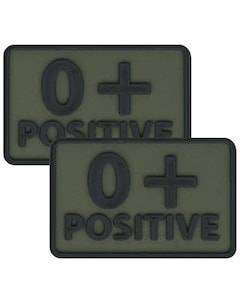
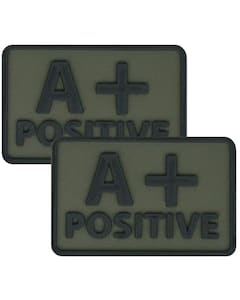
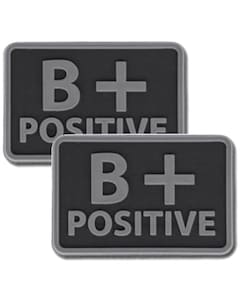
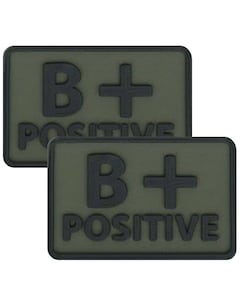
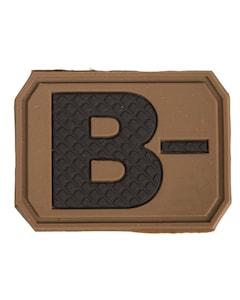
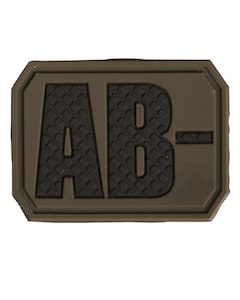
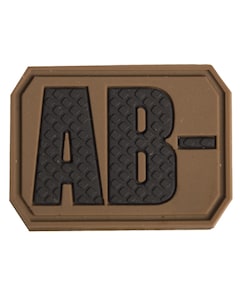
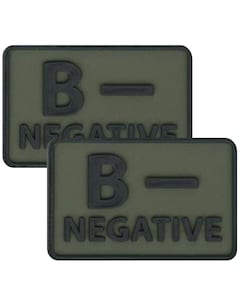
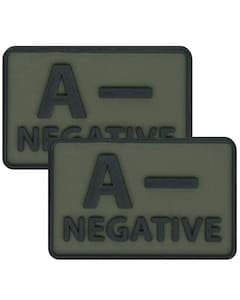
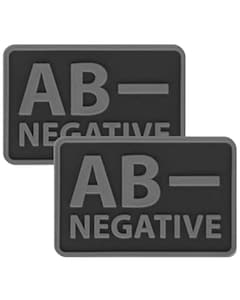
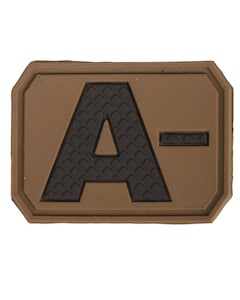
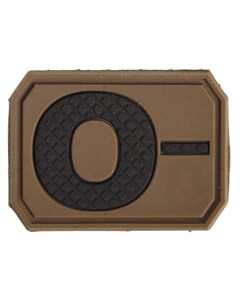
Blood group patches have been a fixture of military units around the world, including Poland, for years. They are an important part of the uniform. In the event of a threat to the health and life of injured soldiers, they provide important information for medical services, helping them to respond quickly and confidently, which is extremely important in such situations. Blood group patches are attached in visible places on the uniform so that emergency services can easily spot them. To begin with, a little history of the origin and classification of blood types. Blood types were discovered by Austrian physician Karl Landsteiner in 1901. He noticed that there are two antigens on red blood cells, which determine the phenomenon of clumping of individual cells together, or agglutination. Based on his research and the insights of two other scientists: Ludwig Hirszfeld and Emile von Dungern laid the foundation for the science of blood groups. It was these scientists who introduced the designations by symbols: A, B, AB and 0, which were adopted worldwide in 1928.
The division into blood groups is related to the presence of blood group antigens, or certain characteristic proteins, on red blood cells. To help determine the group several systems were created, but the most relevant for us is the AB0 system and the Rh system. The presence of the A or B antigen determines membership in one of the four basic groups of this system, namely: A, B, AB, 0. Belonging to a specific blood group is an immutable characteristic, every person. Blood type can change in the case of a bone marrow transplant, as the new marrow produces red blood cells with donor antigens. If there is a D antigen in someone's blood, this is further determined by the designation Rh-positive. Conversely, if a person does not have this antigen, it is referred to as Rh-negative. This antigen appears in as many as 85% of people, and in 15% it is absent. Its occurrence is not linked to a specific group A, B, AB, or 0, so it may or may not occur in any of them, but knowledge of the Rh factor is very important for blood transfusions.
Determination of blood groups from the AB0 and Rh systems is of great importance in selecting blood for transfusion during blood loss, as well as during surgery and other forms of treatment. If a situation arises, blood should be given that is compatible in at least these two key systems. Only in exceptional situations is it permissible to transfuse blood of another group, such as the so-called universal 0 Rh-. Thus, a person who has blood type B Rh- should be given B Rh- blood. This is very important because our bodies produce antibodies against antigens from the ABO system, which we do not have ourselves. A dangerous post-transfusion reaction can occur if blood is transfused with antigens that someone does not have. Therefore, blood transfusion should be done at least according to the AB0 and Rh system. In the offer of our store we have at your disposal emblems and patches with different blood groups. Among them are those in a more traditional style, embroidered with black thread on a material that appears in the camouflage pattern of the so-called "Polish panther", as well as those produced from PVC. There will be those that we sew onto the uniform, as well as those that we attach with velcro velcro to panels on our clothing.