Crampons vs. micro crampons - what to choose for winter mountain tours?
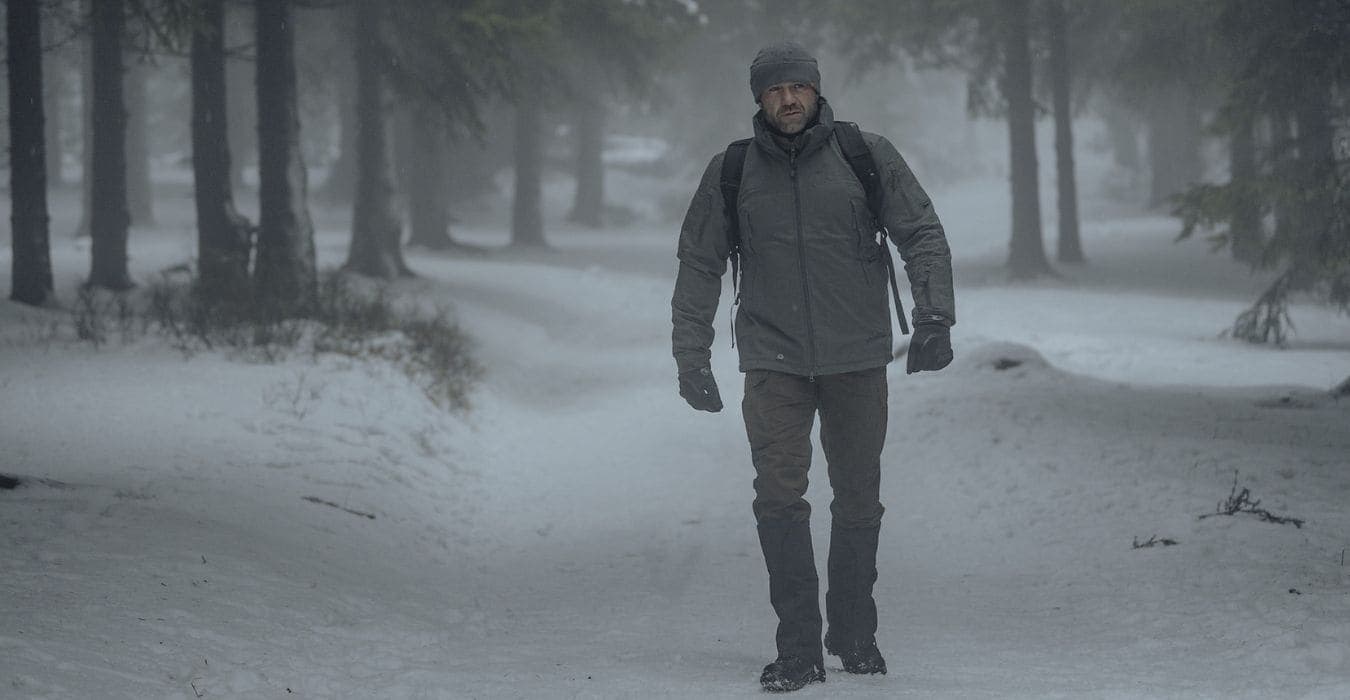
The winter season is a great time for mountain hiking, but lovers of this activity should consider both the weather conditions and the condition of the hiking trails in order to prepare accordingly. In such challenging conditions, it is worth considering what specialist equipment to choose for footwear, crampons or maybe crampons? It all depends on individual needs. One thing is for sure - it's a must-have piece of equipment that will make hiking in the mountains in winter much safer. In this guide, you will find answers to your questions on how to choose the right equipment for your boots. Amongst other things, you will learn the difference between crampons and crampons, which ones to choose, as well as the different types of crampons and touring crampons.
Crampons vs. micro crampons - main differences
Winter is a season that brings many dangers. Sometimes the trails are covered with ice or hard, frozen snow. To increase traction and therefore safety when hiking in such conditions, it is a good idea to put crampons or crampons on your boots. But what are the main differences between crampons and crampons?
What are crampons? Crampons are a set of metal or aluminium teeth attached to the shoe by cages or special snaps. They provide traction on ice and frozen snow. They generally have more teeth than crampons (usually 10 or 12) and are heavier than them. Depending on the type and design of the crampons, they are used in alpine tourism, mountaineering and ski touring, and ice climbing.
Hiking crampons are mainly aimed at hikers on easier trails where there are no difficulties of a climbing nature. They are not equipped with attack spikes, which allow climbing on steep slopes. Their advantages over crampons are lighter weight, lower price, and simple handling. They are recommended for lower mountains, forest paths or even in the city for icy pavements.
To briefly summarise - the main difference between crampons and crampons is that their choice depends on where we are hiking in the mountains. Want to conquer the Tatras? Choose a stronger construction - i.e. crampons. On the other hand, if you don't plan heavy trails - buy crampons, which are much lighter and easy to attach to your shoe.
Boot crampons - types
There are three main types of crampons on the market that will work well for high altitude hikes - basket, automatic and semi-automatic.
Basket crampons
Basket crampons are a good choice for those starting out on their winter mountaineering adventure. They can be worn on various types of footwear, provided they reach behind the ankle and have a suitably stiff sole. As far as their construction is concerned, they are fastened to the shoe with plastic cages and straps made of tape. At first, this type of crampon may seem complicated and time-consuming. So it's worth practising before your first winter outing.
Automatic crampons
Automatic crampons are a good choice for those looking for advanced solutions that will perform in the toughest conditions. Unlike basket crampons, they are equipped with a mechanism that allows you to quickly put them on your footwear. However, if you decide to buy them, you need to be prepared for the additional expense. This is because you need to buy special mountain boots, which have the right cut-outs at the tip and heel and are very stiff.
Semi-automatic crampons
They are an intermediate solution between basket crampons and automatic crampons. They are a good choice for people who frequently traverse high mountainous terrain or do glacier tourism. In terms of their construction, they have a plastic basket at the front, but the back is fastened by a buckle with a metal rim. Semi-automatic crampons, like automatic crampons, require specialised footwear. The shoes for these crampons must have a ridge in the back where the clip rests. So who are these crampons for? Primarily for more advanced users, but there is no obstacle to beginners deciding to buy them.
Tourist crampons– types
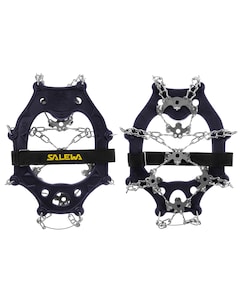
What type of hiking crampons to choose? When it comes to the types of hiking crampons, we can distinguish between three main types: strap crampons, shoe crampons and city spikes. Crampons are ideal for lower mountains and low-lying areas that are icy. Their advantage is that they are smaller and lighter than crampons.
Striped crampons
Strap crampons are attached by straps to the midsole. Their advantages are that they fit all trekking shoes of any size, and they are low in price. They are small in size, but have long and strong tines that easily dig into the ground for stable hiking. They are great for protecting against slipping on frozen snow.
Boot crampons
This is a type of crampon that is extremely popular. Boot-tensioned crampons have a rubber clamp in their construction, which allows them to be quickly put on shoes. They have short prongs, but they are spaced all the way under the shoe, making them much easier to move over slippery terrain.
City spikes
With these models, the teeth are replaced by small spikes. Non-slip overlays work best for everyday use, for example when moving on icy pavement. They are not designed for conquering mountain peaks, but are meant to ensure safe movement on a thin layer of ice. Their advantage is that they are easy to put on.
Summary: Crampons vs. micro crampons - which to choose for going into the mountains?
To sum up the above information - crampons and crampons are a must for going into the mountains in winter. Without extra traction, our health and lives can be put in danger. Crampons are the ideal choice for going into the higher mountains as they are very sturdy and have attack teeth. Crampons, on the other hand, are recommended for less demanding routes. We hope that by reading this advice it will be easier for you to choose the right crampons for the mountains, or crampons. In the Militaria.co.uk shop you will find different types of crampons and hiking crampons that will provide grip on ice and frozen snow.