Walther PPQ for rubber bullets
This article originally appeared in print in Strzał.pl magazine in September 2017.
Text: Jarosław Lewandowski
Photos: author and Militaria.pl
Walther PPQ for rubber bullets
Effective marksmanship training for close quarters combat, especially in a confined space, poses very serious challenges to training procedures and concepts. This way of using weapons, commonly referred to by the acronym CQB (Close Quarters Battle), is relatively new, so it has not yet grown into a training routine. Although its origins can be traced back to the trenches of the First World War and the urban battles conducted during the ensuing world war, the whole thing developed with the emergence of asymmetric conflicts at the turn of the century, and in particular the Iraq wars, when the army was forced to perform tasks characteristic of police counter-terrorist formations rather than the typical military operations of a full-scale conflict. When it is the artillery and air force that captures the terrain and the infantry supported by tanks that merely occupies it.
In an asymmetric conflict, the infantry not only has to conquer the terrain, but also do so in a surgical manner, without harming the civilian population and often additionally by recapturing hostages. Such operations require highly proficient use of small arms, both long and short - because in CQB events play out very quickly and mostly with an element of surprise, and the intermingling of own, foreign and civilians additionally requires rapid decisions and precision fire so as not to cause casualties in one's own ranks. In theory, this is called ‘high-intensity, short-term combat with sudden use of force over short distances’. Fine, but how to train it?

Shooting ‘tactical’ training
Shooting training of this kind of skills - in addition to the classic components of learning to hold a weapon, pulling the trigger and using aiming devices (here mostly optoelectronic) - must be enriched with dynamic elements, and above all training through simulated combat. Here, we have to teach the soldier how to shoot at an opponent who is very close by and who is also firing. This cannot be done ‘dry’, and training with real weapons is obviously not an option. What is needed, therefore, are some kind of training pistols and rifles that will be safe when shooting at each other, while at the same time their hits will be unpleasant enough for those hit to force the imperative to get out of the firing line.
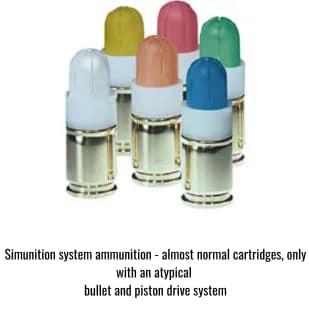
Canadian company Simunition offers a conversion system that allows special training ammunition to be fired from real weapons, with a capsule containing paint instead of a bullet. After wearing the appropriate body protection, the practising team can shoot at each other with this, and the coloured paint is supposed to identify the perpetrator of the hit. A distinctive feature of this system is the blue painting of the barrels, magazines and sometimes the locks or breech chambers of weapons adapted to firing these cartridges. The concept works in practice to a limited extent, firstly because of the very high running costs - not only the ammunition itself is expensive, but also the conversion kits for specific types of weapons (the offer is not very wide and applies only to the most well-known models). In fact, it requires the purchase of new, specially modified units to avoid cases of mistakenly loading the wrong kind of cartridges: the theory was attractive, but in practice unfortunate accidents occurred. The Canadian system was (is?) also used in Poland, by anti-terrorist police units - even the Weapons Factory in Radom invested in developing ‘blue’ Glauberytes for Simunition cartridges.
 |
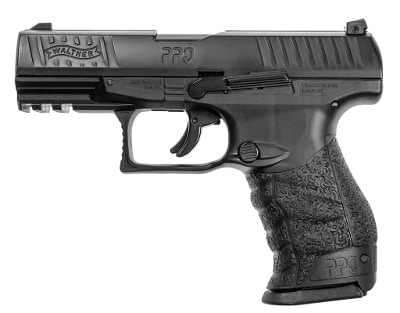 |
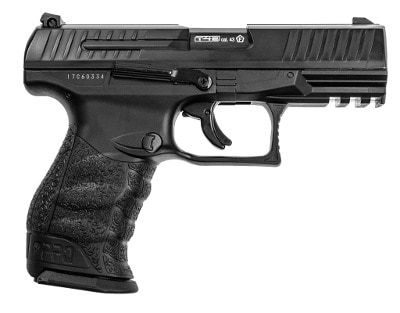
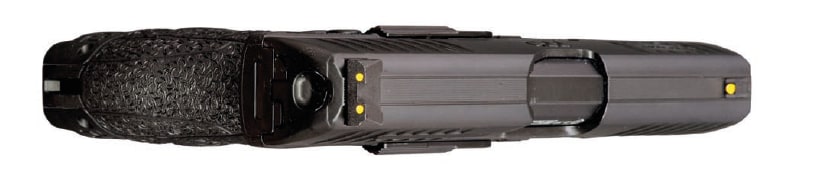
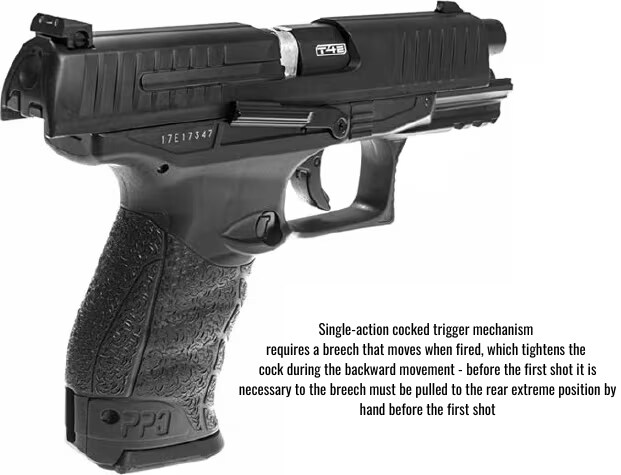
| The Walther PPQ M2 version of the T4E looks identical to the pistol for real cartridges - the only external difference is the lettering on the barrel within the ejection window and the different black of the breech (here it is painted, while in the original it is oxidised) | |
As an alternative, attempts have been made to adapt replicas of airsoft, due to their considerable external resemblance to real firearms and the very low cost associated with their use. Airsofts are used by some military units (in Poland, for example, GROM uses them), although the very light plastic balls behave very differently in flight than real bullets. Another version is the RAM system markers - a distant relative of paintball, firing half-inch balls, with a choice of rubber, compressed talc or paint-filled gel capsules. The original paintball markers were unsuitable due to their completely different construction and design, while RAM at least offered external shapes similar to known models of real weapons. However, these are all just surrogates.
Training through combat
The breakthrough will come with the T4E system - or Training For Engagement, in the fashionable grep notation, with the numeral 4 (a pronunciation game: four as in ‘four’ is pronounced similarly to for, i.e. ‘for’) - which in Polish can be rendered precisely as ‘training through combat’. There are already at least a few replicas of well-known firearm models on the market made using this technology. Although perhaps the word ‘technology’ is a bit of an overstatement: after all, this is just a further development of the idea of RAM-type airguns, made in the form of even more realistic replicas, which are also exactly 1:1 in scale in terms of weight and operating principle.
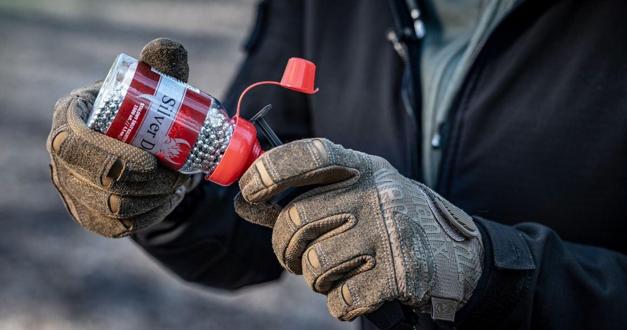
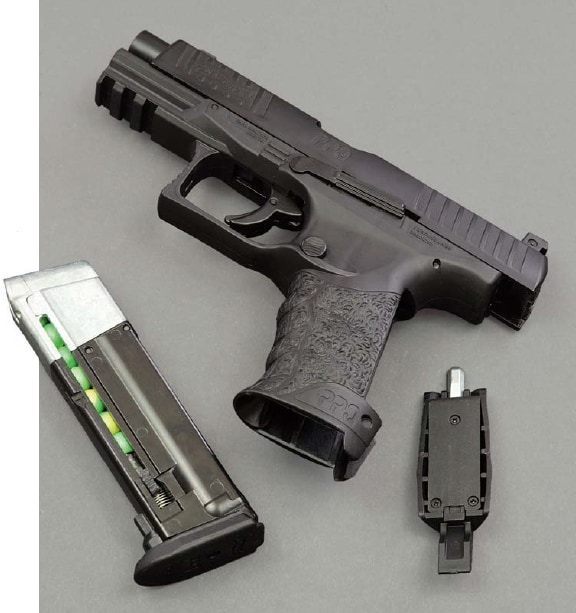
Cartridges with compressed CO2 are placed in the magazines, together with the gas valve and the balls. These have a calibre similar to that of a typical pistol calibre (approximately 10 mm, although for some unknown reason they are called ‘.43’, which corresponds to 11 mm) and even their number in the magazine is similar or the same as in a real weapon. There are rubber, paint or coloured powder (‘powder’) balls available.
The T4E concept was conceived and developed by Troy Gragg, an American who runs a training company of the same name in Fort Smith, Arkansas. Mr Gragg, of course, has a ‘service background’, but this is the norm in the USA, where tactical training is only carried out by ex-servicemen of one sort or another. He enlisted the help of the German company Umarex, which has so far developed the M4 carbine (in two versions: TM4 and TM4 RIS), a replica HK416 rifle and the Walther PPQ M2 pistol, according to his instructions. A good idea, refined from a technical point of view and, together with perfect execution, has finally made it all work as it should. As a result, we have a training weapon that is safe (because it cannot be loaded with real ammunition), reliable in operation and is a perfect replica of the models used by training formations as primary armament. We have the same weight, a lock that moves when fired, an identical ‘manual’. In addition, the price is attractive, both when purchasing the replica and in its subsequent use.
The company's materials focus on comparing the cost of the T4E system with the Simunition system - in the US real world, the cost of a single shot (in terms that take into account the purchase and depreciation of the replica, CO2 cartridges and pellets) for the T4E is around 8 cents, and for the Simunition between 65 and 80 cents, depending on the weapon (pistol or carbine). For the equivalent of 3,000 Simunition cartridges, you can buy two T4E carbine replicas with spare magazines, 200 CO2 cartridges and 8,000 pellets. The replicas also have the added advantage of not requiring practitioners to wear special protective clothing; all that is required is head and face protection, which is provided by a simple helmet and goggles (or, as a last resort, extended ballistic goggles), similar to airsoft. Even heavy balls made of steel-powder reinforced rubber do not pierce standard clothing or perforate the skin - at most they will leave a bruise (at close range the hits are painful, but no more so than with more powerful airsoft markers). On the other hand, the Simunition, due to its smaller calibre and slightly higher energies, requires heavier full-body protection, such as plastic armour: here the bullet can penetrate not only clothing, but also enter the body (and extracting it is already a task for a surgeon).
Advantages alone? Not really - the disadvantage of the T4E system is the very small model range so far, but this is expected to change quickly. Although there are already some problems: apparently, that's why HK withdrew from the cooperation with Umarex, because it wants to make a T4E version of the gun and make money on it itself, once it became clear that the refined concept promises a chance of market success. And this is probably why we still only have one model of the pistol (as there were still to be HK models): the Walther PPQ, of the second generation described in this article.
Walther version T4E
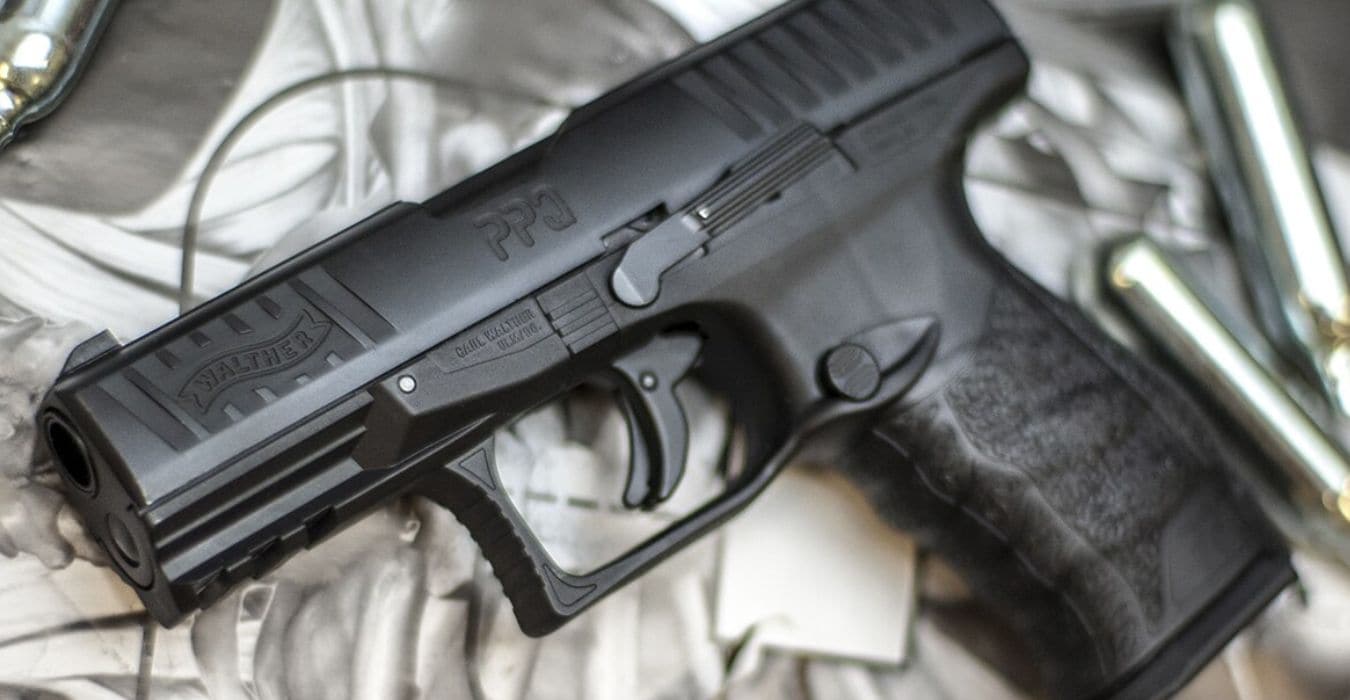
The pistol on display is a faithful replica of the second-generation Walther PPQ - both in terms of external dimensions and very similar weight. Given that the pistol is manufactured by the same concern that also produces the original Walther, this similarity is not surprising. Just as the choice of this particular model is not surprising: not so long ago, Umarex had the rights to licence the ‘look and feel’ of many HK, Colt and Beretta models, but when the fashion for training replicas became more widespread, some manufacturers apparently decided to fight on their own for this market segment and the licence was not renewed. Umareks was therefore left with its own brands and an emphasis on promoting Walther, the most recognisable of these.
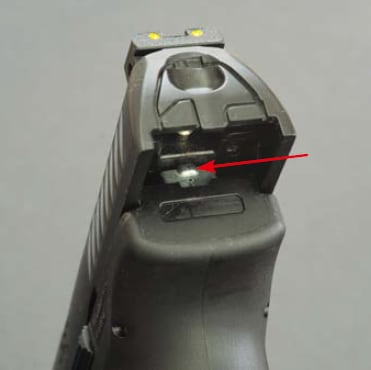
The Walther PPQ M2 T4E is technically a 10mm calibre pellet-shooting air rifle, powered by a CO2 cartridge contained in an interchangeable magazine. This magazine also contains a gas valve assembly and a container for 8 bullets (i.e. the magazine proper). The valve actuation mechanism is. cocked, with the cock hidden beneath the breechplate - and since it is impossible for the user to disassemble the gun (to do so, you have to knock out the pins connecting the aluminium ‘soul’ to the plastic grip housing, so it is better not to do this at all, or if you do, have it done by a qualified gunsmith), it is very difficult to see the cock at all. On the other hand, the trigger mechanism is ... SA-type, but with an unusually long trigger-tongue path, which is supposed to replicate the action of the original Walther PPQ mechanism. The movement of the trigger not only activates the cocking catches, but also pushes the barrel - the actual barrel, which moves inside the external tube-guide - against the valve. The barrel is topped with a tail, or rather a spoon, which selects a round from the magazine, incidentally clearing the way for the others.
This is one of the few pistols of its kind that does not have problems with feeding more than one round at a time, nor does it lose rounds from the magazine when you remove a magazine that is only partially empty (or full) from its slot in the frame - RAM-type airguns usually have this problem. The lock is ejected to the rear on firing, and this is how the cock is tightened before the first shot - by pulling the lock back to the rear extreme position. It is worth noting that the lock is metal (magnesium alloy) and the frame is plastic, almost like a real gun. And that the lock remains in the rear position when there are no bullets in the magazine.
 |
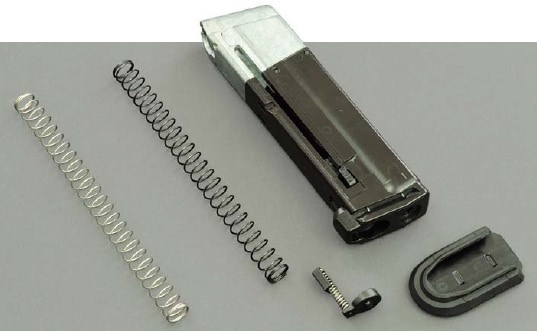 |
| Walther PPQ T4E - the inner cock is very poorly visible - a fragment of its head (arrow) can only be seen by looking from inside the rear of the breech shell | The magazine holds both the balls (in one column, eight in number) and a cartridge with compressed CO2 - as well as the gas valve assembly; after removing the foot (beware of its catch spring!), the donor spring can be exchanged: the set includes a stronger one (black) for rubber balls and a weaker one (silver) for paint and powder balls |
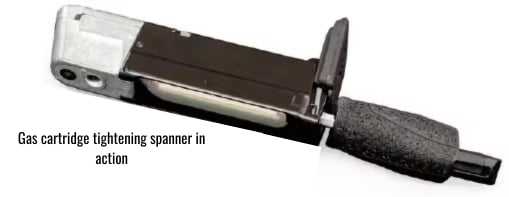
Two more words must be said about the magazine, or rather the way in which the compressed carbon dioxide cartridge is attached. The sliding foot reveals the head of the Allen screw used to tighten the cartridge. If anyone who is not previously familiar with the pistol or who has not looked at the instruction manual may react inappropriately at this point: because in the box with the pistol one will not find a spanner for this screw in vain, and its large size means that it will be rather difficult to find a suitable spanner in the multitool kit we carry with us. I'm ashamed to admit that our first instinct upon opening the box at the shooting range was to cough - convinced that someone had swiped the key from the box.... In the meantime, it is still in the gun, cleverly integrated into the insert of the grip's back.
Where a real Walther has interchangeable caps that change the grip circumference, this PPQ T4E windsock has just the place for the key (and is very comfortable to use, thanks to its pleasant-to-touch plastic casing). You just need to know about it. By the way, it wouldn't hurt if Umarex's marketers made sure to include an additional leaflet with this information: the instruction booklet is written for people who are completely unfamiliar with guns, and most people who have had their hands on an Umarex air rifle before simply don't even take the manual out of the box, let alone read it. And this, it turns out, is a mistake.
Utility aspects
As I have mentioned a couple of times already, the Walther PPQ M2 T4E has been refined - just like the other models of this family. One of the most important advantages of this refinement is the improved gas valve: this pistol (or rather the magazine for it) can be stored with a tightened CO2 cartridge in full readiness for use, even for an extended period of time. The importer mentions a month, but our editorial copy sat with the cartridge plugged in for two months and was still serviceable - a measurement of the discharge velocity showed marginal deviations from a newly plugged cartridge, of the order of 1% or less. In general, the valve's operation is close to perfect: unless one exaggerates the speed of the shots fired, their repeatability is exemplary. As I was interested in the real discharge energy of the bullets, we measured it, for different types of bullets. The results are shown in the table below:
Speeds and discharge energies
| type of bullets | velocity V0 [m/s] | mass [g] | energy E0 |
|---|---|---|---|
| light rubber | 101 | 0,9 | 4,6 |
| heavy rubber | 84 | 1,5 | 5,3 |
| powder | 99 | 1,0 | 4,9 |
As you can see, the discharge energy for heavy rubber bullets (reinforced with steel powder) is a very respectable 5 joules - and the range of an accurate shot for such ammunition is up to 25 m (provided the target is a silhouette shield, and our requirements in terms of focus are not too high: an unstabilised bullet in flight will not perform miracles of accuracy). For powder bullets, for which the uniformity of weight distribution is the worst, the range of an accurate shot is about 10 m - light rubber bullets are somewhere in the middle, while being the most sensitive to wind gusts.
Ammunition Simunition
In the Polish real world, such a gun can of course also be used for training, in accordance with the purpose given to it by its American originators. However, let's not fool ourselves: in our backyard it will be used primarily as an unauthorised self-defence equipment. And there is no need to grumble about it or to be puzzled - it is certainly better than an ordinary air rifle, and although probably slightly worse than a good gas alarm gun, most potential buyers will have no choice: The police are seduced into banning and making it as difficult as possible to access alarm guns. Law-abiding citizens, especially the elderly, may feel at least a little more secure and safe after being armed with a Walther T4E type - yes, it's not a real gun, but most people don't want one at all.
The chance of a confrontation with a criminal armed with a real pistol is negligible in Poland, mostly the native hoodlums are armed with fists and a boorish stomp. After a close hit in the face or genitals, this nerve should disappear like a golden dream, especially after being hit several times. And preferably with a heavy rubber-steel ball. The powder ones can be used for training, as you will see where you hit (it's a kind of reverse ‘Shoot*N*C’ system, where it's not the target but the bullet that is reactive). Soft, lightweight rubber can be forgiven - when it hits, it can bounce and can hit the shooter. Similarly, paintballs can be easily dismissed, especially that in order to use them it is necessary to replace the magazine donor spring with a weaker one (the standard one may lead to crushing of the balls in the magazine). There is another type of bullets available, with pepper powder: this if one absolutely has to, as the effectiveness will be moderate. Much better and more convenient to use will be hand-held pepper spray.
Availability, price
The pistol described here can be purchased in shops selling weapons and defence accessories, and is imported to our country by the Wrocław-based TM Militaria company, best known from the Militaria.pl website. Included with the Walther PPQ T4E is a soft plastic cleaning notch for cleaning the barrel (useful especially in the case of intensive shooting with powder bullets) and a spare magazine spring, for use with paint or pepper bullets - as well as a nicely published instruction manual. All this is packaged in a neat plastic case. It's worth buying a second magazine right away to increase your usability.
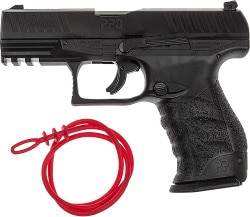
Polish regulations do not impose this, but in some countries training weapons must be specially marked - and it is for these markets that Umarex produces a version of the Walther replica with a blue-painted lock. This model is also available in Poland, so if you insist on a blue Walther, you can get yourself one. Only then there is no ‘defensive effect’...
At the time of writing this article, the retail price of the gun in the summer promotion was 699 PLN (the normal price is much higher - 999 PLN). A spare magazine costs PLN 150, so it is worth taking advantage of the promotion and spending some of the money saved on it. The price of the bullets - rubber ones are PLN 29.99 for 100 bullets, steel-rubber ones PLN 39.99 for 100 bullets, powder ones PLN 29.99 for 100 bullets, and pepper ones PLN 99.99 for 10 bullets. CO2 cartridges will be bought at a zloty apiece. Plus a pair of silhouette shields and maybe a holster. After that, the only thing left to do is to practise shooting.
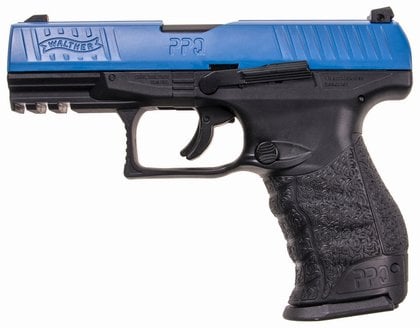
Walther PPQ M2 (T4E)
| calibre | 10 mm (.43 in) |
| cartridge | 12 g CO2 |
| fired bullets | rubber, powder, pepper, paint |
| length | 180 mm |
| width | 35 mm |
| height | 138 mm |
| barrel length | 102 mm |
| mass (unloaded) | 848 g |
| magazine capacity | 8 balls |