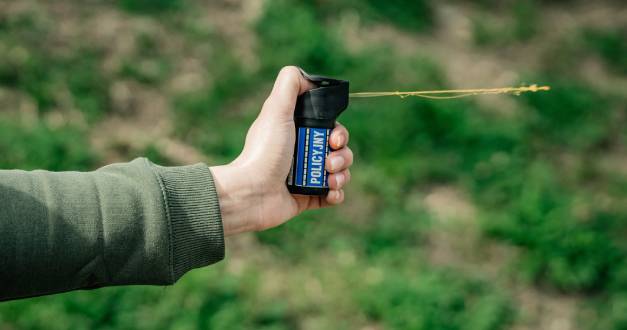
Pepper gas - important information
Pepper gas throwers, both handheld and pistol-style, are legal and effective defense accessories. To consciously and safely use their capabilities, read the following information.
General characteristics of pepper gases
So-called pepper gases are legal irritants based on pepper plant extract, which, by being placed in pressurized containers, can be directed toward an attacker in the form of a jet or aerosol.
The most important component of pepper gas is OC (Oleoresin Capsicum). This substance, when in contact with the skin or mucous membranes, causes a reaction comparable to an allergic one, manifested by a feeling of severe burning, limited ability to catch one's breath and temporary blindness. These symptoms add up to a general disorientation of the attacker, giving us time to escape or call for help.
The reaction to pepper spray is independent of the threshold for feeling pain, making the agent also effective in confrontations with people under the influence of alcohol, drugs or under the influence of high amounts of adrenaline (agitated). It also works on aggressive animals.
An important advantage of pepper gas is that in most cases it does not cause permanent injury, let alone death, to the attacker. Thus, it can be used without fear as a necessary defense - also in situations of lesser importance than a fight for life.
How to wear?
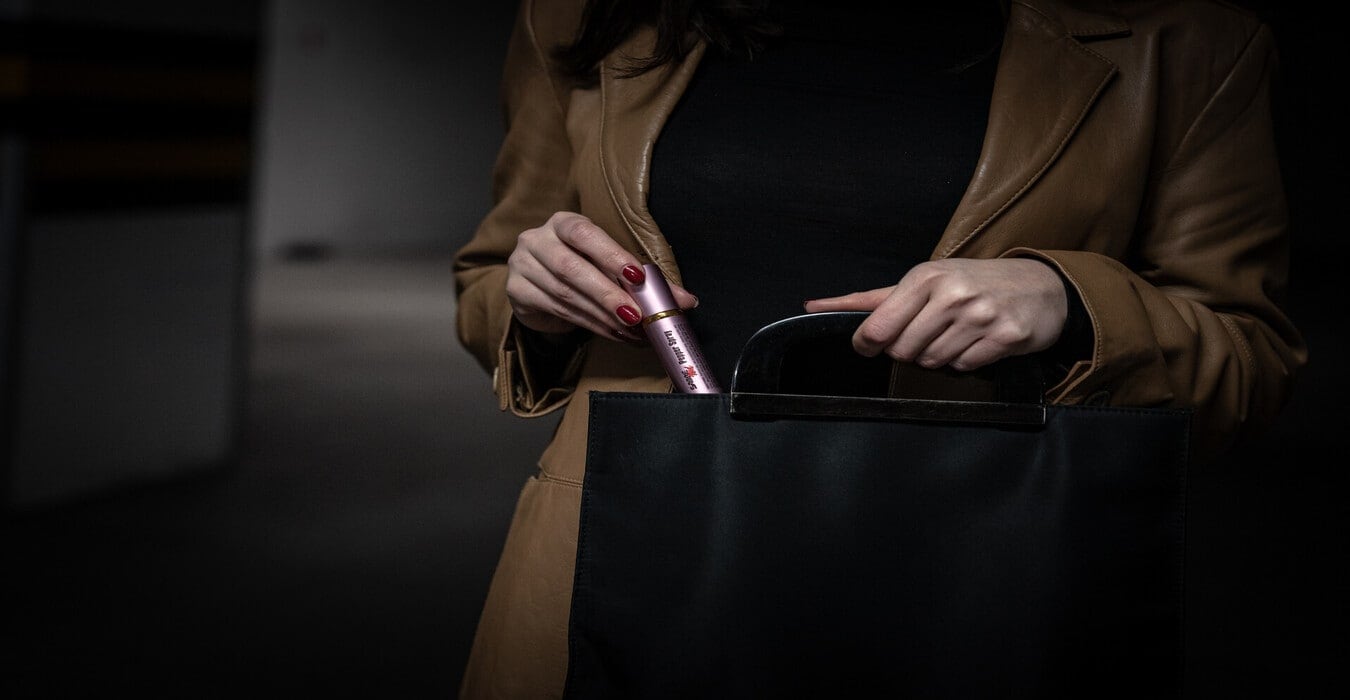
Depending on the size, model and type of thrower, pepper spray can be carried in a holster, on a clip or loose in a pocket.
The key thing is to carry it in such a way that in a threatening situation you have the possibility of instant, intuitive retrieval. A pepper spray thrower at the bottom of a woman's purse or loose in a backpack will be useless - under stress, in a situation where every second counts, the probability that we will manage to find it among other things and take it out is close to zero.
It's also worth practicing taking out the gas, locating the button or trigger and aiming. Let's ask someone to measure the time. It should not exceed 2-3 seconds. Such training will allow us to verify the correctness of the carrying method and allow us to act more reflexively in an emergency situation.
Where to direct?
The strongest effect on an attacker will be produced by a jet / cone aimed directly at the face (eyes, nose, mouth). Hitting the neck or chest may also have some effect due to the diffusion of the aerosol particles and irritation of the skin itself, but the effects will appear slower and be weaker.
Restrictions
Pepper gas begins to take full effect after about 3-5 seconds after contact with the attacker's skin and mucous membranes. Until then, be extra vigilant and try to keep your distance!
Using pepper spray in tight quarters or from very close range can turn against the defending person.
Weather conditions can affect the range and accuracy of the gas jet. Avoid directing the stream against the wind.
The importance of acuity and OC concentration
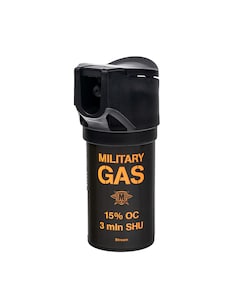
"Sharpness" of the capsaicin used is crucial for the mentioned speed/delay of the pepper gas. It is given in SHU (sharpness units according to Scoville). The concentration of OC, given in %, is also important for overall effectiveness, because it determines how strongly and for how long the attacker will feel the effects of contact with the liquid/aerosol of the irritant, but it does not have much impact on the speed of action.
"Pepper gas 1": sharpness 3 million SHU, concentration 6%.
"Pepper gas 2": sharpness 2 million SHU, concentration
The former will act faster, and the latter with a longer delay, although the effects of contact with a substance of such proportions will be felt by the attacker for longer.
The importance of capacity
A larger capacity means a larger supply of irritant, which translates into the possibility of a longer or more intense defense. In addition, larger-capacity containers have a higher working pressure, which results in greater range and less susceptibility of the jet to wind - especially in the first phase of use.
Flux vs. cone
A nozzle that ejects pepper gas in the form of a jet (gel) provides greater range, better accuracy and greater wind resistance. On the other hand, the advantage of the pepper gas ejection nozzle in the form of a cone is a larger area of coverage with the irritant, making it much easier to hit a moving attacker in a stressful situation.
Handheld vs. pistol throwers
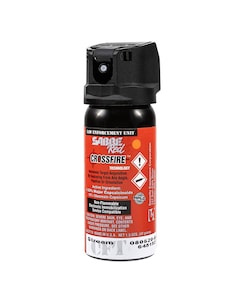
The most important difference between hand and pistol throwers is the form. Handheld throwers are most often offered in the form of a small cylinder-shaped container with a button and nozzle. Their use is intuitive for anyone who has dealt with any aerosol (spray) such as hairspray or deodorant. Pistol blasters are gas canisters with a nozzle in a housing that mimics a firearm, in which the trigger tongue activates the nozzle, releasing the gas through the barrel. Their most important advantage is the psychological factor - the attacker in the first seconds is not able to determine whether he is dealing with a real firearm or just a replica. We can use this time to use the gas accurately. The aiming itself is also made easier by the pistol grip and barrel.
First aid
In case of accidental use to the detriment of oneself or bystanders, it is recommended to wash the skin with liquid vegetable fat or milk. Do not use warm water, as it may intensify the effect of OC.
Shelf life and disposal
We recommend replacing the pepper spray canister once every 9 to 12 months. In addition, we recommend testing the nozzle patency once every 3 months by briefly pressing the button or trigger. Used or expired pepper spray can be disposed of in the trash without worry. Pepper gas is an environmentally friendly substance and does not require special disposal methods. However, we advise against throwing the container into a fire, as the heated residue of the substance can lead to ignition or explosion.