Telescopic batons - guide
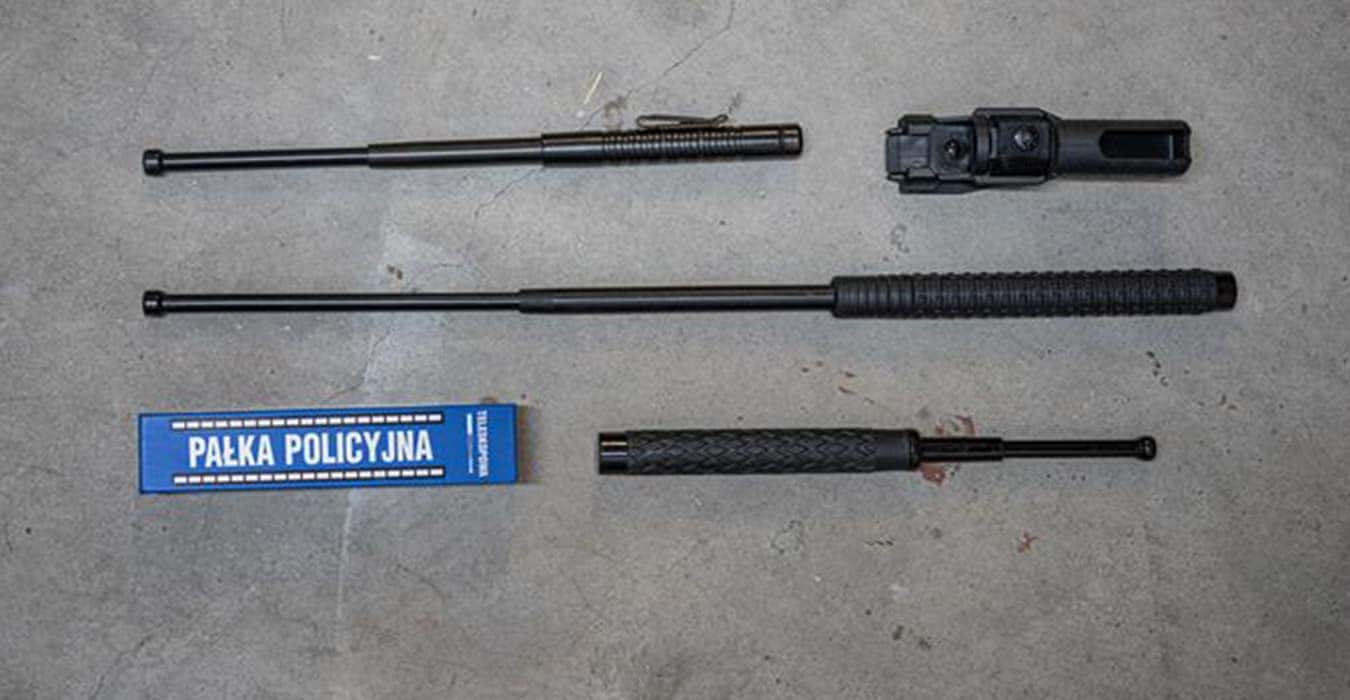
The telescopic baton is an effective tool for self-defence. Importantly, it can be purchased completely legally and without a permit. Today, several types of telescopic batons can be found.
Which telescopic baton to choose?
In general, we divide telescopic batons into spring-loaded and rigid, and the latter into hardened and non-hardened. A spring-loaded telescopic baton, thanks to its flexibility and wide rubber tip, will not cause serious injury even if we hit it with considerable force. The benefits are that a spring-loaded baton can be used freely in relatively harmless situations or against aggressive animals. Unfortunately, it will not be effective against a particularly determined attacker.
Rigid telescopic batons are much more effective. Both hardened and non-hardened models enable very strong blows to be inflicted, which will stop any attacker, moreover, with a stiff baton we can perform levers, chokes and uppercuts, impossible to perform with a spring baton. The advantage of the hardened baton is its durability. An untempered baton can become permanently deformed after hitting hard objects or even in contact with an attacker's body.
Carrying a telescopic baton
A telescopic baton can be carried in dedicated holsters, as well as loose in pockets or clipped to the waistband of trousers. The priority when choosing how to carry a telescopic baton should be to be able to remove it instantly in a threatening situation. The time between perceiving a threat and removing and opening the baton should be a maximum of 3 seconds. There is no point in carrying a baton that is intended for defence at the bottom of a rucksack or bag.
Also remember not to flaunt your possession of a telescopic baton. You can possess a telescopic baton without a permit, but ostentatiously opening it in a public place and brandishing it without necessity will be justifiable grounds for intervention by the police, municipal police or private security services. In addition, unnecessarily demonstrating possession of a baton may provoke aggressive behaviour (especially in persons under the influence of alcohol or drugs) and become the cause of a confrontation that could have been avoided.
Opening the telescopic baton
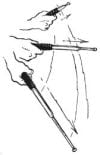
We can open the telescopic baton in two basic ways:
-
a powerful downward sweep (preferably at a 45-degree angle)
-
strong upward sweep (preferably at a 45-degree angle)
Those who become more proficient and have a good feel for the tool they own may try a combination of opening with a downward sweep and delivering a blow. However, we do not recommend this technique for those who have bought a telescopic baton for the first time and are just getting familiar with it.
Folding telescopic baton
The telescopic baton is assembled by perpendicularly striking the end of the baton against a hard surface.
You don't need to use great force to do this. The key is to use the moment of inertia, as if you were dropping the baton perpendicularly downwards in a controlled manner. The grip when folding should be fairly loose to allow the baton segments to vibrate.
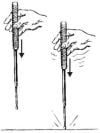
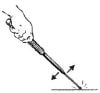
In the case of a particularly tightly locked baton, we can make the task easier by gently striking the end of the baton against a hard surface - flat rather than perpendicular. We then try to fold it in the standard way, by striking perpendicularly.
Essential training
In order to be able to take full advantage of the defensive qualities offered by a telescopic baton, at least basic training is essential.
-
Learn how to quickly draw and open the baton. Try the same in an arranged situation simulating stress (shouting, noise, loud music, strobe light, slippery pavement, jostling, etc.). Ask a friend for help. Also measure the time you need under the conditions to remove and open the telescopic baton.
-
Practice strong swings of the baton in the air. See how strong your grip should be and how controlling the baton puts strain on your wrists. Try to get the baton back to the starting position in no time after each swing, as it will also act as your cover in a real fight.
-
Practice strong strikes on a punching bag or other object that can simulate an attacker's body. However, do not hit trees, walls or metal items, as this can damage the baton.
Telescopic baton defence - key principles
-
Remember to ensure that it is necessary defence or a state of necessity. Any other use of a telescopic baton to the detriment of a person, animal or property will result in criminal liability.
-
Do not pull out a baton unless you are sure you will be ready to use it. Pulling out a telescopic baton in a threatening situation just to scare an attacker - without the determination and skill to use it, will most likely end up with the baton being taken away from us and used against us.
-
If the reason for using the baton is not to endanger health or life, do not hit the head or other sensitive parts of the body. A firm blow to the thigh or forearm is sufficient.
-
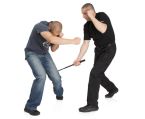
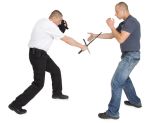
When defending yourself against an attack or blackmail with a knife or other dangerous object, always try to eliminate the attacker's hand first. A hard hit to the hand or forearm usually leads to dropping the threatening object. Only after ensuring that you are not threatened by a knife or other dangerous object can you - if necessary - continue to defend yourself by striking other parts of the attacker's body.
-
Try to keep your distance - being able to strike from a distance is the most important advantage your baton provides. Any excessive shortening of distance risks your telescopic baton being seized by an attacker and puts you at risk of being struck with a knife or other dangerous object.
-
Don't be a "slave to the tool" - do not panic when it is missing. Remember that even if you drop your baton, it is taken away from you or you simply do not have it with you, you can still defend yourself or try to escape.
Gain expert knowledge
The tips outlined above are the bare minimum. You will find more useful information related to the handling of the telescopic baton in the course entitled. "Telescopic baton in practice". Using similar training materials you will learn to handle this tool efficiently. However, it is worth emphasising again that the use of the telescopic baton should only occur within the limits of necessary defence or in a state of superior necessity.