


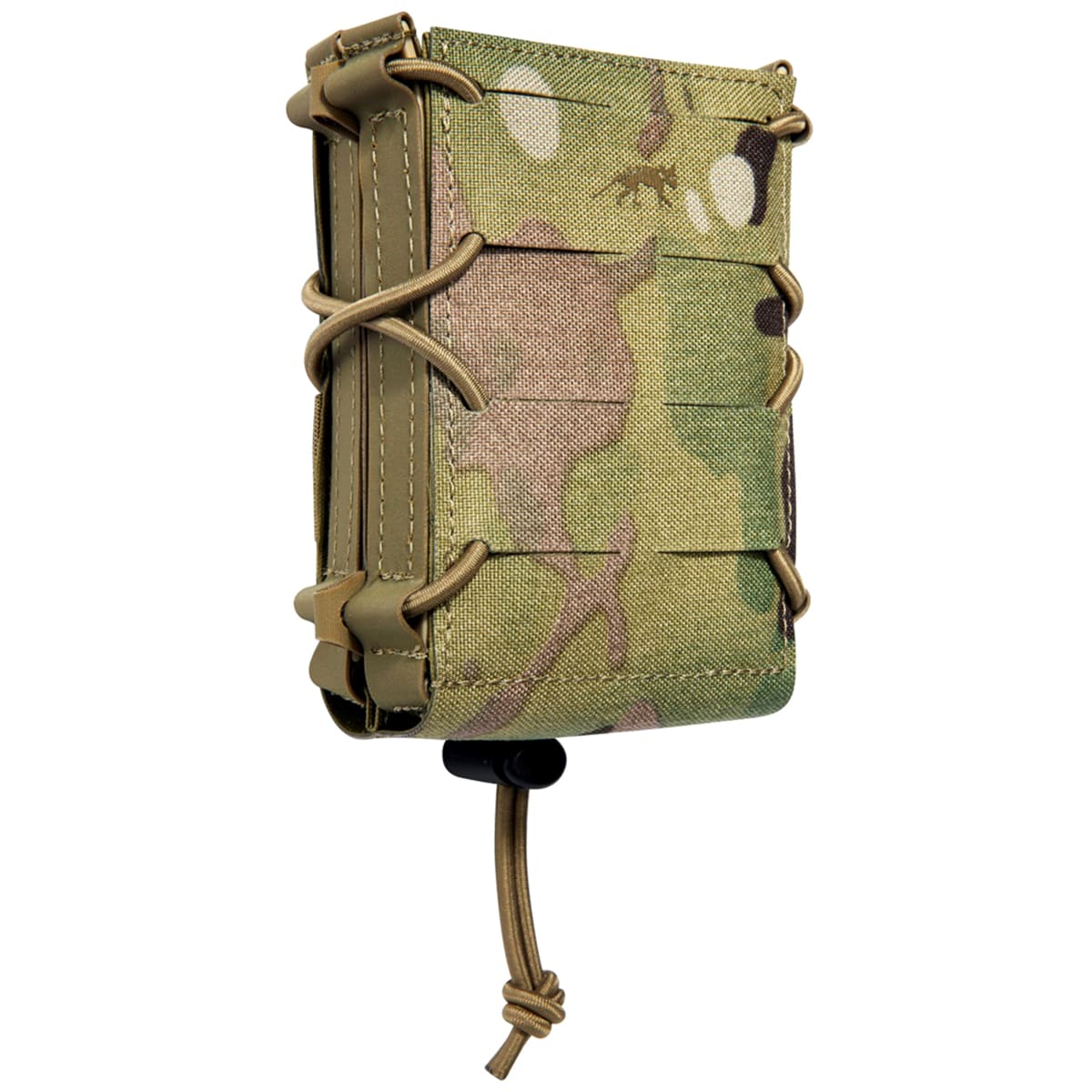
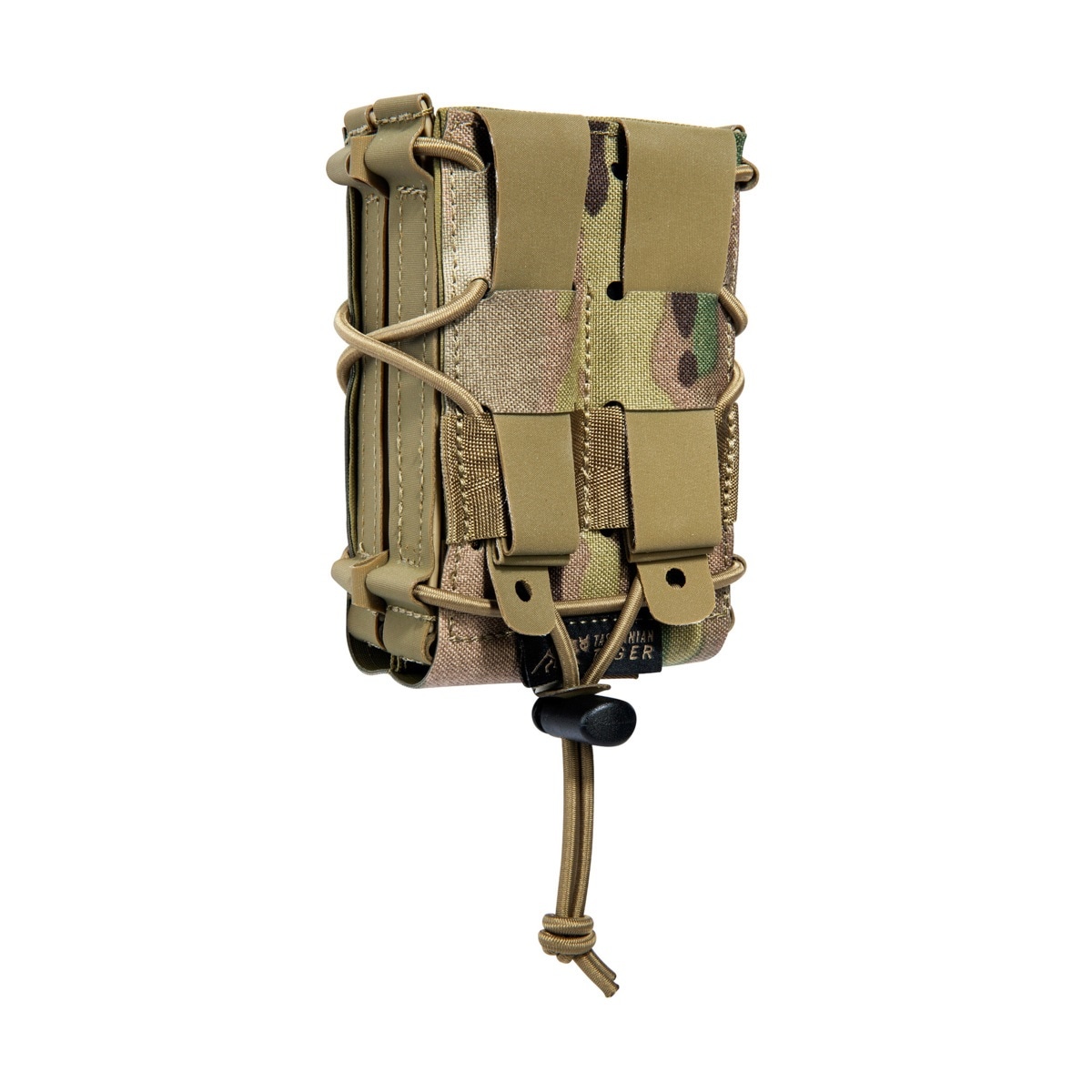
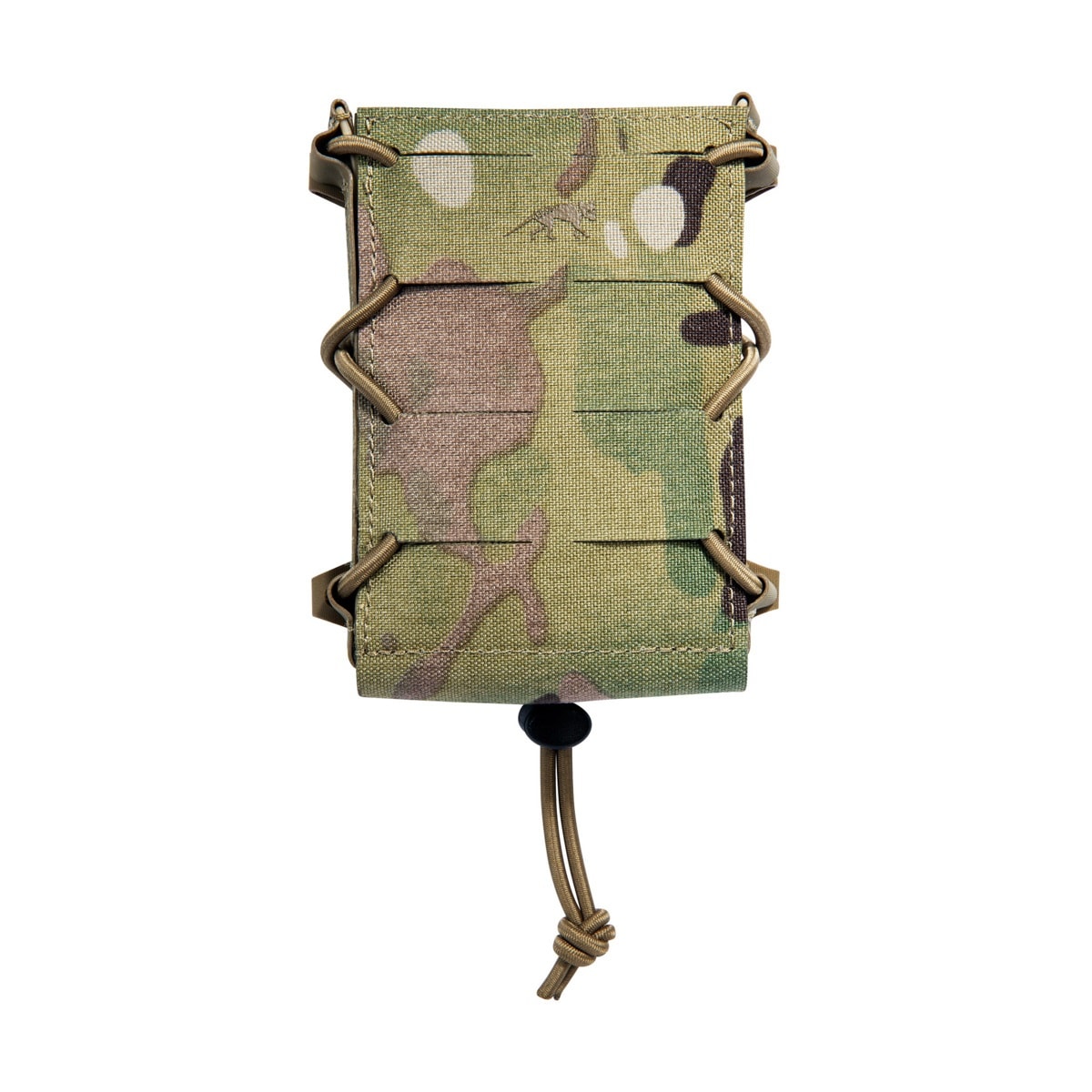
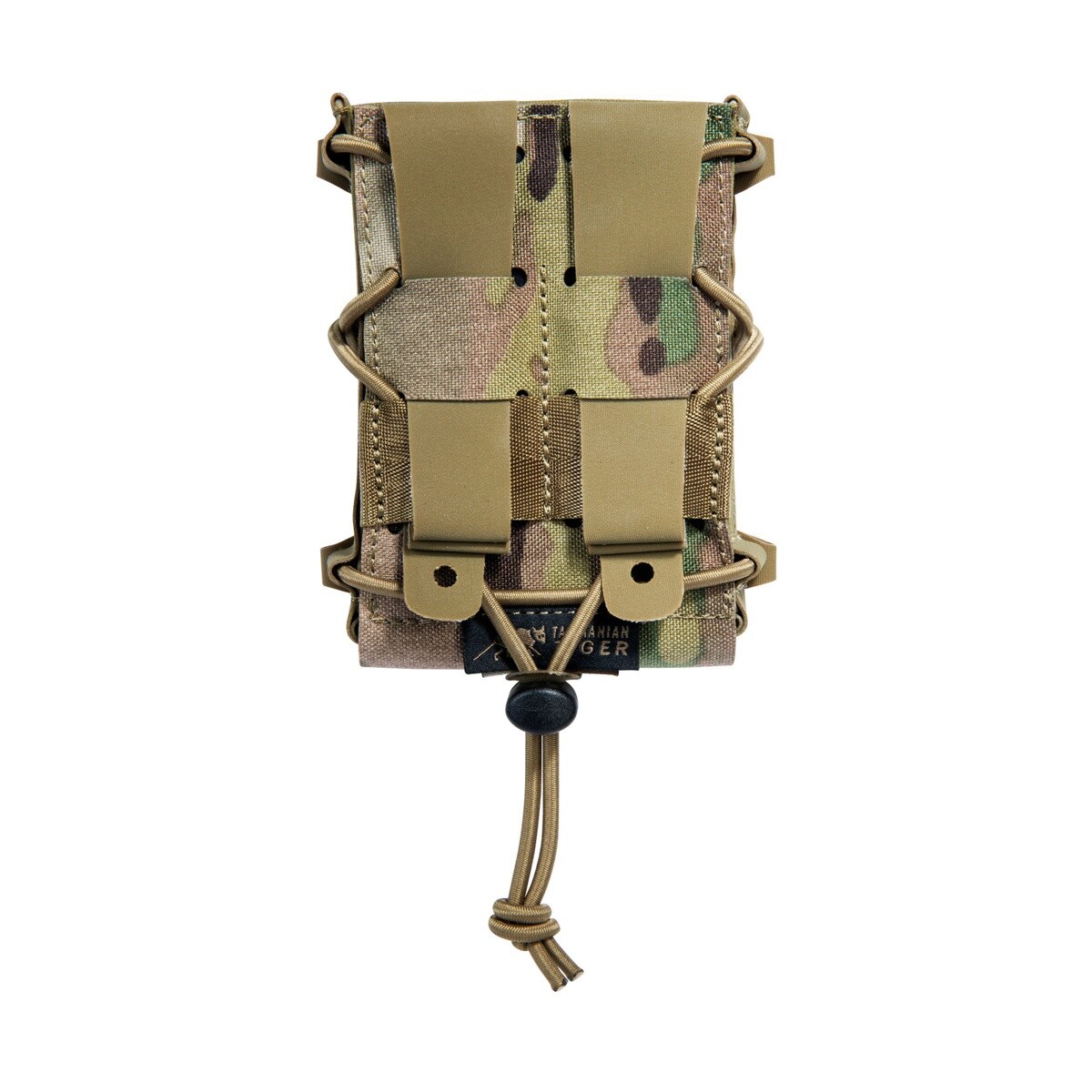
Tasmanian Tiger DBL Mag Pouch MCL - MultiCam


- description
- technical data
- features and technologies
- Reviews
- Goes Well With


Tasmanian Tiger DBL Mag Pouch MCL - MultiCam
A MultiCam camouflage pouch crafted to hold two rifle magazines (M4, G36 PMAG, Sig, AR15, Steyr AUG, Sig 55X or comparable models). Manufactured from robust 500D Cordura, this pouch offers excellent resistance to wear and tear.
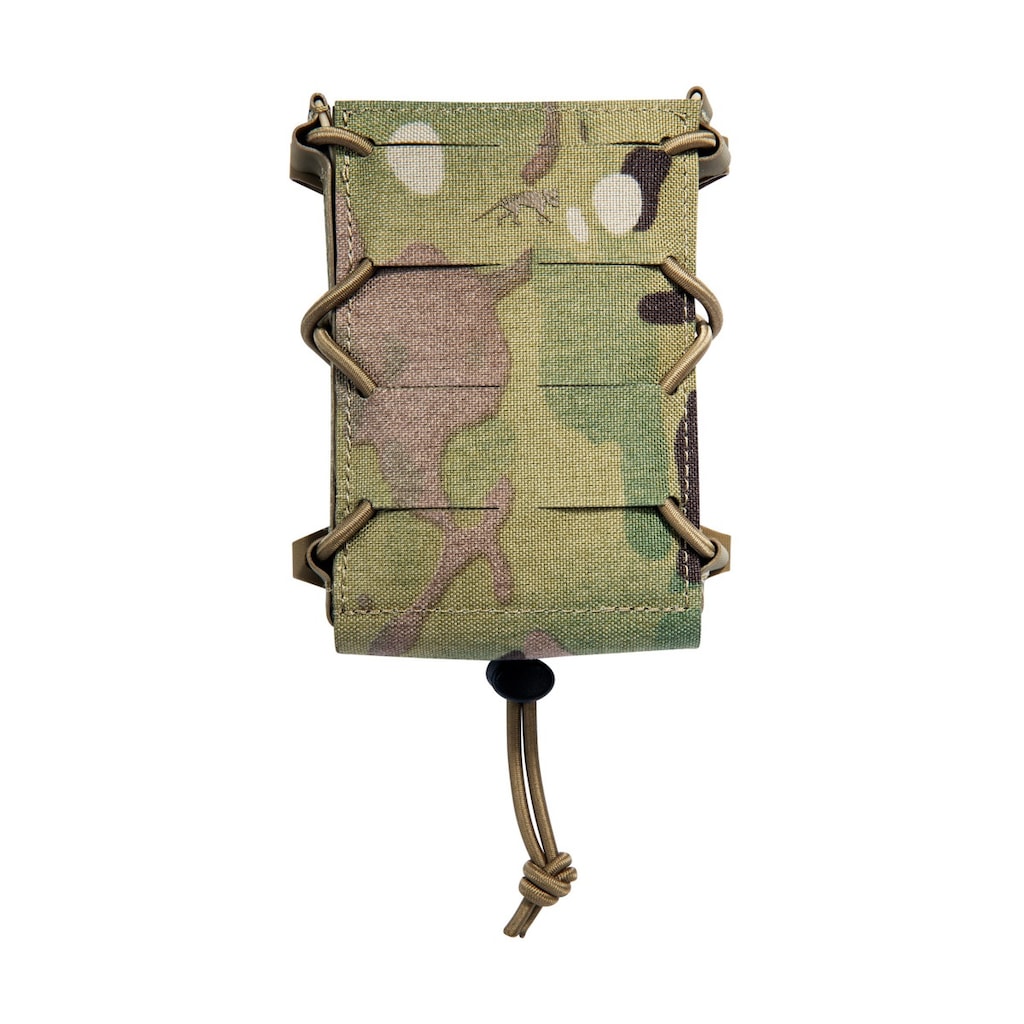

MOLLE system, bungee cord with a stopper
Designed for compatibility with the MOLLE attachment system, the pouch can be securely mounted on a belt, backpack, tactical vest, or other gear components. The construction ensures rapid access to stored equipment, while a bungee cord equipped with a stopper adapts the pouch to fit various magazine shapes, guaranteeing secure retention.
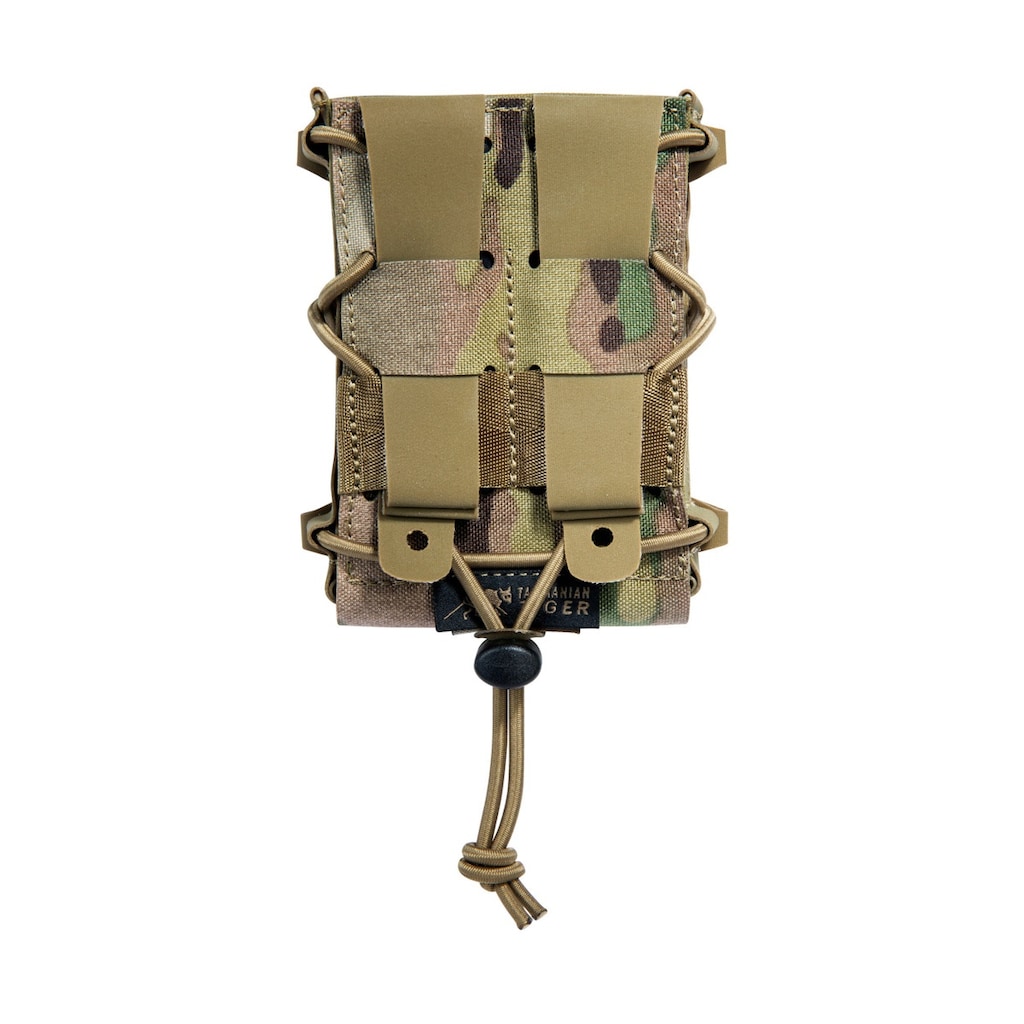

main features
- 500D Cordura construction for enhanced durability
- MOLLE system compatible
- Bungee cord with adjustable stopper

technical data
Pattern: MultiCam camouflage
Fabric: 500D Cordura
Size: 11 x 7.5 x 4 cm
Mass: 100 g
Brand: Tasmanian Tiger, Germany

Camouflage MultiCam
MultiCam represents an advanced camouflage pattern introduced in 2002 by the American company Crye Precision, developed in collaboration with the United States Army Soldier Systems Center (Natick Labs) as part of the Objective Force Warrior project. Its purpose focused on designing a highly adaptable camouflage capable of performing effectively across diverse terrain types and in fluctuating environmental conditions. Featuring a palette of seven colors, the MultiCam pattern offers seamless color gradients blending greens, browns, and beiges. This allows the pattern to visually adapt to a wide variety of backgrounds, reflecting green tones within forests or shifting to browns and beiges in arid, desert landscapes—in Central and Eastern Europe, the pattern proves especially effective during autumn and in areas with dry foliage. MultiCam has earned worldwide acclaim among military and elite units, and in 2010, became the official camouflage of the US Army for soldiers deployed to Afghanistan, replacing the Universal Camouflage Pattern (UCP). Available to civilians as well, the pattern is also favored among military enthusiasts and airsoft players.
Militaria.pl is a premium dealer of the Tasmanian Tiger brand.
Tasmanian Tiger is a German brand specializing in the production of professional tactical equipment for the military, police, and emergency services. It was established in 1999 as part of Tatonka GmbH and has been committed to the highest quality, precision, and full control over the production process from the very beginning. Its product range includes combat backpacks, tactical vests, medical bags, pouches, and MOLLE accessories. The brand name refers to the extinct Tasmanian tiger - a symbol of strength, endurance and adaptability. Tasmanian Tiger products are valued by professionals around the world and recognized as synonymous with equipment that can be relied on in any situation.
| Weight | 100 g |
|---|---|
| Color/camouflage | Camouflage |
| Molle/pals compatible | Yes |
| Camouflage | MultiCam |
| Dimensions | 11 x 7,5 x 4 cm |
| Main material | 100% 500D Cordura |
| EAN | 4013236385502 |
| Manufacturer code | 7685.394.UNI |
| Brand | Tasmanian Tiger |
| EAN |

Cordura is a material woven from durable nylon fibers, developed by DuPont. The structure of the material provides lightness and abrasion resistance, as well as weather resistance. Due to its properties, Cordura is widely used in tactical equipment.

MOLLE (Modular Lightweight Load-carrying Equipment) is a system for attachment of tactical equipment, used for example in backpacks or tactical vests. It provides the possibility of flexible and modular placement of various accessories and pockets, which allows personalization and optimal adjustment of the item to the specific needs of the user. It is widely used by the military, special services and survival and outdoor enthusiasts.

LCS (Laser Cut System) is a new version of the assembly used in the MOLLE system, where instead of traditional tapes, laser-cut holes are used directly in the material. The system is much lighter than standard sewn-on PALS tapes and guarantees better camouflage. The holes are hemmed with thread to prevent fuzzing and ripping, or, as in the case of Cordura, the laser-cut edges are fused.
