Firefighter Ranks in Poland
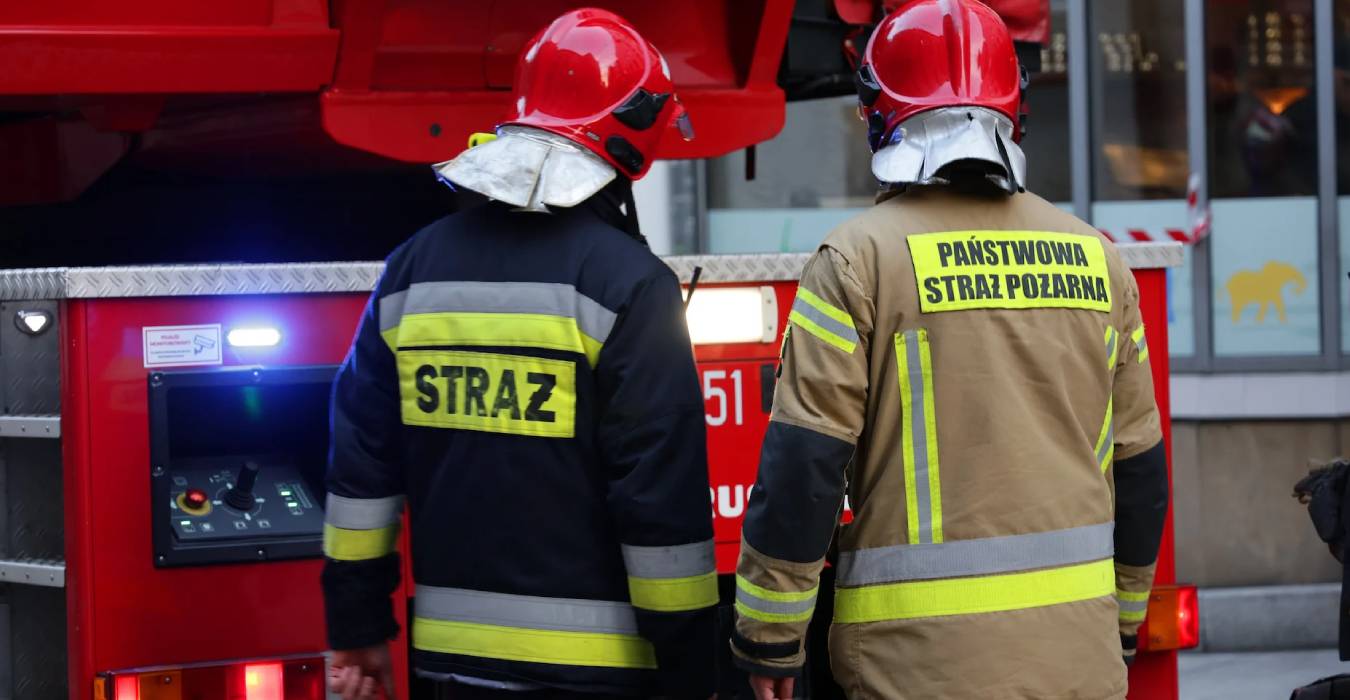
There are two types of fire departments in Poland: Volunteer and State Fire Service, abbreviated as TSO and PSP. Although the fire department is well known to everyone, only a few are able to distinguish the ranks in the fire department, the service hierarchy or even the basic differences between the State Fire Service and the Volunteer Fire Service. These two units have the same mission, which is, among other things, to fight fires or recover from natural disasters, but in many formal respects they are very different. With this post, we want to introduce you to the structure of these institutions and how the ranks in the TSO and the Fire Department look like.
Who gives ranks in TSO and PSP
Let's start by answering the question of whether the ranks of the TSO uniformed services are identical to those of the Fire Department. These are two different formations, subject to different statutes, and consequently the ranks and the way they are awarded are also different. In the case of the TSO, who confers firefighter ranks is strictly regulated by the law of August 24, 1991 on the State Fire Service. According to this regulation, the rank of firefighter is conferred on the date of appointment to the first post, and the conferral is made by superiors authorized to make appointments to official posts. The conferring of the rank takes place on the occasion of Firefighter's Day, only in particularly justified forfeitures may take place on another date. A graduate of a school of the State Fire Service who has obtained qualifications for the profession may be conferred the rank of senior firefighter by the chief of the school of the State Fire Service.
NCO ranks in the PSP are conferred depending on the unit:
-
Commander in Chief at Headquarters
-
School commandant at the School of Fire Service and other schools
-
Unit director in research institutes
-
Regional commanders in other organizational units and the Military Fire Protection Service
The first aspirant rank and officer ranks are conferred by the minister responsible for internal affairs upon the proposal of the Chief Commandant of the State Fire Service, and the remaining aspirant ranks are conferred by the Chief Commandant of the State Fire Service. The rank of brigadier and brigadier general - the highest rank in the fire department, is conferred by the President of the Republic of Poland upon the proposal of the minister in charge of internal affairs. The ranks of non-commissioned officers, aspirants and officers in the fire service are for life, while firefighters dismissed from the service may use the ranks they hold by adding the term "retired".Revocation of a rank in the State Fire Service may take place in the event of loss of Polish citizenship, deprivation of public rights by a final court judgment and disciplinary expulsion from the service. Posthumously to a higher rank may be appointed firefighters who have shown sacrifice and courage, having suffered death in the line of duty in direct rescue operations during a fire, natural disaster or other emergency.
Awarding of ranks in TSOs
As for the issue of who confers ranks in the TSO, the matter is no longer so obvious. A TSO is a uniformed unit, equipped with specialized equipment, intended in particular to fight fires, natural disasters or other local threats, but it functions under the rules of an association, and although TSO units are members of the Union of Voluntary Fire Brigades of the Republic of Poland (Union of Voluntary Fire Brigades of the Republic of Poland), they are an independent legal entity, separate from the Union of Voluntary Fire Brigades of the Republic of Poland. Consequently, the regulations introduced by ZOSP RP do not affect the internal affairs of TSOs. This explains the lack of a specific law regulating the granting of ranks in TSOs, and as ZOSP RP reports: "The issue of the rules for conferring distinctions for TSO members is at the discretion of TSO itself. In case this issue is not regulated on statutory grounds, these rules are determined by the general meeting of members as the highest authority of the association."
In a nutshell, although the ranks in the fire service are strictly defined, both in the case of the PSP and the TSO, the way in which ranks are conferred in both cases differs significantly.
Firefighter ranks in the State Fire Service
In a word of introduction, it is worth defining that the State Fire Service is a professional, uniformed and equipped with specialised equipment formation, designed to fight fires, natural disasters and other local threats. The basic tasks of the State Fire Service therefore include the identification of fire and other local hazards, followed by the organisation and execution of rescue operations during fires and in emergency situations caused by other natural disasters. Additionally, during natural disasters, the State Fire Service assists other emergency services in providing assistance to the injured and in eliminating local hazards. The State Fire Service also has a mission to educate personnel within its own organisational structure, as well as other fire protection units and the general civil protection system. It also carries out scientific and research work in the field of fire protection and civil protection and supervises the observance of fire regulations. In matters of cooperation with other services, the State Fire Service is obliged to cooperate with fire departments and rescue services of other countries with which the Republic of Poland has signed international agreements, as well as to cooperate with the Head of the National Criminal Information Centre (source: Act of 24 August 1991 on the State Fire Service).
The organisational units of the State Fire Service are:
-
Headquarters,
-
Provincial Command,
-
District Command and City Command,
-
School of Fire Service and other schools,
-
Research and development units,
-
Central Museum of Fire Fighting.
There are currently 19 ranks in the State Fire Service divided into four corps. Here is how the division into corps and ranks in the State Fire Service is presented:
Private Corps:
 |
FIREFIGHTER It is the first and also the lowest firefighter rank of the National Fire Service, which is conferred on everyone when they are accepted for service in the National Fire Service. |
 |
SENIOR FIREFIGHTER This is the highest rank of the Private Corps in the National Fire Service and is equivalent to the rank of PFC in the Polish Army. The rank designation is a single gold bar. |
NCO Corps:
 |
SECTION FIREFIGHTER This is the lowest non-commissioned officer rank of the National Fire Service and is equivalent to the rank of corporal in the Polish Armed Forces. The section officer acts as a section leader and the rank insignia is two gold beams. |
 |
SENIOR SECTION OFFICER Non-commissioned officer rank corresponding to the military rank of corporal major, which can be recognised by the three gold bars on the epaulettes and the distinction. |
 |
JUNIOR STEWARD The designation of this non-commissioned officer rank is four bars, and this rank corresponds to the rank of platoon sergeant in the Polish Army. |
 |
FIRE PROTECTOR It is the fourth non-commissioned officer rank in the PSP and can be recognised by the gold 'V' shaped insignia and epaulettes trimmed with gold distaff tape. |
 |
SENIOR FIRE OFFICER The senior fire master's rank insignia is recognisable by a second "V" shaped insignia placed inside the fire master's rank insignia. The epaulettes are additionally trimmed with gold distaff tape. |
Corps of aspirants:
 |
JUNIOR ASPIRANT It is the lowest rank in the aspirant corps in the National Fire Service and its equivalent in the army is the rank of junior ensign. In order to obtain this rank, the completion of two years of education at one of the following schools is required:
The insignia of the rank of junior aspirant is a V-shaped insignia with one star placed between the shoulders. The epaulet is additionally trimmed with a gold distaff band. |
 |
ASPIRANT The second aspirant rank, which can be recognised by the distaff with one star and the epaulet with one star and the distaff ribbon trim. |
 |
SENIOR ASPIRANT The rank of firefighter, which is the equivalent of ensign in the army, and the distinction on the uniform is two stars and on the epaulettes two stars with a distaff ribbon trim. |
 |
STAFF ASPIRANT The highest rank in the corps of aspirants with a designation in the form of three stars on the distaff and three stars with a distaff ribbon trim on the epaulet. |
Officer Corps:
 |
JUNIOR CAPTAIN This is the first officer rank in the State Fire Service and corresponds to the rank of second lieutenant in the Polish Army. The rank of junior captain is appointed by the minister in charge of internal affairs upon the proposal of the Chief Commandant of the State Fire Service, and a firefighter who has completed four or five-and-a-half years of education at the Main School of Fire Service in Warsaw in the barracks system or has obtained the professional title of fire engineer within the framework of a referral to the Main School of Fire Service is eligible for the rank. The designation of the degree is two stars. |
 |
CAPTAIN The PSP officer rank, which is the equivalent of lieutenant in the Polish Army, and the mark of the rank is three stars. |
 |
SENIOR CAPTAIN The firefighter's officer rank, which is the equivalent of the rank of captain in the Polish Army, and the insignia of the rank are four stars. |
 |
JUNIOR BRIGADIER Officer rank in the National Fire Service, which is equivalent to the rank of major in the Polish Army, and the insignia of the rank are two horizontal bars and one star on the epaulet and distaff. |
 |
BRIGADIER A brigadier acts as a brigade commander and in the PSP is equivalent to the rank of lieutenant colonel in the land forces and commander in the navy. The insignia consists of two horizontal bars and two stars. |
 |
SENIOR BRIGADIER The insignia of the rank of senior brigadier in the PSP are two horizontal bars and three stars, and the rank corresponds to that of colonel in the Polish Armed Forces. |
 |
CHIEF BRIGADIER Chief brigadier is the first of two general ranks in the PSP, to which the President of the Republic of Poland solemnly appoints upon the proposal of the minister responsible for internal affairs. The military equivalent is brigadier general, and the insignia of the rank is a gold general's hose and one star. |
 |
BRIGADIER GENERAL Brigadier general to the highest rank in the fire service, to which the President of the Republic of Poland appoints. A rank of this rank can only be held by one person - the Chief Commandant of the State Fire Service on a full-time basis. The insignia of the rank is a general's hose and two stars. |
PSP Distinctions - where to put the rank markings?
The first professional firefighting units were established in Poland in the late 19th century. The systematic formation of a structure in Polish firefighting generated not only the need for hierarchy, but also for official uniforms, and the first model of firefighter uniform was created in 1915 for the Warsaw Fire Brigade. Of course, the PSP uniform has changed many times, and its present-day appearance is strictly defined by Article 61(5) of the Act of 24 August 1991 on the State Fire Service.
In accordance with the Decree of the Minister of Internal Affairs and Administration of 29 September 2021 on the uniform of firefighters of the State Fire Service, firefighters wear rank insignia in gold on:
-
the cornet cap,
-
shoulder epaulettes of formal and casual dress,
-
epaulettes on the epaulettes of the service dress shirts,
-
the step mark pads worn on the chest, on the left side:
-
a business mackintosh,
-
service fleece sweatshirt,
-
service blouse,
-
special clothing jackets.
The PSP gala uniform consists of a cornet cap, an exit shirt, a dark blue uniform, a tie and a firefighter's gala cord.
In addition to the rank insignia, firefighters also wear other insignia on their uniform in the form of:
-
patches with the emblem of the Republic of Poland,
-
patches with the flag of the Republic of Poland,
-
the emblem of the National Fire Service,
-
the emblem of the National Fire Service school,
-
the semi-circular emblem of the National Fire Service,
-
image of a fire eagle,
-
metal name badge,
-
textile name badge,
-
locality identifier,
-
image of the eagle general,
-
gold-coloured fire sign,
-
graduate signs from the National Fire Service school.
Firefighter ranks in TSOs
Before looking at the service hierarchy and the appearance of the ranks in TSOs, it is worth mentioning in a few words what exactly a Voluntary Fire Brigade is and what its duties are. TSOs have Operational and Technical Units which are the equivalent of the rescue and firefighting units of the State Fire Service. In order to be allowed to act in a TSO unit, a firefighter must be at least 18 years of age and no older than 65. A TSO firefighter must also be in good health, documented by a current medical examination, and have completed fire training appropriate to their function.
The main goals and tasks of TSOs include, above all, cooperation with the State Fire Service in fire prevention activities and active participation in rescue operations during incidents such as fires, environmental threats or natural disasters. An important mission is also to inform and educate the population about existing hazards and how to protect against them. In addition, TSOs are involved in a wide range of cultural and educational activities, environmental protection activities and support for local communities.
As we have already mentioned, the granting of ranks in TSO is not strictly regulated by law, while the appearance of distinctions is already defined by regulations and uniform for all units. Here is what the ranks of the TSO firefighters look like, as well as the list of qualifications for receiving them based on the rules and regulations of the Warszowice Voluntary Fire Brigade:



The rank of firefighter is awarded to a person who actively participates in the life of the unit, contributes to its development and is over 18 years of age. The rank of senior firefighter is awarded to a person over 18 years of age and who has completed the course of firefighters rescue OSP, actively participates in the life of the unit and takes part in rescue and firefighting activities. The rank of rota commander is awarded to a person who has completed the course of firefighters rescue OSP, technical rescue and takes part in rescue and fire-fighting activities.



The rank of assistant section commander is awarded to a person who has completed a course for TSO rescue firefighters, technical rescue, KPP course or completed Basic Training of a firefighter of a fire protection unit and takes part in rescue and firefighting actions. The rank of section commander is awarded to a person who, in addition to the previously mentioned conditions, has completed the course for TSO commanders. The rank of assistant platoon commander shall be awarded to a person who, in addition to the previously mentioned conditions, has completed the course of TSO commanders.



The rank of Platoon Commander is awarded to a person who, in addition to the previously mentioned conditions, has completed the Municipal Commanders course or has completed the Supplementary Course for Non-Commissioned Officers of the State Fire Service.



The ranks of the members of the Board of Directors and the members of the Audit Committee are given according to the function they hold.

The service ranks in the Association of Voluntary Fire Brigades of the Republic of Poland vary somewhat depending on the administrative level of the branch concerned:
Municipal Branch of the Polish Association of Fire Brigades (ZOSP RP), Municipal Branch of the Polish Association of Fire Brigades (ZOSP RP):







District Branch of ZOSP RP:








Provincial Branch of ZOSP RP:











General Board of the Polish Association of Fire Brigades:











Insignias and distinctions on the TSO uniform
In terms of placing insignia and distinctions on the uniform of the TSO, the situation is much clearer than in the case of appointments to ranks. The rules are regulated by the same law as in the case of the State Fire Service, and the exact instructions are written in the Uniform Regulations of the Union of Volunteer Fire Brigades of the Republic of Poland. TSO insignia for the gala uniform, in silver on a dark blue background, is worn by firefighters on the collars of their uniforms or the left pocket of their summer shirt. Additional elements on the uniform include the TSO emblem, personal badge, specialty badge and other badges and orders, depending on the merits of the firefighter in question.
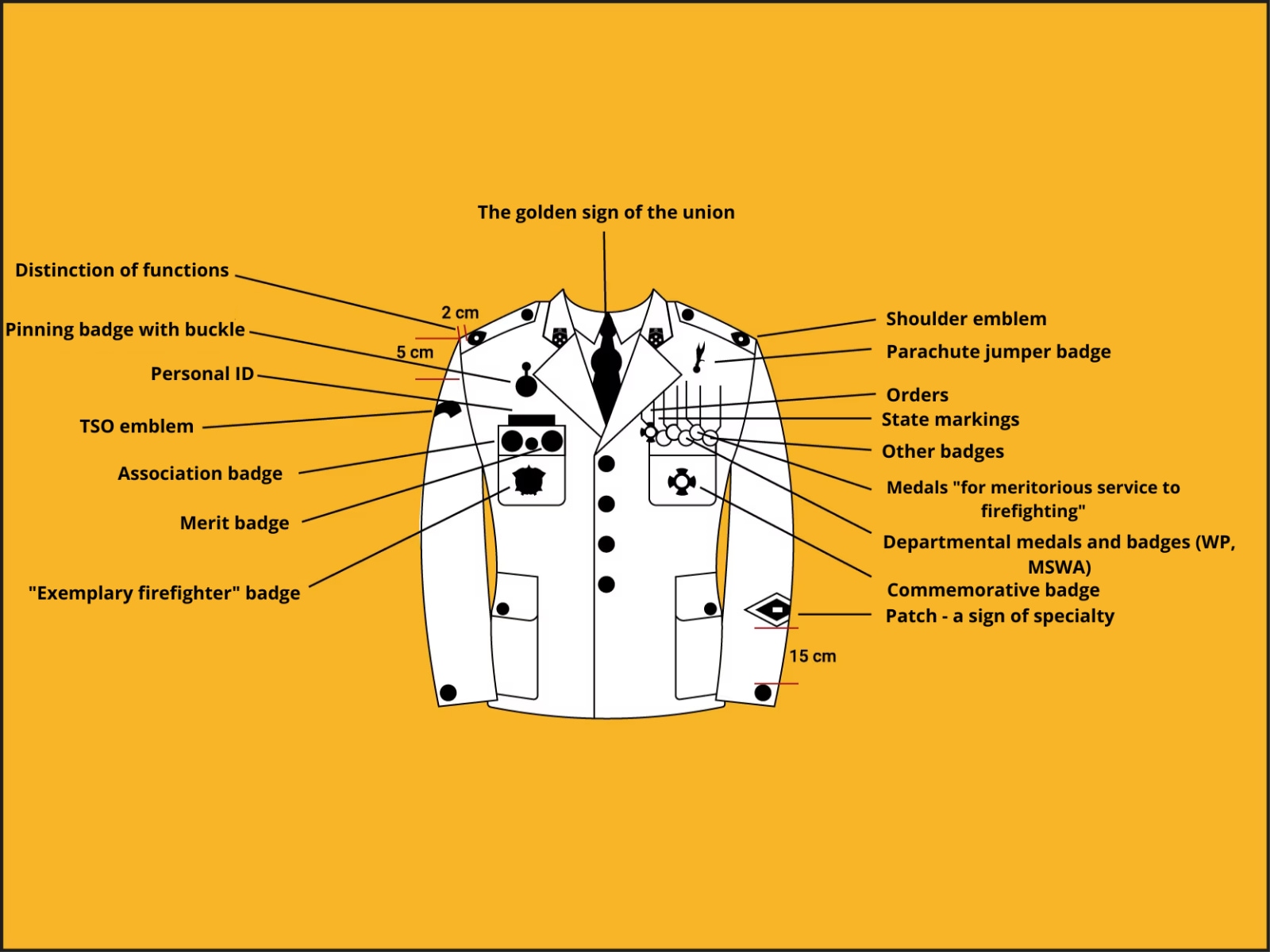
In summary, the TSO and PSP differ significantly in terms of their legal status, organizational structure, as well as their appearance and the way in which service ranks are awarded. What is important, however, is that they are united by a common mission, which is to act shoulder to shoulder in crisis situations and to guard the safety of citizens. Militaria.pl offers distinctions, rank designations and emblems for the uniforms of both the Volunteer and State Fire Service.