How do you choose the right footwear?
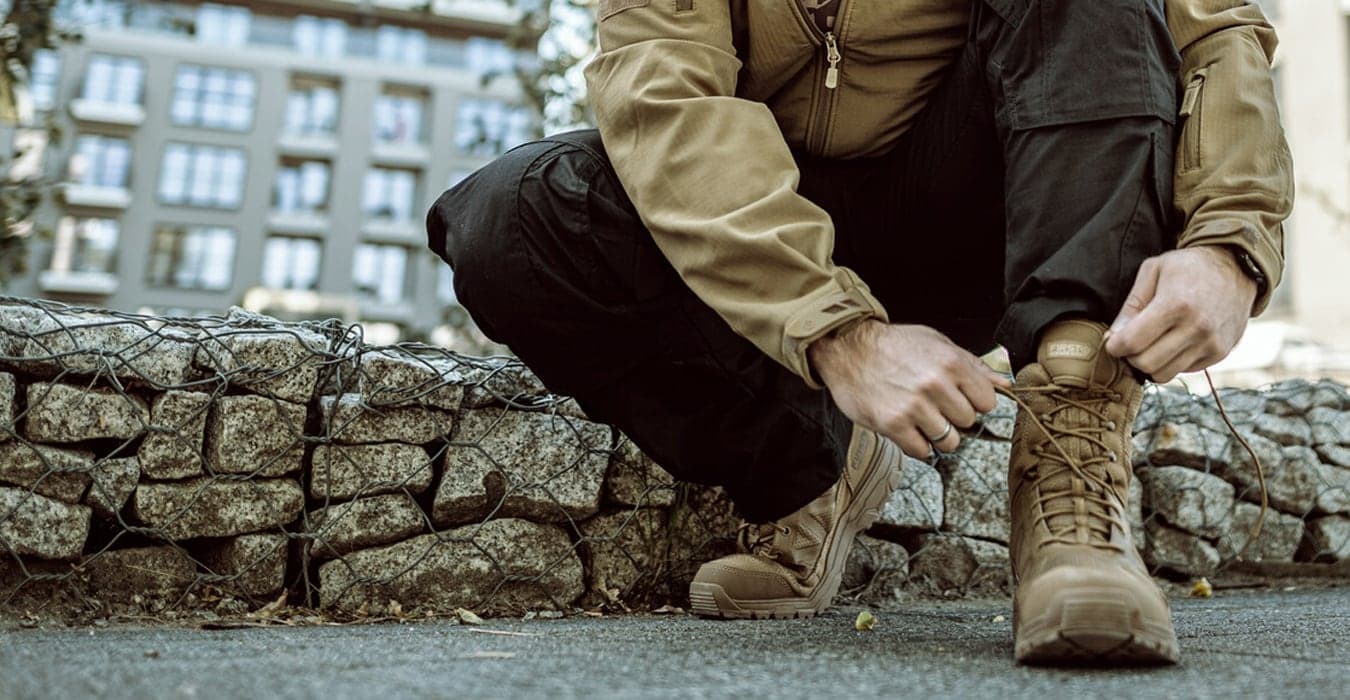
Among other things, the guide includes information on shoe construction, types of shoes and their best uses, as well as tips on cleaning and proper waterproofing of footwear. In addition, you'll learn which method of lacing your shoe will increase its flexibility, as well as which binding will prevent heel corns or painful pressure on the top of the midfoot.
Methods of lacing
Military lacing - increases the flexibility of the shoe
-
1. Thread the laces through the bottom eyelets from the inside out and center the laces.
-
2. Insert the laces into the eyelets that are exactly above the eyelets from which the laces came out.
-
3. Cross the strings and insert into the next eyelets from inside to outside.
-
4. Continue step 2 and 3 until you run out of eyelets. Tie the laces into a bow.
"Window" - eliminates painful pressure on the top of the metatarsal
-
1. Pull the laces out of the loops, up to a point slightly below the pressure zone.
-
2. Trim the strings using a simple knot.
-
3. Pull the ends of the laces vertically upward to the next pair of loops. Do not cross them.
-
4. Re-tighten the laces using a simple knot, for better stability.
-
5. Finish tying the shoe in the classic way.
Surgical knot - prevents corns on the heel
-
1. Thread the laces at the top of the shoe.
-
2. Locate the 2 pairs of pinch hooks that are closest to where the top of the foot begins to bend. Tie a surgical knot on each of these pairs of hooks.
-
3. Wrap the laces around each other twice, then pull tight. Wrap the remaining ends of the laces around the higher pair of hooks to block the tension of the knot.
-
4. Repeat step three on a higher pair of hooks.
-
5. Finish tying the shoe in the classic way.


Shoe construction
Language
Among its functions is to hold the foot in place, protecting it from the ingress of sand, pebbles or water into the shoe. In advanced models of shoes, the tongue and upper are often made of a single piece of leather. It is worth knowing that a small number of stitches improves the waterproofness of the shoe.
Hooks
The function of the hooks is to keep the tightened laces in place. Many models have locking devices to ensure that the laces will hold the midfoot tight all day.
Upper
The upper is usually made of leather or suitable materials with membranes. Its task is to protect the upper part of the foot and keep it in place.
Otokhok
The shoe's lining is most often made of rubber. Its function is to protect the toes from impact and protect the front of the shoe from damage.
Collar
The collar is the edge of the shoe that stabilizes the ankle. It should be finished with soft leather, mesh or foam so that it does not cause chafing when walking for hours.
Insert
The insole can be replaced and adapted to any type of foot. The insole can be antibacterial or have gel inserts in a specific place (such as the heel) or be all foam. Cork insoles are popular.
Outer sole
The type of outsole is best chosen according to the type of ground on which you plan to hike. There are several types of tread available, which differ in the depth of the grooves, among other things.
Depreciation
Cushioning systems most often use different hardnesses of foam. They also have different levels of elasticity and varying ability to absorb vibration at key areas of the foot.
Types of shoes
When it comes to types of shoes, trekking sandals must certainly be mentioned. Their advantages are, first of all: lightness, breathability, few pressure points on the foot, low risk of blisters. Disadvantages include poor foot stability and the fact that the open design risks injuring the foot in the field. Trekking sandals will work well for hiking on well-maintained trails, among other things.
Advantages of low trekking boots are lightweight, flexible and breathable. However, this type of shoe will not work when you want a protected ankle. Uses: daily hiking and easier routes with climbing elements.
(Higher) trekking shoes are very durable and fit the foot. They provide solid stability and have a strong sole construction. However, they are quite heavy, and depending on the height of the upper - they have less dynamism on approaches. They will work well, for example, during day or weekend backpacking trips.
High-mountain boots or mountaineering boots provide strong support for the feet and ankles against difficult terrain. It is possible to attach automatic or semi-automatic crampons to it. This type of footwear is heavy and not very comfortable to wear for a long time. They are ideal for mountain climbing in difficult geographic and weather conditions, as well as for traveling with a heavy backpack.
Cleaning and care of shoes
Shoe cleaning
-
1. Remove the laces and insoles. Most shoe insoles are machine washable in a laundry bag.
-
2. Wipe off the dirt. Preferably only after the mud has already dried. Wet dirt will rub off unnecessarily.
-
3. Wash more difficult dirt with a special shoe cleaner. You can buy it at most hiking stores. You can also use soap with water, but don't do it too often, because soap dries out the leather that the shoe is made of.
Drying shoes
-
1. Find a cold, dry place for your shoes to dry. No matter how tempting it is to place your shoes next to a heater, don't do it. The hot air will dry out the leather and make it crack, which will eventually allow water to leak through the upper.
-
2. Stuff the shoes with paper to absorb sweat and water that has gotten inside. This will speed up the drying process and prevent the shoe from deforming too much.
Mold removal
-
1. Wipe the mold off your shoes with a cloth or hard-bristled shoe brush. Make sure you do this outside and away from your face. Take care that the mold does not get into your lungs or settle on other items in your home.
-
2. Mix half a cup of vinegar with half a cup of water and apply this mixture to the shoes. Allow it to dry. Finally, wipe the entire surface of the shoe with a dry towel.
-
3. Put the shoes away in a shaded, airy place. Keep the shoes away from other leather objects.
Impregnation
-
1. First of all, determine what your shoes are made of. If you have shoes made of grain leather, for example, stock up on shoe waterproofing wax. For shoes made of buckskin, use spray-on waterproofing products such as Nikwax.
-
2. Impregnating obuwie skoncentruj się na szwach, ponieważ są one najbardziej podatne na przepuszczanie wody.