Types of camouflage patterns and their uses
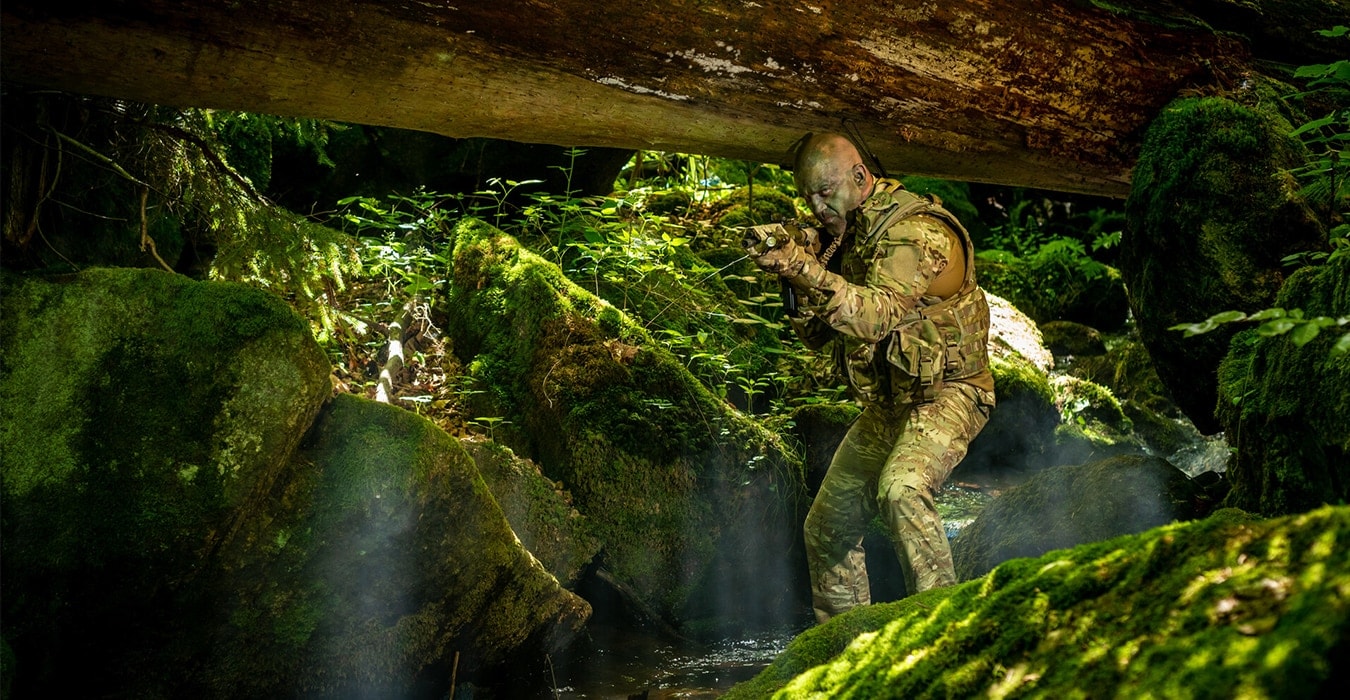
The art of camouflage is an important skill during warfare. However, camo clothing and accessories are used not only by soldiers. ASG game enthusiasts equip themselves with such gear to increase their chances of victory, anglers and mushroom pickers to better blend in with their surroundings, and wildlife photographers camouflage themselves so as not to scare off game. From this guide, you'll learn what types of camouflage there are, when they are used and under what conditions they work best. We'll help you choose the right pattern for Polish forests, sandy areas, as well as universal colors that will work in any terrain. In addition, you will learn about their origin and a little history.
Choose which topic interests you from the list below:
1. What is camouflage?
2. Camo patterns for the Polish forest
3. Types of universal camouflage
4. Types of desert camouflage
5. Urban camo - camouflage for the city
What is camouflage?
This section will discuss military camouflage patterns that will work well for camouflage in the temperate zone, with an emphasis on the period from mid-spring to late summer. This time is the dominance of green in nature, so this is also the color that will prevail in the types of camouflage discussed. In addition to the forest, which is the most obvious environment for their use, the following types of camouflage will not infrequently work well in the realities of our country in other non-urbanized areas as well. .
Note: Decades of development and changing needs mean that the camouflages discussed in this section often offer alternative variants designed for operations in desert, tropical, arctic climates or urban areas, but within the following section we focus on the most common basic variants. At the same time, these are not universal or multipurpose camouflages, but dedicated forest camouflages.
If you want to learn more, please visit our guide on camouflage theory.
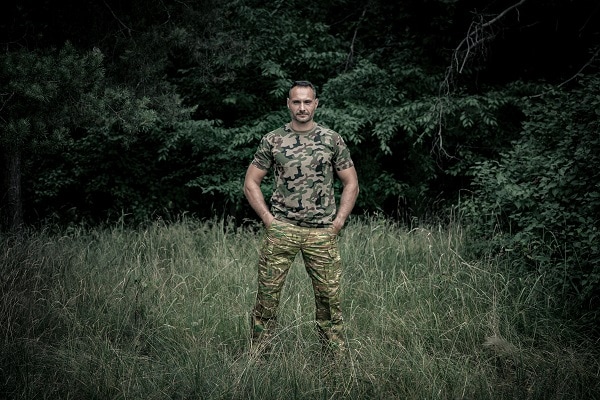
Camouflages for the Polish forest
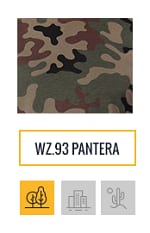
Camouflage pattern 93 "Panther"
Wz. 93 is the camouflage currently in force in the Polish Armed Forces, the first camouflage designed and introduced for general use in the Third Republic. The 1993 pattern offers a combination of mimicry and disruption properties, thanks to the use of various sizes of irregular patches. The color combination of green, brown and black makes the Polish panther the right answer to the question: what camouflage for the Polish forest will be the right choice? Uniforms in this camouflage are also essential for students of Military Uniform Classes.
The disadvantage of this camouflage is considered to be the excessive repetition of the pattern on a relatively small area of fabric, which limits the disruptive features.
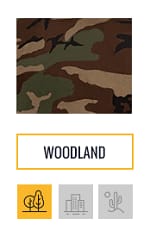
Woodland
Also known as U. S. Woodland or M81 camo. Modeled after the earlier ERDL camouflage, it was introduced in the U.S. armed forces in the early 1980s and used by them until the end of the first decade of the 21st century. Due to its good camouflage effectiveness and the popularity provided by its use in US forces, various variations on this camouflage have found use in the uniform formations of more than 60 countries around the world. It has also left a stronger mark in pop culture than any other pattern, permeating from military and reconstruction applications to everyday fashion.
In the case of Woodland, the very name leaves no doubt - it is a reasonable option when looking for camouflage for the Polish forest. The combination of brown, beige, green and black will work well in the climatic conditions of our country. High contrast and large patches allow for satisfactory disruption properties.
DPM - Disruptive Pattern Material
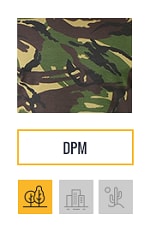
British camouflage from the 1960s, dating back to the Second World War. This did not prevent it from remaining the main camouflage pattern of the British Armed Forces until 2016, and it is still used in some units and among cadets. Due to British involvement in the Middle East in the 1980s, a desert variant of the DPM camouflage was created, but by far the most popular is the classic forest version. The camouflage has subtly evolved over the years, which can be seen in minor changes in the shape of the patches or the brightness of the colors.
The tried-and-true combination of green, brown, beige and black makes DPM a good choice for temperate forests in spring-summer. Combined with large, irregular patches that disrupt the silhouette, it will allow effective camouflage at close and medium range in our country's conditions. DPM also has the advantage of fairly good demobilization availability.
Flecktarn
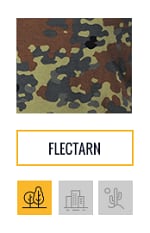
A German military camouflage pattern designed in the 1970s and introduced into large-scale service after German reunification in 1990. When we say Flecktarn, we most often mean the five-color version currently used by the Bundeswehr. However, there are many more designs based on this design, such as the desert Tropentarn or the Danish M84, which feature an altered color scheme and a number of colors ranging from 3 to 6.
Flecktarn combines the advantages of mimicry and disruption camouflage, thanks to the presence of both micro-pattern, fairly high contrast and large patches that refract the silhouette. In the context of the color scheme of the most popular variant of 5 Farben, we are dealing with a composition of dark green, light green, reddish brown, brownish green and black. Flecktarn was inspired by the various types of military camouflage used by the Waffen SS during World War II. However, this is in no way due to ideological considerations, but to the fact of the extremely high effectiveness of the patterns developed for this formation.
Wondering what camouflage to choose for the Polish forest, it is worth turning to what our western neighbors have created. Similar climatic conditions have made the Flecktarn an effective and widely available, including in demobilized form, way to camouflage in the realities of our country.
PenCott
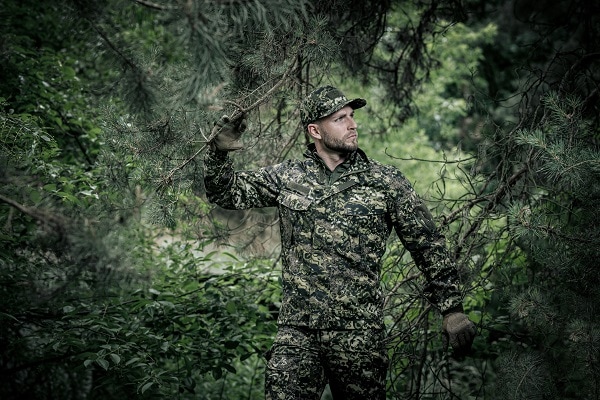
A group of modern second-generation digital camouflages created by Hyde Definition. PenCott combines mimicry and disruption properties. The former are provided by a very faithful rendering of color noise and the presence of an extensive micro pattern. The second is achieved through high contrasts that mimic light reflections and light shining through vegetation, increasing the three-dimensional effect, as well as a distinct macro pattern based on dark greens and browns.
GreenZone and WildWood versions, which are dominated by green, will work best in Polish forest conditions. For the autumn transition period, the BadLands variant, which reduces the intensity of green and increases the share of light brown, will also be a good choice. In addition, the manufacturer has also prepared desert, snow and urban versions.
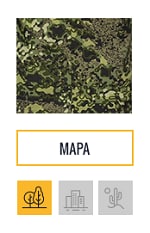
MAPA
A second-generation digital camouflage developed in Poland. The name refers to the appearance of the camouflage, which at first glance may resemble levels on a map. It was designed on the basis of computer analysis of thousands of terrain photographs, which ensured a very faithful reproduction of the background color noise. In doing so, the biggest mistakes encountered in the creation of first-generation digital camouflage, namely excessive fragmentation of spots and lack of a clear macro pattern, were not made.
As a result, MAPA not only has perfectly matched colors for use in the forest areas of Central Europe, but also deforms the characteristic silhouette of a man. The spots with their shape resemble fragments of vegetation, and the intensely contrasting bright elements of the pattern imitate sunlight shining through the cover.
All in all, this is a very modern, extremely effective and, on top of that, our native design. Definitely one of the most interesting camouflage proposals for the Polish forest.
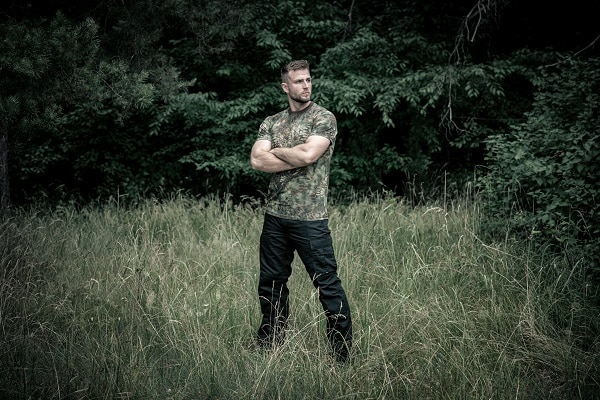
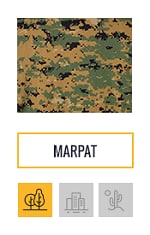
MARPAT (Marine Pattern)
Often referred to as Digital Woodland due to distribution restrictions for the commercial market, this is an American pixelated camouflage used by the Marines. MARPAT was developed in the early 21st century based on the Canadian CADPAT camouflage. In addition to the standard woodland version, there is also a desert variant and a prototype urban variant.
MARPAT, which is characteristic of digital camouflages, very effectively reproduces the color noise of the environment. Distinctly contrasting colors reduce the problem of patches merging into a monochromatic mass, although MARPAT still suffers from a lack of macro pattern. In the Polish forest, it will be a good choice for short-range games, where its effectiveness is greatest. When matching the camouflage to the area of operations, it is worth remembering that the MARPAT pattern is dominated by green combined with brown.
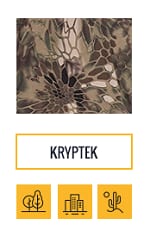
Kryptek
A company that creates a whole series of camouflages designed for different environments, but using a common base in terms of shape, size and distribution of spots. Kryptek camouflages are characterized by patterns unheard of by other manufacturers, reminiscent of branches with leaves, distorted honeycombs or even turtle shell. These shapes give the camouflage intense contrast and an interesting micro pattern, while merging at a greater distance into larger patches that build a macro pattern. All this, combined with different colored backgrounds and smooth color transitions, makes the Kryptek not only look unusual, but also have high camouflage effectiveness.
The type of camouflage most suited to our country's forest areas during the summer is Mandrake. In the autumn season, you can consider using Highlander. In addition, Kryptek offers urban, mountain and even water camouflages, among others.
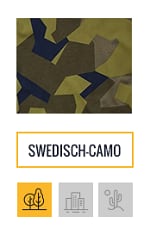
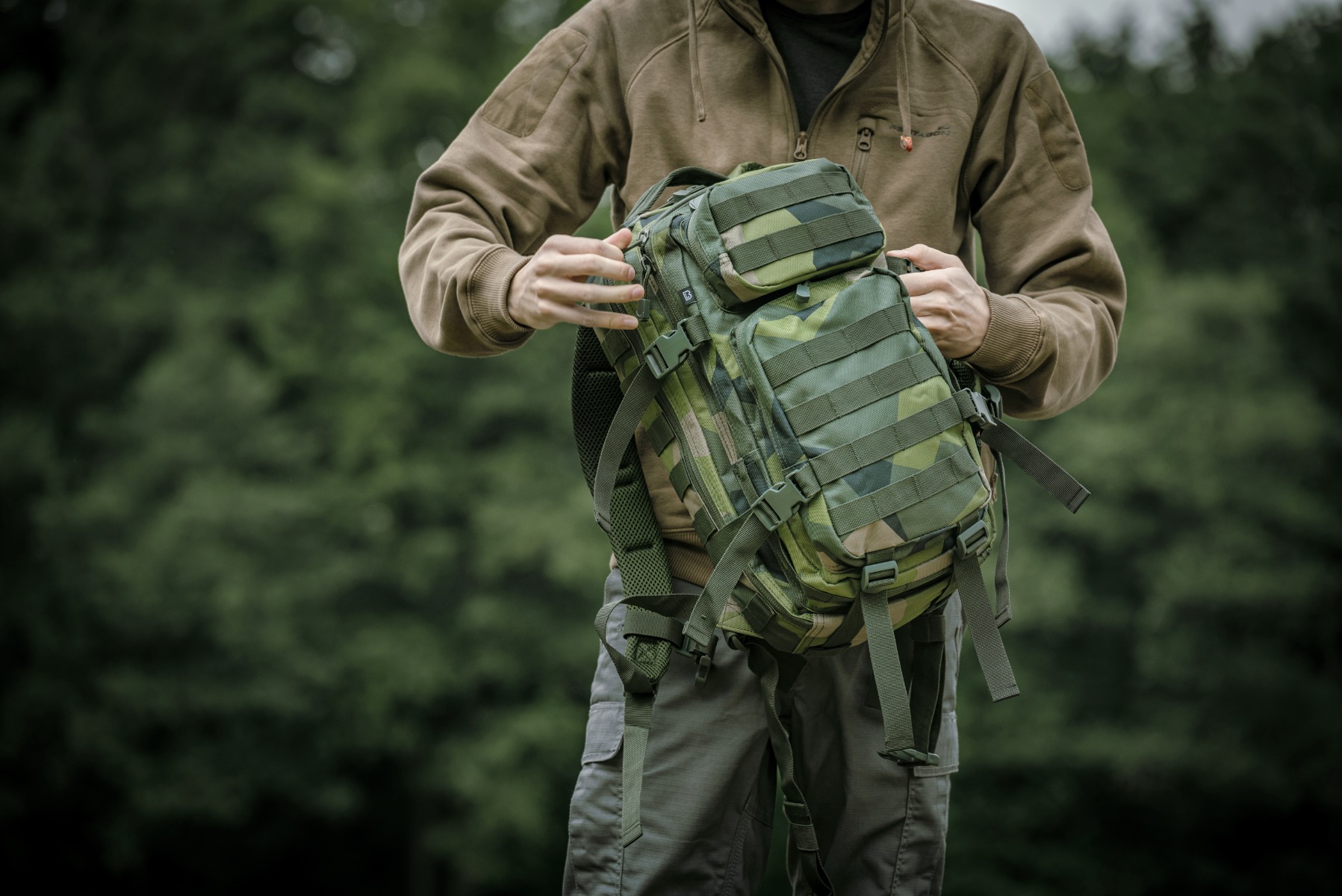
Swedish Camo
Swedish Camo camouflage (otherwise known as M-90 or Lorhagen) is a camouflage pattern for the uniform system 90, which is used by the Swedish Armed Forces. This pattern was introduced into use in the late 1980s, and permanently adapted to the armed forces in the Armed Forces in the late 1990s.
The pattern consists of distinct geometric shapes that create a pattern of camouflage pattern effective in moderately wooded areas and on the Swedish plains. In addition to the classic pattern for Swedish forests, the following have also been developed desert and winter variants.
Behind the need for a new uniform design was not only the making camouflage more effective on its own territory or creating a fully national. The main purpose of developing this pattern was to be able to conceal the jets scattered in rural areas that monitored potential developments in a clash with superior Soviet forces. Subsequently, the pattern began to be used to conceal vehicles from reconnaissance via aerial and satellite imagery, until it eventually found its way onto military uniforms. Both jets and vehicles were covered in paint, creating a pattern of camouflage pattern.
The Swedes approached camouflage in an interesting way that was significantly differed from German or American standards. According to the scientists working on the M90, the Americans envisaged urban combat where the distance between opponents varies from 10 to 100 metres. The Swedes, on the other hand focused on long-distance combat, for example in a forest, where the distance between opposing sides can be up to a kilometre.
Currently, uniforms in M90 camouflage are treated to provide a low risk of detection at night when using infrared.
The M90 is available in several different models that have been tailored to the soldiers' activities:
-
M90F — standard uniform for general use,
-
M90P — Pansar Armour — for armoured vehicle crews, was equipped with among other things, with elbow and knee pads, and benefited from a heavier material with better fire resistance properties,
-
M90H — Helicopter — for helicopter crews, an orange lining in the jacket,
-
M90L — Latt — light summer uniform,
-
M90TR — Tropik — for rainforest forces, a thinner and lighter material,
-
M90BE — Tropic Beige/Khaki — to the desert environment,
-
M90K — Desert — for services stationed in and around Afghanistan, pattern based on warm greys, beiges and browns.
Greek Lizard
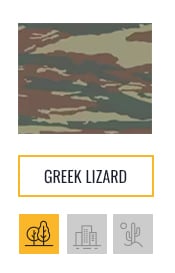
The Greek camouflage Greek Lizard also functions under the name Hellenic Camo. It is the first camouflage pattern of the Greek army, which was modelled on the French leopard or lisard. It was introduced in the mid-1970s.
The French version of the camouflage was adapted several times to Greek requirements. A more perceptually disruptive arrangement of spots and stripes in the pattern was introduced.
Several colour versions have also been created. The basic pattern is based on a light green background with a mixture of irregular dark green and brown spots. This was followed by a pattern consisting of dense vertical stripes in blue and black and two shades of olive green with a brown background.
Another version is based on dark grey and orange-brown stripes on a light blue background. In the update, the orange and brown stripes have been replaced by grey-green, and the light blue background has been replaced by light grey. Introduced A desert version of the Greek Lizard has also been introduced, based on horizontal brown-yellow stripes and a sandy background.
Splinter
Splinter camouflage (Splittertarnmuster, Splittertarn, Splittermuster) is called the splinter pattern. It is a four-colour camouflage pattern that was developed by Germany in the late 1920s and was first introduced in 1931.
The pattern consists of a diffuse, zig-zag arrangement of sharp-edged polygons edges in shades of brown and green on a beige or light grey background, as well as vertical, irregular lines imitating raindrops or blades of grass.
The first version of the 1931 camouflage used colours such as ochre, rusty orange and brown on a green background. Later, the yellow-ochre shade polygons was replaced by a muted grey-beige shade. The Splinter camouflage was used by German forces until 1944.
During the Second World War, the model was also used by Bulgarian troops. To Today, the Bulgarian army uses the basis of this camouflage pattern, and in 1997 it was it was introduced in its current form.
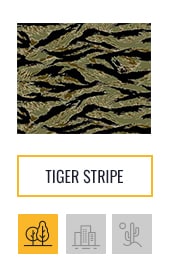
Tiger Stripe
Tiger Stripe camouflage is a family of camouflage patterns originating in South Asia. It is based on the French Lizard camouflage.
Tiger Stripe camouflage is based on narrow stripes in green and brown shade and wider stripes in grey on an olive or khaki background. The stripes are irregular, resembling brushstrokes. Tiger Stripe is used in dense jungle and tropical forests. It masks well in low and medium vegetation, and detection at close range is very difficult. The name of the camouflage is derived from the tigers' colouring.
The most popular version of the camouflage is Tiger Stripe, which originated in the Republic of Vietnam. The pattern was created in 1960 and was used between 1957 and 1975 by the South Vietnamese Army. The pattern was used in various variants also in other countries:
-
in the primary colour variant by Australian and US and US special forces,
-
Vertical Tiger Stripe variant by US units in Vietnam. American units in Vietnam,
-
Blue Tiger Stripe variant during the design of a new uniform for the United States Armed Forces (US Air Force) - in 2004. camouflage was modified,
-
The Digital Tiger Stripe variant (successor to the Blue variant) was introduced in 2007 for use by the US Air Force.
Types of universal camouflage
The premise of universal camouflage sounds great for logistical, economic and battlefield safety reasons. However, theory does not always walk hand in hand with practice, and that is the situation here. While it would be an exaggeration at this point to say that when something is for everything, it is essentially for nothing, it is undeniable that in specific conditions dedicated designs are simply more effective. In this regard, universal camouflages have recorded numerous ups and downs during their introduction into service and during their subsequent practical verification on the battlefield. Situations have arisen where they have been withdrawn from use or variants tailored to a particular environment have been created, somewhat demolishing the whole concept. However, it is worth distinguishing them from the traditional types of camouflage, as there is still some clear difference. While Woodland in the desert or DCP in a nearby forest will guarantee you instant deconfidence, MultiCam used wisely will conceal you whether in Poland, Afghanistan, Iraq or Somalia.
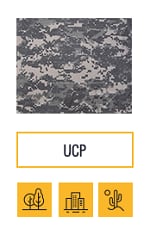
UCP – Universal Camouflage Pattern
This is a type of digital camouflage that was developed in the early 21st century and was introduced as a successor to the US Woodland and Desert patterns. In addition to forest and desert, UCP was intended to camouflage also in urban areas, hence the color composition of green and beige is complemented by gray. It has now been supplanted in the US forces by the MultiCam-based OCP camouflage.
Unfortunately, what looked good on paper and during testing did not work on the battlefield. The stain distribution based on the MARPAT camouflage and the use of a low-contrast, pastel color scheme resulted in a deficit of a clear macro pattern. The fragmented, pixelated micro pattern is able to blend into the background quite well at short distances, but at greater distances it turns into a uniform gray object.
This does not mean, however, that UCP is a camouflage devoid of merit. It performs quite well in infrared, which, after all, was one of the reasons for its introduction into the US Army. In our conditions it will perform well, for example, during QCB games conducted in urban areas.
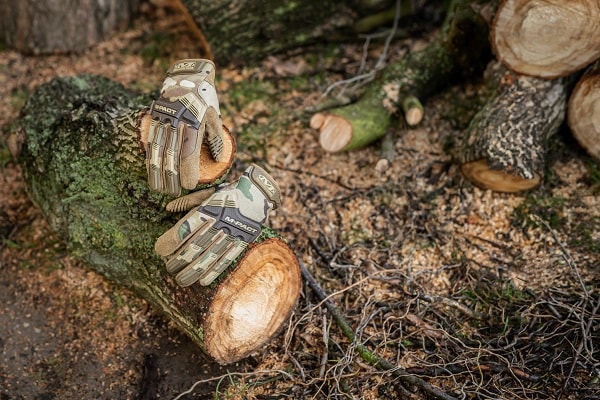
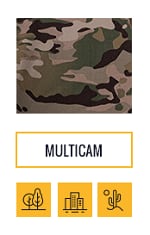
MultiCam
A pattern developed as a universal and, despite the various adventures surrounding its use in the armed forces, one of the most successful camouflages of its type. MultiCam is a version of the Scorpion camouflage pattern created by Crye Precision for the consumer market. Scorpion, on the other hand, was the design that lost the competition to UCP in 2004 for an all-purpose camouflage for US forces. The triumph of the UCP did not last long, however; in 2010, faced with the low effectiveness of camouflage during operations in Afghanistan, American soldiers received uniforms in the previously rejected MultiCam camouflage, and since 2015 the UCP has been gradually replaced throughout the US Armed Forces by the OCP, which is a modification of the MultiCam pattern.
On the ground in Afghanistan, MultiCam has offered high camouflage effectiveness, thanks in large part to its color scheme. MultiCam's color palette consists of 7 different colors, which are shades of beige, brown and green. Such a set performed better than classic desert camouflage, designed for strictly sand-dominated environments. MultiCam also offers a contrasting micro pattern, well imitating light flickers or tiny twigs. At the same time, it is not devoid of larger patches capable of refracting the silhouette.
There remains the question of MultiCam's effectiveness in an environment other than Afghanistan. Here, the drawbacks of universal camouflage are once again apparent. Unfortunately, it will never be as effective as a pattern dedicated and specialized for a given environment. Consequently, a classic MultiCam in an intensely green forest in late June and early July will not be as good as a classic forest camouflage. However, this does not mean that it will not find its use in Central Europe. The beige-brown color palette will work very well in autumn, early spring, as well as in pine forests devoid of intense green in the undergrowth or in an August sunburned meadow.
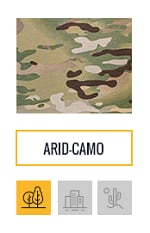
The creators of MultiCam recognized the problem of insufficient effectiveness for long-term use of the pattern in a specific environment, rather than in variable conditions. Since 2013, additional variants have been developed: Tropic, Arid, Alpine and Black. Designed successively for forest, desert, snow and city. MultiCam has also been adapted or modified by many other formations and companies. This has resulted in designs such as the Polish Suez used by Grom, and a range of camouflages called Arid Camo, among others.
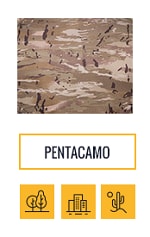
PentaCamo
A modern type of camouflage created by Pentagon. In PentaCamo one can see the inspiration of the Lizard pattern used by the Greek army and the popular MultiCam. The general design of the spots used in this camouflage was taken from the Lizard. The inheritance from the MultiCam is mainly in the color scheme, as well as the addition of small spots to the pattern to improve mimicry properties.
Due to its color scheme, PentaCamo will work well in our climate rather in autumn or early spring. In summer, when we are surrounded by intense green, the shade of the uniform will be too beige.
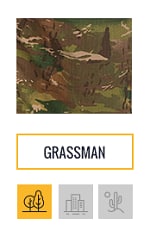
As with MultiCam, this problem has been recognized and a type of camouflage has been created that is dominated by green. The Grassman camouflage, as it is referred to, retains the PentaCamo pattern, but the proportions of green versus beige are reversed, and the colors themselves have greater saturation.
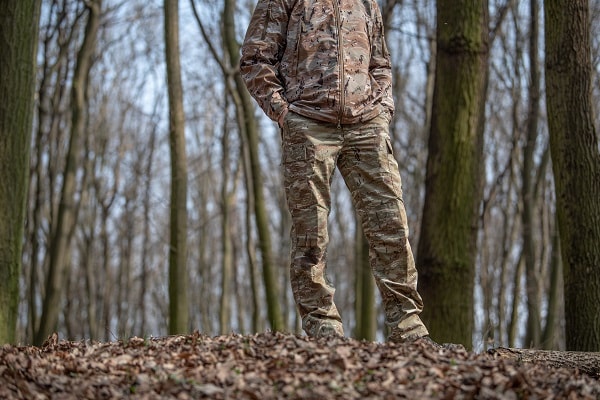
A-TACS
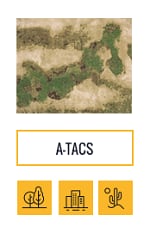
A whole family of hybrid camouflages created by the American company of the same name. The designs can be categorized as second-generation digital camouflages. The original A-TACS AU variant was by design an all-purpose camouflage, but it works best in semi-desert environments or during autumn.
While pixelated camouflages immediately show, with the rest rightly so, that they were designed on a computer, the A-TACS in its original version is more like a painter's canvas with color transitions from a palette of greens and browns. However, this does not mean that modern computer technology was not used in its production. A-TACS simply replaced the squares and right angles unseen in nature with so-called organic pixels. This maintained a very high fidelity reproduction of background color noise, with a more natural appearance. In addition, a macro pattern was created from the organic pixels, allowing for effective silhouette deformation.
Eventually, as was the case with other universal camouflages, there were more specialized versions, intended in this case for forestry operations. A-TACS FG offers the smoothest color transitions and a color palette based almost exclusively on various shades of green. A-TACS iX is, in terms of color, a fusion of the FG and AU variants, with much clearer boundaries between spots. The increased contrast is designed to enhance the three-dimensionality and deformation of the figure. The A-TACS FG-X is still in an intense green color scheme, a successor to the regular FG, with increased color contrast and clear cutoffs at the stain boundary. These variants will work well in our climate during late spring and summer.
MM-14 camouflage
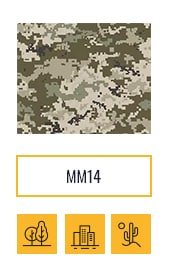
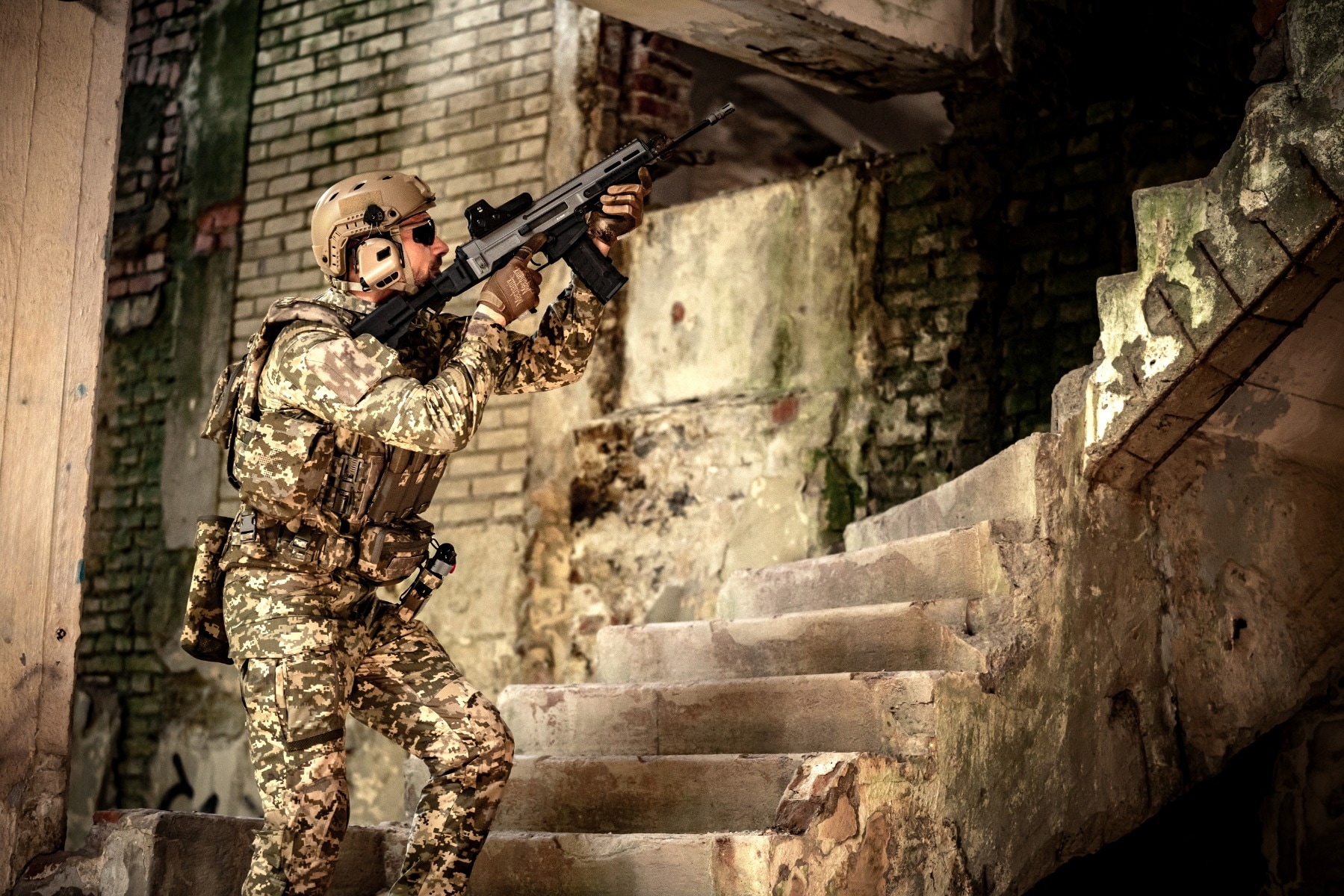
The name of the camouflage "MM-14" is an acronym for маскувальний малюнок, or camouflage pattern. Camouflage is also known is also known by the unofficial names Pixel, Ukrainian Pixel, Ukrainian Pixel Camo or Digital Camo.
MM-14 is a five-colour military camouflage on which a digital deformation. The pattern was adopted in 2014 by the Armed Forces of Ukraine to replace the outdated Soviet camouflage patterns Dubok and Berezka.
The Ukrainian MM-14 camouflage is characterised by a light beige background on which applied pixel patches in shades of dark grey, grey green, light green and dark swamp green.
The prototype for the Ukrainian MM-14 is believed to be the US Army's UCP camouflage. However, the MM-14's camouflage pattern took its drawing from the US UCP pixel, whose silhouette smearing properties have been confirmed during many military operations. The colour scheme of the Ukrainian camouflage pattern remains unique and takes into account the naturally occurring colour palette in the eastern areas of Ukraine, where this camouflage.
In 2017, the MM-14 pattern was adapted to the colours of the Ukrainian Navy Ukraine, hence the creation of a version called MM-16 F (naval pixel), which is maintained in blue and dark blue-grey-black colours. A red colour variation was also observed, but it was not confirmed whether this is another version of the MM-14 camouflage pattern.
Phantomleaf
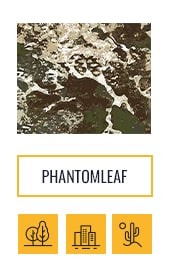
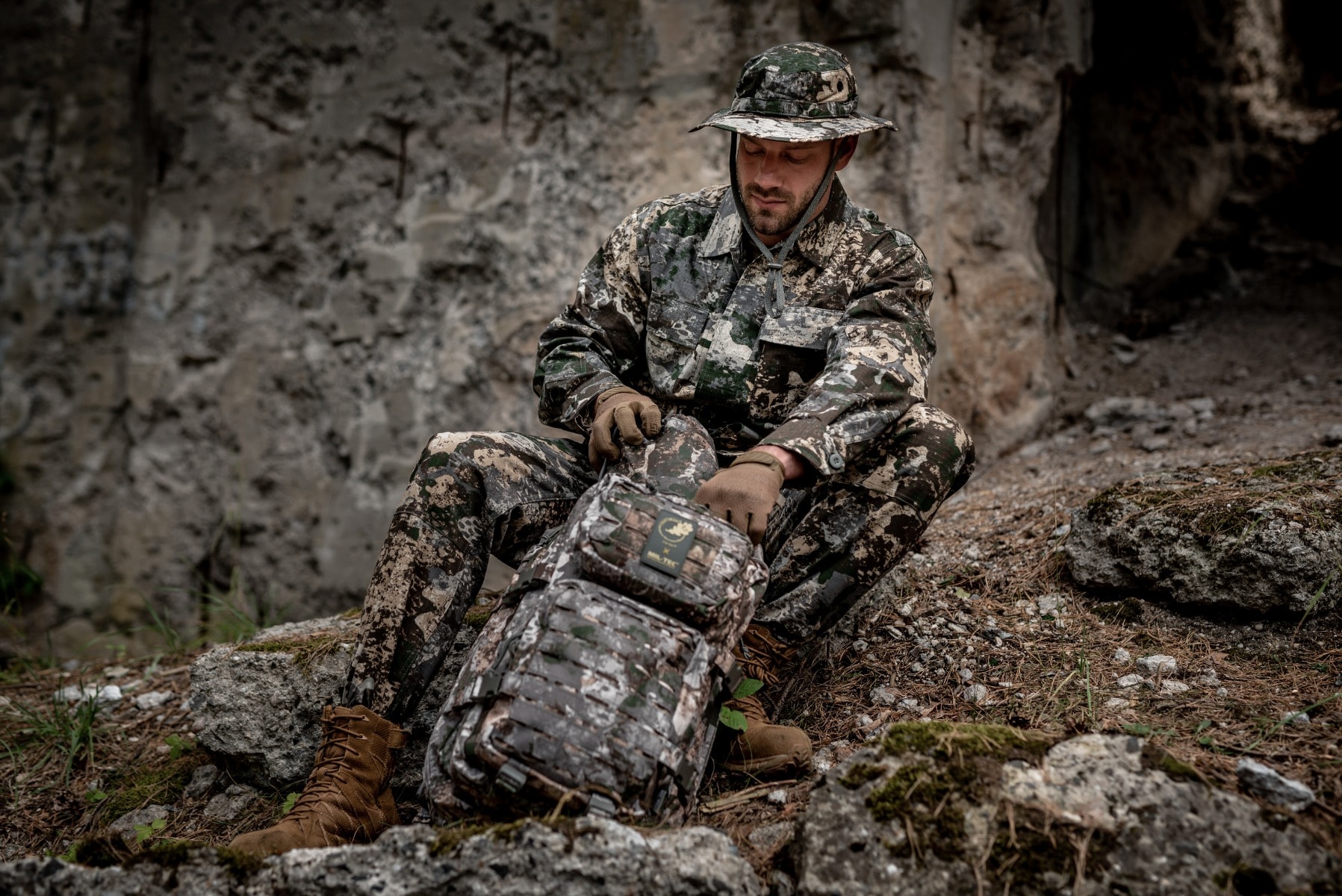
Phantomleaf camouflage is an innovative camouflage pattern that enables the blurring of human silhouettes and equipment at various distances. The shapes familiar to the human eye are obscured and dispersed by multi-layered structures that connect the object with its surroundings. Behind the development of Phantomleaf camouflage was a number of scientists from fields such as medicine, psychiatry and neuropsychology. Thanks to extensive research at various levels, Phantomleaf provides the the highest camouflage effect.
The Phantomleaf camouflage pattern is intended for the troops and services of of countries cooperating with NATO. Almost every member state equips Each Member State equips its army with a distinctive camouflage pattern, but nothing prevents the integration of However, there is nothing to prevent the integration of uniform elements in the Phantomleaf pattern into other national camouflage patterns.
Phantomleaf uses a holistic stealth system - the camouflage is used on a modular basis, with parts tailored to the requirements of a specific mission. The following camouflage variants are available, tailored to global zones:
-
Z1A — hot desert variant — intended for areas with little or no natural cover. Recommended recommended for sandy plains, rocky terrain and areas transitioning to grassland. grassy areas.
-
Z1B — rocky desert variant — will perform well in areas above the tundra and tree line, rocky terrain and areas with little snow.
-
Z1C — snow desert variant — for snowy areas.
-
Z2 — variant for areas with low vegetation — good choice for areas border areas between sandy and densely wooded areas.
-
Z3A — variant for areas with high vegetation — suitable for mixed and tropical forests mixed and tropical forests.
-
Z3B — variant for snowy areas with high vegetation - winter version of the variant Z3A.
-
Z4 — urban variant — will be suitable for built-up areas with extensive developed infrastructure, as well as in transport areas (seaports and airports, railway stations, logistics centres, etc.).
The manufacturer has also created a special CIV-line for commercial use: the Phantomleaf WASP I and WASP II camouflage. The WASP I line you will find uniforms and accessories in the Phantomleaf Z1B, Z2 and Z3A. The WASP II line includes a wider set: Z1A, Z1B, Z1C, ZS, Z3A, Z3B, Z4 and BLK.2 (dark/night camo).
Types of desert camouflage
Most of the most popular military camouflage designs have their variants designed for use in desert, arid environments. Camouflage types designed for such an environment from the beginning have also been developed. A large development of this branch took place since Operation Desert Storm in the early 1990s and continues today in connection with subsequent phases of the conflict or subsequent stabilization missions in Iraq, Afghanistan or Syria. In our environment, their use is very niche and rather limited to dunes and training grounds. Below we describe two of the most common camouflage camouflages found in our sand environment.
Desert Camouflage Pattern (DCP)
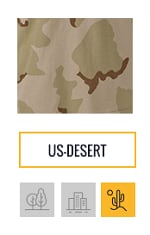
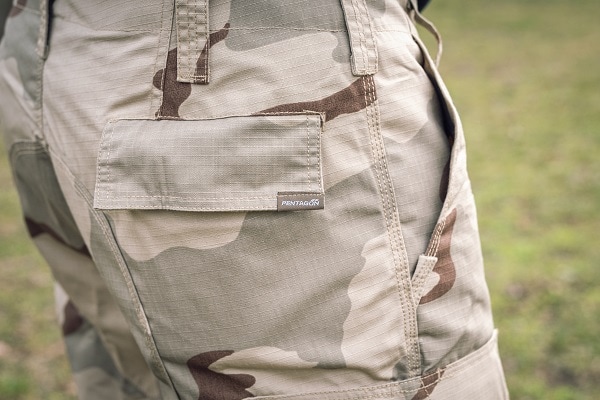
DCP is also referred to US Desert, 3 Color Desert Pattern or DCU after the name of the Desert Combat Uniform. It was used in the US forces from the early 1990s, replacing the BDU variant until the end of the first decade of the 21st century, when it was gradually supplanted by the UCP. The pattern is dominated by beige and pale green, which have been complemented by smaller brown patches.
True to its name, it is a type of camouflage designed for use in desert areas, created for operations in the Middle East. It is characterized by a reduced number of colors compared to its predecessor - 3 instead of 6. This is followed by reduced contrast and a simplified micro pattern devoid of small spots. Such solutions allowed for higher efficiency in arid, sandy environments. In addition, the maintenance of a very bright color scheme has eliminated the problem of spot heating of the uniforms, appearing in the previous version.
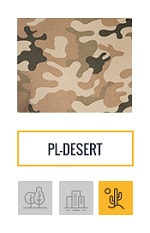
Desert Panther - PL Desert
Due to the involvement of Polish Military Contingents in overseas operations by Polish soldiers, two types of military camouflage are commonly used. PL Desert is characterized by an altered color scheme compared to that of the Forest Panther, tailored to dry climates, with a dominance of beige and light brown and only a delicate accent of green. The spotting pattern itself remained unchanged in this version. The Desert Panther has found use in missions in Iraq, Afghanistan and Turkey, among others.
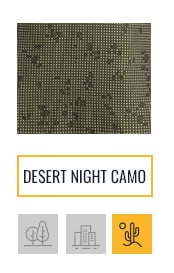
Desert Night Camo
Desert Night Camo camouflage (DNC) was developed by the US military in the early 1980s. The design consists of a green shade that is applied in a square figure and a random dark spots and a beige background.
Behind the creation of the DNC were the needs of the US Army to hide at night in desert areas areas, although the idea for this camouflage pattern goes back even further. In the 1960s 1960s, the US command tried to develop technology that would resist Radzic night vision goggles. Some twenty years later, the development of the DNC, and in the 1990s saw its introduction into combat use. The camouflage completely failed in the clash with night vision technology (this was partly a result of US efforts to block Soviet technology from the 1960s, when they were faced with upgraded devices). Camouflage DNC was withdrawn after an attempt to use it during Operation Desert Storm in the Persian Gulf (1991).
Although Desert Night Camo (like no other camouflage) was unable to block night vision capabilities, it cannot be denied other achievements. DNC is the first pixelated camouflage to be developed, and also the first camouflage developed for night-time use.
Due to its dark green colour scheme, this camouflage pattern is a popular choice is in wooded areas.
Urban Camo - camouflage for the city
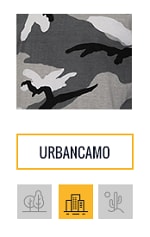
A separate topic is camouflages designed for combat in urban environments. It is worth noting that this refers to urban areas characteristic of Western civilization, where shades of gray dominate and concrete is more common than sandstone.
In the case of urban-type camouflage, we are most often dealing with special versions of already existing patterns rather than camouflage types designed from scratch. Spots of green, sand or brown are simply replaced by shades of gray, often also by white. This is also the case with the most popular urban camo, created on the basis of the classic M81 Woodland.
Urban camouflages will work well for CQB games conducted, for example, in post-Indutrial areas. On the equipment of the army in many cases, urban camouflages did not leave the testing phase, however, they were used in police and paramilitary forces. In the case of these formations, the psychological effect exerted by the uniform is often more important than the camouflage properties themselves.
Below is an infographic that is a brief summary of the above post. On it you will find all the camouflages mentioned and their application.
Types of camo patterns