Recommended sleeping bags for spring
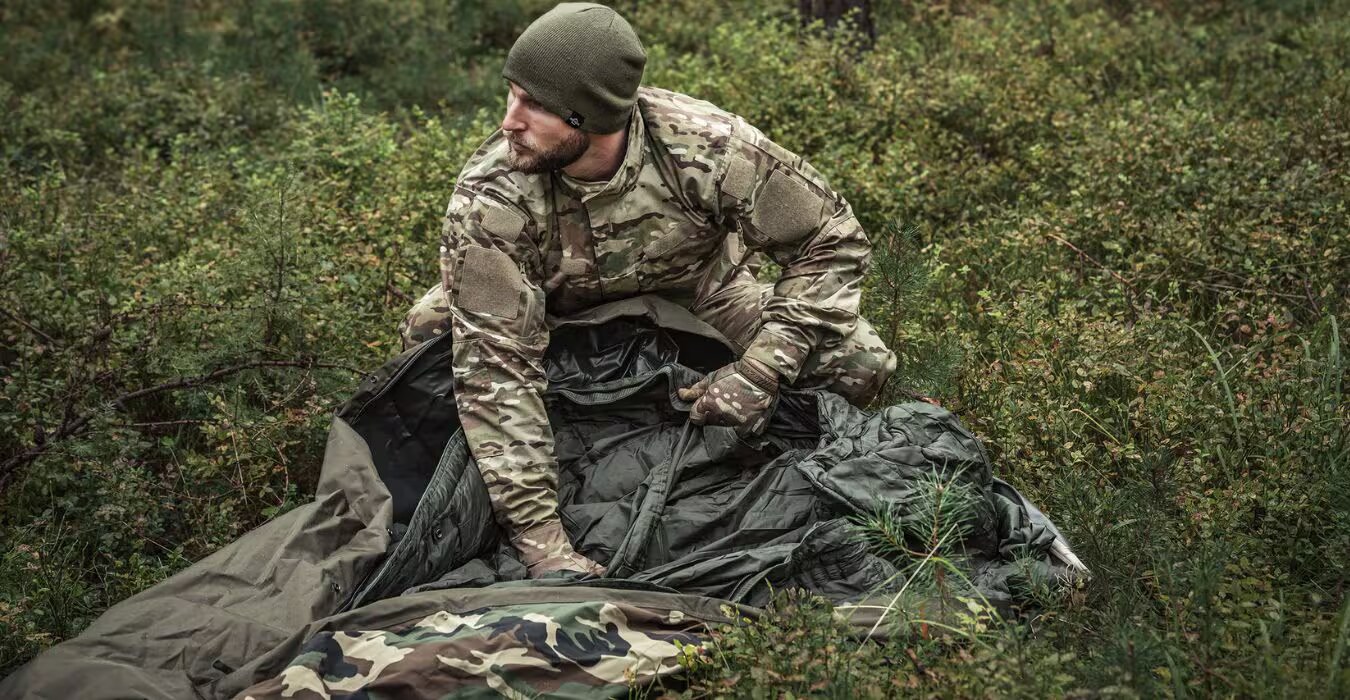
It is possible to camp outdoors all year round, but some people forgive the winter period and return to their hiking adventure in spring. It is important to be well prepared for a spring camping trip, which unfortunately may not be easy, as spring can surprise you with heat or minus temperatures and snowfall. It is also important to bear in mind that while spring is in full swing in the lowlands, snow may still be lying in the mountain regions and night temperatures may drop below 0 degrees Celsius. The basic question we should ask ourselves when completing our equipment for a spring expedition should be: which sleeping bag for spring?
Which sleeping bag to choose for spring?
Before choosing a sleeping bag for spring, it is important to consider the conditions in which we intend to camp. If you intend to spend the night in mountain huts and do not want to use the bedding available there, you can choose a lightweight envelope sleeping bag with synthetic filling that can be completely unzipped and used as a duvet.
When going to the mountains in spring, it is important to remember that despite the high temperatures during the day, the nights can be chilly and the weather in the mountains changes quickly. Another thing to consider is the altitude at which you plan to camp. The higher we are, the more the temperature will drop. In this situation, we should choose a sleeping bag whose temperature limit will oscillate between 0 and -5 degrees Celsius.
When hiking and camping in the lowlands, we can choose lighter sleeping bags whose limiting temperatures will be in the range of 0 to 8 degrees Celsius, depending on the month in which we will be sleeping in the field (the average night temperature in April is 1 degree Celsius, in May 5 degrees and in June 8 degrees Celsius). When choosing a lighter sleeping bag, it is a good idea to provide warming inserts in case of a sudden chill.
Thermal comfort in a sleeping bag in spring
To ensure a pleasant rest in sleeping bags in the spring, we should pay attention to their parameters and adapt them to the conditions in which we plan to spend the night. Sleeping bag manufacturers usually include several parameters on their products to guide you:
-
The temperature of the upper comfort limit (T max) - this is the ambient temperature beyond which a 'standard man' can suffer the negative effects of overheating. This value should be taken into account when choosing a sleeping bag to use in a hostel.
-
Comfort temperature (T comfort) - this is the ambient temperature at which a 'standard woman' should not feel cold.
-
T limit temperature (T limit) - is the minimum ambient temperature at which a 'standard man' can spend a comfortable night.
-
Extreme temperature (T extreme) - the ambient temperature at which you may be on the verge of hypothermia. This value should not be suggested when choosing a sleeping bag for spring.
"Standard male" is 25 years old, 73 kg and 176 cm tall, while "standard female" is 25 years old, 60 kg and 160 cm tall. It is important to remember that everyone feels the temperature differently and has different body thermals.

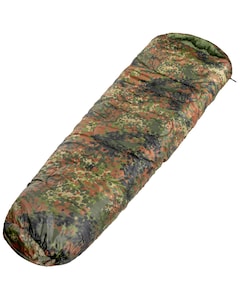
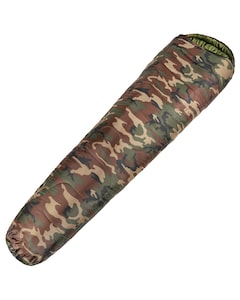

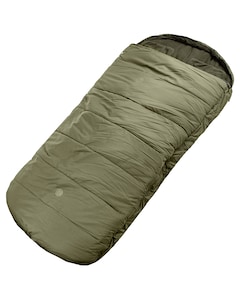

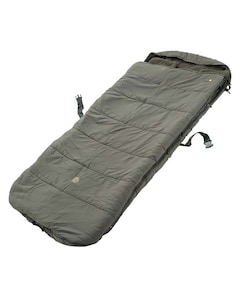
How about a three-season sleeping bag?
Three-season sleeping bags should fulfil their purpose from spring to autumn. In this type of sleeping bag, the comfort limit will oscillate between 0 and 5 and sometimes even 10 degrees Celsius. Choosing a warmer sleeping bag may result in overheating on warm summer nights. The best solution is to buy two three-season sleeping bags - one warmer, for the cool days of the beginning of spring and the end of autumn, and the other lighter, which will serve us in late spring, summer and early autumn, when temperatures are still relatively high. Another choice we will face when choosing a sleeping bag will be its shape. The best choice will be a mummy sleeping bag, an envelope sleeping bag in the thermals we are interested in will be very difficult to find. The sleeping bag should fit our body shape and height and have a hood.
Another important topic is the choice of filling. Sleeping bags filled with natural down are lighter, insulate better and are also easier to compress and transport. Unfortunately, they are much more expensive than sleeping bags with synthetic filling. If we are planning a multi-day march with an overnight stay in the field, it is worth getting a lightweight three-season sleeping bag filled with natural down. When travelling by car, when we do not have to worry about the weight of our equipment, we can use a synthetic-filled sleeping bag. Synthetic-filled sleeping bags also perform better in damp conditions as they absorb less moisture and dry more quickly.
Here you will find tips on how to choose a sleeping bag!