Basic materials for making knife handles
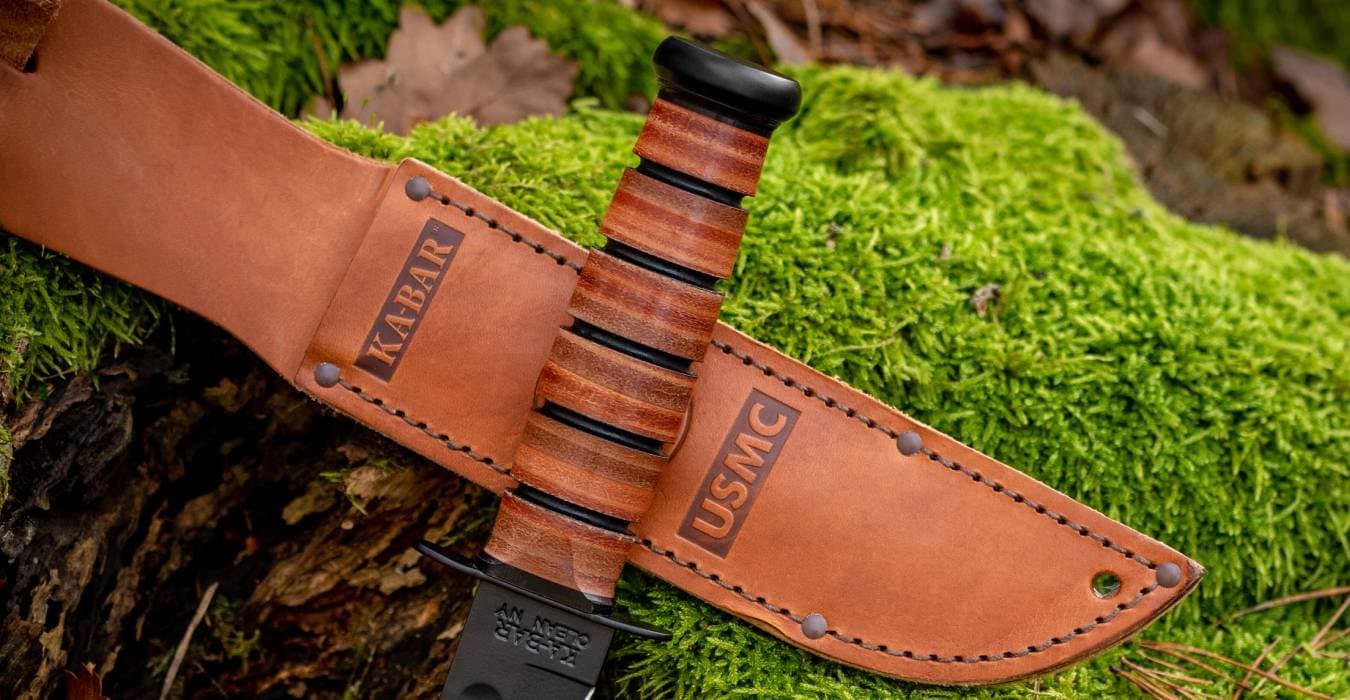
Many people only focus on the blade when considering the purchase of a knife, whereas the handle is no less important. The handle determines how the knife feels in the hand. In addition to the length, thickness and profile of the handle, the material is also very important.
Handle Materials – Natural
Natural materials like wood, bone, horn, and leather are valued for their look, character, and comfort in use. They give handles a traditional feel and often mold better to the hand over time. However, they’re generally less resistant to moisture and mechanical damage compared to modern alternatives.
Wood
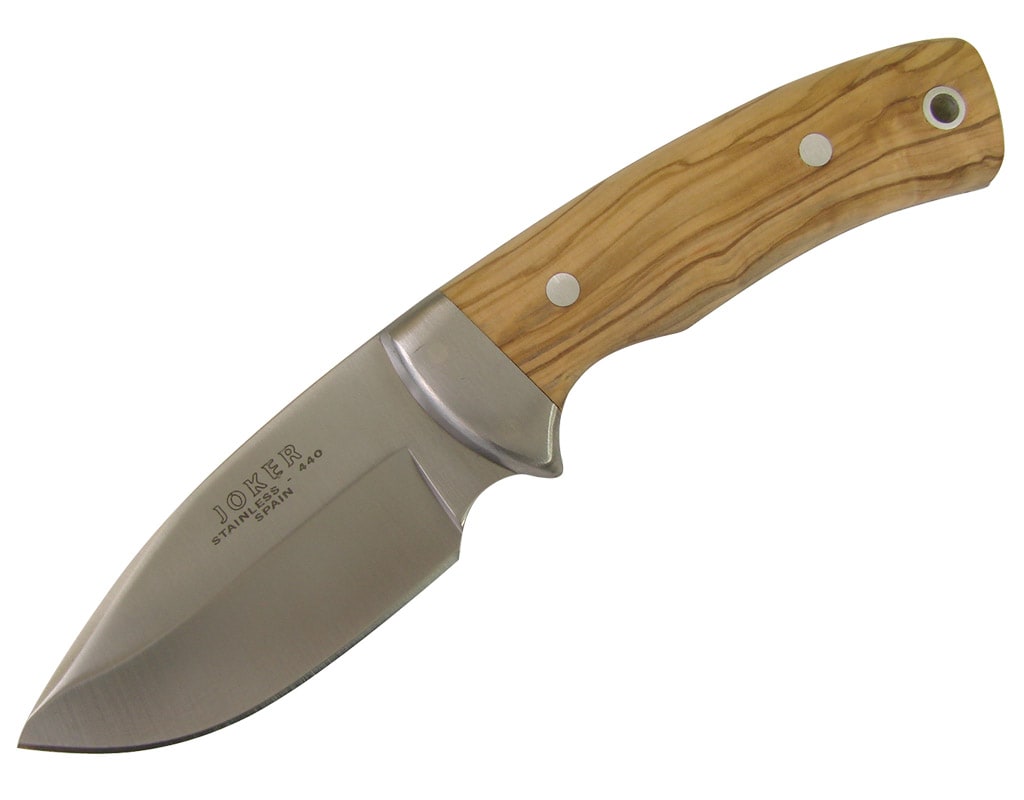
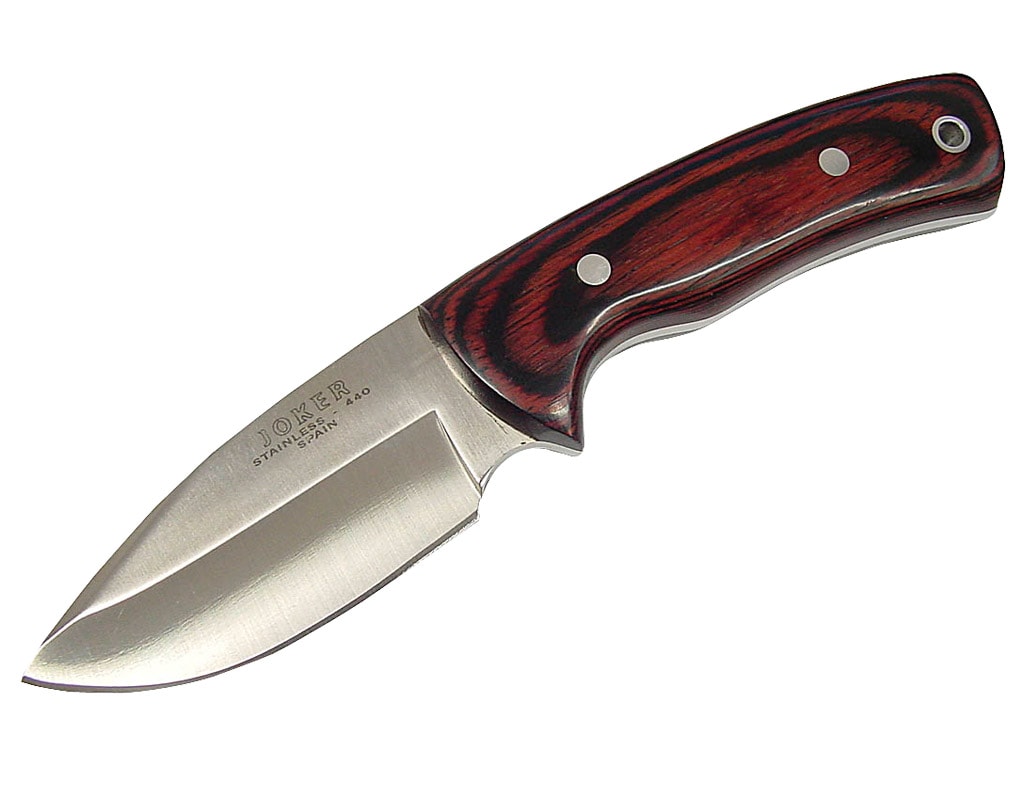
One of the historically oldest, classic materials for knife handles. Many types of wood are used, from exotic species such as cocobolo, ebony, imbuya, pakka, through traditional European species such as birch, beech, chestnut, cherry, walnut, olive tree, to dyed plywood. Wood is usually treated with protective substances and sometimes dyed. It is inferior to modern synthetic materials in terms of durability and resistance to water and chemical agents, but it is still readily used in knives of all types and price classes due to its aesthetics and unique atmosphere.
Bone / Horn
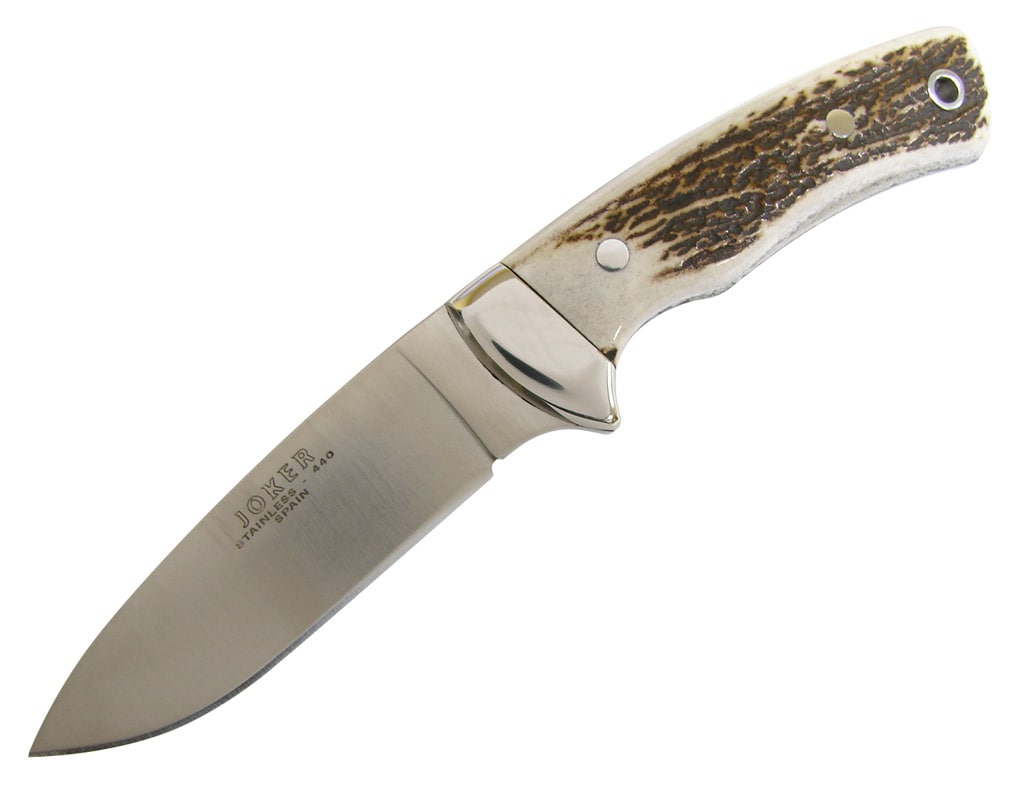
Bone and antlers of wild animals are, like wood, one of the historically oldest, classic materials for knife handles. Sometimes the natural texture of the material is left, more often it is engraved and/or polished. It is particularly popular in knives designed for hunters. The most expensive variety of this material is made from fossils, e.g. mammoth blows or the fossilised tusks and bones of extinct mega-fauna predators.
Leather
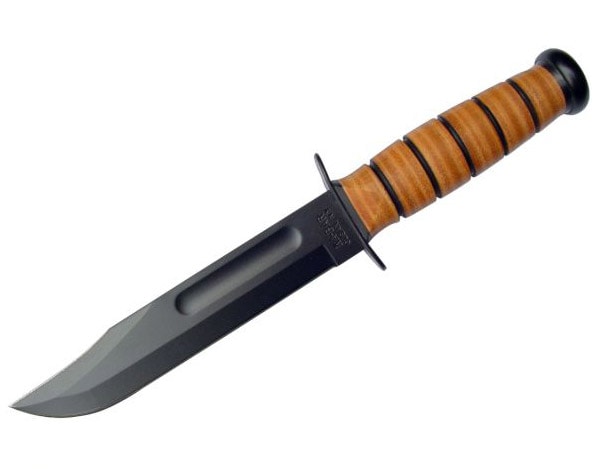
Compressed discs of leather applied directly to the steel shank of the knife. One of the historically oldest, classic knife handle materials. Pleasant to the touch, with a relatively good grip on the hand. It is inferior to modern synthetic materials in terms of durability and resistance to water and chemical agents, but is still popularly used in knives of all types and price classes due to its aesthetics and unique feel.
Handle Finishing Techniques
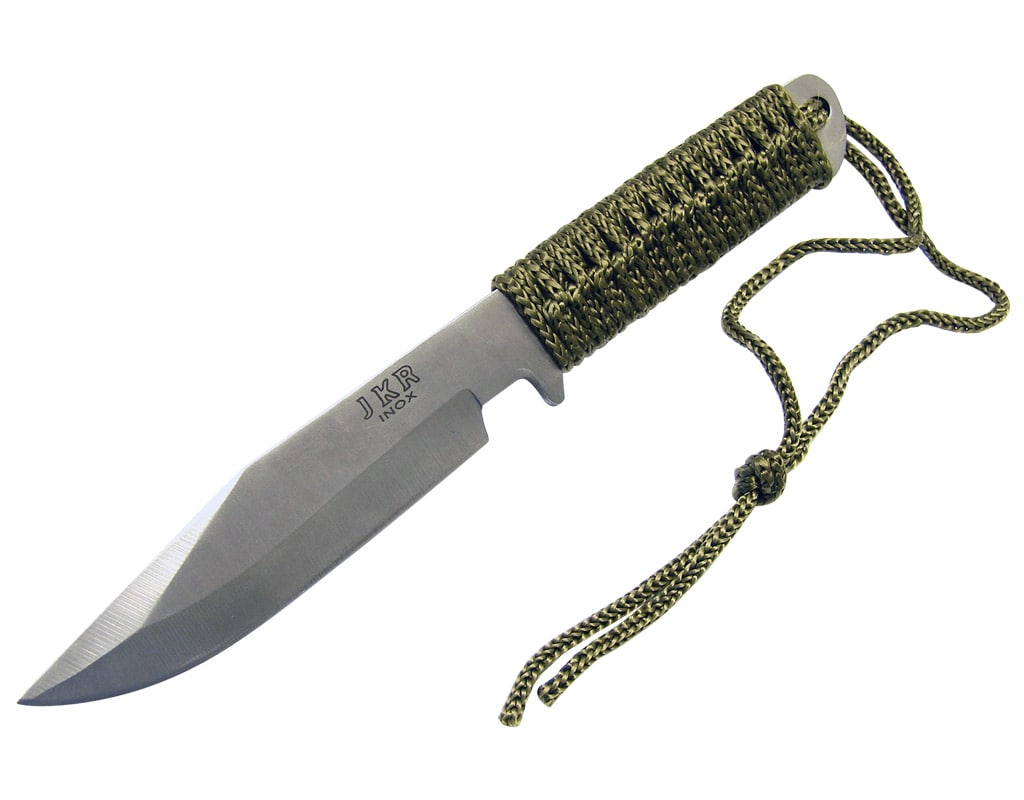
Finishing techniques like paracord wrapping (cord wrap) improve grip and functionality. They’re easy to replace or customize and are popular in survival and tactical knives for their simplicity and practicality.
Cord Wrap
A braid made directly on the steel shank of the knife, nowadays usually from nylon non-stretch parachute cord. It can be simple or with an intricate weave, e.g. referring to the braids made on traditional Japanese swords. Inexpensive to produce, it gives a good grip on the hand. Its disadvantages are its susceptibility to damage by sharp objects and its tendency to accumulate moisture, which is important for tool and spring steels.
Handle Materials – Composite and Synthetic
Composites like G-10, Micarta, and carbon fiber offer great durability, weather resistance, and low weight. Synthetics like Kraton, Zytel, or ABS are more affordable and ideal for mass production. These are practical choices, common in modern knife designs.
Stamina Wood
A composite that is a combination of veneer and epoxy resins, highly compressed at high temperatures. Stronger and more resistant than wood, it is also an aesthetically interesting material.
G-10
Laminate of glass fibre layers embedded in epoxy resin. Durable, resistant to impact, most chemical agents and low and high temperatures. Not electrically conductive. Through etching, engraving or sandblasting processes, non-slip textures with excellent adhesion can be achieved. It is used on the handles of high-end fixed-head knives and as an external facing or frame in folding knives.

Carbon Fiber
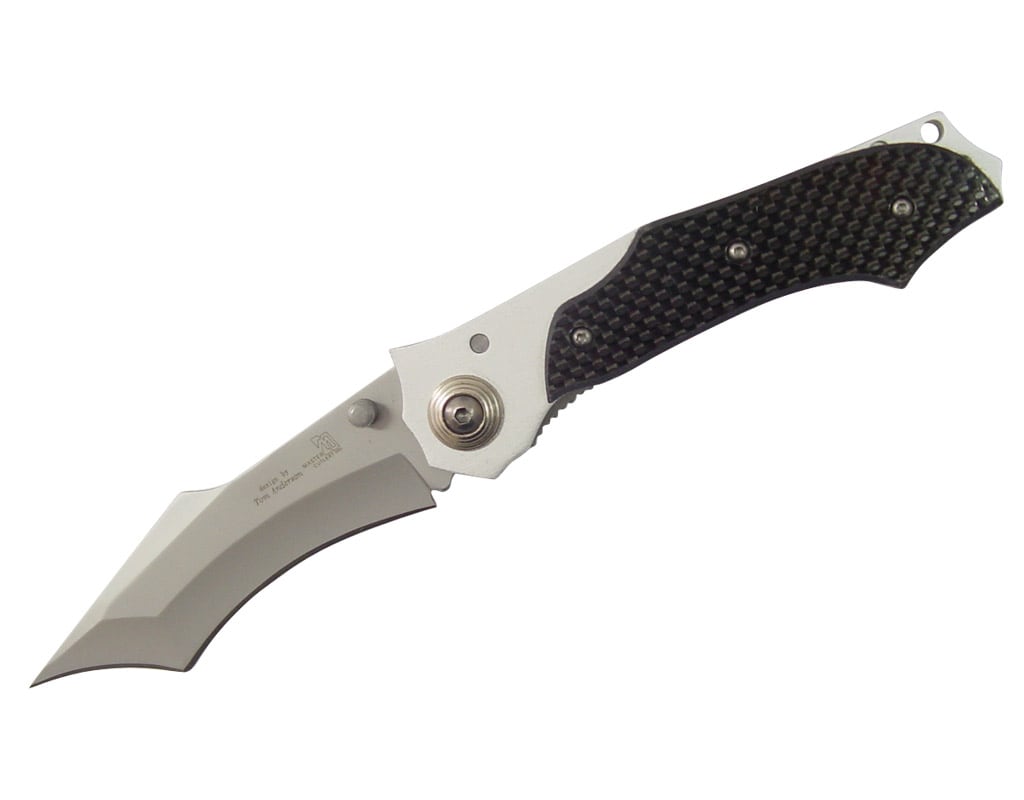
Laminate of carbon fibre layers compressed with resin. An extremely strong, tough, chemically resistant and aesthetically pleasing material. Its only disadvantages are its good electrical conductivity and relatively poor anti-slip properties. It can be machined by cutting. Usually only used in higher-end knives.
Craton
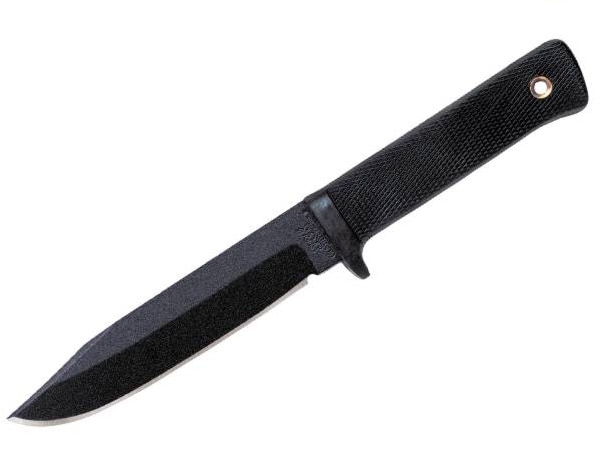
Thermoplastic polymer rubber with high resistance to cracking and abrasion. It does not evaporate, is resistant to petrol, oil, low and high temperatures. Thanks to its ability to be produced by injection moulding, it can be moulded into any shape and given any anti-slip texture. It is characterised by a very good grip on the hand and has excellent shock absorption, which is especially important for larger knives suitable for chopping. Usually in black, but can be dyed in any colour.
Thermorun
A thermoplastic rubber with properties similar to craton. The main difference is its greater hardness, which improves its resistance to mechanical damage, but at the same time slightly reduces its grip and shock-absorbing capacity. Most often in black, but it can be dyed in any colour.
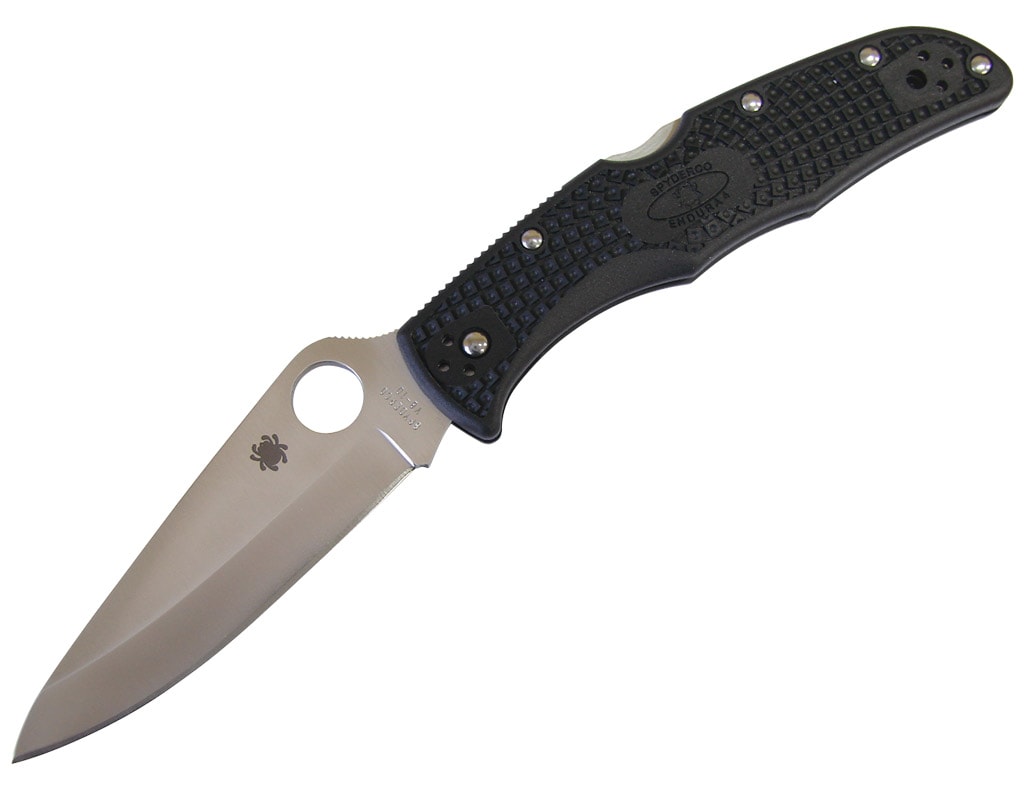
Zytel / FRN / GV6H
Nylon reinforced with micro glass fibres. Depending on the type of nylon used and the amount of glass fibre, it can be more or less flexible. Very resistant to abrasion and cracking. Thanks to its injection moulding capability, it can be moulded into any shape and given any anti-slip texture. Used on the handles of fixed-head knives and also as the backbone of lightweight folding knives. Can come with non-slip inserts made of craton or other thermogum. Most often in black, but can be dyed in any colour.
Micarta
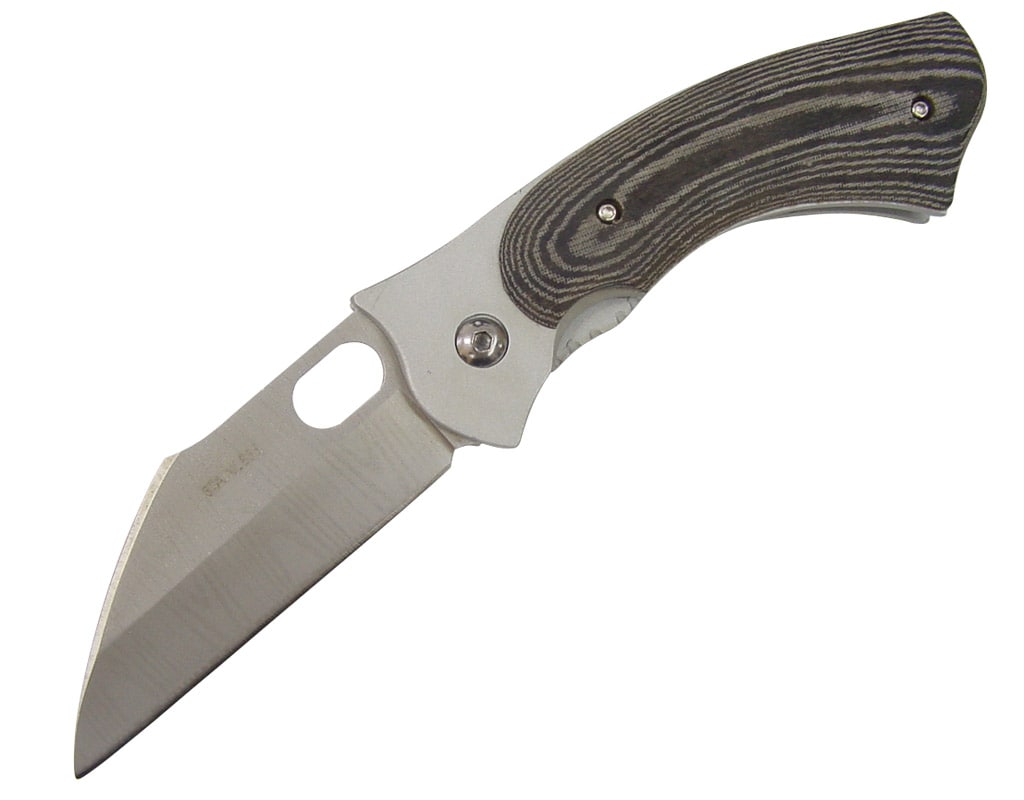
A laminate of layers of canvas or paper embedded in epoxy resin and pressed under pressure. Resistant to water and most common chemical agents. Durability only slightly less than G-10. Depending on the choice of canvas or paper, interesting colour effects and a variety of textures can be achieved. Micarta is machined by cutting and can also be given a non-slip texture even at the pressing stage. It is mainly used in medium and high-end knives.
Noryl GTX
A material very similar in mechanical properties and manufacturing process to Zytel, differing mainly in the use of Kevlar fibres instead of glass fibres in the nylon base. Stronger, slightly more expensive. Usually black in colour, but can be dyed in any colour.
ABS
A tough, impact-resistant, injection-moulded polymer material. Commonly used in industry wherever high strength is needed. Usually black, but can be dyed to any colour. Also used as a material for knife scabbards.
Handle Materials – Metals
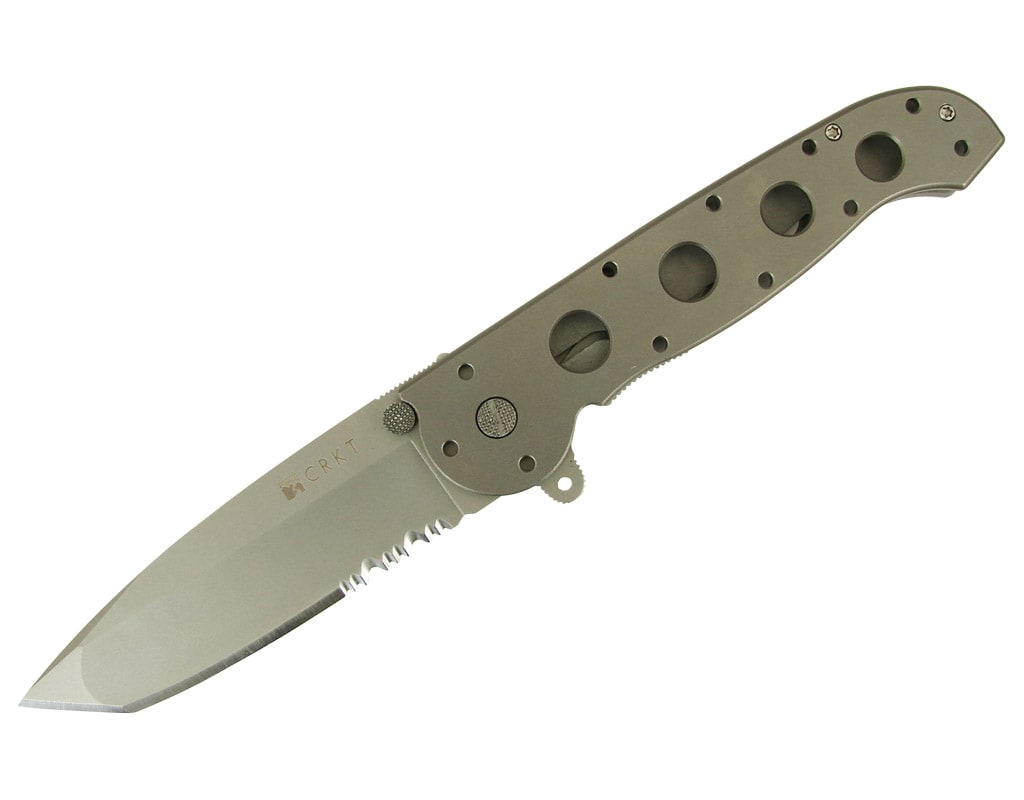
Metal handles made from steel, aluminum, or titanium are known for their durability and wear resistance. They’re a solid choice for utility and tactical knives. While heavier, they offer a sturdy feel and often allow for precise tool balance.
Steel 410
The steel is mainly used in folding knives as the material for the internal skeleton and the lock, less often as the outer facings or the handle of an integral design with a mono-lock. It is characterised by high resilience and corrosion resistance.
Steel 420J2
A steel with similar applications to 410, but due to its better mechanical properties, it is also found as a material for the heads of cheaper knives, usually kitchen knives.
Aluminium
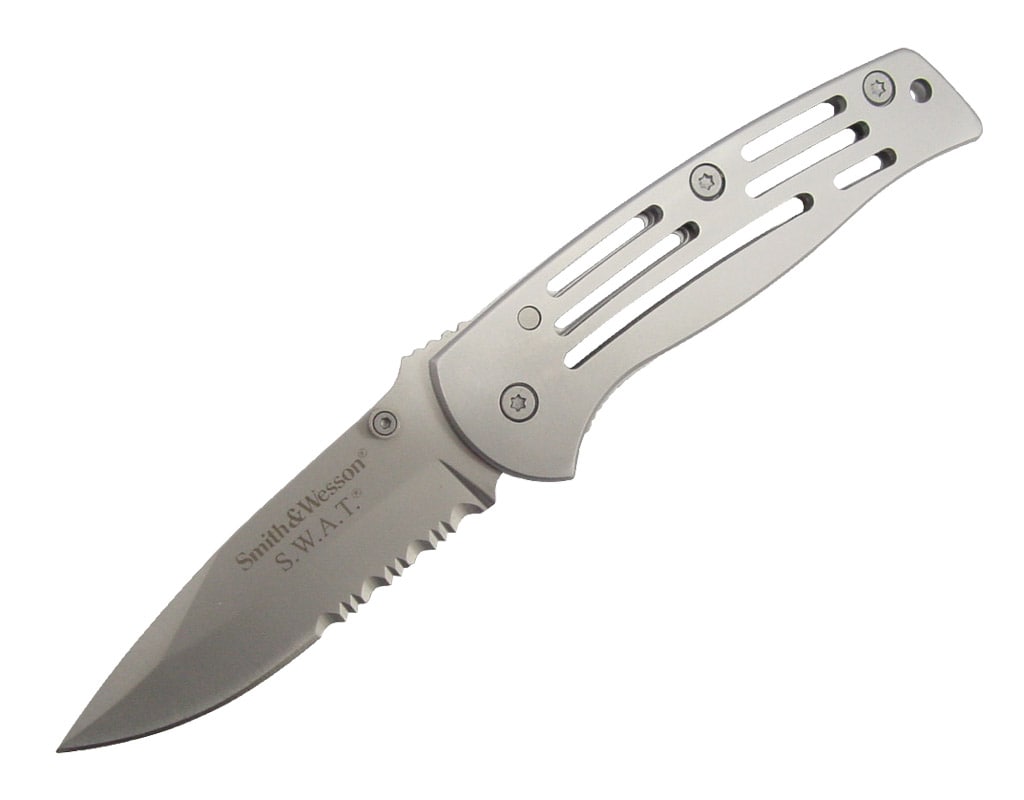
Hardened aluminium used in the aerospace industry, i.e. 6061 T-6 Aircraft Aluminium. A lightweight and strong material that is resistant to corrosion. Aluminium is often used as the backbone of folding knives and as outer liners. It is usually found in combination with external non-slip inserts of Kraton, Zytel, G10 or other material to increase grip confidence. The aluminium can be engraved into any texture and can also be coloured through an anodising process.
Titan
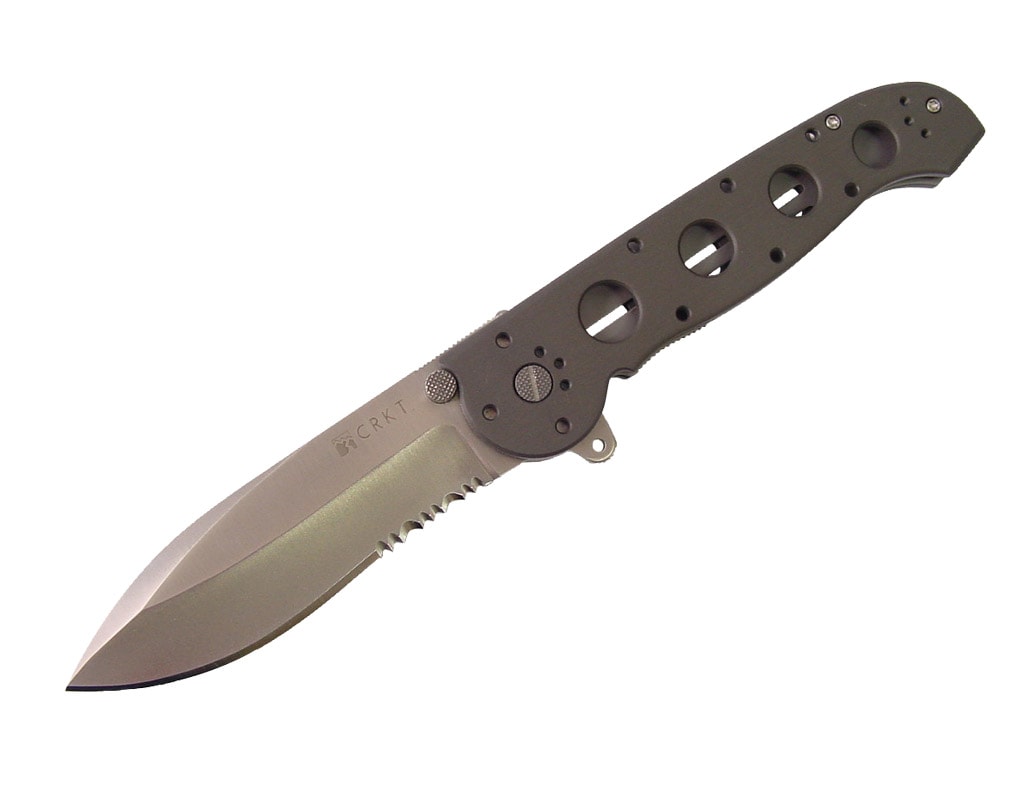
A hardened titanium-aluminium-vanadium alloy, or 6AL-4V Titanium. A hard, impact-resistant yet lightweight metal. It is mainly used in folding knives as the material for the internal skeleton and liner-lock, and less frequently as the outer facings. It is also the best material for an integral handle design with mono-lock. As with aluminium, any texture can be engraved on titanium and it can also be coloured by anodising. It is found practically only in the best mid- to high-end knives.
Richer with this bit of information, we are certainly ready to go shopping - take a look at our range of knives.