Basic types of knife grinding - a guide
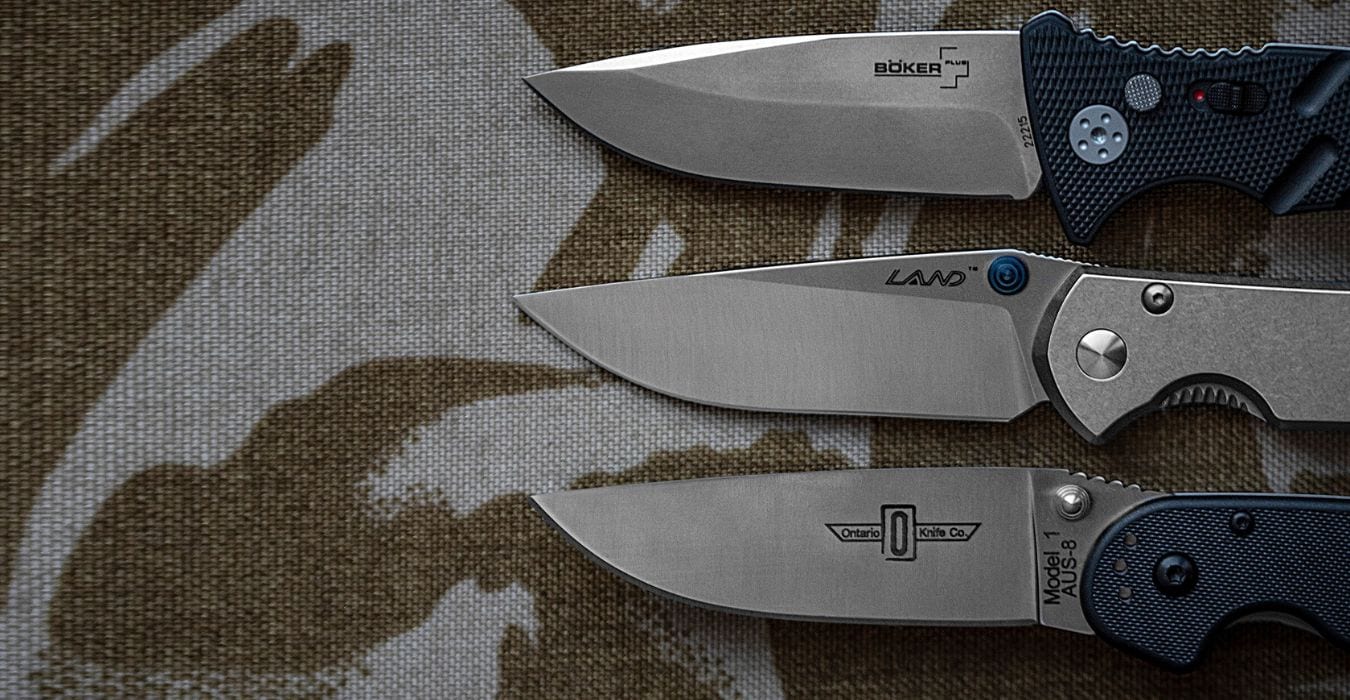
Choosing the right knife grind is crucial, both for its functionality and durability. Different types of knife grinds have their own unique characteristics that affect the strength, sharpness and application of the blade. The grind also determines how well the knife will cut a specific material, as well as the ease of sharpening and maintenance.
In this guide, we present the different types of knife grinds, along with a brief description of their advantages and disadvantages, to help you choose the best solution for your needs.
Full Flat Grind
One of the most popular grinds. The side surfaces of the blade are entirely a cutting wedge formed by planes extending from the back to the cutting edge. Such a head has a very favourable balance between strength and smoothness and lightness of cut. The wide flat surfaces provide a very stable movement in the material being cut, which, combined with the low resistance offered by such a blade, ensures an excellent, deep cut. Used in hunting and general purpose knives.


Hollow
The side surfaces of the cutting wedge are concave. The grind can be derived over the full width of the blade or partial (low/high). It has the advantage of being able to create a thin, very good cutting wedge with a relatively low grind height, and therefore decent strength of the blade with a good cutting edge. The disadvantages are the lower strength directly above the cutting edge and the fact that with deeper cuts the head loses stability and creates a lot of resistance due to the rapidly increasing thickness near the back. Mainly used in hunting and general purpose folding knives.


Convex
The side surfaces of the cutting wedge are slightly convex and there is no clear demarcation between the cutting wedge and the edge itself. The grind can be either full width of the blade or partial (low/high). This profile provides a strong cutting edge with relatively little resistance from the blade in the material being cut. Recommended for the cut of survival knives and larger blades adapted for chopping. It is quite difficult to make, which unfortunately results in a higher price of the knife. In addition, the cutting edge of the convex grind requires more practice in sharpening.


Scandi Grind (Scandinavian cut)
It is a low, partial flat grind with the cutting edge brought out to zero. It does not have the traditional separate cutting edge chamfer that is characteristic of other grinds, such as concave or convex grinds. Knives with the Scandi grind are very sharp and at the same time the cutting edge is resistant to chipping - the cross-sectional area grows quickly behind the cutting edge, making it harder to chisel. Knives with this cut are not suitable for slicing food. However, they are excellent for woodworking, which makes them a frequent choice of bushcrafters.


Chisel
The grind is only brought out on one side, the other side of the blade remains flat. It can be flat full, partial or even convex. For a right-handed person, it is best if the flat part is on the left side, otherwise the head will tend to deviate from the cutting line. The main advantage of this grind is simpler production and less tool wear, which should translate into a lower knife price.


Flat Grind
The side surfaces of the cutting wedge are flat as in the full-flat grind, but start to converge towards the cutting edge from about halfway down the width of the blade. If the cutting wedge planes take up more space, the grind is called high, if less, the grind is called low. It has similar characteristics to the full-flat grind, but the cutting wedge is lower and its planes converge at a greater angle, resulting in greater cutting resistance. The advantage of the partial grind is that the cross-sectional area is larger for the assumed width and thickness of the blade, making the knife much more resistant to breakage. Used in military, tactical and heavy knives adapted for chopping.

Mixed/combined/asymmetric
Mixed grind, also known as combined grind or asymmetrical grind, is an advanced machining technique that allows different types of grind to be combined to achieve the desired aesthetic and functional effect. In practice, this means that concave grinds can be combined with flat grinds, convex grinds with zero grinds or any other combination that suits the specific requirements of the project.