The most common locks used on folding knives
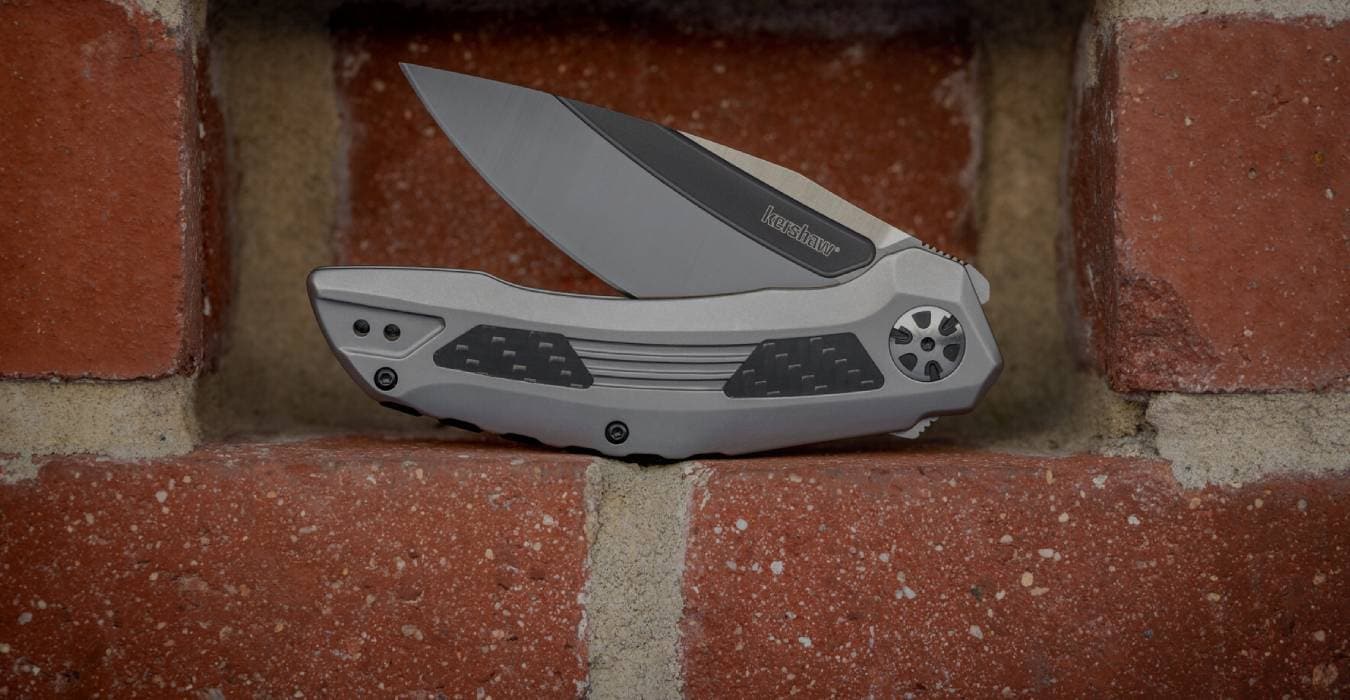
Knife locks are an often forgotten item when choosing a folding knife. However, it is good, especially when buying online, to know some information about the types of locks. This element largely determines the safety of use or the ability to use the knife quickly. Below we have presented the types of locks and the principles of their operation. For those considering buying a knife, we have prepared a guide "which knife to choose". - we hope it will help you in your choice!
Back lock
The so-called rear locking mechanism. Historically one of the oldest locking mechanisms in folding knives. Locking is done by means of a locking lever located on the back of the handle with a protrusion that, when the knife is opened, interlocks with a notch in the back of the blade, preventing its return movement. This lever is pressed by a flat spring inside the back of the handle. Unlocking is accomplished by pressing down on the back of the lever, which is accessible through a small cutout in the linings on the back of the handle. In the closed position, the lever presses on the cam surface at the back of the blade, preventing it from opening on its own. The advantages of this lock are the ease of operation with both right and left hands, as well as the simplicity of the design and the security of holding the head in the closed position. Unfortunately, it has relatively low resistance to dirt and dynamic loads.
Liner lock
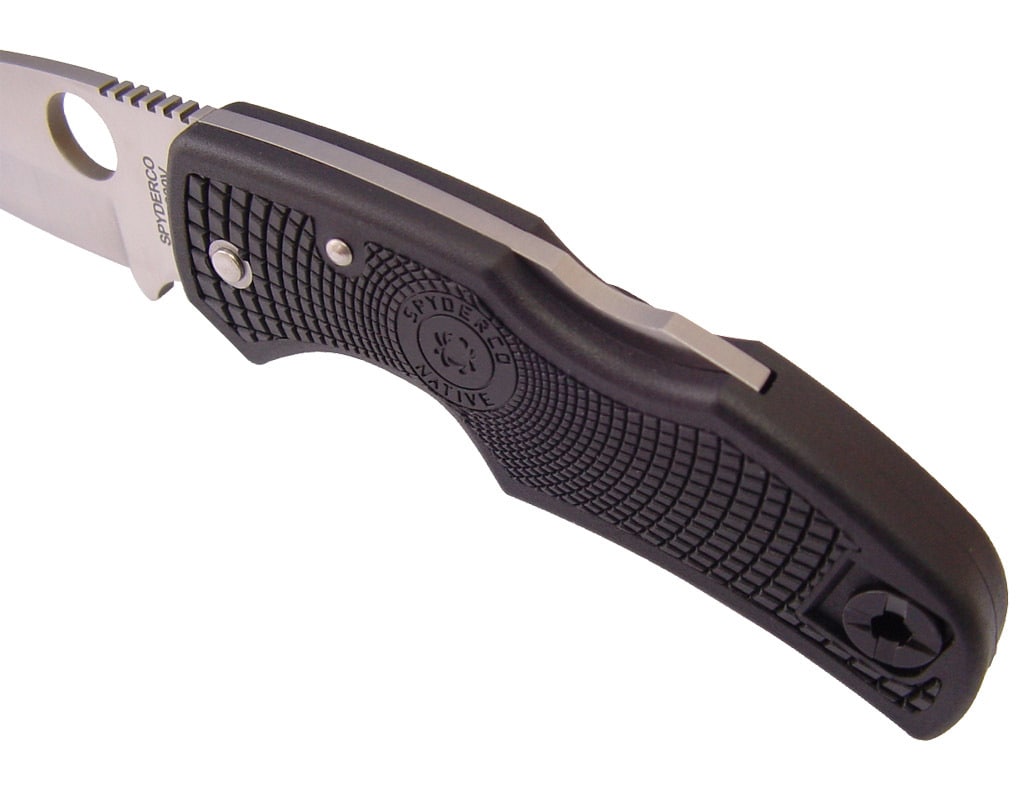
Currently the most widespread locking mechanism. Locking is carried out by a spring-loaded wing that is an integral part of one of the side plates (liners) of the steel or titanium skeleton of the handle. When the knife is opened, the plate (liner) bends at a slant to the inside of the handle and clasps against the bevelled back of the blade, preventing its return movement. Unlocking is done by bending the locking wing outward, which is most conveniently done by pressing it with the thumb. On the locking wing is embedded a small bearing ball, which in the closed position is pressed against a pawl drilled into the side of the back of the head, preventing it from opening on its own. The main advantages of the liner lock are simplicity of design and intuitive operation. Unfortunately, it is relatively unresistant to dirt and dynamic loads, although it is superior to the back lock in this regard. More difficult to operate for left-handed people.
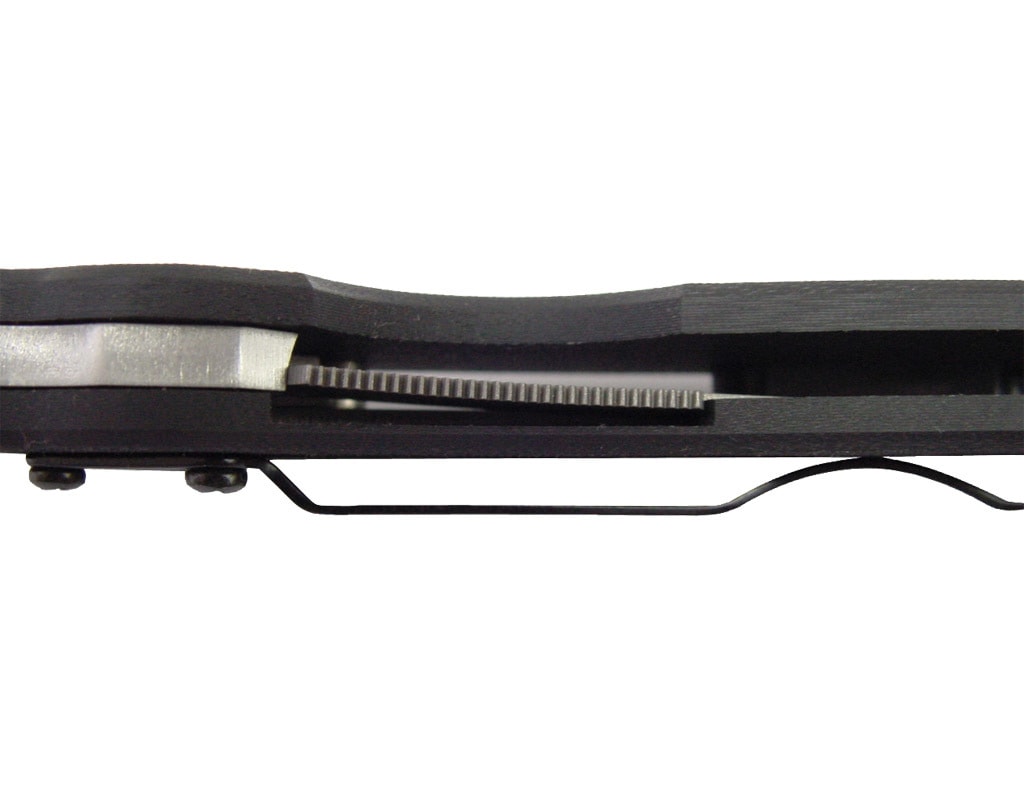
Frame lock (Integral lock, mono lock)
A very strong, stable lock using the principle of the liner lock. The main difference is that the side plates of the handle skeleton are so thick that no additional facings are needed. This also makes the locking wing much thicker, stiffer and therefore less sensitive to dynamic loads. In addition, this lock is much more resistant to dirt, since there is no space between the locking wing and the linings where dirt could accumulate. For the construction of this lock, titanium is most often used, less often steel, occasionally aluminum.
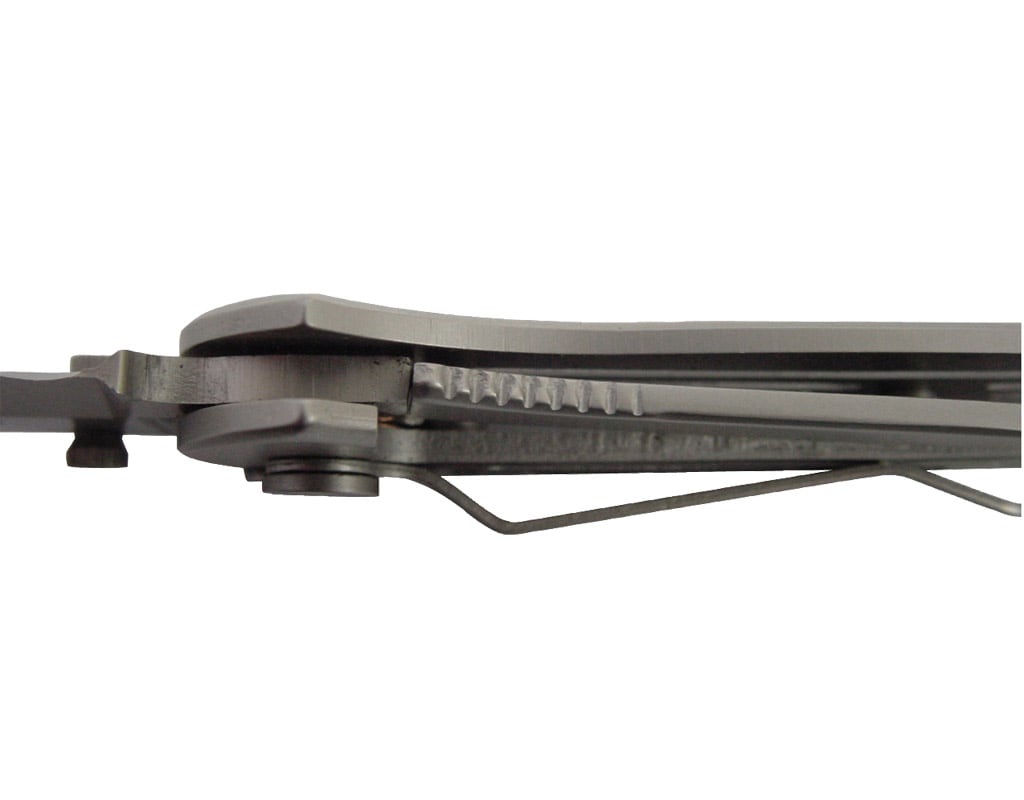
Axis lock
The locking mechanism introduced to the market by Benchmade. Locking is done by an axis (axis) that moves horizontally in longitudinal cutouts in the steel side plates of the handle frame. When the knife is opened, the locking axis overlaps the back of the blade from above, preventing its return movement. This axis is pressed down by two letter-shaped springs. Unlocking is done by pulling back the locking axle, the ends of which are accessible through cutouts in the liners on the sides of the handle. In the locked position, the axle presses against the cam surface at the rear of the head, preventing it from opening on its own. The advantages of the axis-lock are its resistance to contamination, practical insensitivity to dynamic loads, ease of operation with both right and left hands, and lightness of operation. Its weak point is the relatively fragile springs.
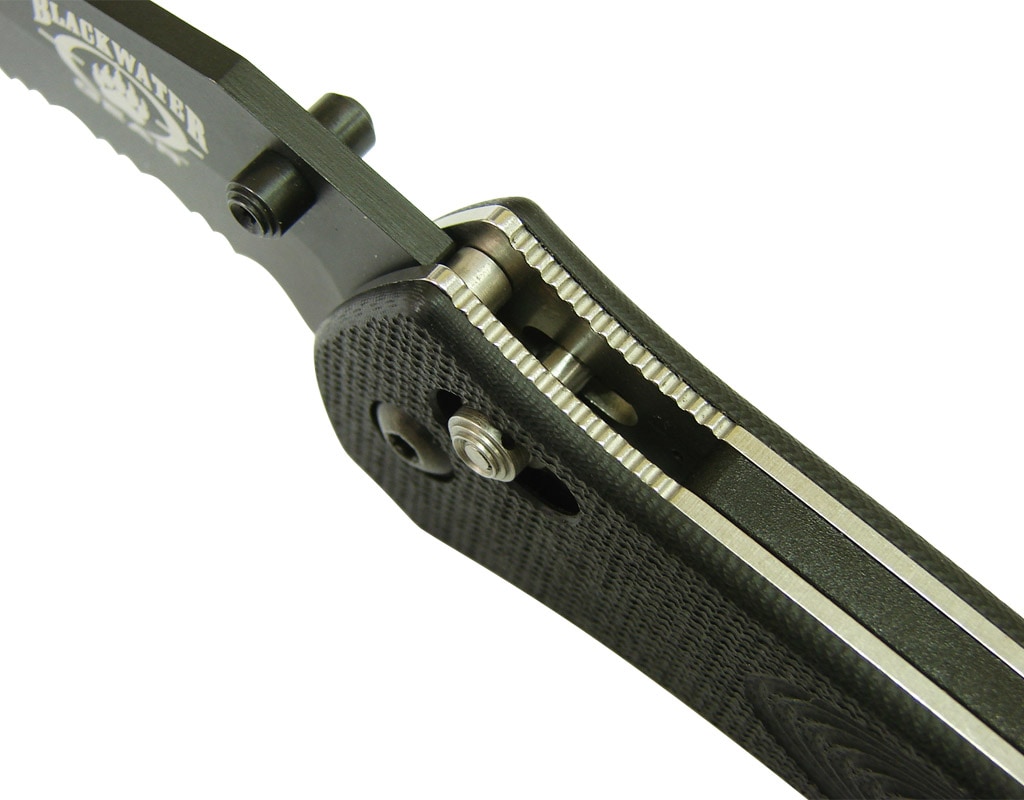
Ultra lock
Axis lock counterpart used in Cold Steel knives. The main difference is that the locking pin moves inside a milled channel in the headstock, rather than outside, as in axis lock. Springs, operation and general principle of operation identical.
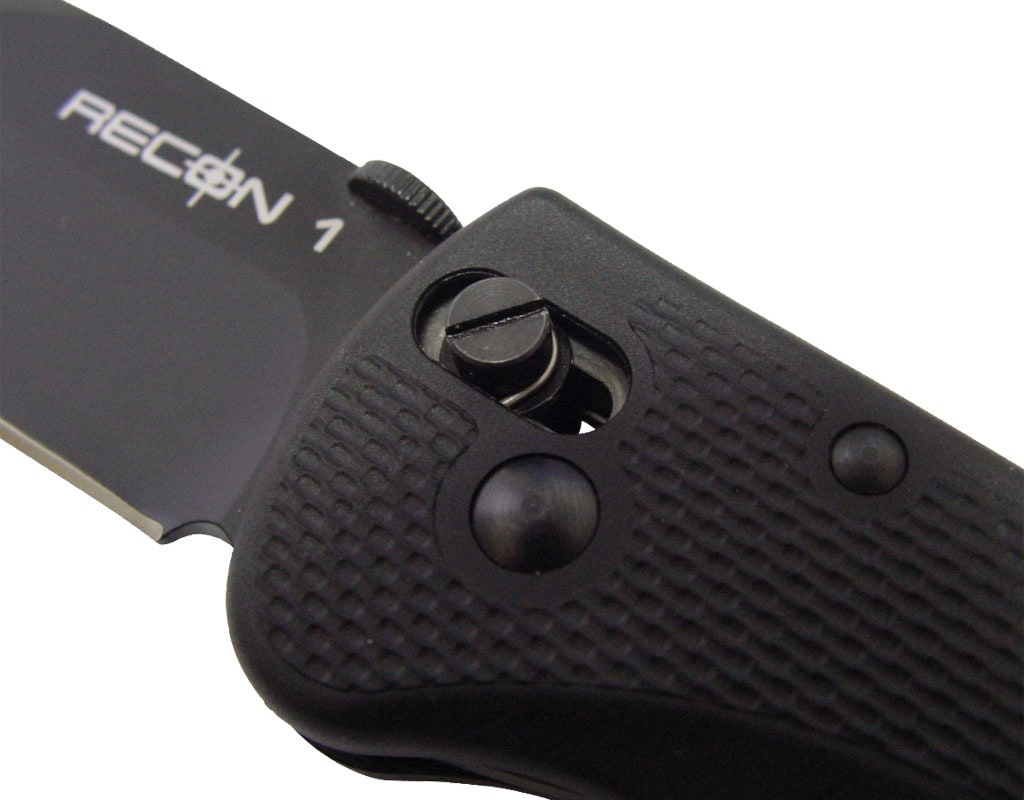
Plunge lock
The lock immobilizes the blade in the open position by means of a spring-loaded pin that enters from the side into a hole drilled in the shank / back of the blade. In the closed position, on the same principle, it protects the blade from accidental opening. It is most commonly used in automatic knives.