How to choose a knife? Knife guide
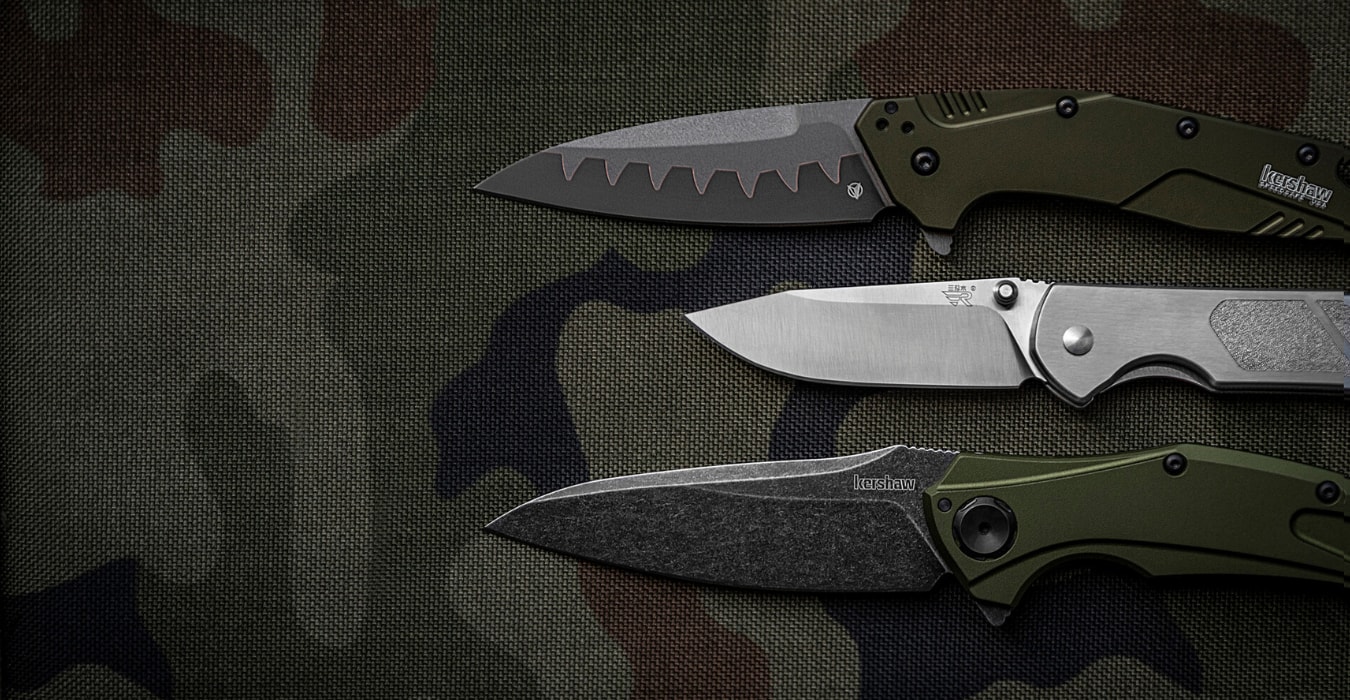
Choosing a knife is often not an easy dilemma, especially since it is usually not a small expense and once bought should serve us for years. So it is worth first determining what features a knife should have that are optimal for our needs and expectations, and the easiest way to do this is to answer the following questions. Remember that regardless of the type of knife you choose, it is a good idea to familiarize yourself with and follow some simple rules for using and maintaining knives. By doing so, you will significantly improve the life of this very practical tool, and in addition, its use will become safe for you and those around you.
What questions should you know the answer to before buying a knife?
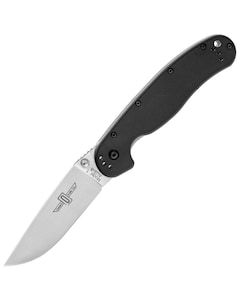
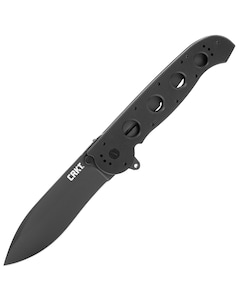
Folding or fixed blade knife?
| Folding knife: | Fixed blade knife: |
|
|
|
|
|
|
 |
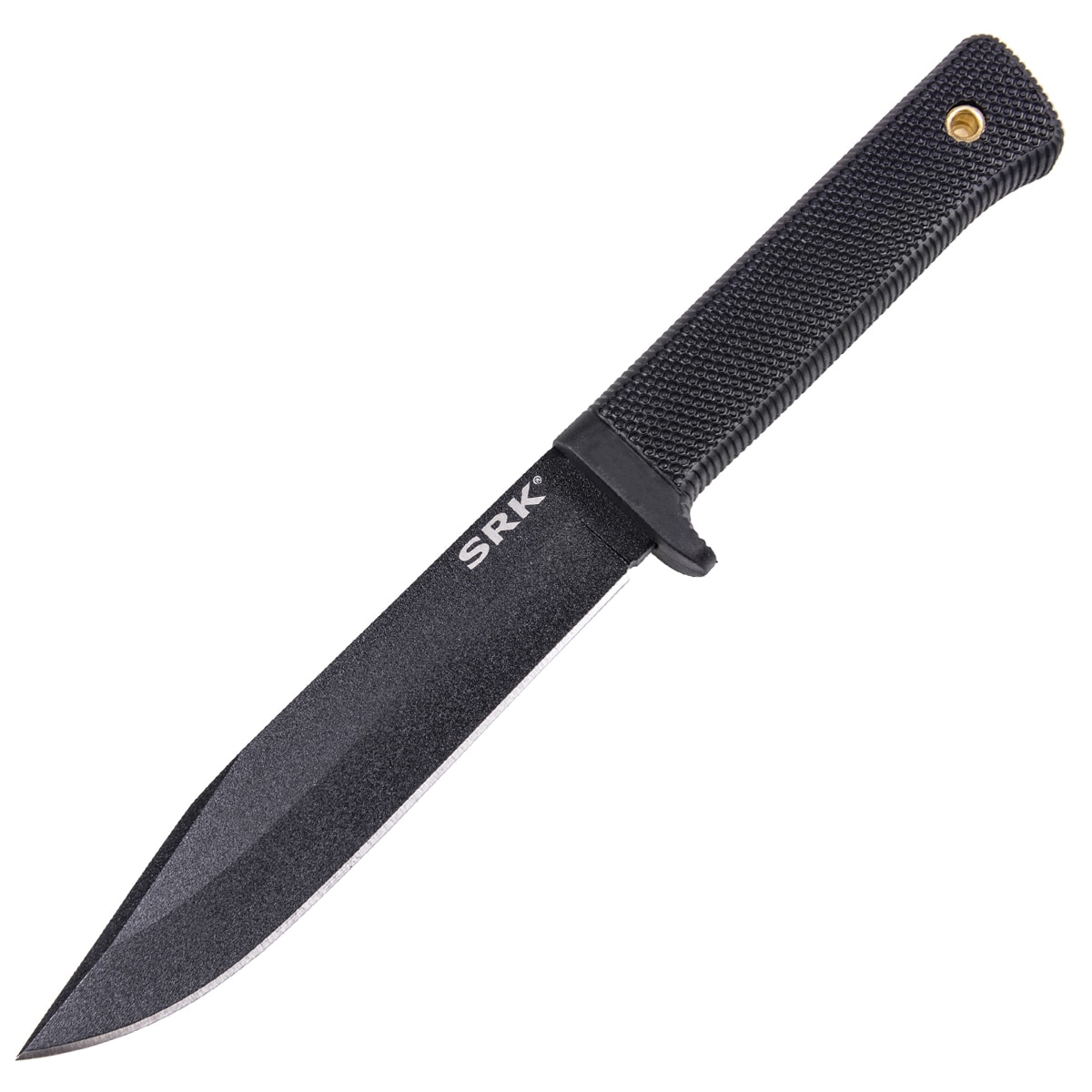 |
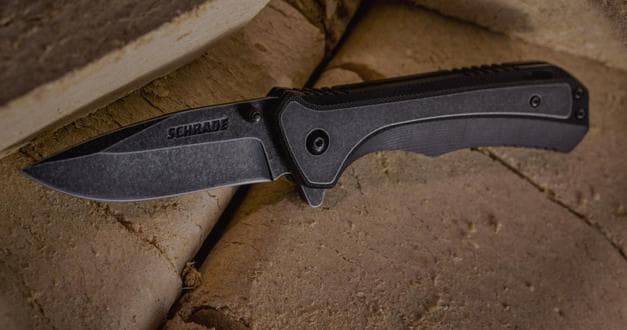
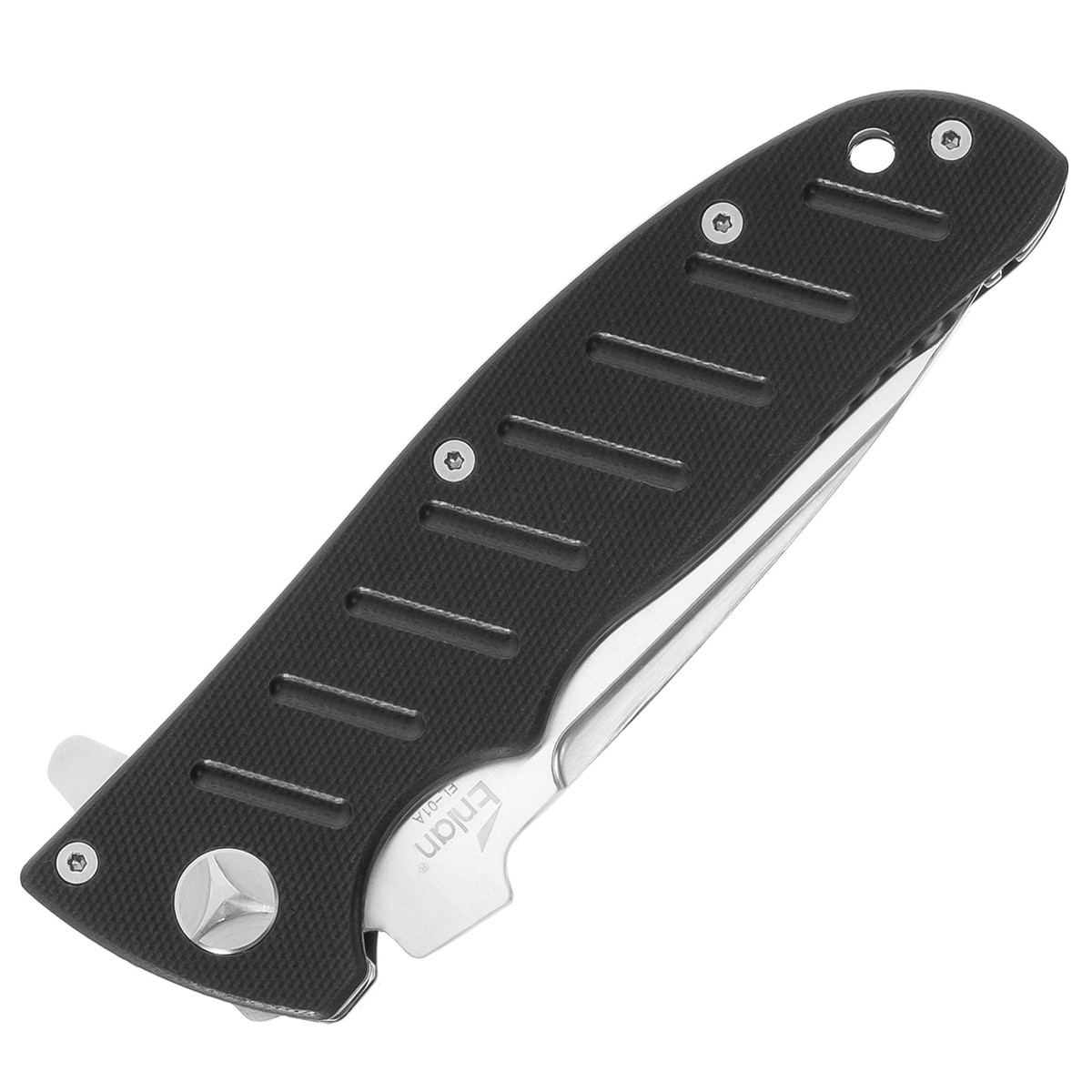
Both solutions have advantages and disadvantages. A folding knife takes up much less space than a fixed blade knife of similar length, and does not require a sheath or even a small holster, as it can be carried loosely in a pocket. In addition, most modern folding knives are equipped with a spring clip attached to the handle, which allows it to be clipped behind a belt or against the edge of a pocket, as well as a variety of solutions that allow you to quickly open the head with one hand. These features make folding knives much more convenient to carry with you all day, especially when you want to be discreet, but at the same time want to be able to quickly retrieve this very practical tool in many situations.
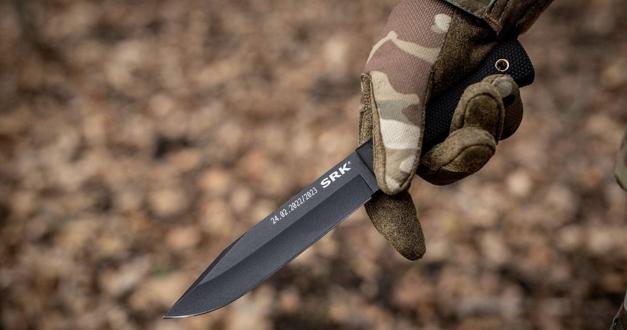
On the other hand, an average knife with a fixed blade will always be more durable than a folding knife of similar length and head thickness. The reason for this is the weakest point of folding knives, i.e. the axis of rotation of the blade and the elements responsible for holding the head in the open position such as the lock to prevent accidental folding and the opening stop. During work such as chopping, undermining or even strong cutting or hammering, it is relatively easy to damage these elements, which not only risks destroying the knife, but also threatening injury to the hand holding the knife.
Another advantage of a fixed-head knife is that it is less susceptible to dirt, which in the case of folding knives could interfere with the effective operation of the axis of rotation of the head and the mechanism that locks it, which in extreme cases can make it impossible to use the knife safely, and sometimes even at all.
It should also be mentioned that knives with a steel blade are safer - in the case of folding knives, when carried in the event of a sudden shock (such as a fall, jump or bump), the blade could accidentally open and if you carry the knife loose in your pocket or on items of clothing, serious injury could result. In the case of knives with a fixed blade carried in a sheath, this problem is practically non-existent. However, this does not put folding knives out of the question - the locks used in folding knives significantly increase the safety of their use.
The last important difference is that knives with a fixed blade usually have a more comfortable handle, providing a more secure grip. After all, in the case of a folding knife, it must accommodate the folded head and the locking mechanism, while on the outside we have an attached clip, which does not always harmonize with the need for proper ergonomics.
Taking the above into account, it can be concluded that a folding knife is a suitable solution for people who need a knife for concealed carry and everyday use in urban conditions, but for hunting, military or survival applications a more durable and reliable knife with a fixed blade will undoubtedly be a better choice. Of course, there may be exceptions to this rule, but I recommend always weighing the pros and cons of both basic types of knives.
You can take a look at our range of folding knives and fixed blade knives.
What should be the length of the knife's blade?
Contrary to popular opinion, Polish law in no way limits the length of the blade of a knife that we can legally carry with us. With the exception of blades concealed in objects that do not have the appearance of a white weapon (such as a sword concealed in a walking stick), we can own, carry and use any length of blade from miniature pocket knives to machetes and swords. However, it is worth thinking about what length of blade we really need, as this largely determines the handiness and comfort of carrying.
For folding knives, the optimum is within 3-4 inches, or between 7.5 and 10 cm. A smaller head may prove insufficient even for everyday trivial activities, while a larger one will nullify the basic advantage of a folding knife, which is its compactness when folded. Of course, many manufacturers offer folding knives with blades slightly longer or shorter than those mentioned. The latter, in particular, find many customers, mainly because they can be carried discreetly even with formal attire, and also because of the restrictive regulations of some countries limiting the type and size of knives allowed.
In the case of a fixed blade knife, everything depends on the planned range of uses, but it should be remembered that a knife with a blade length of more than 15 cm will be quite cumbersome to carry, especially during a long hike.
The majority of hunting and hiking knives have a blade length of no more than 4-5 inches, or a maximum of 10-13 cm, which is due to the fact that this size is a good compromise between the length of the cutting edge and portability during precision work such as game handling or equipment repair.
However, if we decide that the knife is to be our primary, universal tool during an outing in unpopulated terrain, it is worth that it has a head length of at least 15 cm, and preferably larger. Otherwise, the use of a knife for chopping wood will be very troublesome.
Knives with heads longer than 20 cm are actually already slightly more durable and more versatile machetes. They will not 100% replace an axe, and for the role of a typical machete they are a bit too heavy, but in some situations they can prove very useful. Clearing brush, building a shelter or even dissecting the carcass of a hunted animal in the field are tasks for which large Bowie or Kukri knives will prove perfect.
What should be the thickness of the knife's blade?
We should not suggest the thickness of the blade itself, since parameters such as the strength and cutting properties of the knife depend more on the cross-sectional area (and therefore also on the width of the blade) and on the geometry of the grind located on the amphibian. At most, one can assume that any knife with a blade thicker than 5 mm will tend to wedge in the material being cut, especially when cutting deeper.
Which knife blade geometry to choose?
This question raises an issue too broad to answer in a few sentences, but it is worth remembering some basic principles:
• the higher the cut on the blade amphibian reaches, the better the cutting properties of the knife at a given thickness and width of the blade,
• the larger the cross-sectional area at a given width and thickness of the blade, the greater its resistance to lateral stress,
• concave grind provides excellent cutting properties, especially for shallow cuts, but unfortunately at the same time significantly reduces the cross-sectional area of the blade, thus reducing its strength, especially just above the cutting edge. This is not a problem in small hunting, touring or folding knives, but if you assume the use of the knife for chopping or other heavier work, it is better to choose one of the variants of the flat grind,
• heads with a Recurve blade style, i.e. those whose cutting edges in the side projection resemble an overturned letter "S", make it easier to cut fibrous materials and very well enhance the belly of the blade. However, it should be borne in mind that such a knife has a weakened section of the blade on the handle side, besides, it will be difficult to sharpen it on an ordinary flat whetstone,
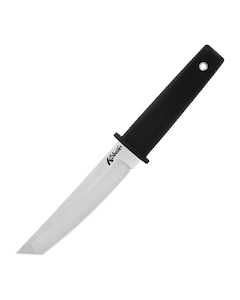
• if you care about the strength of the tip, choose heads with a Tanto or Drop-Point blade style, while if the priority is the possibility of effective penetration, the best will be Dagger or Spear-Point blade.
A good compromise are Clip-Point, Bowie, and Drop-Point blade styles having a small under-milling on the back of the head on the tip side called a false blade.
If you need to explore this topic in more depth, please see our article on knife blade styles.
Knife - what kind of steel should it be made of?
We have devoted a separate article to the topic of steel grades and their properties - knife head materials and their properties.
What kind of knife handle to choose?
In order to be guaranteed that the knife we buy will fit well in our hand, it is best to take it in hand before buying and try it in different grips. Unfortunately, we do not always have this opportunity, but you can avoid disappointment by keeping in mind a few basic rules:
• while in a small folding knife it is acceptable for the length of the handle to allow a grip with only three fingers, in a full-size knife that you intend to use for heavier work the handle should be of a length that allows a free, full grip, so at least 10 cm,
• people with longer fingers should choose handles that are cracked and/or have thick linings, otherwise, despite the right profile and length, the handle will not provide a secure grip,
• straight handles, coaxial with the head of the knife will work well in a universal knife, which should lie equally well in the hand in any possible grip and for any type of work,
• curved handles usually provide a more comfortable and secure grip, in addition to allowing a more favorable application of force during heavy cutting or planing. Their disadvantage is that they are less versatile - they usually lie best in only one grip and are not suitable for knives with which you intend to cut something on a flat surface, such as a kitchen board.
In addition, it is important to pay attention to the design solutions that determine the strength of the connection between the blade and handle, as well as the handle itself.
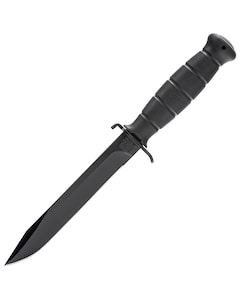
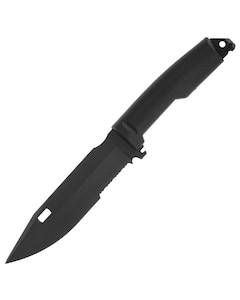
The most reliable solution are knives with Full Tang handles, i.e. knives in which the steel handle is an extension of the head, having the same length and width as the handle linings.
Many knives are equipped with Hidden Tang handles, i.e. those in which the bolt is narrower than the width of the handle and usually completely invisible. The advantage of such a design is lighter weight, as well as isolation of the hand from the cold steel shaft. Unfortunately, not all knives of this type have sufficient strength for particularly heavy work, so if it is to be a survival or military knife, it is worth carefully examining its design and consulting experienced users before buying.
The least trustworthy knives are those in which the head and handle are made as completely separate components and joined by a screw, rivet or welding. You certainly shouldn't chop with such a knife, and you can't be sure that over time the head won't loosen or even fall off the handle.
Another no less important issue is the material of the handle grip. The best grip and comfort are provided by handles made of modern rubber-like plastics, unfortunately, they are relatively sensitive to damage by sharp objects, as well as the effects of temperature.
Much more durable are hard plastics based on nylon with glass or Kevlar fiber additives. Thanks to the possibility of giving them any texture, they can have a grip equal to or even better than rubber; unfortunately, they do not dampen as well the vibrations transmitted by the mandrel during chopping. In the case of small folding knives, these plastics are sometimes used to make integral, skeletonless injection-molded handles, but they do not have enough rigidity to withstand heavier work.
Equally, if not more durable, are modern glass-epoxy laminates and their carbon-fiber-based counterparts. Their additional advantage is a very good stiffness-to-weight ratio, so they can be self-supporting structures in the handles of folding knives, even those designed for heavier work.
Another group is metal handles. The advantage of using materials such as steel, titanium and aluminum for handle linings is primarily their strength and sometimes attractive appearance, but it should be remembered that this usually comes at the expense of greater weight and less grip comfort.
Of course, knives with handles made of traditional, natural materials such as leather, antler or wood are also still produced. Compared to the aforementioned synthetic materials, they have more disadvantages than advantages, and the most important problem is their relatively high susceptibility to weathering. However, if we take care of the proper maintenance of the knife and do not subject it to serious abuse, then also with an antler, leather or wooden handle will serve us for years.
You can find some additional and useful information about handle types in the article about materials used for handles.


Leather or synthetic sheath?
As already mentioned regarding the handle, the disadvantage of leather is its susceptibility to the elements, so a knife in a leather sheath will be a poor choice for those engaged in advanced survival or water sports.
The synthetic equivalent of a leather sheath are fully moisture-resistant sheaths made of Cordura and other nylon fabrics. Their disadvantage is their relatively high susceptibility to cutting and their low stiffness, which makes them as limited in trouser options as leather scabbards.
The best functionality is provided by modern self-locking sheaths made of hard plastics like Kydex, ABS, etc. They are durable, easy to clean, and thanks to holes on the edges can be trolled in many ways, including with the handle facing down. However, not everyone is comfortable with a knife in plastic, and for some designs a plastic scabbard simply does not fit.
Let's also remember that a scabbard that does not suit us does not have to be a reason to abandon the purchase of the desired knife. You can even have a cobbler make a leather scabbard, and nowadays you can easily order a Kydex scabbard tailored individually to your knife.
Already know what you want? Check out our range of knives! When choosing a knife, remember about the discount coupons available from us.