Knife blade finishes and types of protective coatings
Buying the right knife is not only a matter of selecting the type and size of blade for a particular task. The finish of the blade and the protective coatings used also play an important role, affecting both the aesthetics of the blade, but also the durability, lifespan and resistance to external factors. In this article, we will discuss the different types of finishes and coatings used in knife manufacturing.
Knife finishes - types
Knife finishing is the final surface treatment of a blade that not only gives it a distinctive appearance, but also affects its performance characteristics. The blade of the knife is finished in such a way that a specific grit is created on its surface. A low-gloss finish has a grit of 280 to 320, while the standard finish for high-quality knives is around 800. A higher gloss can be achieved by polishing the blade with chrome oxide (white or green chrome) or by hand using very fine sandpaper.
The most common types of knife blade finishes are described below:
Satin Finish
Finish with fine, barely discernible striations/splashes, which are the residue of grinding (mechanical or manual). The corresponding satin finish accentuates the shapes of the blade and reduces glare. This is a typical finish for most working knives.

Mirror Finish
The head is sanded "mirror-like". This finish is undoubtedly striking, but it scratches quite quickly during use and exposes scratches instead of decorating. In addition, it is difficult to produce, making production more expensive. Relatively rarely used in working knives, more often in small gentleman's knives and decorative models hunting knives.

Stonewash
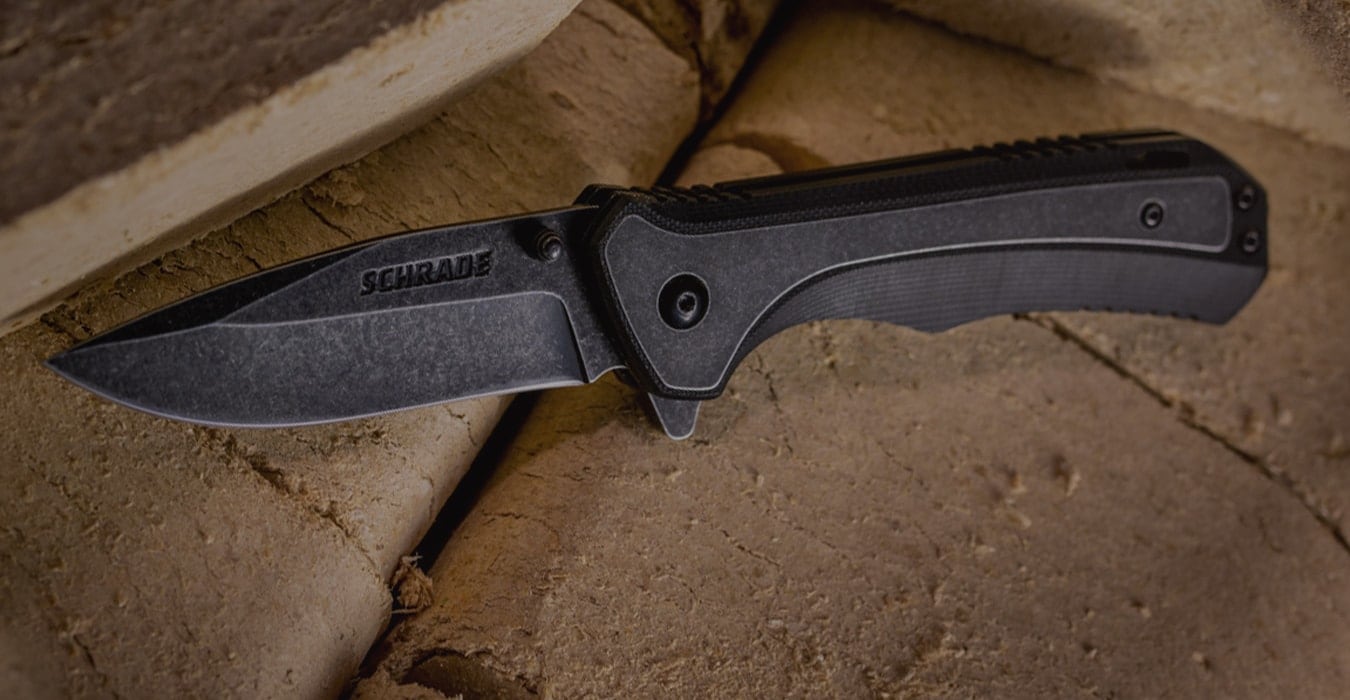
The head acquires its characteristic fine scratches as a result of bathing in gravel or other abrasive materials. The chaotically distributed, irregular fine scratches mask well the subsequent scratches that occur during use.

Beadblast
Matt blade finish achieved by sandblasting. Designed especially for stainless steel. It is used in utility and tactical knives. It is characterised by a very aesthetic appearance and does not reflect light.

What are the types of coatings used on knife blades?
Knife coatings are thin layers of material applied to the blade to impart specific properties. They can improve a knife's resistance to corrosion, scratching, wear and tear, as well as increasing its kickback-reducing properties.
Paint coatings
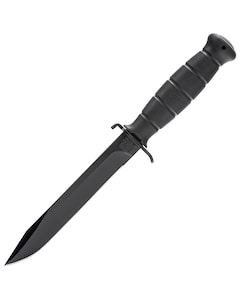
Most commonly, it is a hot-applied black lacquer. It mainly serves an aesthetic function (until it starts to peel off), although in the case of corrosion-prone steel knives it also has some protective significance.

Oxide
A popular finish for firearms and military knives, consisting of coating the metal with a black layer composed of its oxides. An inexpensive and aesthetically pleasing protective coating, but not suitable for stainless steel. It protects the blade from corrosion and reduces light reflections. The disadvantages of oxide are very low scratch resistance and sensitivity to even small concentrations of acids.

Hard Chrome
Coating of the blade in an electroplating process with a hard layer of chrome. Such a coating is usually semi-matt, but high-gloss chrome-plated knives also occur. It is more scratch-resistant and provides better protection against corrosion than oxidation. Chrome plating can be applied to both tool steel and stainless steel knives.

Parkerisation
Coating of the blade in an electroplating process with a matt grey coating based on phosphorus compounds. Other names for this method are phosphating and phosphatising. An effective anti-corrosion coating, it is very good at eliminating light reflections, but is relatively soft. It also comes in dark grey and black colours. Parkerisation can be applied to both tool steel and stainless steel knives.
Epoksy Powder
Hot-applied powder coating on an epoxy resin basis. Effectively protects against corrosion and is very good at evening out light reflections. Due to its considerable thickness, it is relatively resistant to abrasion and scratching. Its disadvantages are softness and quite a lot of friction when cutting deeply into hard material. Epoxy coatings can be any colour, but are most commonly found in black. Mainly used in large tool steel or spring steel knives.

Black Teflon (BT2)
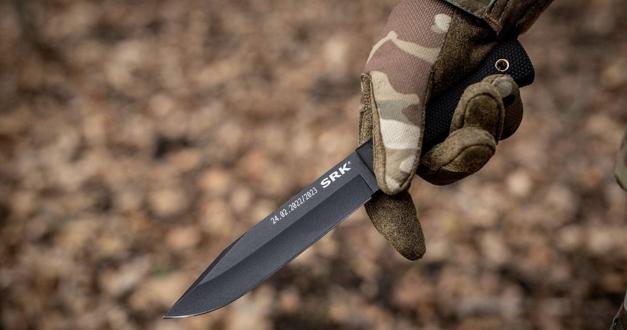
Coating of the blade with a layer of Teflon. It protects 100% against corrosion, moreover, due to its slip properties, it reduces the tendency of the cut material to stick to the knife head. Teflon coating is quite easy to scratch, but Teflon bonds to the steel structure to a depth of a few microns and even quite strong scratches do not become a focus of rust. It is used in both tool steel and stainless steel knives.
Black-Ti
Coating of the blade with a titanium compound (titanium-nitride). This coating is noticeably more scratch-resistant than epoxy and Teflon coatings, making it more suitable for knives intended for everyday use. Its disadvantage is the cost of production, which noticeably increases the price of a knife with such a head coating. It is used in both tool steel and stainless steel knives.

DLC
Diamond-like Carbon, a coating with a diamond-like hardness. It gives an aesthetically pleasing black steel effect similar to the boron-carbide coating, but is much more durable. Its only disadvantage is its high production costs. It is used in small elegant folding knives of the gentleman's folder type as well as in high-end working knives.

Boron Carbid
Coating of the blade with boron carbide. One of the hardest, highly abrasion-resistant coatings. Its hardness is approximately 90 HRC, which is much higher than any hardened steel. It protects against corrosion and reduces light reflections. This coating is not visible as an outer layer applied to the blade, but creates the impression of black steel. A durable, aesthetic coating that is unfortunately very expensive. Used in small, elegant folding knives of the gentleman's folder type and in high-end working knives.