Binoculars - FAQs and answers
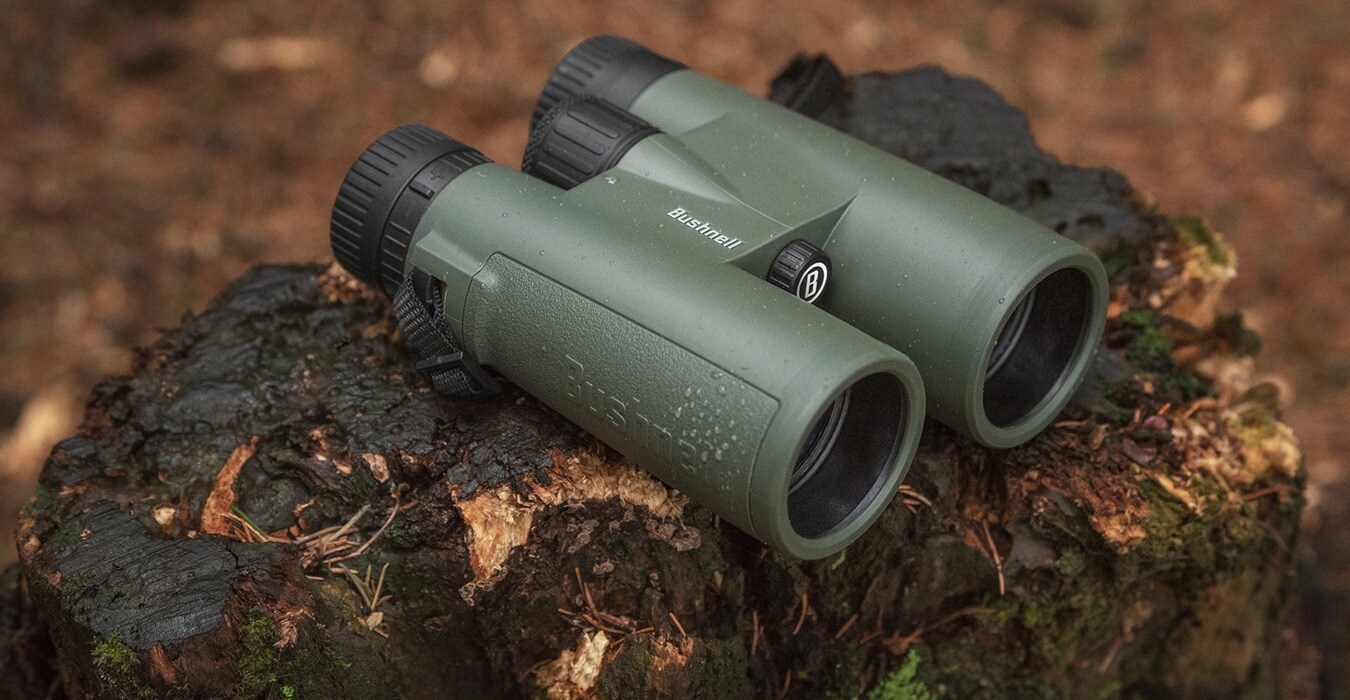
Buying binoculars is not always an easy matter, especially if it is to be equipment that will serve for years. Manufacturers give a lot of parameters that a novice user may not understand. In this guide we will illuminate the subject of binoculars, how to look at the technical data, what to consider when choosing and which binoculars will work best for specific applications. You will also learn how to handle binoculars and how to clean them truthfully so as not to damage the coating on the glass. We will also answer the question of which binoculars will be better for daytime and which for night. We invite you to read on. Below you will find the table of contents, which will allow you to go straight to the topic of your choice. Below the table is a video divided into 3 parts, which will also allow you to choose a binocular for yourself.
Watch the video and find out which binoculars to choose.
Actually, why do we need binoculars?
One of the key traits that has determined the success of our species is curiosity, and the most elementary manifestation of this extraordinary instinct is the desire to see something up close, in detail, thoroughly. Unfortunately, we cannot always simply walk up or pick something up. Often there is too great a distance or difficult terrain obstacles separating us from the object of interest, and the object itself may be in motion or pose a threat to us.
The need to develop an instrument that would allow us to magnify a distant object therefore stemmed directly from our nature, and modern optics tackled this problem relatively quickly. Already at the beginning of the 17th century the invention of the telescope (scope) became widespread and immediately after it came devices much more compatible with our way of seeing - binoculars.
Therefore, if you are asking why you need binoculars, consider where your innate curiosity directs your gaze and think how much you are missing out on by not being able to really see it up close. Inaccessible elements of the landscape or architecture, skittish or dangerous animals, sports players, airplanes, ships or interesting industrial objects - with binoculars you can see all of this as if you were many times closer than is realistically possible.

It is also worth mentioning that modern binoculars are not only equipment that helps our eyes to cover large spaces. Many models allow us to sharpen the image from a distance of 2 meters or even less, so that our binoculars can act as a convenient, stereoscopic, yet very powerful magnifier for observing nature. Like a magnifying glass, we will see lizards, insects, birds or other small animals. Let's add that with an ordinary magnifying glass this would be rather impossible, because by taking the two steps separating us from the object, we will usually panic it.
Another often overlooked use of binoculars is to observe the night sky. Traditionally, this is the domain of telescopes, but even through the relatively small 8×42 class binoculars we will see much more than without them. Especially with clear skies and no moon, we will be surprised by the vast number of stars we would never see with the naked eye. Binoculars also have several important advantages over telescopes. The most important is binocular observation, which is not only more natural and less tiring than monocular observation, but by engaging a pair of eyes and both hemispheres of the brain, we simply see better. In addition, binoculars have a much larger field of view, and due to their small size, they are easy to carry and most often do not require a tripod, which gives us a great deal of freedom compared to observation with a stationary telescope.
Of course, binoculars are not just for recreation. It's hard to imagine such professions as a hunter or ornithologist without binoculars, and binoculars are also an essential part of the equipment of sniper teams, border patrols, reconnaissance soldiers or search and rescue teams. In addition, despite advanced electronic means of detection and navigation, binoculars are still an important tool in flight control towers and on board aircraft carriers, helping to assess the correctness of the approach to landing, as well as the condition of the landing gear or any defects in the mechanization of the wing. Binoculars play a similar, auxiliary role in barrel artillery and short-range anti-aircraft missile batteries. There is also probably no warship or ship of the merchant fleet on which the crew does not have at least good quality 7x50 naval binoculars.
Why the popularity and timelessness of binoculars? It is simply difficult to find a more versatile, reliable, relatively inexpensive, and ergonomic support for human vision.
Binoculars prices - what do we pay for?
No matter what budget we want or can allocate to buy binoculars, it is good to be aware of what we can expect within a given budget. Such knowledge can change one's perspective, or at least protect us from disappointment.
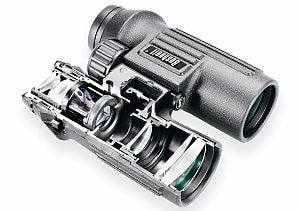
Before we get into the details, we suggest a little thought experiment. Let's put together with binoculars perhaps the most common optical instrument in the world - glasses. A pair of basic corrective lenses and simple frames for them cost a total of at least PLN 200. Meanwhile, binoculars are two optical axes that usually contain 6 or more lenses each and 2 prisms that reverse the image. These lenses and prisms need to be very precisely aligned with respect to each other and secured against repositioning. However, it doesn't stop there. In most binoculars, it is necessary to have precise, yet durable mechanics to translate the movement of the focus knob into a corresponding change in the position of the elements of the optical system. Let's add that these elements must move smoothly and at the same time be stable. The whole is closed by a housing in the form of two tubes and a bridge connecting them, which should provide ergonomics, as well as much greater mechanical resistance than is the case with typical frames of corrective eyeglasses.
Given the above, is the amount of several hundred PLN for binoculars an exorbitant price? Of course, mass production in the Far East provides ample opportunity to reduce costs, but manufacturers are not miracle workers. Below a certain ceiling, a drop in the quality of materials and mounting can hardly even be called a compromise anymore, and the resulting binocular-like product will only be a source of irritation and discouragement to binoculars as such.
So, contrary to what the auction sites try to convince us, any binocular, even the simplest but properly made, is a product that must cost a little more than a T-shirt or a movie ticket. Disregarding exceptionally favorable promotions and sales, in the price of 100 to 300 PLN we will get an absolutely basic instrument, from which we should not expect more than parameters in accordance with the specifications, sufficient brightness and correct functioning of the mechanics. Let's also point out that the lower limit of this range is the price of compact binoculars, while full-size binoculars cost at least twice as much, that is, about 200 PLN.
Paying >300 PLN we can already count on waterproof housing, prisms made of Bak4 glass instead of cheaper BK7 and/or better quality anti-reflective coatings on lenses and prisms. The price goes up if the aforementioned coatings are everywhere where unwanted reflection occurs, i.e. Fully Multi Coated, and not only on the surfaces that the manufacturer has deemed crucial.
Usually, in parallel with the quality of the optics, the smoothness of operation and durability of the mechanics, as well as the precision of assembly and the quality of the materials from which the binocular housing is made, also increase. In this respect, binoculars in the 600-1000 zloty range should already be close to perfect, although there may be minor slip-ups at the level of quality control and production repeatability.
As we approach and exceed the PLN 1000 mark, we pay for more and more perfect color reproduction and light transmission close to 90% or even better, which translates into higher contrast and practically available image resolution.
Another important feature we can expect in the best binoculars is good correction of optical defects, which are an unavoidable phenomenon in standard optical paths due to the laws of physics. Distortions in image geometry and a drop in sharpness at the edges of the field of view are corrected by using advanced lens systems with special shapes like aspherical lenses. Color anomalies called chromatic aberration are minimized by using special multi-element lenses and low-dispersion ED glass. All this is expensive and requires good design. In addition, a larger number of optical system elements means more borders that need to be coated with anti-reflective coating, and these must be coatings of higher quality than in systems with fewer lenses. Otherwise, the price for correcting the aforementioned defects will be a decrease in light transmission.
A feature that significantly increases the price is also a larger objective lens. Therefore, a binocular with a 50 mm objective lens will always cost more than a binocular of the same brand and product family, but with a 32 mm objective lens. The difference can be as much as several tens of percent. To a lesser extent, by a few percent, the price is affected by higher magnification.
It should also be noted that a roof prism binocular will always be more expensive than a porro prism binocular offering the same image quality. In this case, we have to reckon with a price higher by at least 100%. This sounds discouraging, but image is not everything, and in every other respect roof prism binoculars will be a more advantageous purchase than similar quality porro prism binoculars.
Why are anti-reflective coatings so important?
Visible light passing through an uncoated optical glass lens loses about 10% of its brightness, because at any air-glass boundary 5% of the light is reflected.
This doesn't seem like much, but you have to take into account that we are talking about a single optical element. The simplest binoculars contain at least five such elements, and today's advanced roof binoculars have many more. So it's easy to calculate that our light transmission will drop by 50% and more, which means that the image in the binoculars' glasses will be at least twice as dark as the one we perceive with the naked eye. This is already a lot.
The solution to this problem is anti-reflective coatings, that is, thin layers of chemicals applied to the glass, which prevent the reflection of light at the boundaries of the media. The most commonly used substances are magnesium fluoride or titanium dioxide. The best results are achieved by using multilayer coatings, and they should also be on all air-glass boundaries, which in the English-language optical dictionary has come to be known as Fully Multi Coated.

The effectiveness of coatings depends on their quality, and a particularly difficult technological problem is to achieve the same anti-reflection parameters for all wavelengths of visible light, which translates into proper color reproduction. The most common problem is inferior transmission for blue or green light, resulting in color distortion toward yellow or red. This effect is particularly noticeable in older Polish and Soviet binoculars, as well as in the cheapest modern binoculars.
Good quality coatings and covering all air-glass boundaries with them means not only better light transmission and good color reproduction. An important benefit of a good coating system is also the reduction of internal multiple reflections, which make themselves known when there are point sources of strong light in the field of observation. This phenomenon, similar to the flare effect known from photography, can significantly reduce observing comfort at low sun, during astronomical observations or when pointing binoculars at streetlights and car headlights.
Why should you always buy waterproof binoculars?
Waterproofness is one of the key features we should consider when buying binoculars, and this recommendation is by no means limited to users of marine binoculars. Meanwhile, first-time binocular buyers usually underestimate the importance of this parameter, claiming that they are unlikely to observe in a downpour or cross a river in a ford with binoculars around their necks. And they are probably right, but the idea of sealing binoculars is not only based on the need to make them immune to contact with a large mass of water.
The main argument for making the interior of the binoculars as watertight as possible is the need to reduce the phenomenon of moisture accumulation, which alternately evaporates and condenses on the glass optical elements depending on pressure and temperature changes. To fully exclude internal fogging of optics, atmospheric air is pumped out of the tubes and replaced with an inert gas. Most often this is nitrogen, less often argon. The effectiveness of this procedure depends on the quality of the seals used and the precision and sterility of the assembly, so it is not worth trusting the waterproofness of no-name binoculars or those sold suspiciously cheaply.
The main argument for making the interior of the binoculars as watertight as possible is the need to reduce the phenomenon of moisture accumulation, which alternately evaporates and condenses on the glass optical elements depending on pressure and temperature changes. To fully exclude internal fogging of optics, atmospheric air is pumped out of the tubes and replaced with an inert gas. Most often this is nitrogen, less often argon. The effectiveness of this procedure depends on the quality of the seals used and the precision and sterility of the assembly, so it is not worth trusting the waterproofness of no-name binoculars or those sold suspiciously cheaply.
It's also worth remembering that not every type of binocular can be equally sealed. The most difficult task is to seal porro prism binoculars with a movable eyepiece bridge. The safest assumption is that they are splash-proof-only designs, because even if new, straight out of the box they will be waterproof, after prolonged use and loosening of the eyepiece bridge they will rather lose this feature. Porro binoculars without an eyepiece bridge, i.e. with individual adjustment on both eyepieces, are far superior in this respect, and not surprisingly, they dominate among marine binoculars. It is also relatively easy to seal most rooftop designs, and sometimes these binoculars are guaranteed to withstand full immersion of 1m or even deeper.
What are the characteristics of porro prism binoculars?
Modern binoculars with porro prisms differ little from their prototypes from the second half of the 19th century. When something is close to perfect, it's hard to improve it. The most important advantage of the porro system lies in the very principle of its operation, and that is the phenomenon of total internal reflection. This means that none of the surfaces of the prism requires the application of a mirror coating - the reflection of light is due solely to the appropriate inclination of the walls with respect to the light beam. Significantly, this reflection is practically lossless, which is unattainable when using standard aluminum- or silver-based reflective coatings. In addition, the course of light inside the porro prisms does not cause phase shifts that adversely affect image resolution. Thanks to these features, porro prism binoculars typically offer a brighter and higher-contrast image than roof prism binoculars costing the same amount.
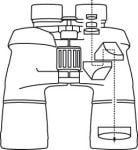
The porro system imposes a specific "broken" shape of the tubes, with both advantages and disadvantages. The outward displacement of the axis of the objective lenses relative to the axis of the eyepieces means greater stereoscopic vision, and therefore a stronger impression of three-dimensionality of the image.
The price for this is larger dimensions - porro prism binoculars are much wider than roof models with similar parameters. In addition, the relatively large distance between the tubes housing the prisms and lenses is an unfavorable balance when holding the binoculars with one hand.
Another weakness of porro prism binoculars is the external focusing system, i.e. the movable eyepiece bridge. This makes it difficult to properly seal the binoculars, as well as more susceptible to mechanical damage. Therefore, porro binoculars designed for service on warships most often do not have a central focusing system only individual adjustment of each eyepiece. However, this solution is much less convenient, especially when observing objects at close and variable distances.
What are the characteristics of roof prism binoculars?
The most important advantage of roof prism binoculars is the alignment of lenses and eyepieces, which allows such binoculars to be much smaller in size than porro prism binoculars of the same specifications.
In addition, an internal focusing system is standard in roof binoculars, where the only external moving element is the focusing knob. This solution makes it easy to build binoculars completely protected from water, dust, microbes and internal condensation. The minimal number of external moving parts also means greater mechanical resistance and the inability of the binoculars to be unsettled by pressure on the eyepieces.
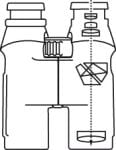
These features mean that roof prism binoculars are displacing porro prism binoculars wherever compactness, durability and insensitivity to dirt, moisture and harsh weather are important. Therefore, if you are thinking about binoculars for a soldier, hunter, ornithologist or mountain hiker, you should consider roof prism binoculars first.
The last noteworthy feature of roof prism binoculars is the shorter minimum focusing distance, which can be less than 2 meters.
Unfortunately, the aforementioned advantages of binoculars with roof prisms literally and figuratively come at a price. Most roof prism binoculars use the Schmidt-Pechan system, in which one of the prism walls must be covered with a reflective coating. If this is a standard mirror surface based on aluminum, light loss on the prism itself can reach 10%. To make the light transmission comparable to that in porro prisms, manufacturers of binoculars with Schmidt-Pechan roof prisms are forced to use expensive dielectric coatings. In addition to this, the light beam in roof prisms is broken into two of different wavelengths and then merged at the output. In the process, phase shifts occur, resulting in the extinction of part of the spectrum, which negatively affects image resolution and contrast. To prevent this, expensive phase-corrected coatings such as PC3 are used in Bushnell binoculars.
Finally, let's add that roof prisms are much more difficult to mount in the tubes and align correctly with respect to each other. All this means that roof binoculars usually cost twice as much as porro prism binoculars that offer an equally good image. Nevertheless, roof binoculars are increasingly dominating the market, which seems to confirm that their off-optical features are worth the price.
What is the binocular numbers meaning "8x32", "10x42", "10-22x50"?
The number in front of the "x" stands for the magnification multiplication factor, so it tells us how many times larger the object seen through the binoculars will be in relation to the apparent size of the object seen with the naked eye. If the binoculars have variable magnification, the two digits connected by a hyphen indicate the range of available magnifications of the binoculars from minimum to maximum.
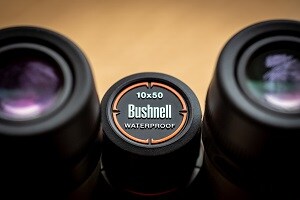
The number after the "x" is the diameter of the objective lens expressed in mm. For example, 10x42 binoculars will have a lens diameter of 42 mm, and 8x32 binoculars have a lens diameter of 32 mm.
There is a reason why this form of labeling binoculars was adopted. Magnification, lens diameter and the relationship between them are the key parameters that determine the functionality of a particular model. If you want to learn more, read the following discussion of the issues of magnification selection and lens diameter.
Binoculars magnification - which one to choose?
With magnification, the apparent size of the observed object increases, and at the same time the amount of detail we are able to see from a given distance. To put it more precisely, the resolving capacity of our eyesight increases by the multiplication factor of the magnification of the binoculars through which we are looking. For example, if with the naked eye we are able from 100 m to distinguish objects adjacent to each other at a distance of 6 cm, then through perfectly made binoculars with 8x magnification we will distinguish from 100 m objects adjacent to each other at a distance of 7.5 mm. So it might seem that the choice is simple - the higher the magnification, the better. Unfortunately, this is not the case.
The basic and most perceptible limitation is hand tremor translating into image instability, which tires the eyesight and nullifies the resolution gain. The higher the magnification, the stronger the translation of hand tremor, and even our pulse and breathing, into the apparent vibration of the objects being observed. In practice, the magnification we are able to maintain at a reasonable level of stability is a maximum of 12x. Binoculars with higher magnifications require a tripod, possibly an improvised support like a rolled-up mat or sandbag.
The basic and most perceptible limitation is hand tremor translating into image instability, which tires the eyesight and nullifies the resolution gain. The higher the magnification, the stronger the translation of hand tremor, and even our pulse and breathing, into the apparent vibration of the objects being observed. In practice, the magnification we are able to maintain at a reasonable level of stability is a maximum of 12x. Binoculars with higher magnifications require a tripod, possibly an improvised support like a rolled-up mat or sandbag.
Besides, the smaller the magnification, the greater the depth of field, and thus the distance from which the binoculars focus to infinity without further adjustment. For example, binoculars with 7x magnification will focus to infinity already at a distance of about 50 m after sharpening, and for binoculars with 12x magnification this distance will be about 150 m. Of course, much also depends on the individual accommodative ability of the user's eyes, but it is worth remembering this general rule.
Another important limitation for magnifications used in practice is the size of the objective lens. The higher the magnification, the larger the diameter of the lens must be. Otherwise, the image in the binoculars will be dark, and at extremely high magnifications, additionally, we can reach a limit, the exceeding of which will not give us an increase in resolution, but will only stretch the image blurring the details. Unfortunately, the larger the lens, the greater the size, weight and cost of making binoculars, so lenses larger than 56 mm are rarely used. The consequences of this are explained in detail below in the discussion of the importance of lens diameter.
How about variable magnification?
Beginning observers quite often consider buying binoculars with variable magnification. Unfortunately, such binoculars can become a source of disappointment. First of all, the problem is what seems to be an added value - the possibility of obtaining very high magnifications. As we have already signaled, at magnifications higher than 12x it is very difficult to hold the binoculars stable enough, the increasingly darker image makes observation more difficult, and at very high magnifications, unsuitable for the diameter of the objective lens, we can also note a decrease in resolution.
In addition, variable magnification is a greater complication of mechanics, and thus a higher failure rate than a similar class of binoculars with fixed magnification. This is especially true for low-budget binoculars. So, if you absolutely want binoculars with variable magnification, you'll do best by investing in binoculars at least in the mid- to higher-price range, such as the Bushnell Legacy 10-22x50. Of course, cheaper binoculars with variable magnification can also provide a lot of fun, but don't expect too much from them.


Lens diameter - what does it matter?
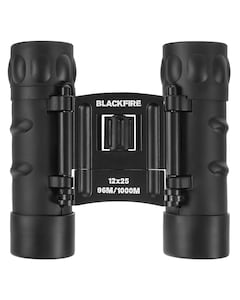
The brightness of the image decreases by the square of its magnification, and at the same time increases with the square of the lens diameter. From these two correlations a rather obvious conclusion can be drawn - if the image in the binoculars is to be as bright as the one we see with the naked eye, then the higher the magnification, the larger the objective lens of our binoculars should be. Specifically, how big? Here we have to take into account another variable - the diameter of our pupils, which, depending on the intensity of the light, varies between 2.5 mm in bright sunlight to 7 mm on a moonless night.
In order to take full advantage of our eyes' ability to collect light, the imaging disc in the binoculars' eyepieces, the so-called exit pupil, should have the same diameter as the pupil of our eye under the given conditions. The diameter of the exit pupil is calculated by dividing the diameter of the objective lens by the magnification of the binoculars, so, for example, 10x25 binoculars will have an exit pupil of 2.5 mm. This means that if you are looking for typical daytime binoculars with a magnification of 10x, a lens diameter of between 25 and 32 mm will be sufficient. However, if we would like to use binoculars with 10x magnification mainly at night, its objective lens should have a diameter between 50 and 70 mm.
In practice, even in binoculars for daytime use, such a relationship between the lens and magnification is most often used that the exit pupil is nevertheless larger than the mentioned 2.5 mm. The observed space is never uniformly illuminated, some objects are in shadow, and the light intensity itself depends, after all, on the weather, which changes. The diameter of our pupils also changes dynamically. Therefore, even on a bright day, a larger lens diameter provides better contrast of less well-lit objects, which translates into overall image quality. A larger objective lens at a given magnification also means that our daytime binoculars are more useful at dawn, dusk, when observing stars or simply in dense woods.
On the other hand, a pupil diameter of 7 mm is rarely reached by our eyes, as the moon or the glow from city lighting is enough to make our pupils dilate to no more than 5-6 mm. What's more, the ability to dilate pupils decreases with age, which is often forgotten by hunters over 50 who buy large night binoculars like 8x56 or 10x70. Therefore, an exit pupil of between 4 and 6 mm is considered a reasonable standard, which is provided by the popular 8x32, 8x42, 10x42 or 10x50.
The maximum magnification at which no loss of resolution is observed, the so-called resolution magnification, also depends on the size of the lens. At the same time, this is the magnification at which the lens fully uses its resolution potential. It is assumed that the resolving magnification is obtained at an exit pupil of 2.3 mm. For example, for a 50 mm lens it is about 22x, and for a 25mm lens it will be only 11x. Magnifications higher than the resolving magnification do not bring more details, but only stretch the image, which gives an effect similar to that of enlarging a small jpg. image in a simple graphics editor. However, this is actually only the case with variable magnification binoculars, as most fixed magnification binoculars have magnifications much smaller than resolution magnifications. If you care about image brightness and are observing without a tripod, magnifications at the resolution limit are simply impractical.
Unfortunately, a larger objective lens also means heavier weight, larger size and usually a higher price compared to binoculars of the same quality but with a smaller objective lens. So evaluate your needs before buying.
Which binoculars will be optimal for daytime?
The daytime pupil of the human eye shrinks and expands in the range of about 2.5 mm to 4 mm, so it makes no sense to use binoculars whose exit pupil is much larger during the day. On the other hand, it is a good idea to choose binoculars with an exit pupil larger than the minimum for daytime observation, as this will also make our binoculars perform well in variable or lower light, as well as in situations where part of the field of view is occupied by objects that are heavily shaded.

The diameter of the exit pupil of binoculars results from the quotient of the objective diameter and magnification. A more detailed discussion of the problem can be found in the section on lens diameter; here, for ease of reference, we will list the most popular daytime binoculars.
Compact models: 8x21, 8x25, 10x25, 10x28, 8x32, 10x32, 10x36
Full-size models: 8x42, 10x42, 10x50, 12x42, 12x50
Which binoculars will be optimal for evening and night?
At night, the pupil of the human eye can reach a diameter of 7 mm, and theoretically this should also be the exit pupil of night binoculars. In practice, due to starlight, moonlight or city lighting, our pupils rarely reach a diameter of more than 6 mm, and the ability to dilate the pupil itself decreases with age. So it's also worth considering buying binoculars with an exit pupil in the 5-6 mm range, which will be smaller, lighter and usually quite a bit cheaper. The diameter of the exit pupil of binoculars is derived from the quotient of the diameter of the objective lens and the magnification. A more detailed discussion of the problem can be found in the section on lens diameter, here we will list the most popular night binoculars for ease of use.
Typical nocturnal: 7x50, 8x56, 9x63, 10x70
Day-night and for older observers: 8x42, 10x50, 10x56

However, it must be strongly emphasized that for binoculars for evening and night, a sufficiently large objective lens, providing an exit pupil of between 5 and 7 mm, is not enough. No less important are anti-reflective coatings, their quality and application on all surfaces. In the case of roof binoculars, high quality mirror surfaces of prisms and phase shift correcting coatings are also necessary. A large but inexpensive 7x50 or 10x50 binoculars may be much less useful for night observation than a good quality, compact 8x32 binocular. Be aware of this and you will avoid disappointment.
What binoculars will be the most universal?
There is no universal binoculars in the full sense of the word. Depending on our needs, we expect binoculars to have different magnification values, twilight performance, dimensions and weight. However, there is a class of binoculars that is a great compromise of the most important performance characteristics of binoculars for different purposes - these are 8x42 binoculars.
On the one hand, these binoculars are quite compact and relatively lightweight, and on the other hand, thanks to the exit pupil of 5.25 mm, you can successfully use them even at night or in a heavily shaded forest.
The 8x magnification will not provide us with as much detail as 10x or 12x, but it will be better in this respect than 7x and smaller. In addition, at this magnification it is already quite easy to maintain a stable image, so during a longer, more exhaustive observation the readability of details may turn out to be even better than it would be by comparison during an observation of a few seconds.
Another advantage of 8x42 binoculars is the relatively large field of view, usually larger than that of 8x56, 10x42, 10x50, 10x56 or 12x50 binoculars. The depth of field is also usually higher compared to binoculars with higher magnification.
For the reasons mentioned above, 8x42 binoculars are favored by ornithologists and other professional wildlife observers. These parameters should also be appreciated by hunters, but, often unjustifiably, this community is most likely to choose classic night-vision binoculars.


Adjustment of newly purchased binoculars
Adjustment of newly purchased binoculars should be carried out in three stages with the following order:
-
Adjusting the spacing of the eyepieces
-
Compensating for differences between our left and right eyes
-
Freely adjusting the focus to the chosen observation distance.
We start by applying the binoculars' eyepieces to our eye sockets. The glasses should not pinch our nose, and the visible image should be a single circle. If we see two overlapping circles or the edges of the field of view are clipped, it means that the spacing of the glasses does not correspond to the spacing of our pupils and requires adjustment. The adjustment process itself is very simple. The binocular tubes are hinge-mounted, so by moving them in the axis of the hinge we move them away from or closer to each other, thus changing the spacing of the eyepieces. (Fig. 1)
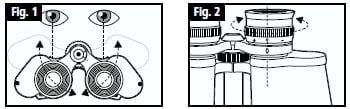
Most binoculars offer the ability to compensate for differences in visual acuity between our left and right eyes. This is done by a diopter that usually takes the form of a knob on one of the binoculars' eyepieces or is sometimes integrated into the central knob. Regardless of the method of operation, in the vast majority of cases the diopter modifies the focus in the right optical path of the binoculars. (Fig.2))
The adjustment begins by closing the eye looking through the eyepiece with the diopter. Most often this will be the right eye. Then, looking only through the eyepiece without a diopter, which is most often the left eye, we point the binoculars at the selected object and focus its image using the central focus adjustment.
When this is done, we open the eye that is looking through the eyepiece with the diopter and close the one that was previously open. Without touching the central adjustment knob, we move the diopter eyepiece knob and set it to the position that provides the best sharpness of vision. Of course, we look at the same object and from the same distance as before.
Having done the above, we no longer need to use the diopter. We point the binoculars to any distance and, looking with both eyes, tune the focus with the center adjustment knob./p>
Important tips
- Even if we are convinced that we have no visual defects and the vision in both our eyes is identical, it is worthwhile to carry out the procedure of aligning the eyepieces. Minor errors in the assembly of binoculars can result in a minimally different focus in each tube, which negatively affects the quality of the image. It is worth checking this and possibly correcting it with a diopter.
- The eye that we closed will be strained and immediately after opening will see worse, so the diopter adjustment may not be reliable. Therefore, as long as you have lens caps, instead of closing your eyes, it is advisable to use the caps as lens caps. Using lens caps, we do not have to squint our eyes, which are looking through the blinded tube. We apply them normally open to the eyepiece. As a result, the eye will be relaxed and further relaxed by the blackness.
- The first focus adjustment is best done by pointing the binoculars at such objects as distant car license plates, posters covered in print or street name signs. You can also use special charts like the USAF Resolving Power Test Target. Focus adjustments based on images of objects containing less detail may not be reliable.
- If you adjusted your binoculars some time ago so that at a given distance the image is sharp, and after a long break in observation and putting the binoculars to your eyes again, the same object appears out of focus, this does not necessarily mean that you need to adjust the central or diopter again. Sometimes it is enough to blink a few times and stimulate the muscles responsible for accommodation, and everything will return to normal. This is especially the case if we have used our eyes at close distances for a long time before observing, for example, studying a map or modifying GPS navigation settings.
- If you lent your binoculars to someone, check the focus in both eyepieces after returning them. You may have to repeat the adjustment procedure. If this is not done, and someone has adjusted the diopter, the image in the binoculars will be of poorer quality, and just looking through them will be tiring.
Can I use binoculars while wearing corrective glasses?
Using binoculars without removing your corrective glasses is possible, but two conditions must be met. First, the binoculars must be equipped with folding eyecups, which will reduce the distance between the lenses of the binoculars' eyepieces and the lenses of our corrective glasses. Secondly, the binoculars' eyepieces should provide a large pupil distance - at least 17 mm. .
The pupil distance (eye relief) is the distance between the outermost lens of the optical instrument's eyepiece and the point where the exit pupil forms. We can also say that it is the maximum distance between the eye and the eyepiece lens from which we will still have access to the entire field of view..
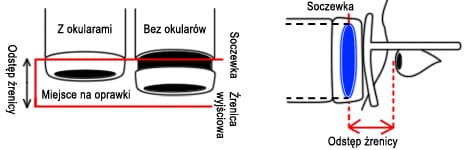
When observing with corrective glasses, the distance of the eye from the eyepiece lens of binoculars is always greater by the space between our eye and the glass frames of our glasses, hence the importance of the pupil distance of binoculars being large. If it is small, despite the folding of the eyepiece shells, we will not have access to the entire field of view, which will give the effect of looking through a tube or keyhole.
It is also worth mentioning that the focusing system of most binoculars allows you to correct visual defects of -5 to +5 diopters, so as long as you do not suffer from significant astigmatism, you can remove the glasses and use the binoculars in the standard configuration, that is, with the eyecups extended.
There is also no contraindication to using the binoculars while wearing contact lenses, in which case we also look through the binoculars' eyepieces with the eyecups extended.
How should binocular lenses be cleaned?
The cleanliness of the objective lenses, and to an even greater extent the cleanliness of the eyepiece lenses, significantly affects the quality of the image. Unfortunately, no matter how much we take care of binoculars, sooner or later their glasses will become dirty. For this to happen, it is not even necessary for the lenses to come into contact with dust, dirty water or fingertips. The most common cause of dirt is our own eyes, specifically our eyelashes, which spray the lenses of our glasses with tears and sweat when we blink. So cleaning the lenses of binoculars won't pass us by, even if we only use them at home to look out the window.
No matter what kind of dirt we notice on the binocular lenses, it is worth sticking to such a cleaning procedure as if they were covered with sand. Sometimes all it takes is a microscopic, invisible grain of quartz for a seemingly innocent wipe of the lenses with a tissue to give the anti-reflective coating the appearance of a figure skating rink.
That's why we always start by blowing out the glasses. The best for this is a special pear for cleaning optics. Definitely less safe is compressed air in a can, because it can leave permanent frost-like streaks, and we do not recommend this method.
The next step is to sweep the lenses with a fine brush. Once you have minimized the risk of hard particles on the surface of the lenses, you can start degreasing. The best way to do this is to use special liquids for cleaning optics. Using ordinary alcohol or household chemicals can damage the anti-reflective coatings or seals around the lenses. Spray a tissue or microfiber cloth with the liquid and gently, in a circular motion, clean the glasses, then dry by pressing another clean, dry cloth or tissue against the glasses. Repeat the operation until all smudges, dots and discoloration disappear. In the case of deep-set lenses, we can help ourselves by using cotton buds.
Caution: never use tissue wipes with so-called lotion or fragrance, because you will only add to your work by leaving more streaks. Other inadvisable materials are paper towels and toilet paper. They often contain contaminants in the form of hard particles that can scratch the anti-reflective coatings of binoculars. In general, we advise against improvising on cleaning products and materials to replace the microfiber cloth. Especially if you are a novice user, you will do best by buying an optics cleaning kit.
What else is worth remembering? (binocular health and safety)
In addition to the rules for proper cleaning, as we discussed above, there are a few other practical rules for handling binoculars that you should keep in mind:
-
Never look through binoculars into the sun! Even very brief exposure of your eyes to such amplified sunlight can lead to serious damage to your vision.
-
Always use a strap to hang around your neck and remind other users to whom you share binoculars. Although modern binoculars are solidly rubberized but an unfortunate fall from a height of more than 1m can lead to irreparable damage, which is not covered by the warranty.
-
Don't leave binoculars in harsh sunlight, for example, behind a car window, as their housing can get so hot that it damages their seals or leads to internal leakage of lubricants, which can spill from the mechanics onto the optical components.
-
Don't place binoculars on their eyepieces or on the back side with the adjustment knob, as accidental pressure can damage these components relatively easily. It is safest to put the binoculars away by placing them on the objective lens mounts or flat on the underside.
-
When transporting the binoculars, they should be in a carrying case, with the eyecups folded down and the lids on. This greatly reduces the risk of accidental damage.
-
Do not use binoculars to ostentatiously look into apartment windows, at passersby or beachgoers. Respect other people's privacy.