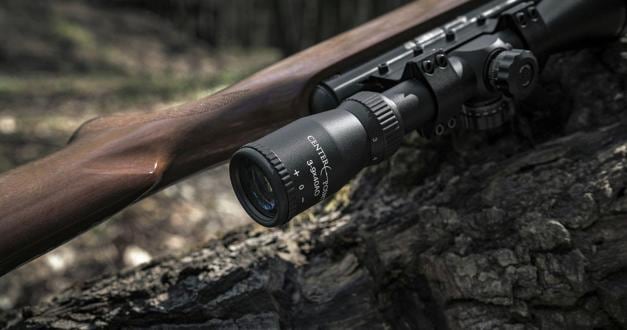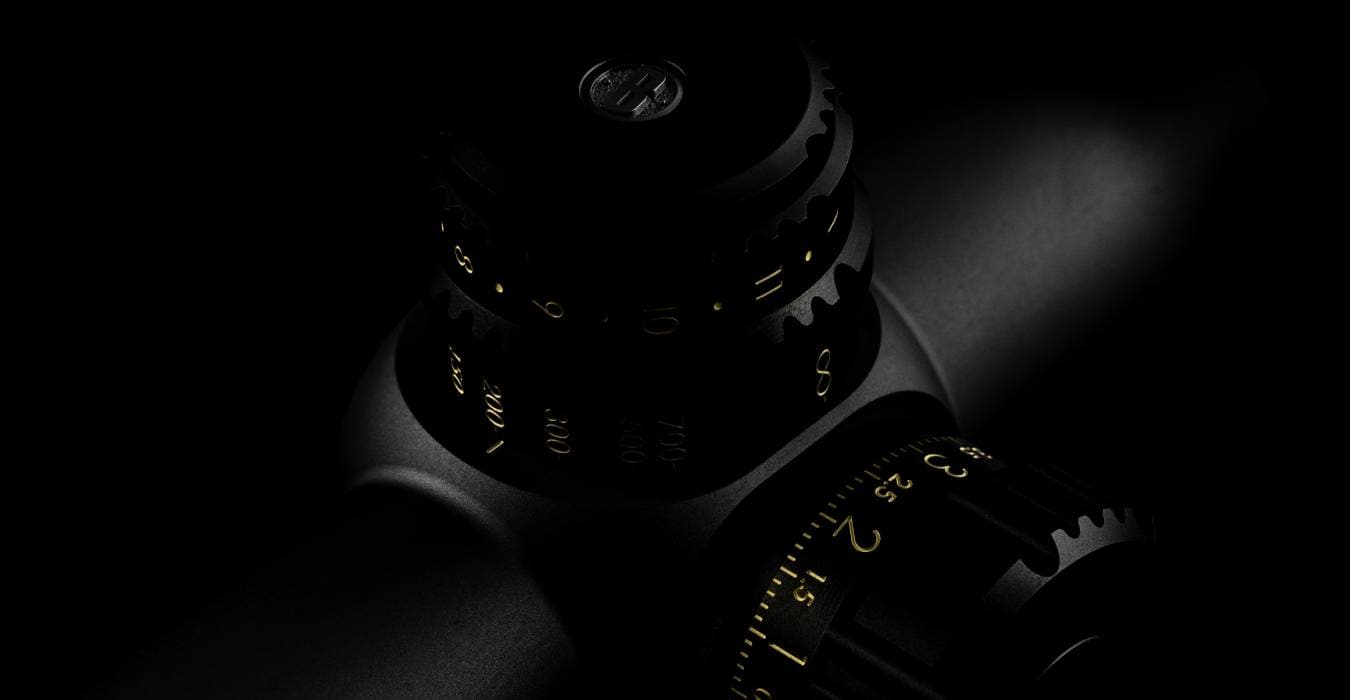
A spotting scope is a rather complicated device to build, and it's hard to get caught up in its construction - especially at first. That's why in this tutorial we explain when a spotting scope is useful and how to read certain parameters. You'll learn what parallax is, the field of view, what nitrogen filling is all about, and how to properly mount a scope on a windshield. We will also tell you why it is important to pay attention to recoil resistance. Welcome to the tutorial.
Why an optical sight (scope)?
The design of the eye allows to see sharply only those objects that are at the same distance from the observer. It becomes practically impossible to have a clear, simultaneous image of the pinniped, the bow tie and the target. When aiming, there is a phenomenon of tuning the eye to each of these elements, then trying to bring them together into one clear image, which will still not be maximally clear. This problem is even greater for eyeglass wearers. In this case, a spotting scope becomes the only solution. It greatly simplifies the aiming process. The shooter only has to align the aiming crosshairs with the target, plus the target is magnified by the optical system.
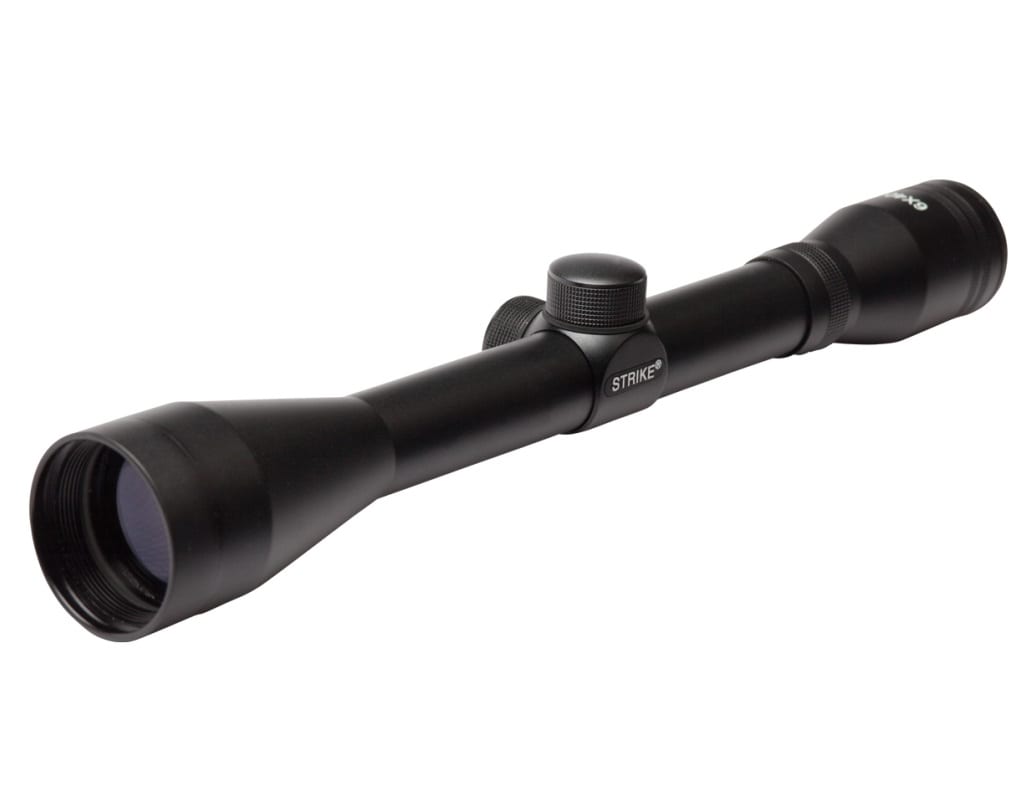
What is the field of vision?
The field of view is the width, covered by the scope, of the area seen, located at a certain distance. As a rule, it is given in meters or feet per 100 meters or Yards. The relationship of the field of view to the magnification of the instrument is important. The higher the magnification, the narrower the field of view.
What is the efficiency of a telescope/binoculars?
The efficiency of the optical system, which telescopes and binoculars are, professionally known as the Twilight Number. It is a quantity that determines the efficiency of a telescope/binoculars in low-light conditions. It can be very simply calculated. It is the square root of the product of the magnification and the diameter of the objective lens. The higher the resulting number, the better the image obtained by the optical system will be. Thus, 10x50 binoculars with a twilight number of 22.5 will perform better in low-light conditions than 6x30 binoculars with a twilight number of 13.4.
Why such a nitrogen?
Dry nitrogen, filling the tube of the telescope/binoculars, prevents the lenses of the optical system from fogging up from the inside. Such a phenomenon often occurs when optical equipment is moved rapidly between environments with a large temperature difference, such as from a heated car to the air, especially in winter or in the morning. When the glasses are fogged up from the inside the system is useless for a while. Nitrogen replaces the air in the tube and eliminates this type of phenomenon.
Parallax error. What is this phenomenon?
When applying the eye to the eyepiece of the scope, it is rare that the axis of the eye overlaps the axis of the scope. When the two axes do not overlap, the shot on the target will be slightly deviated from the aiming point. This is caused by a greater or lesser distance from the target than that at which the scope is set. With typical hunting scopes this does not matter much, so the parallax in these instruments is set to a target 90-100 m away. However, for precision shooting, for example: with airguns, or varmint hunting shooting (hunting pests and small animals from considerable distances), the phenomenon of parallax error will be very important, so many scopes have the ability to adjust parallax. Most often in the form of a ring on the lens, or a knob on the adjustment turret. However, in order to effectively use such an option, it is necessary to estimate the distance to the target quite well.
MOA? What is it?
MOA stands for Minute Of Angle - it is a measure of angle. From the shooter's point of view, it is a unit which is defined as the shift of the aiming point when rotating the crosshair adjustment knob vertically or horizontally by one click (a characteristic jump resulting from the indexing of the crosshair adjusters). The most precise spotting scopes have an adjustment of up to 1/8 MOA, i.e. about 0.38 cm/100m
Target grid (crosshairs)
A sighting reticle, also known as a crosshair, is the name for a sight located in a telescope! It can be made up of various types of beams, threads, reticles and dots placed in the scope and visible when looking through it. When aiming, the blade of the spearhead or the crosshairs of the threads point accordingly at the target. Horizontal or vertical beams, points, additional reticles are aids to aiming. They can be an indicator of distance, drop, etc. etc.
In recent years, many new aiming reticles have been designed. However, simple crosshairs such as German, 30/30, No. 4 and No4A remain the most popular, while from the ballistic-type reticles are: Mil-Dot, TDS, Ballistic.
For those interested in this topic, we have prepared a separate article on the types of target reticles.
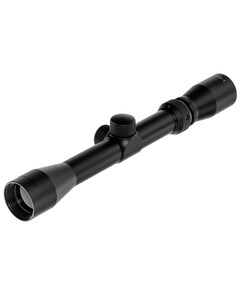
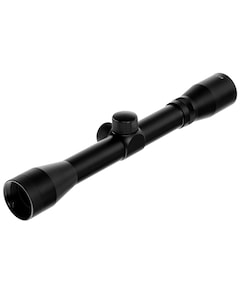
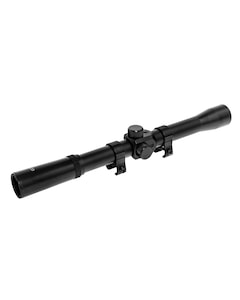
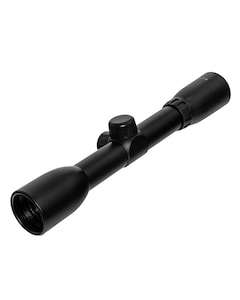
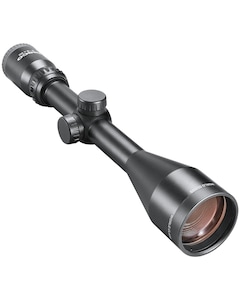
Why is recoil resistance so important?
Optical systems, such as sights, are very delicate devices, the multitude of elements, i.e. lenses, prisms, target reticle, illumination system, makes that any shock can be deadly for this instrument. Resistance to such damage is ensured by a good quality tube and the way all elements are mounted. The crosshairs and lenses can not move, relative to the other elements of the system, as a result of recoil resulting from the firing of a shot. An offset of 0.005 mm is permissible. This translates into an offset of the hit point of about 5 mm per 100m of distance from the target.
What should be the distance of the eyepiece from the eye?
The distance between the eyepiece and the eye is determined by a parameter referred to as the exit pupil distance, that is, the maximum distance from the eye at which the observer loses nothing from the sight's field of view.
This parameter, for different telescope manufacturers varies between 75 and 100 mm. It should be remembered that those who wear glasses, or use magnum caliber weapons (or both), should get a sight with the largest possible value of the exit pupil distance.
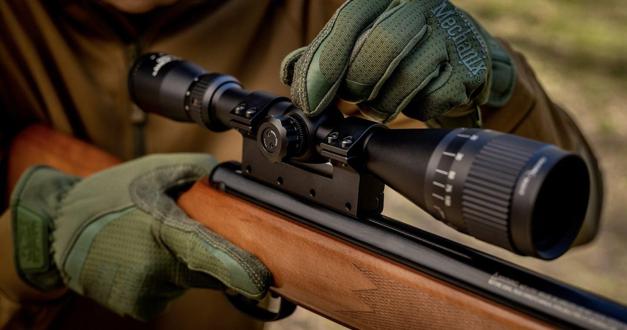
What is the best way to mount a scope on a weapon?
-
put the optical sight on the mounting rail, but do not tighten the clamps all the way,
-
take the most comfortable shooting position,
-
move the telescope back or forward so that the full image in the eyepiece is visible, and the distance of the eye from the eyepiece is not less than approx. 80 mm,
-
tighten the clamps on the mounting rail.
Those using Magnum caliber in hunting weapons or wearing glasses should move the scope forward by about 1.5 mm after adjusting the distance and obtaining a full sight picture. The loss in the field of view will be minimal, and the eye will be protected from the impact of the scope during firing. The shooter will avoid the so-called "French kiss."
Take a look at our range of scopes.