Binoculars - glossary
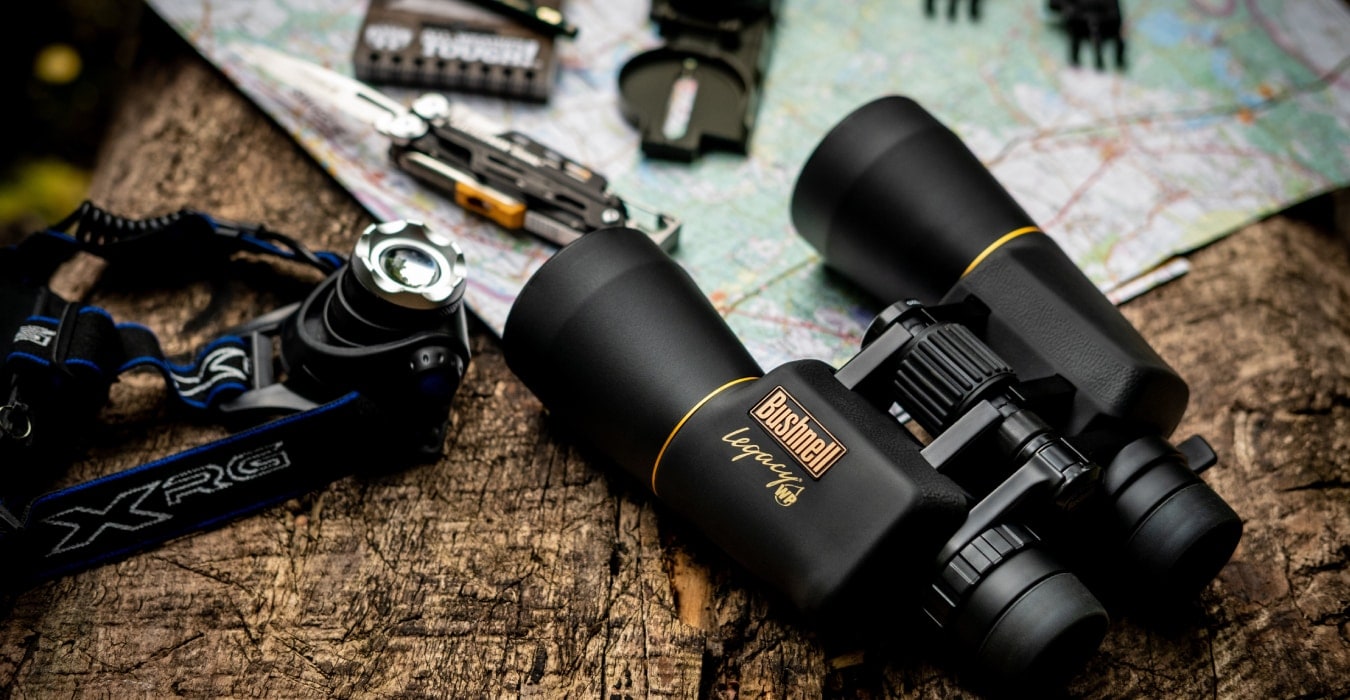
In the following list you will find some common terms related to binoculars. Familiarizing yourself with this glossary will certainly make it easier for you to choose the right binoculars.
Central Focus (central system): system - which precise control of the focus in both eyepiece sights is done with a single knob usually located in the center of the binoculars
Focus-Free - no focusing is required, as the binoculars' viewing range is preset at the factory for typical viewing distance.
Insta Focus - also known as fast focus - is a system for quickly sharpening an image using a finger-moving dial. This system is ideal when observing objects that remain in motion.
Twilight number: this is the efficiency of the optical system, i.e. binoculars, or telescopes. It determines how well the system performs in low-light conditions. The twilight number is calculated as the square root of the product of magnification and objective diameter. The higher the result, the higher the efficiency of the optical system.
Minimum focus distance (CLOSE FOCUS) - this is the minimum distance at which the observed object can be located so that it can be fully focused.
Exit pupil distance (eye relief): this is a parameter that determines the maximum distance between the eye and the binoculars' eyepiece lenses at which we still have access to the binoculars' full field of view. The parameter is particularly important for those who want to use binoculars without removing their own corrective glasses. In general, the larger the pupil distance, the less need to press the binoculars' eyepieces against the eye sockets and the less tension on the eyeballs, so the greater the comfort of using the binoculars.
Field of view (field of view) - is the width of the area seen, located at a certain distance, covered by the binoculars. As a rule, it is given in meters or feet per 1,000 meters or Yards.
Magnification - is the multiple with which the observed object is magnified. Thus, for example, binoculars having parameters, for example: 7x50 offer seven times magnification of the observed object.
Focus system - a system that allows to sharpen the image falling on the eye of the observer, processed by the optical system. The most popular focus systems are Central Focus, Insta Focus, Individual focus, Focus-Free.
Lens coating system - a system of coating lenses with anti-reflection layers, significantly improving light transmission. Here are the coating systems that occur:
-
Uncoated - no coating, light loss in binoculars about 40%
-
Coated - single or double layer - light loss in binoculars about 30 - 35 %
-
Fully coated - all boundaries of the media (lens surfaces) are covered with one or two layers. Light loss in binoculars is about 15 - 20%
-
Multi Coated ("MC") - Multilayer coatings on parts of the media, this reduces light loss in the system to several percent
-
Fully Multi Coated - Multilayer coatings on all centers - in binoculars from reputable companies, such coating reduces light loss to about 5% throughout the system.
Tube: a housing for optical devices, or their components, used for the coaxial seating of optical elements - lenses or optics.
Prism Array - is a system of prism arrangement in the optical system used to invert the image coming from the binocular lens and directed to the eyepiece.
Porro-type prism system - here is a system in which the objective lenses are shifted centripetally or centrifugally with respect to the sight lenses. Binoculars having this type of system are larger in size, while they often offer a wider field of view than lenses with a different system.
Prism system "roof" (roof) - this is a system in which the lenses of the objective lenses remain in line with the lenses of the sights. Thanks to the use of this type of solution, the size of binoculars has been significantly reduced.
Individual focus - a system of controlling the focus of each eyepiece sight separately. Most commonly found in marine binoculars. Very useful for people with strong visual impairment.
Exit pupil (exit pupil): this is the maximum diameter of the spot of light falling on the observer's eye after passing through the binocular optical system. The exit pupil of binoculars can be calculated to a good approximation, it is the result of the quotient of the diameter of the objective lens by the magnification of the device. Thus, binoculars with parameters of 7x50 will have an exit diameter of about 7 mm. A parameter that is especially important if you decide to buy binoculars typically for daytime or typically for nighttime.