How and with what to start a fire in the field?
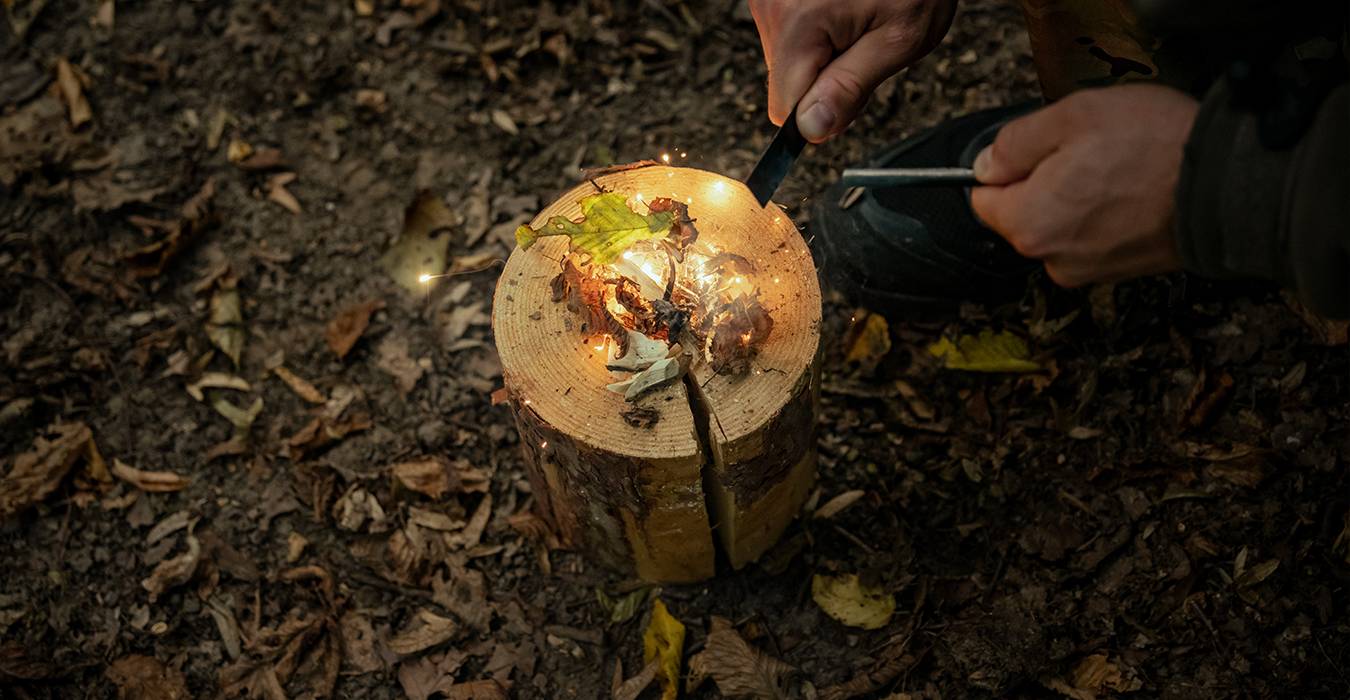
Lighting a fire is an important skill that comes in handy in a variety of situations, such as on outdoor expeditions, bushcraft or in emergency situations. Amongst other things, a campfire makes it possible to cook a hot meal, boil water for tea or coffee, or keep warm in colder weather.
If you are a fan of survivalism, bushcraft or just plain camping, then we encourage you to read our article. In it, you will find information about different fire making techniques, useful tools, as well as fuel, campfire pile layouts and safety issues related to using an open fire.
Rules for lighting a fire - what you need to know
One of the important considerations when lighting a fire in the field is finding a suitable place for a campfire.
Preparation of the campfire site
Prepare a suitable fire pit in the following step:
- Find an open space without trees, remove the mulch and dig a small pit. It is also a good idea to remove the mulch around the dug pit.
- Cover the edge of the pit with stones to minimise the risk of fire spreading.
- Immediately prepare nearby fuel and a container of water, a pile of sand or earth to put out the fire.
Size and type of bonfire
Another important element of safe fire burning is to pay attention to the height of the flames. These should not exceed a height of 2 metres. A fundamental rule for using an open fire - never leave a lit fire unattended! For various situations, have a charged phone or other device at hand through which you can call for help.
What do you use to start a fire?
The following are both simple, contemporary ways to start a campfire, as well as traditional ones that will come in handy in difficult conditions.
Starting a fire with matches
Starting a fire with matches is not difficult, but it does require some skill and also good weather conditions. If it is dry and windless, you can use traditional matches without any problems. In other circumstances, however, they may not work. Below are different types of matches that have been created to meet more demands than traditional models.
- Storm (marine) matches – storm matches burn much longer than the classic versions, plus they are waterproof and do not go out quickly in the wind (important note: you need water to extinguish a storm match).
- Survival matches – The advantage of survival matches is that they generally do not require a scratch, just rub vigorously against any rough surface.
- Waterproof matches – slightly less 'advanced' than storm matches, will work well in rain, wind or snow blizzards.
- Permanent match – is not a typical match, it is a combination of lighter, match and flint. The permanent match has a wick that is permanently immersed in petrol; to light it, simply remove the match and rub the sparkler against the flint.
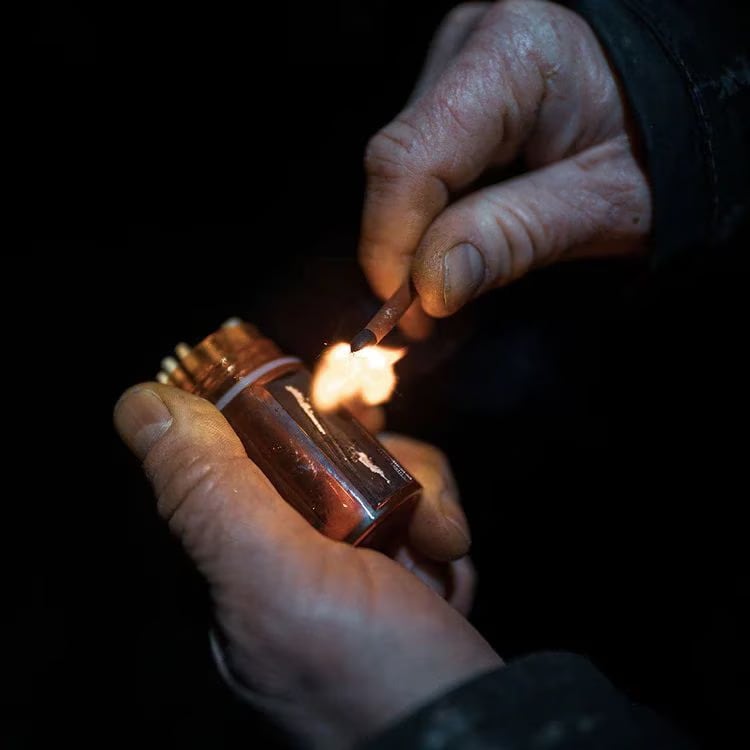
Starting a fire with a lighter
Starting a fire with a lighter is as simple a process as lighting it with matches, but we face the same difficulties here. A standard lighter can prove useless in harsh weather conditions. Which lighters will work well in the field? We will look at three types:
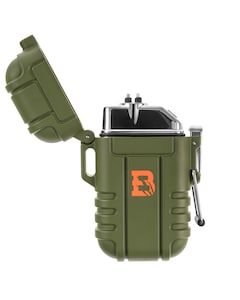
- Gasoline lighter — the classic petrol lighter keeps flame even in windy weather. In our offer you will find its improved version, i.e. survival lighter. This is a waterproof lighter that is made from lightweight aircraft grade aluminium. This lighter features a thick wick that produces a large and bright flame. The survival lighter is usually also equipped with a wind shield.
- Plasma lighter — This type of lighter works thanks to electrodes that trigger electric arcs. This model can easily cope with heavy rainfall, blizzards or heavy snowfall. Our range includes, among other models, the plasma lighter, which is characterised by a reinforced housing made of tough and resistant plastic. Its matt surface guarantees a firm grip even with wet hands. The plasma lighter is charged via a micro-USB cable.
- Gas lighter — to common type of lighter that can be purchased in almost any shop. A variation of the gas lighter, is the glow lighter. This type also uses gas, but before the flame is produced, the gas is mixed with air, making the flame stronger and more stable. Importantly, such a lighter will work up to an altitude of about 3 000 metres above sea level.
Fire strickers for starting a fire
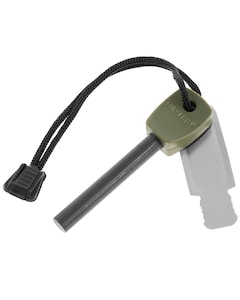
Fire strickers are divided into several types depending on the material used to make them, so we have traditional, ferrocite and magnesium models. Currently, ferrocite fire strickers are very popular. To light a fire with it, you need a fire stricker and a sparkler. In order to light a fire, the fire stricker must be rubbed vigorously against the sparkler.
Want to find out more about fire strickers? Take a look at our article: What is a fire striker and how does it work?
How do you start a fire without anything? Alternative ways
You already know the tools with which you can easily start a fire. But what do you do if you don't have any of these items at hand? Here are some alternative ways to start a fire.
Starting a fire with sticks
Lighting a fire with sticks is the original technique for creating flames. However, lighting a fire using this method is not easy and requires practice. We therefore recommend the use of matches, lighters and fire starters.
Before starting the fire, prepare the fire pit and arrange the wood in it. To light a fire using this technique you will need two sticks cleaned of bark about 10 to 20 cm long, it is important that one of them is twice as wide as the other. Sharpen the tip of the narrower stick into a cone, while in the wider stick make a hollow about 3 mm and about 5 cm long. Prepare a small amount of dry grass or paper, for example. Place the sharpened cone in the hollow and start rubbing vigorously. The friction produces a high temperature, which allows the fire starter (prepared beforehand) to ignite. If the fire starter ignites, embers will be created which should be placed in the prepared hearth.
Types of focal stacks - how to build a campfire?
When burning a campfire, it is not only important to know the techniques and tools for starting a fire. It is also useful to have a basic knowledge of the campfire stakes themselves. Below you will find information on a few types we have selected.
| Types of focal stacks | ||
|
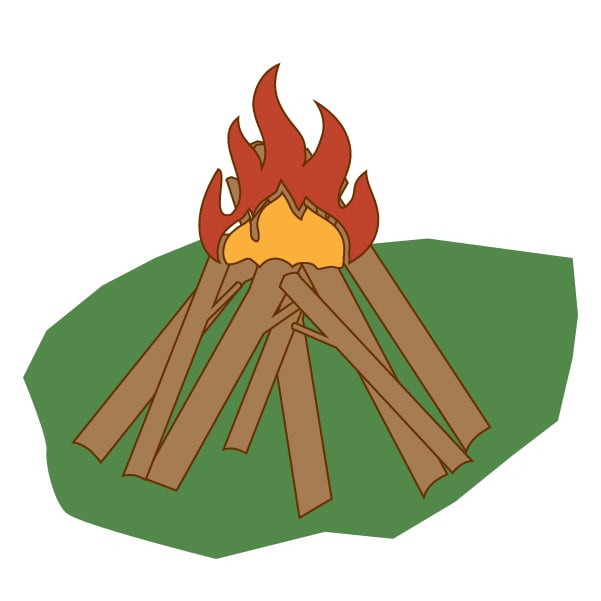
Cone (wigwam) |
|
You can use the cone stack for cooking, but it will work much better when you want to warm up quickly. The cone burns quickly and gives off a lot of heat. However, it is worth bearing in mind that it uses a lot of fuel. To build the wigwam you will need a peg to be driven into the centre of the circle. Drape the peg on the ground with kindling. Then stack branches around the central peg to form a pile. Leave a small opening on the windward side to ensure adequate draught. |
|
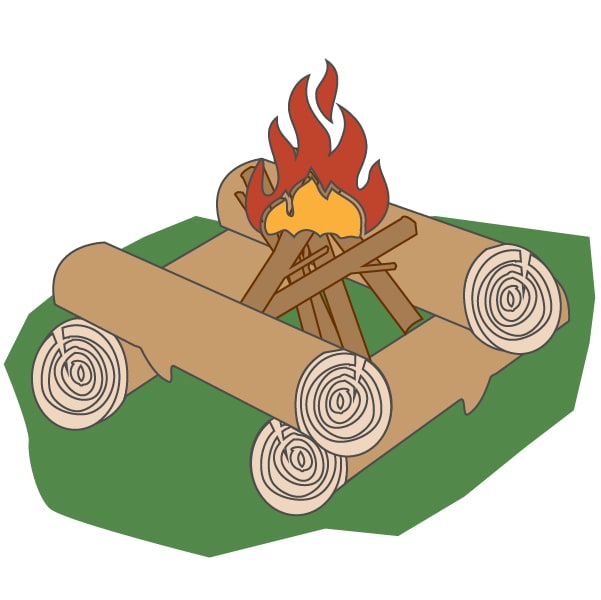
Well/Signal fire |
|
The well provides plenty of heat and light through a good air supply. The core of the campfire is a cone, around which pieces of wood of equal length are arranged in the shape of a box. A pile of this type can also be used as a signal fire. Place a significant amount of green grass, leaves or conifer branches on top of the structure. This will produce a lot of thick smoke, which can attract the attention of rescuers, for example. A constant supply of air will fuel the smoke and the bonfire will not go out.It is also worth remembering that the international sign of a call for help is the three-fold. |
|
Pyramid |

|
A pyramid stack is a similar stack to a well, but each successive floor of the structure is laid with shorter and shorter pieces of wood. A pyramid stack fire burns for a long time, making this arrangement a good choice for a nighttime campfire. |
|
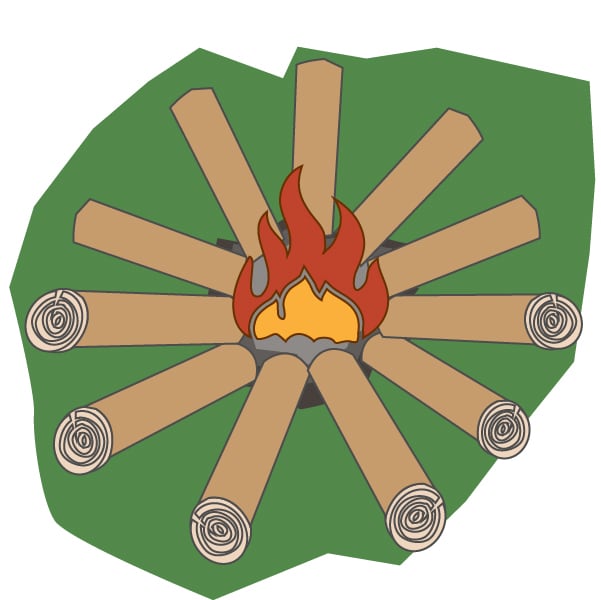
Star |
|
The star is also known as an Indian stack. A useful pile if you have little fuel available or care for a small fire. The fire itself is lit in the centre of the hearth and the thick pieces of wood should only glow at the ends closest to the fire. If you need a larger fire, simply move more logs closer to the centre. The star is useful for keeping watch at night. |
|
Long-term fire |

|
For this type of pile it is necessary to dig a shallow trough in the ground, or you can lay two thick logs, leaving about 20 cm space between them. It is a good idea to put small sticks under the logs to provide an air supply. A fire in this arrangement works very well for cooking. |
|
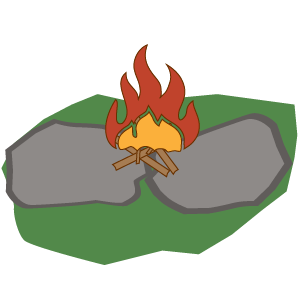
Fire on a pedestal |
|
If you are camping in a marshy area, a pedestal campfire will be a useful structure. For stacking, it is a good idea to find some flat stones to isolate the campfire from the ground. It is worth taking care to choose stones that are not too porous. Once the stones have been stacked, all you need to do is light the bonfire on them. |
Kindling (firelighters) and fuel
Kindling, also known as fire starter, is a flammable material that is used when lighting a fire. It is used to ignite solid fuels that require high temperatures to ignite (such as wood or coal).
The kindling must be a material that will take care of the fire in a short time. One of the best choices will be: dry birch bark or dry resinous wood (from coniferous trees). The following will also work well as kindling: cotton wool, dry leaves, dry grass or even tissues.
It is possible to make lighting a fire much easier for yourself by using ready-made kindling. Kindling can come in various forms.
For example, you can choose a fire starter in the form of a small piece of pine trunk, which is saturated with up to 80% resin. Use a knife to cut off small pieces of fire starter. Another type of fire starter is pine sticks (for example from the Mexican Montezuma species).
A fire starter can also be a cotton string that has been soaked in paraffin wax. Interestingly, this type burns steadily for about 10 minutes. Ground nuggets made from a mixture of pine wood and paraffin wax show the same burning time. More types of kindling can be found in our categories of kindling.
Firewood - which species to choose?
The fuel, i.e. the fuel that will support your campfire, should also be chosen wisely. This choice, however, depends on what kind of fire you need.
Coniferous wood for a bonfire
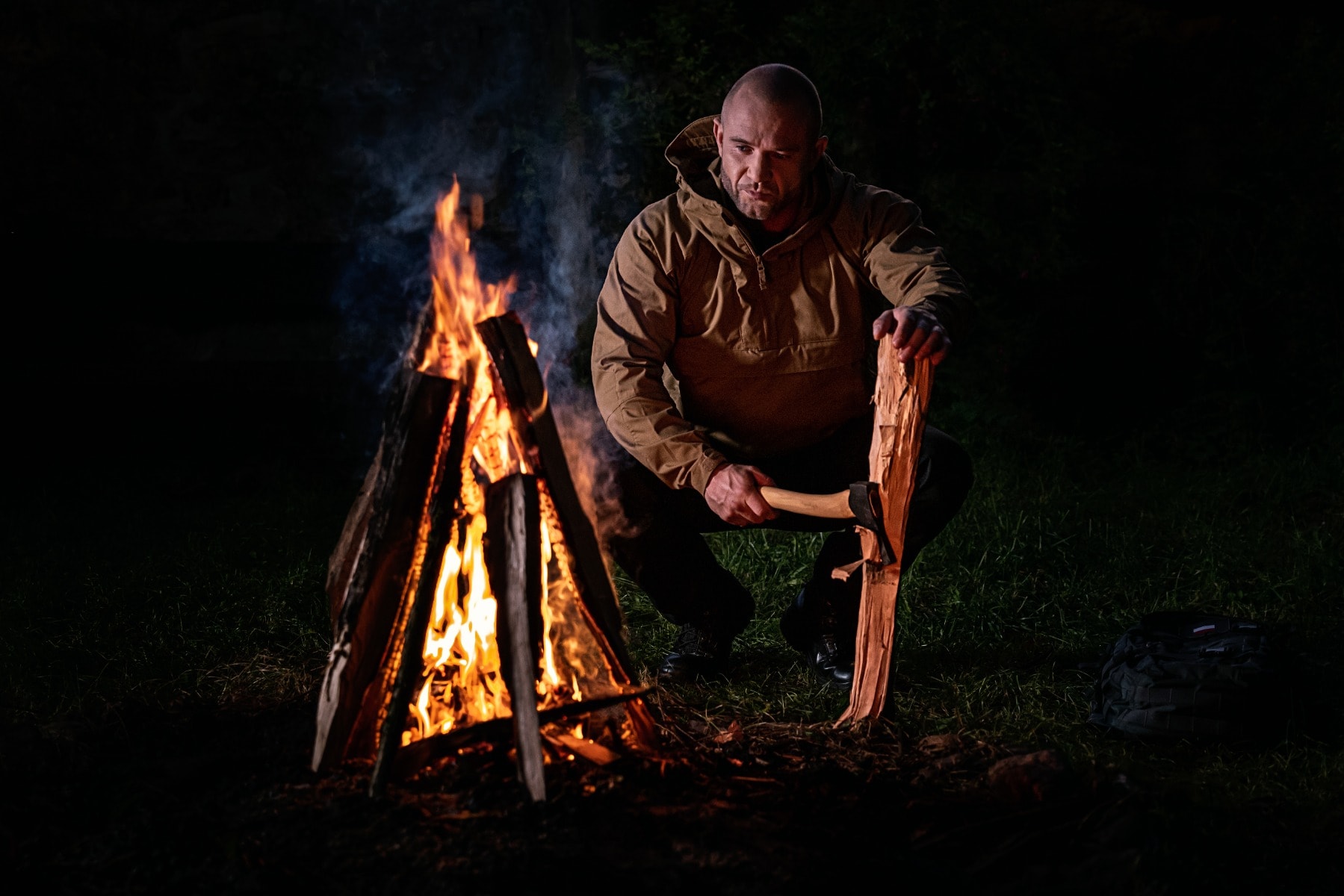
Coniferous trees are rich in resin, which helps the wood to catch fire quickly. If you need a strong flame to brighten up the area, choose wood from coniferous species. The downside of this type of wood is that it burns quickly and gives off a significant amount of tar. We advise against choosing conifers if you want to maintain a long-lasting bonfire for cooking a meal, for example.
Example species: spruce, pine.
Hardwoods for bonfires
Wood from hardwood species can be soft or hard, and each will work well for a different type of fire.
Softwood takes up fire quite easily, but burns quickly. It will work well for cooking, for example. Examples of species include birch, poplar, willow and lime.
Hardwoods take longer to ignite, but thus take longer to burn. It is worth choosing it when you need a long-lasting, stable campfire. Hardwood does not generate a significant amount of smoke, so it will be a good choice for a bonfire for long cooking. Species such as beech, hornbeam, ash and oak are worth choosing.
Also check out our video on different methods and means of starting a fire:
Firestarters at Militaria.pl
After reading this article, you should already know where, how and with what to start a fire. If you are going on a survival or bushcraft expedition, if you are a scout, or if you want to learn how to light a fire in any situation and are looking for the right tools - take a look at the range of Militaria.pl shop. In our range you will not only find the matches, lighters, flints and firelighters mentioned in this article, but also all the necessary equipment for overnight stays and camping in the field.