Which tent to choose?
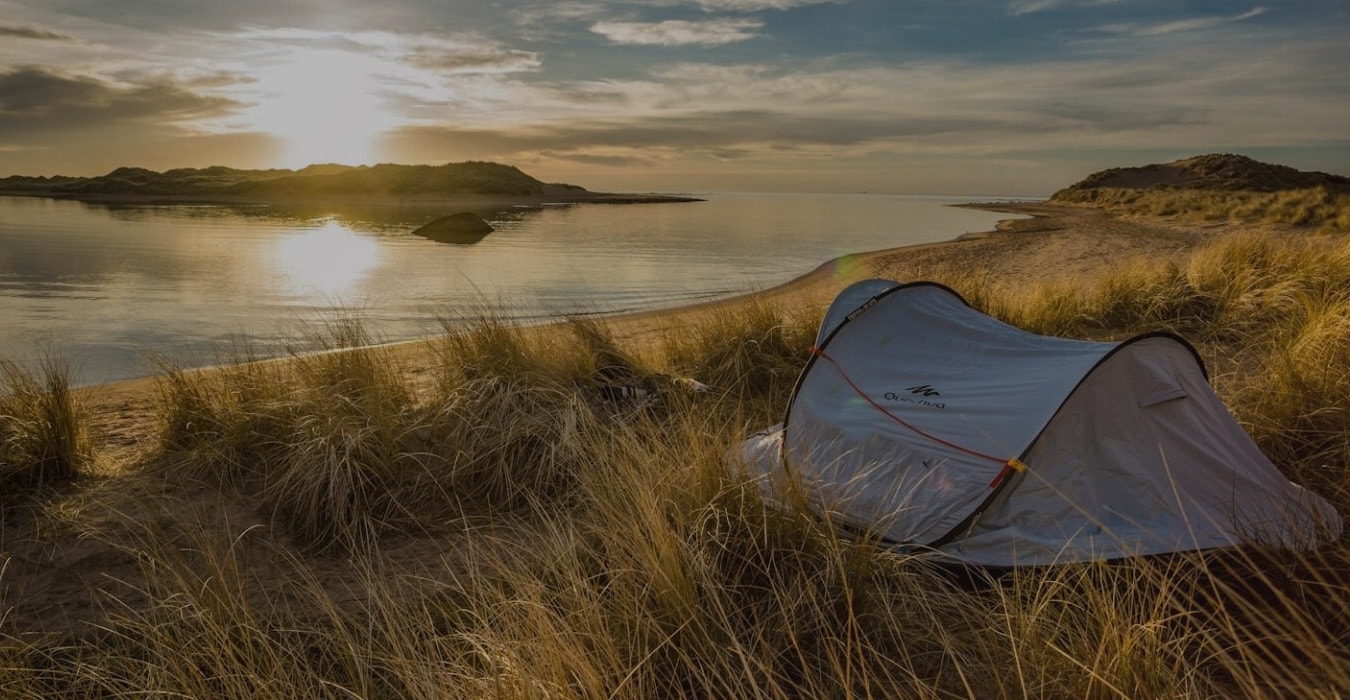
Wondering which tent to choose and need help? No wonder. There are a lot of models on the market, and if you want to buy something for yourself, you can get lost in it all faster than in the woods during a hike.
If you like camping, sleeping in the wild or simply going to areas where there will be no hotels or motels, then this guide is for you. You will learn from it what you need to consider when choosing a tent. You will learn about the main components that make up its construction and what functions they perform. We will also go through the different types of tents and the differences between them. We are confident that the following information will help you decide which tent to choose for yourself depending on your favorite outdoor activity.
What to consider when choosing a tent?
Choosing the right tent is not an easy matter, but we will try to make this task easier for you. You'll choose a different model if you're backpacking and size and weight matter to you, and another if you're going camping by car and will be camping stationary. So what should you consider first?
The size of the tent - which one to choose?
This is the basic feature of a tent, which you need to consider at the very beginning. In our offer you will find 1-person tents, 2-person tents, as well as those dedicated to up to 6 adults. Keep in mind, however, that a 3-person camping tent will be much heavier and larger than a touring tent of the same capacity. Therefore, it is important to know for which applications you need a portable bedroom.
The size of a hiking and trekking tent
Smaller (before and after unfolding) and lighter hiking tents are great for backpacking (increasingly popular backpacking) or biking (bikepacking). Every kilogram saved in this case is at a premium. When deciding on a particular size, take into account how many people will be sleeping, what stature they are, how much luggage you have with you and what kind of comfort you expect. The length and width of the sleeping mat and sleeping bag are also important.
There are two ways to choose the size of the tent. The first is to buy a tent according to what the manufacturer and the name states - that is, if you are traveling with two people, choose a 2-person tent. This is the easiest way and should work in most cases - especially with products from reputable manufacturers. Another method is to simply calculate how much space you need. In this case, check how much space a sleeping mat takes up. If there are several, you need to calculate how much space they need in total. However, remember to always add 15-20 cm of provision so that when you sleep, you don't touch the walls of the tent.
If, on the other hand, you have a large luggage and want more space to move around, choose a tent with a slightly larger capacity. For example, if you are traveling with two people, it is worth taking a 3-person tent with you. However, keep in mind the extra weight and dimensions when folded.


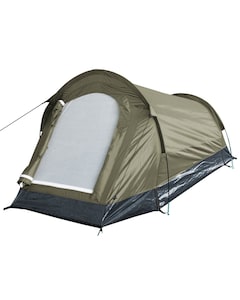


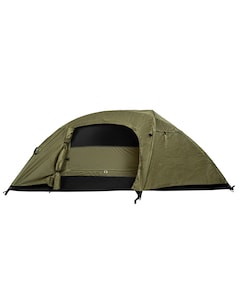

Camping tents
With large, camping tents, the matter is so much simpler because you usually won't be concerned about weight and size when folded. For stationary camping or long camping trips to a campground, we very often go by car. For such leisure activities, the main selection criteria will be the comfort and price of the tent. Before buying, think about what will be stowed inside and how much space you need for it. A great advantage of camping tents is that they are equipped with a large vestibule, where you can put a tourist chair, folding table or other accessories you will use. Large luggage can stay in the car. In our range of camping tents you will find models that can accommodate up to 8 people.
Water resistance of tents
Why should you pay attention to water resistance? A tent that does not get wet is a must have for any expedition where there is a chance of precipitation - which is almost always. A waterproof flysheet will provide you with sleeping comfort and peace of mind that water seeping into the tent from all sides will not wake you up in the middle of the night. No one wants a trip to turn into a stressful, nervous time. If we can prevent it, it's definitely worth it.
You can find details about water resistance in the description and technical data of the products on our website. Remember, however, that the value alone, such as 3000 mm, is not the only factor that should be taken into account. A tent from a reputable manufacturer, with less waterproof material, will better protect you from rain than a cheap tent from the market, whose quoted water resistance value is higher. Why is this the case?
Proven brands take care of the highest quality workmanship of their products. This is followed, first of all, by great joining of materials in the most vulnerable places to getting wet. Great performance will be of no use if the workmanship is of a low standard. Keep this in mind if you want to be sure that you and your belongings will stay dry, regardless of the weather conditions.
To further increase water resistance, many manufacturers use waterproofing. If your tent doesn't have one from the factory, check out the range of waterproofing products for tents. Remember, a tent that doesn't get wet is your peace of mind, comfort and a pleasant time, even on torrential days.
Other features of the tent - weight and size when packed
The size of the tent and its water resistance are important, and in fact, these are two key aspects you need to pay attention to. However, there are a few other things to consider, even though they may not seem important at first look.
If you're looking for a backpacking tent, the weight of the tent and the size of the tent before it's pitched will be important - especially if you're hiking for several days or moving by bicycle. A two-person tent may weigh 2 kg, but it could also be 7 kg. Make sure the one you decide on is not too heavy. Size when packed will be equally important if you want to fit or strap the tent to your backpack.
The last things, already less important, are the quality of the pegs and pins and the extra pockets in the tent's bedroom. These are marginal matters, yet they can be important to many - especially the extra space for accessories. The quality of the pegs should concern you especially if you are going to very windy areas or the weather is not promising. Decent quality metal pins will also come in handy in areas where the soil is rocky.
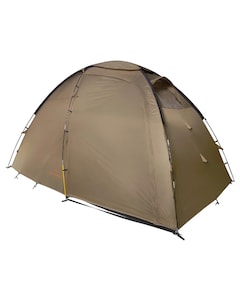


Frame, bedroom, flysheet - that is, the elements that make up a tent
The three structural elements of most tents are the frame, the bedroom and the flysheet. They are all important, but what exactly should you pay attention to before buying a tent?
These are the risers, made of fiberglass or aluminum, which are the support system for the bedroom and the flysheet. As they support everything else, they must be strong enough to withstand strong gusts of wind and sudden downpours. At the same time, they should be relatively lightweight. The arches (frame) are fixed to the ground with pins or pegs. More advanced designs will be equipped with additional arches, so that they can withstand extreme conditions. However, one must then expect additional costs. The same is true of the materials from which they are made. Cheaper, less durable is fiberglass. If you want the greatest durability, choose a tent whose frame is made of aluminum. This will be a suitable choice if you are going to the mountains or places where you can expect very gusty gusts of wind.
Also keep in mind that camping tents will have more risers included and often additional supports to hold the vestibule. This affects the cost, weight and size of the overall structure. Some models, however, have a solution in the form of inflatable frames. This has two advantages. Firstly, such models are lighter, because you no longer need the classic risers. Secondly, such a tent is definitely easier to set up. However, you need an additional pump for this. However, if you move by car, this should not be a problem, and you will save a lot of time. Inflatable tents are a good solution for stationary camping in moderate weather - especially if you travel this way occasionally.
Tent bedroom
This is the element that is responsible for your comfort while sleeping or waiting out the rain. A good bedroom should be made of sturdy materials - waterproof flooring and a durable mosquito net. A waterproof floor is a non-negotiable. Otherwise, when it rains, water will seep in from underneath, and this is something you want to avoid. A proper mosquito net, which will resist light tearing, will protect you from mosquitoes and other insects, as well as allow air circulation.
Flysheet
It is the flysheet that provides protection from water entering the tent when it rains. It will also protect you from unpleasant winds. When buying, pay attention to the degree of waterproofness of the tent and the quality of the material's bonding. If you opt for a product from a reputable manufacturer, you are unlikely to have anything to worry about. Choose a tent with a sturdier, more waterproof flysheet when your travels take place on colder days and in rainy and windy regions of Poland or the world.
The tropical can be made of different materials. It can be plain, cheap polyester or nylon. Due to its properties, nylon will be a great choice, as it is lightweight and more durable than ordinary polyester. To further increase tear resistance, the material can be reinforced with Rip-Stop weave. It is easy to recognize such a solution. A convex grid will then be visible on the tropic, which makes it more difficult for the bulk of the material to tear, for example, when snagged on a branch. Also pay attention to the fact that the flysheet has vents with a canopy, which will prevent water from getting inside during a heavy downpour.
Types of tents
In addition to the division by purpose and size, tents can also be divided by their form of construction. And so on the market you will find igloo tents, tunnel tents, triangular tents and other less common types.
Igloo tents
A very popular and also the simplest form of tents, which you will see on many hiking trails and campgrounds. This is a structure whose support system is a frame usually consisting of two crossed arches. It's very easy to set up and you don't need an extra lashing or a supply of pegs. However, it is worthwhile to attach such a tent to the ground. They usually have one or two entrances plus a vestibule, which is ideal for leaving shoes there, for example. The shape of igloo tents makes them good for windy weather.
Tunnel tents
The most popular type of tents. They are taller and longer than igloos, so they provide significantly more space. However, they have their disadvantages. Due to their size, they need additional poles. They also need to be very well drawn back and firmly fixed to the ground with pegs (for hard, rocky ground) or pegs (sand, soft ground). Construction makes it not a good choice in windy areas. Due to the time-consuming set-up and weight of such tents, they are recommended for stationary camping.
Triangular tents
These days it's a rarity on the market, but you can still find them even at reputable, major manufacturers. In our offer you can find several models in the category of military tents. Due to their construction and usually time-consuming set-up, they are recommended for stationary camping. They also do not guarantee such safety during strong gusts of wind as, for example, iglo tents. Like tunnel tents, they need good lashing and attaching with pegs or herrings. Compared to the previous two types, they are the least practical.
Tents - what else to keep in mind
We hope that the above description has helped you make a decision and you already know which tent to choose. The right size, waterproofness and type of tent will ensure your comfort and safety when spending the night in the wild or even at campgrounds. Keep in mind that a tent made of good, waterproof materials that comes with lightweight poles and sturdy pegs will cost more than basic models. However, if you will be using it in extreme conditions or care about maximum tent durability and longevity, it is worth paying a little extra.
On top of all this, it is worth buying special products designed for tent cleaning and waterproofing. Most models are waterproofed and impregnated, but it is worthwhile to protect this additionally from time to time to maximize the life and functionality of the equipment, and to ensure yourself a peaceful sleep. Completing the kit will be a good quality tent pull rope and spare tent poles and tent stakes. Also check out what else to pack for camping in another guide.