First Aid and the Law in Poland
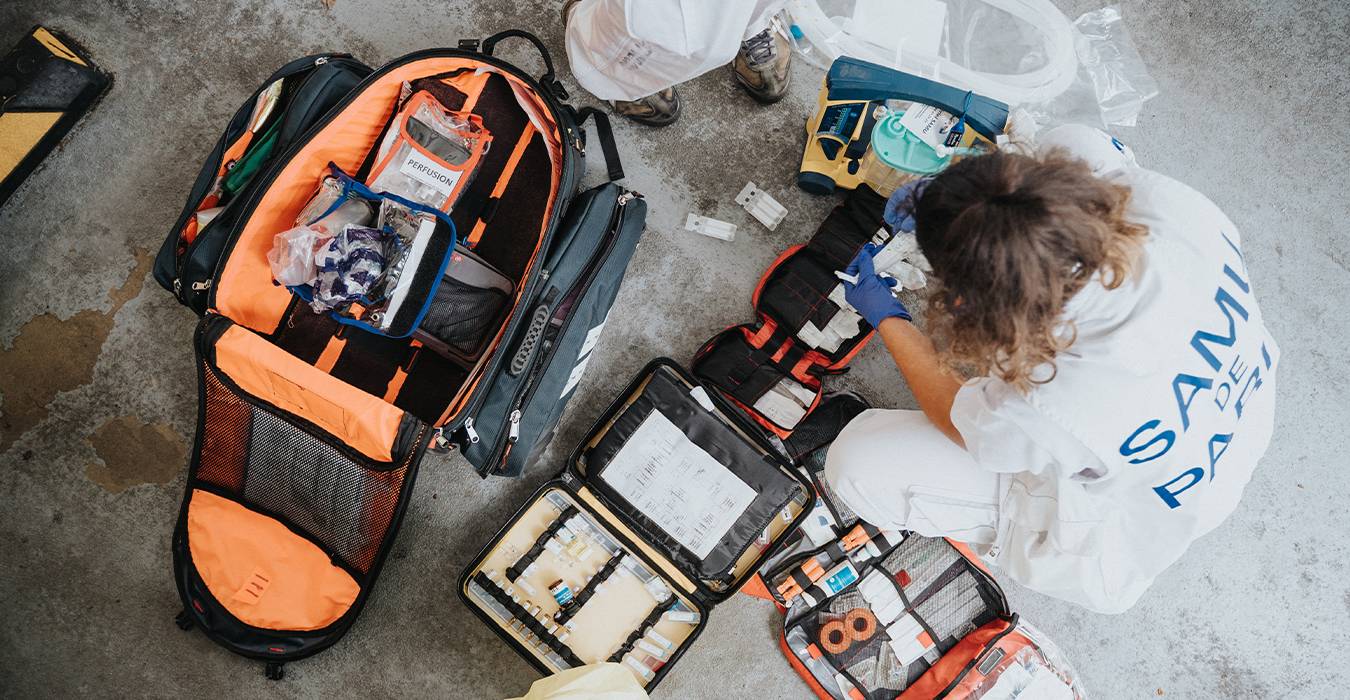
In the world around us, there are often all kinds of incidents and accidents, the consequences of which threaten health or even life. Despite many educational programmes, training courses and advertising campaigns, many people still have doubts about their duty to provide first aid and the legal aspects involved. In the following guide, you will find out when and if you are obliged to provide assistance to an injured person, under what circumstances you should not do so and how to call for help correctly.
Legal aspects of first aid
First aid is a very important subject and the legal provisions concerning it are often misinterpreted, leading to an unnecessary increase in the risk to health or life of those affected. The legal basics of first aid have a completely different purpose - their purpose is not to threaten liability. They have been established to increase the chance that when it is you or someone close to you who finds themselves in a situation requiring medical first aid, they will receive that help.
Failure to provide assistance and the CC - what is the penalty?
The most important legal basis for first aid is the Penal Code. This is because §1 of Article 162 provides for the punishment of failing to provide assistance to a person in danger of loss of life or health.
Penal Code - Art. 162. § 1:
"Whoever fails to render assistance to a person in a situation threatening imminent danger of loss of life or grievous bodily harm and is able to do so without endangering himself or another person with loss of life or grievous bodily harm, shall be subject to the penalty of deprivation of liberty for up to three years."
Who has a duty to provide first aid?
It is clear from the provision that you are obliged to help a person whose health or life is in danger. If you fail to do so, you may be held criminally liable. Importantly, according to the wording of the provision, you can still face the consequences of failing to render assistance, even if there was no final serious injury or death to the victim.
When can first aid be waived?
The second, extremely important piece of information arising from this paragraph is that you are excluded from liability if your attempt to provide first aid would expose you or bystanders to loss of life or health. When the causes of the danger have still not been eliminated, you are not obliged to try to provide assistance yourself at all costs. This may be the case, for example, during a fire, a building collapse or an accident in the mountains. The next paragraph of the aforementioned article also refers to the situation in which you are not obliged to provide assistance to the injured party.
Penal Code - Art. 162. § 2..:
"He does not commit an offence who fails to render assistance for which it is necessary to undergo a medical procedure or under conditions in which immediate assistance from an institution or person appointed for this purpose is possible."
It follows from the paragraph that if the injured person is already being assisted by qualified services or is to be assisted immediately, you should allow the services to act. This does not mean that you should remain completely passive, as your presence can still be useful to the services. Depending on the specific situation, you may be able to provide relevant information or assist the rescue team in the operations concerned at their request.
Why provide first aid?
In some cases, the abandonment of pre-medical first aid is due to fear of liability for causing injury to the victim. A situation often mentioned is, for example, the breaking of ribs during CPR. Remember that you are protected by the Civil Code in such circumstances.
Civil Code - Art. 757:
"Whoever, in order to avert the danger threatening another, saves his or her welfare (...) is liable only for wilful misconduct or gross negligence."
The Civil Code describes two situations where the person providing first aid may suffer the consequences of causing harm to the injured person. The first is when one intentionally causes additional injury, de facto contrary to the very idea of providing assistance. The second is when one's action bears the hallmarks of gross negligence, which is without justification and is an illogical action. It should also be noted that no one can require you to have professional emergency medical knowledge.
You are legally protected by providing assistance
Another piece of legislation relating to the provision of assistance to persons at risk of harm to their health is the State Emergency Medical Services Act.
Act on State Emergency Medical Services - Art. 5. 1:
"The person providing first aid (...) shall enjoy the protection provided (...) for public officials."
This means that, in the course of administering first aid, an infringement of your physical integrity is treated in the same way as an assault on, for example, a police officer, and is punishable by up to three years' imprisonment. The provision is a safeguard relating to situations where the victim or bystanders behave aggressively due to the alcohol consumed or the shock of the circumstances.
Remember that life is more important than property
Under the same law, you are entitled to sacrifice the property of others if this is necessary to save an injured person. For example, a broken window is a small cost compared to a human life, if there is no other option do not hesitate to smash it to render assistance.
Act on State Emergency Medical Services - Art. 5. 2:
"A person referred to in paragraph 1 may sacrifice the personal goods of another person, other than life or health, as well as property, to the extent that this is necessary to save the life or health of a person in a medical emergency."
As you can see, the same provision allows not only property but also personal property, such as dignity or freedom of movement, to be violated during rescue operations. When rescuing another person, it may be necessary to undress him or her or hold him or her in a particular place so that he or she does not risk additional injury under the influence of shock or emotion.
Pre-medical first aid after a road traffic accident
A separate law defines the duty to provide assistance to victims of traffic accidents. Significantly, paragraph 3 of the following article extends this duty to all accident participants.
Road Traffic Act - Art. 44. 2:
"If there is a person killed or injured in the accident, the driver of the vehicle shall furthermore be obliged to provide the necessary assistance to the victims of the accident and to call the emergency medical team and the Police. (3) The provisions of paragraph (...) 2 shall apply mutatis mutandis to other persons involved in the accident."
The above paragraphs also impose a duty on the accident participant to call the relevant emergency services.
Calling for help is also a duty - don't be indifferent
Article four of the aforementioned National Emergency Medical Services Act obliges you to inform the services not only when you see someone already in danger, but also if you perceive circumstances that could lead to such a situation.
PRM Act - Art. 4:
"Whoever observes or witnesses a person or persons in a state of health emergency or an event causing such a state of health emergency shall, to the best of his or her ability and skill, take immediate action to effectively notify those entities statutorily established to assist persons in a state of health emergency of the event."
The wording of the Act draws attention to the skills of calling for help, so it is worth recalling the current emergency numbers for the ambulance service and the scheme for communicating effectively in emergency situations.


Bibliography:
-
USTAWA z dnia 6 czerwca 1997 r. Kodeks karny Dz. U. 1997 Nr 88 poz. 553
-
USTAWA z dnia 8 września 2006 r. o Państwowym Ratownictwie Medycznym Dz. U. 2006 Nr 191 poz. 1410
-
USTAWA z dnia 23 kwietnia 1964 r. Kodeks cywilny Dz. U. 1964 Nr 16 poz. 93
-
USTAWA z dnia 20 czerwca 1997 r. Prawo o ruchu drogowym Dz. U. 1997 Nr 98 poz. 602
-
OBWIESZCZENIE MARSZAŁKA SEJMU RZECZYPOSPOLITEJ POLSKIEJ z dnia 22 stycznia 2021 r. w sprawie ogłoszenia jednolitego tekstu ustawy o systemie powiadamiania ratunkowego Dz. U. 2021 poz. 268