The science behind military camouflage – introduction
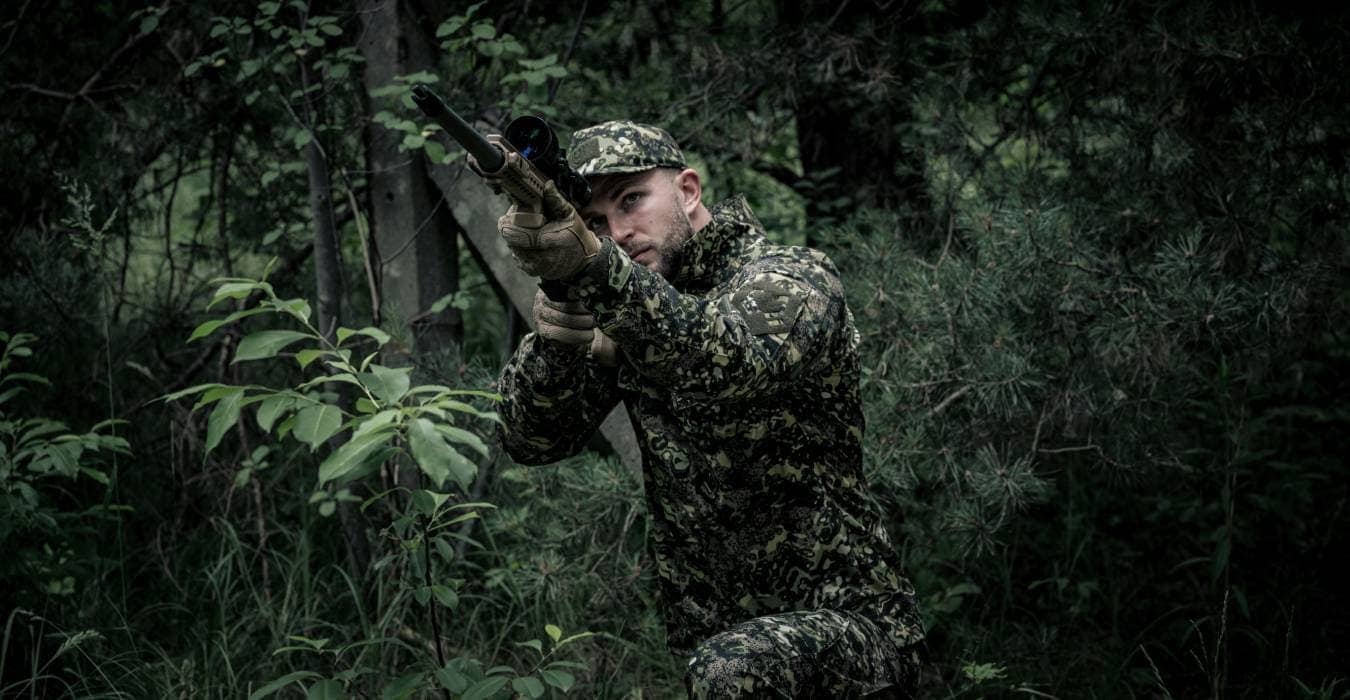
Despite the increasing saturation of the battlefield with opto-electronic means of detection, the art of camouflage, which is designed to protect equipment and soldiers from the sight of the enemy, still has not lost its relevance, as evidenced by the competitions for new camouflage patterns and high-budget research projects still being held by both armies and private companies.
The choice of camouflage clothing is also the subject of numerous discussions on the forums of ASG players and outdoor enthusiasts, and among the disputes taking place, substantive arguments are intertwined with individual tastes and fashion. So let's try to sort out this topic by looking at the basic factors that determine the effectiveness of camouflage patterns. Also take a look at our guide to different types of camouflage. There we describe all the patterns available on our site, taking into account the terrain in which they work best.
Table of Contents:
1. Deceive the eye - mimicry and disruption camouflage
2. Intermediate types of camouflage patterns
3. The most important parameters that determine the effectiveness of a given camouflage in mimicry or disruption aspects
4. The latest trends in camouflage
5. The art of camouflage - its natural limitations
Deceive the eye - mimicry and disruption camouflage
In the operation of human vision, two interrelated processes can be distinguished - spatial vision and central vision.
Spatial vision is a kind of navigation-warning system that nature has equipped us with, and its primary role is to provide information about where-something-is (and possibly whether the object is moving). This information mainly comes from outside the area of space on which we focus our sight and thoughts. Spatial vision, for example, allows us to navigate the sidewalk in relative safety even though we are busy browsing messages on our phone, spot an animal in a vast meadow, or dodge a blow spotted out of the corner of our eye in time
Central vision, on the other hand, is a system of identification, placing objects we've paid attention to in the context of our memory, or intellect more broadly, so that our brain can determine what-it-is (and other details, such as direction and speed of movement and degree of danger).
How does this work? For example, in a street crowd, an intense red color draws our attention (spatial vision), only then do we perceive that it is a person in a red hoodie or cap, a man or woman, relevant to us or one whose presence we will ignore in a second (central vision).


Both types of vision open up considerable opportunities for designers of camouflage patterns. For spatial vision, the most important factors determining its effectiveness are movement, the size of the object and its contrast against other elements in space. Of course, the size of the human silhouette and movement are difficult to correct, especially when we are unaware of foreign observation, but we can do a lot to reduce the contrast between us and our surroundings.
The camouflage that serves this purpose is called mimicry (from the Greek mimesis - to make similar), and we can also describe it as the chameleon effect or blending into the background. Its simplest form is uniforms made of fabric of a uniform color, averaging the dominant color palette in a given space. So these will be popular camouflage military colors like olive, khaki or coyote. Used in many armies from World War I to the present day, as well as uniform sets in gray, navy blue or black used by police and special units.
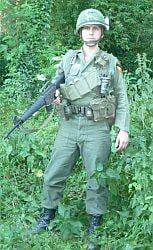
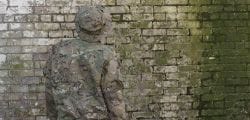
The disadvantage of such uniforms, despite the undoubted progress against the flashy uniforms of the Napoleonic era, is their low effectiveness at medium and shorter distances, and the main reason for this is that the dominant color of space does not reach us as a smooth, monochromatic screen, but is a multicolored color noise of a specified grain. Thus, a soldier standing against a background of scrubs wearing an olive jacket is detected by spatial vision on the same principle as a uniform gray spot on the screen of a snowy black-and-white TV would draw our attention (see photo above).
This problem was solved by creating camouflage patterns consisting of multicolored patches of size and shape similar to natural environmental elements like twigs, leaves, stems, clumps of grass or small stones.
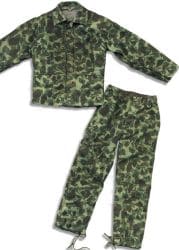
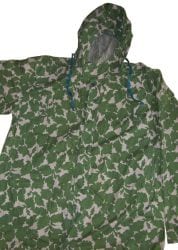
This second generation of mimicry camouflages debuted during World War II, and the most classic patterns of this group include the Soviet Leaf pattern and the American Jungle Camouflage better known as Duck Hunter. Also after World War II, similar patterns were introduced, such as the Austrian M/57 or the Polish Puma pattern, and to this day mimicry compositions are an important element of most camouflages.
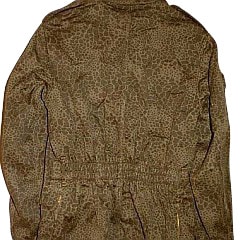
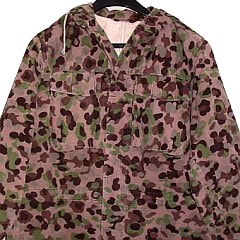
Another significant step that has been taken to fool spatial vision is photo-realistic camouflages, which are 1-to-1 scale representations of the terrain in which one wants to avoid detection. The best example of this are modern camouflage patterns for hunters, which look like canvas paintings depicting forest vegetation in the autumn and winter seasons, or reeds and marsh grasses, common in terrain where waterfowl are hunted. The disadvantage of these designs is that they are very narrowly specialized - strictly tailored to a particular terrain, vegetation and season.
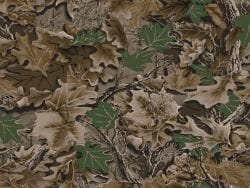
Mimicry camouflage, even the best for a given terrain, rapidly loses its effectiveness when the cloaking object is detected by spatial vision and its tracking is taken over by central vision. Movement is most often the culprit, as well as discontinuities in the color and texture of a space, such as a meadow in a forest or a clump of bushes in a built-up area. The human silhouette, even if entirely covered in brown-green-gray mottling, is still relatively easy to recognize, since what most determines the effectiveness of central vision is not color, but shape. However, vision can also be fooled in this aspect, and disruption camouflage does the job.
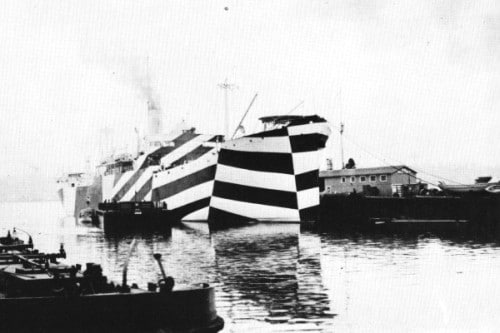
Breaking up a silhouette is most easily achieved by dividing it into several-odd shapeless figures using large, irregular spots in contrasting camouflage military colors. The effect is stronger the more the created spots diverge from the contours of the camouflaged object. An object covered with such camouflage, even if already detected, will cause central vision problems when identifying it - sometimes enough that we ignore it, something that doesn't fit the list of threats our brain generates in the context of a given situation. Besides, even when an object is recognized, it is more difficult to determine its direction of movement and speed. Camouflage of this type was first used on a large scale during World War I in the painting of ships and transport vessels (the so-called Dazzle Camouflage - photo above), and later also found use as camouflage for bunkers, tanks and aircraft, and finally as a camouflage pattern on fabrics used for tents and uniforms.
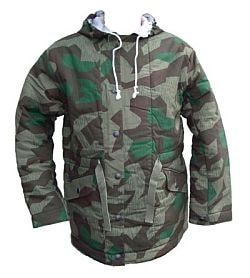
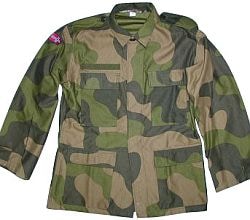
Classic examples of such camouflage art were the German Splinter Pattern (especially the A version) from World War II, the Italian M29, the British Denison Smock Pattern and the Soviet Ameba, while the most representative modern deformation camouflages include the Swedish M/90 pattern, the French CCE and the Norwegian M/98 (photos above).
Intermediate types of camo
Among the camouflage-covered fabrics produced over the last century, relatively few are pure mimicry or disruption types. Much more common are intermediate types, where one of the camouflage methods described above dominates to a greater or lesser degree.
The most important parameters that determine the effectiveness of a given camouflage in mimicry or disruption aspects:
Size of spots
The larger the individual spots, the better they break up the silhouette, but at the same time they reduce the ability to blend into the color noise of the surroundings. The best solution, therefore, would be to combine large (macro-pattern) and small (micro-pattern) stains in a single pattern, which was first attempted by the Germans even before World War II, adding green dashes the size of spruce needles to the Splinter camouflage and developing advanced Waffen SS camouflage patterns that were ahead of their time..
Color scheme and contrasts
In general, for both mimicry and disruption camouflage, military camouflage should be chosen to appear in an environment where one intends to be difficult to detect. The contrast of the individual colors is also usually a desirable parameter, especially for the disruption camouflage. Imagine camouflage composed of patches in 4 shades of green that differ minimally from each other - from just a few meters it will look like a uniform patch of green, making the whole project meaningless. It would be much more beneficial in this case to use light green, dark green, khaki and black. On the other hand, colors that are too contrasting can nullify the mimetic effect, which some designs have tried to remedy by softening the contours of the spots / transitions between colors.
Repeatability of the pattern
As is not difficult to guess, the camouflage pattern printed on the material is not unique over its entire surface, but is a multiplication of a single module of specific dimensions. The frequency with which the pattern repeats itself is determined by the size of the die that does the printing, as well as the design assumptions made. For both mimetic and deforming effects, it is advantageous for the area of a single module to be as large as possible, with this being critical for the deforming effect. In the case of a human silhouette, for example, it is sufficient for the field to be a square of about 50x50 cm. However, if we place a unique sequence of camouflage pattern in a duplicated square with a side of about 15 cm, this repetition is easily picked up by our eye, perceiving it as an unnatural continuity against the background of an irregular space. This problem is particularly evident in, among others, the Polish wz.93 Pantera, which, despite not the worst choice of stain sizes and colors (although these aspects could also be improved), loses a lot precisely because of the repetitiveness.
The latest trends in camouflage
The late 1990s and the first decade of the 21st century were a time of fascination digital or pixel camouflage. The concept behind their introduction involved computer processing of photos of a selected terrain or simply a selected color palette in specific proportions, so that the final result was an averaged pattern composed of thousands of miniature rectangles in 3-4 colors. The goal of this process supported by appropriate software was to reproduce the color noise of the surroundings as optimally as possible, which is not easy in the case of design based only on classical observation, knowledge and intuition of the designer.
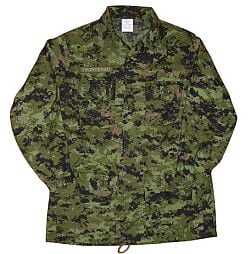
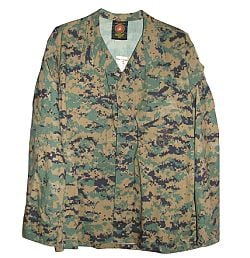
The first countries to introduce this type of camouflage were Canada (the Cadpat pattern) and the United States (the Marpat pattern, followed by the UCP and AOR), later the trend was marked in the uniforms of several more countries.
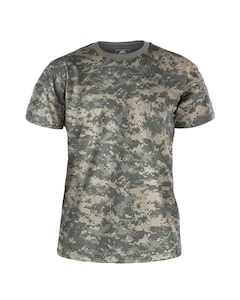


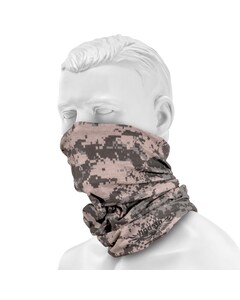

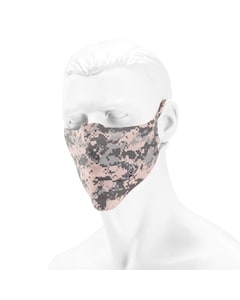


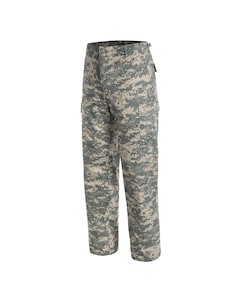
Do these camouflages really represent as revolutionary an advance over analog designs as their designers and early users suggest?
Unfortunately, there is no substantive reason for this. Simply put, the first generation of so-called digital camouflages are simply mimicry camouflages with a highly fragmented pattern - extremely effective mainly at short distances, less so at medium distances, while at longer distances (>100 m) they differ little in their effectiveness from uniforms in colors like olive, coyote-brown or khaki.
The reason for this is quite obvious - the spots (pixels) of these patterns are so fine and so evenly distributed that, despite adequate color contrast, already at medium distances they begin to merge into a single patch of green (Cadpat) or brown-green (Marpat) or gray (UCP). This practical lack of a macro pattern means that first-generation digital camouflages do not provide an adequate deforming effect, and in this respect are a step backward from many Cold War era analog camouflages.
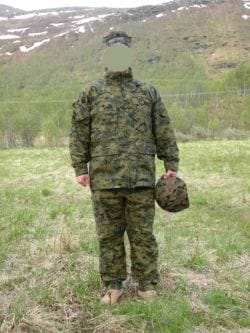
Another issue is the pixels themselves, which have been surrounded by a fog of mystery, creating the technological myth of digital camo. The reason for their use is trivial and has nothing to do with effectiveness - simply that such a micro pattern is the easiest to generate (based on data from digital photography) and print on fabric precisely in the form of pixels, but when it comes to the desired effect it could just as well be, for example, irregular dots, blobs or irregular polygons.
Doing justice to the designers of the Cadpat pattern and other first-generation digital camouflages, it should be emphasized the admittedly very good reproduction of ambient color noise. This effect, however, drastically loses its significance when we are observed from a distance of more than a dozen meters, and then the lack of deforming effect prevails on the balance of gains and losses.
A way out of this cyber-impasse can be sought in two ways. The first is second-generation digital camouflage, in the design of which the idea of transforming terrain photography into a pixel pattern was developed so that the end result combines the features of mimicry and disruption camouflage. In such a pattern, unevenly scattered small patches mimic the color noise of the surroundings and constitute a micro pattern, while their denser clusters of the same or similar color create a macro pattern that breaks up the silhouette. What's more, the micro pattern itself can also be generated as dots or miniature polygons/fractals, which is much closer to the forms found in nature than rectangular pixels.
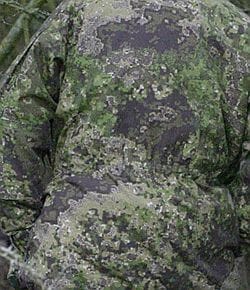
This concept is embodied by today's leaders among private camouflage design companies - Hyperstealth, Hyde Definition or Digital Concealment Systems.
One of the newest and most effective camouflages of this type is the MAPA pattern developed in Poland, used as a coloring for Maskpol brand tactical clothing and selected Wisport brand backpacks.
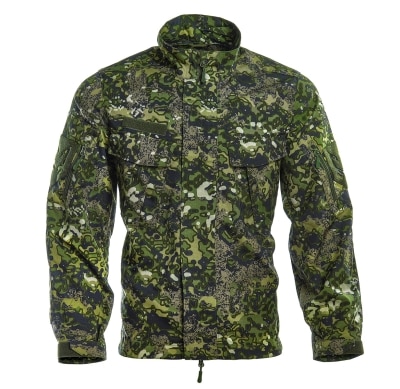
The Italians, who introduced the Vegetato pattern into their army, and the Finns, who developed their current M/05 camouflage pattern, also followed a similar path.
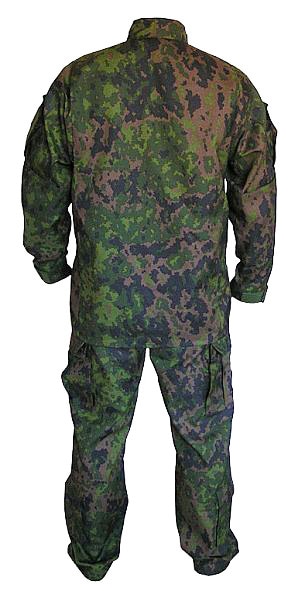
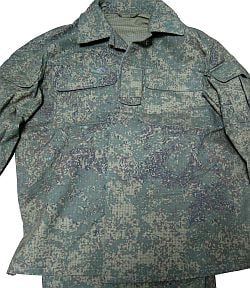
The results of this work range from exceptionally successful to disappointing in practice, with the most common observed problem being an insufficiently distinct macro pattern, the achievement of which is very difficult to reconcile with the micro pattern at the level of first-generation digital camouflage. Meanwhile, some designers try to use stains even finer than the pixels known from Cadpat or Marpat patterns, which generally lacks rational justification and rarely yields good results.
The second method is simpler and at least as effective, though at the same time potentially uncomfortable from the point of view of political correctness. This is because it involves taking inspiration from or even imitating the camouflage patterns used by the Waffen SS during World War II. This path was followed as early as the 1980s by the Germans in their Flecktarn pattern, the Danes in their M/84 pattern, and relatively recently by the Russians in patterns with names that leave no room for guesswork: SS-summer, SS-spring, SS-autumn. These camouflages can most often be seen on the popular maskalat Partizan and Chimara camouflages used mainly by snipers and Spetsnaz units.
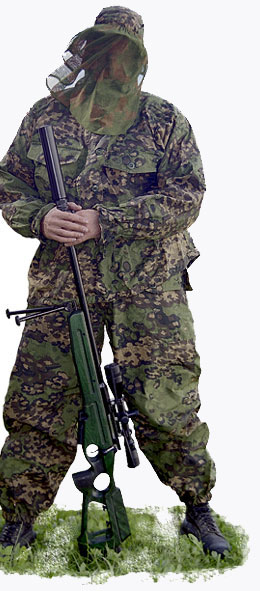
Other camouflages popular in Russia - Skol, Izlom, Tokka, FlecktarnD or Sewer - also draw on the Waffen-SS experience, although in this case indirectly, as they are modifications of the aforementioned German and Danish camouflages. History has come full circle, but the reason for this by no means lies in incorrigible sentiment. The point is simply that the camouflages that Prof. Johann Georg Otto Schick developed for the Waffen SS are still some of the best designs providing both excellent mimicry and disruption properties (combining micro and macro patterns), and thanks to the considerable variety of models that were developed between 1938 and 1945, one can easily find the optimal pattern for almost any landscape. Despite the passage of 70 years, these patterns are not inferior in effectiveness to the latest digital designs, and often surpass them, if only in such aspects as the rational selection of stain sizes and shapes or the choice of hues.
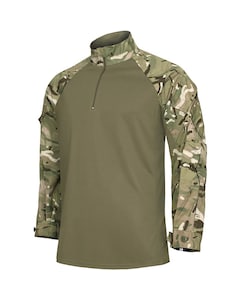
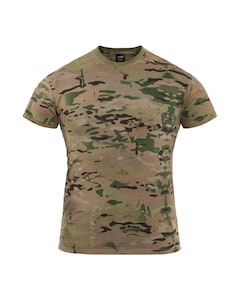
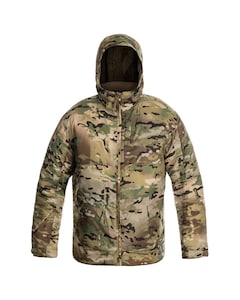
Deserving a separate mention is the MultiCam camouflage designed by Crye Precision, which, although it does not fit into the described trends, has become extremely popular among both civilian and military users in recent years. Its development also made use of digital analysis and processing of terrain photos, but the designers' goal was to create a versatile camouflage that would somehow take on the colors of its surroundings through appropriate color and tonal transitions. Such possibilities are created by the light reflected from the surroundings and the color perception process itself, in which the brain's supplementation of the incomplete information provided by the human eye plays a significant role. Thanks to these two phenomena, in the same appropriately selected color palette once a green-gray color seems to dominate other times a beige-brown color.
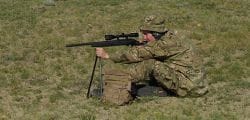
Unfortunately, it doesn't work as well in practice as it does in theory and in pictures prepared by marketing departments. Crye Precision owes its success mainly to its ongoing operations in Afghanistan for more than 10 years, where the color palette of the MultiCam camouflage proved to be one of the best suited to the landscape there. However, this is a classic mimicry effect that has little to do with its assumed versatility, and in a temperate zone landscape or in a city typical of Western civilization, MultiCam performs noticeably less well than other terrain-dedicated designs.
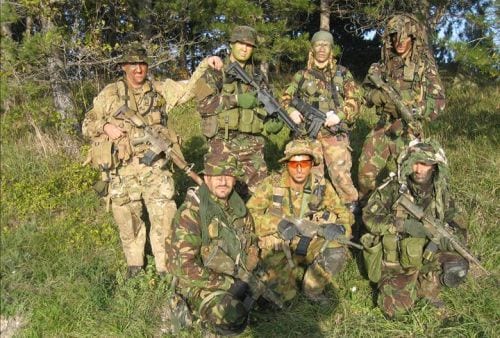
A couple of years after the market release of the basic universal variant, the MultiCam offering was supplemented by dedicated variants: the green MultiCam Tropic™, the desert MultiCam Arid™, the winter MultiCam Alpine™ and the predominantly black and gray MultiCam Black™ for police. Thus, the developers of the MultiCam pattern found its weaknesses impossible to address within the concept of universal camouflage.
However, it should be emphasized that despite the disappointment brought by the confrontation of theory and marketing with practice, the basic variant of MultiCam as a universal camouflage performs much better than the US Army's UCP (Universal Camouflage Pattern). Besides, MultiCam is a great camouflage for the autumn months in the temperate zone, as well as for all kinds of dry areas like pine forest undergrowth or higher parts of the mountains.


The art of camouflage - its natural limitations
Unfortunately, despite almost a century of development and hundreds of good ideas, no fabric covered with a camouflage pattern will make us a Predator from movie. The reasons why even the best-designed camouflages fail are many. One of the most common is an unfavorable angle of incidence of light and its excessive or insufficient intensity.
A camouflage pattern performs its functions best when both the object being masked and the background are illuminated at the same angle and reflect light equally intensely, with the light source behind the observer's back. Only then are the colors and contours of the pattern sufficiently intense and (assuming correct selection) consistent with the image of the surroundings. The problem is that such a setting straight out of portrait photography happens quite rarely in real situations.
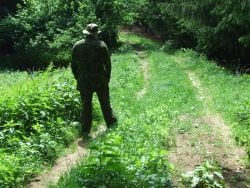
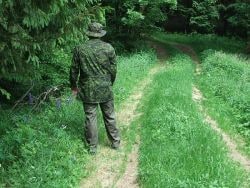
In addition, the leaves and grasses are semi-transparent, so they themselves render colors well almost regardless of the direction of illumination, which cannot be said of the fabric of the uniform. When the light falls in the direction opposite to the direction of observation, the object will be darker than the surroundings, while too intense light in line with the direction of observation will illuminate the object more than the surrounding leaves and grasses.
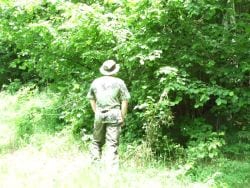
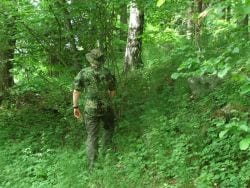
This is best seen in the forest, where, due to irregular clearances in the treetops, moving objects are once observed lit from the side and once from behind, making it more common to see the shaded or illuminated silhouette itself rather than the color and pattern covering it. As a side note - it's also worth remembering the importance of light when evaluating the effectiveness of particular camouflages based on photographs. Quite often on forums and portals dedicated to uniforms, photos are published on the basis of which one can form a misleading idea about the effectiveness of particular camouflage patterns. The most perfect pattern for a given terrain will look worse than the average one if the former is photographed against the light, overly lit or in the shade and the latter under optimal conditions. Besides, at a certain distance and in unfavorable lighting, all patterns look almost the same.
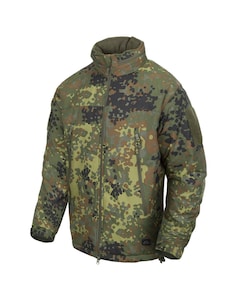
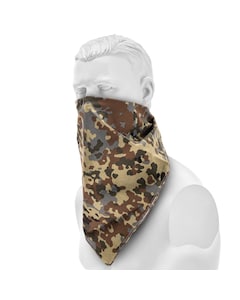
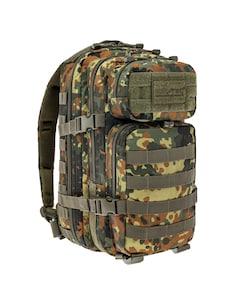
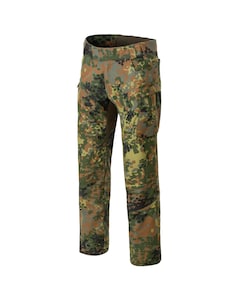


In addition, one must take into account the weapons and equipment that soldiers wear on top of camouflage clothing - this also does not improve the performance of camouflage patterns, as does the fading of the print with wear and tear and each successive wash.

Finally, it is also necessary to mention the cut of the clothes, which usually requires stitching together many small pieces of material (patch pockets, patches, double layers-reinforcements, etc.), and these in mass production are selected haphazardly, which, if extremely unfavorable, can completely nullify the macro effect of the design.
Photo sources:
- henrikc.dk
- militaryphotos.net