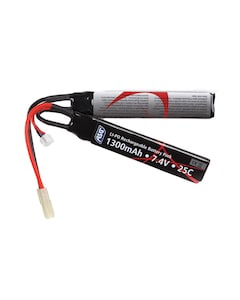
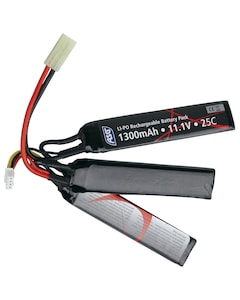
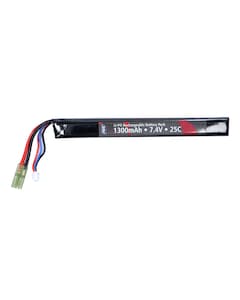
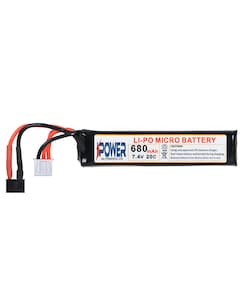
Which battery for ASG replicas? Types and how to charge them
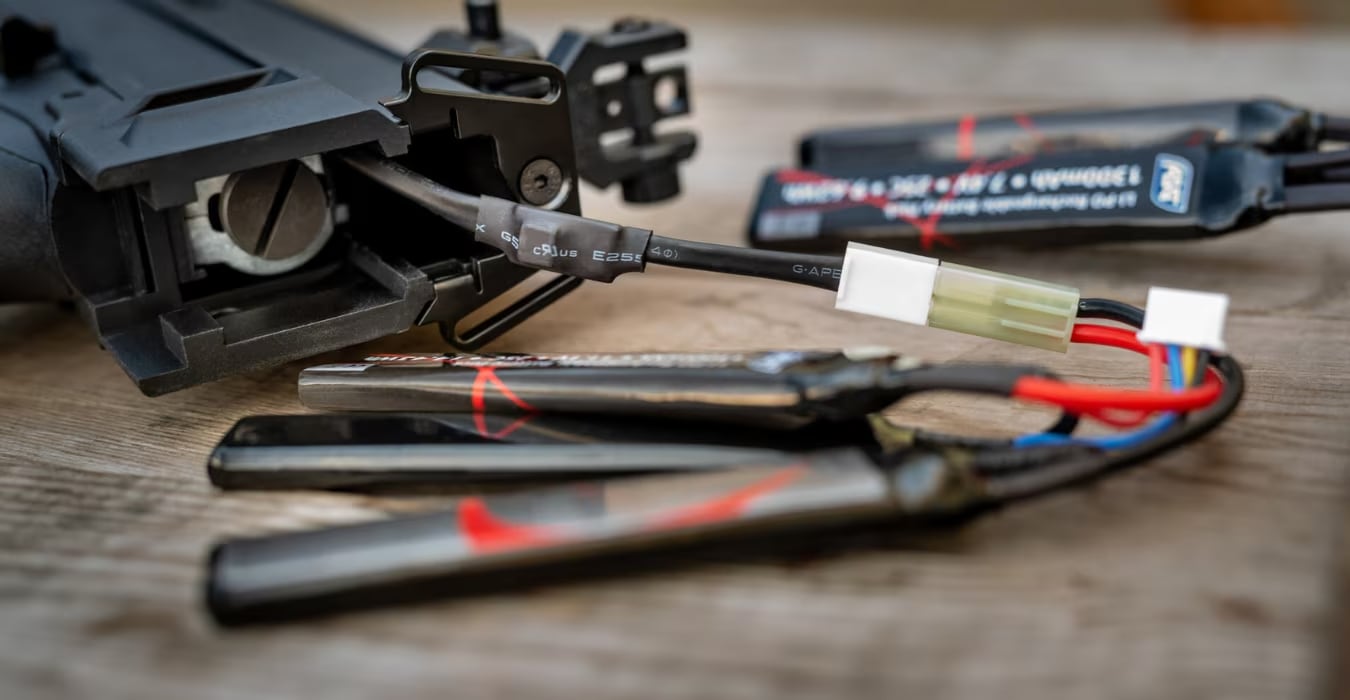
Batteries are the basis for the operation of any AEG (Airsoft Electric Gun) replica. Their task is to supply electricity to the motor, which sets in motion the entire drive train of the replica called gearbox. Choosing the right battery can cause a lot of difficulties, especially when the battery is not included with the airsoft riffle.
During the selection, attention should be paid both to the type of battery, voltage, shape, as well as the type of plug. The selection of a suitable charger and the charging time of the battery is also problematic. It is worth noting that the correct fit of the battery and proper operation have a very large impact on the trouble-free operation of the airsoft gun. From the following guide you will learn: what battery for an ASG gun to choose, how to charge the battery and how to take care of it so that it does not wear out quickly.
Types of batteries in airsoft guns
There are many types of batteries available on the market suitable for use in AEG riffles. These can be divided by the technology of the cells used, voltage, capacity (usually expressed in milliampere hours) and several other characteristic variables. Different types of batteries have their own advantages and disadvantages, so it is worthwhile to familiarize yourself with each of them before making the right choice.
When discussing the technologies and types of batteries used in AEG replicas, it is worth clarifying some basic terms that we will use:
-
A pack is a term for a rechargeable battery, which consists of one to several cells.
-
A cell is a component of a pack. As a rule, it consists of two electrodes immersed in an electrolyte solution, which is the basis for the chemical reaction from which energy is converted into electricity.
-
A battery (a.k.a. a secondary cell) is a device that, when exhausted, can be recharged with an electric current of sufficient intensity. A feature of all rechargeable batteries (and batteries) is that their operation (the release of electrical energy) occurs through a chemical reaction appropriate to the type of battery.
AEG guns most often use:
-
Lithium-ion (Li-Ion) batteries,
-
Lithium-polymer (Li-Po) batteries,
-
Lithium-iron-phosphate (Li-Fe) batteries,
-
Lithium-iron-phosphate (Li-Fe) batteries,
It is worth knowing that batteries are commonly referred to as galvanic (or alkaline) primary cells, which are widely used in electronic equipment. These include, for example, the popular "sticks", or AA batteries. They are disposable and, unlike batteries (which consist of secondary cells), are not rechargeable. However, because of the common use of both terms for batteries in ASG, we use the terms battery and rechargeable battery interchangeably.
Li-Ion batteries
Lithium-ion (Li-Ion) batteries are currently the most popular type of battery used in a wide variety of electronic devices such as laptops and cell phones, for example. These batteries are characterized by excellent performance characteristics, high efficiency and no memory effect. Importantly, they are also characterized by high resistance to deep discharge, which significantly increases their durability and service life.
Advantages of Li-Ion batteries:
-
up to twice the capacity and slower discharge of the battery compared to NiMH models at the same size and weight,
-
much higher capacity,
-
quite high resistance to temperature changes,
-
high service life.
Disadvantages of Li-Ion batteries:
-
very high susceptibility to mechanical damage.
One of the advantages of using Li-Ion rechargeable batteries is also the absence of the "memory effect" that was present in older type batteries. In AEG replicas, these batteries are available in 7.4 V and 11.1 V packs.
Li-Po batteries
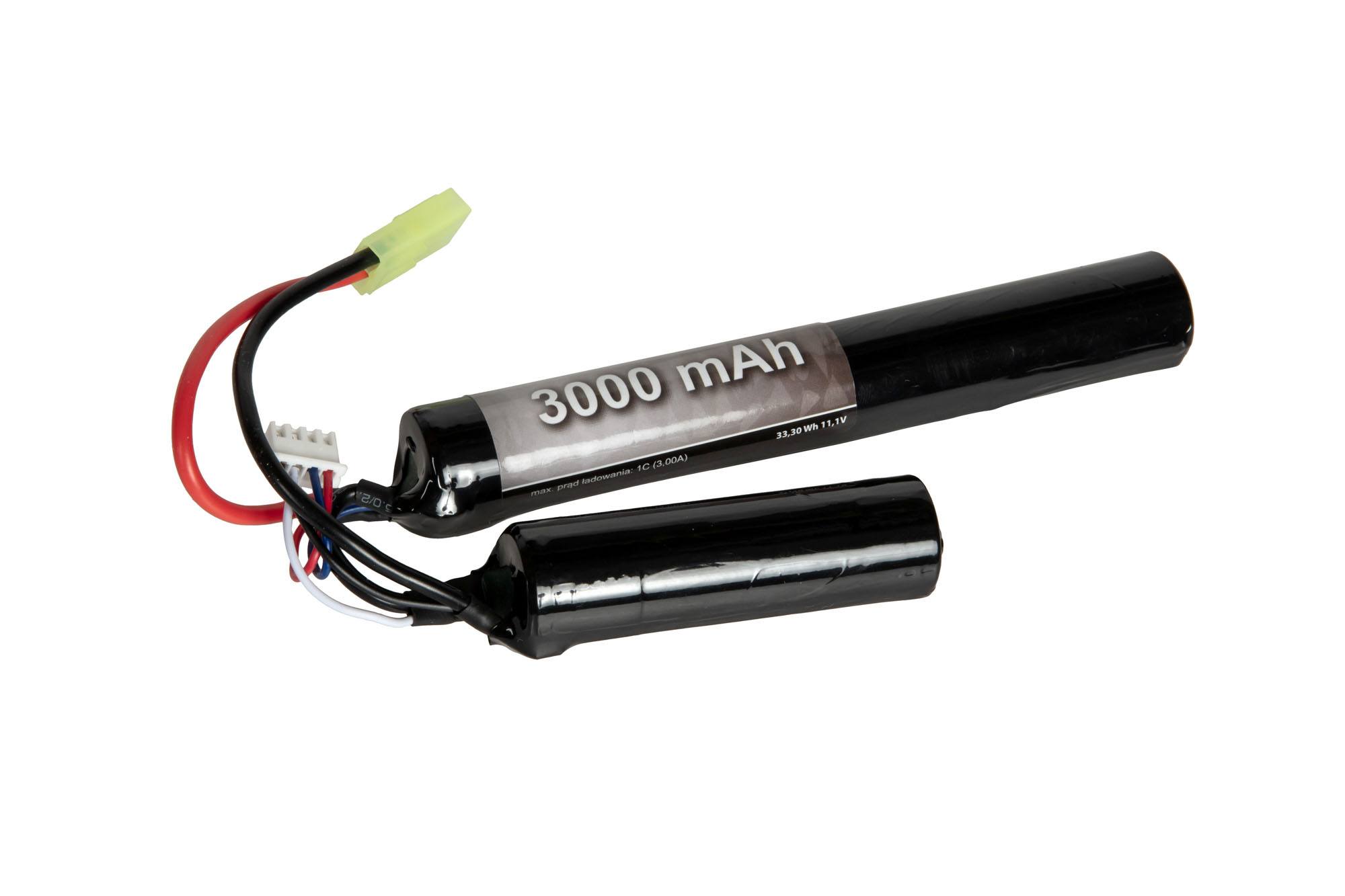
Li-Po batteries are currently the most common type of battery used in airsoft guns. They also have a certain advantage over the lithium-ion (Li-Ion) batteries described above. The two batteries differ in the electrolyte used, which in Li-Ion is liquid, while in Li-Po batteries it is solid or in gel form. Replacing the liquid with gel has had a positive effect on the safety of use and the overall life of the battery.
Due to the nominal voltage of a single cell, which is 3.7 V, Li-Po packs used in AEG replicas are characterized by a total voltage of 7.4 V and 11.1 V, although packs with a voltage of 14.8 V also occur.
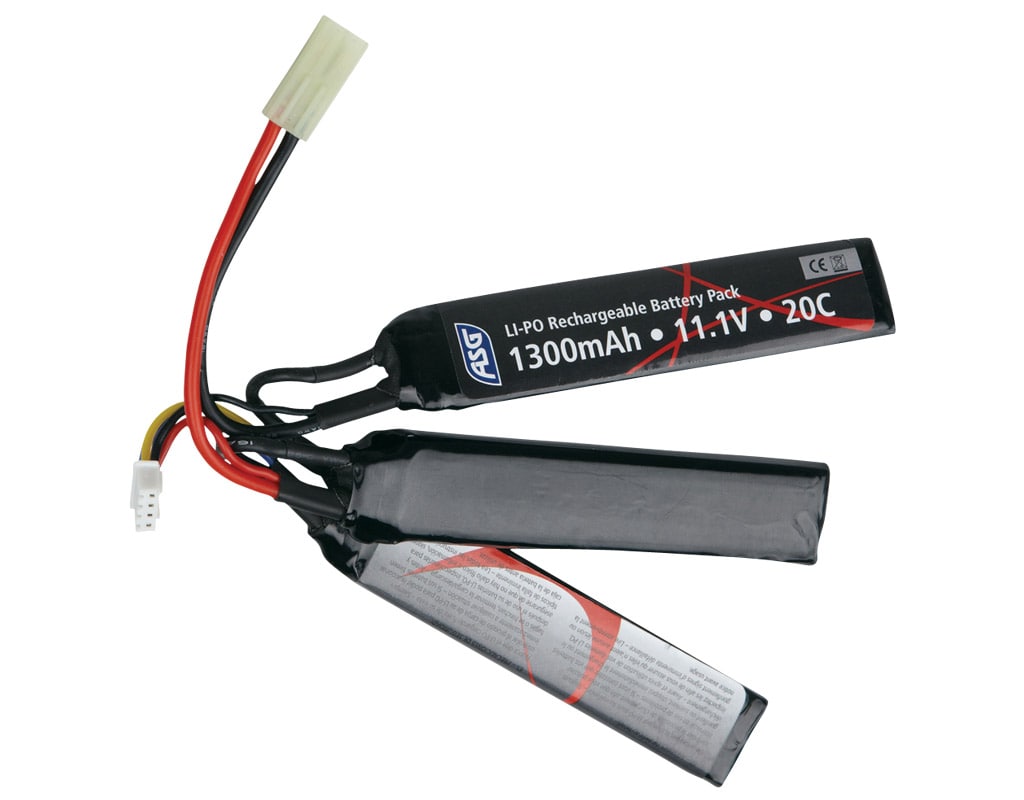
As with Li-Ion batteries, we can count among the advantages:
-
high capacity with low weight and relatively small pack size,
-
high performance compared to NiMH/NiCD batteries,
-
lack of "memory effect."
Disadvantages of Li-Po batteries:
-
low tolerance to over-discharge (below 3 V),
-
low resistance to overcharging (above 4.2 V),
-
higher price compared to Li-Ion packs,
-
risk of reduced service life through incompetent and improper use.
Disadvantages of lithium-polymer batteries also include susceptibility to mechanical damage, which can lead to leakage or explosion of the battery. Fortunately, due to the presence of an electrolyte in the form of a gel, such accidents occur much less frequently compared to Li-Ion batteries, in which the electrolyte is a liquid.
Li-Fe batteries
The Li-Fe (lithium-iron-phosphate) battery is another variation of lithium-ion batteries. These models have emerged in response to the demand for high-quality batteries that will have the characteristics of Li-Po and Li-Ion batteries, but with even higher current capacity and greater safety of use. Batteries of this type are mainly used in automotive applications, although they also find their place in robotics or modeling. For ASG guns, these batteries are a great compromise between Li-Po and Li-Ion batteries of 7.4 and 11.1 volts, as their nominal voltage in the pack is 9.9 volts (3.3 volts per cell).
Li-Fe batteries are characterized by the use of an electrolyte in the form of lithium iron phosphate (LiFePO4). This is an inorganic and water-insoluble compound that works well in cells. The advantages of using this type of electrolyte include very high stability of operation at high temperatures, high energy density, relatively long service life and much greater safety of use.
Advantages of Li-Fe batteries:
-
high tolerance to deep discharge,
-
resistance to low and high temperatures,
-
higher current capacity (relative to Li-Po and Li-Ion),
-
no "memory effect",
-
linear and "flat" discharge characteristics,
-
linear and "flat" discharge characteristics,
Among the disadvantages of Li-Fe batteries, we can include the higher price and the fact that a specialized microprocessor charger is required to charge them.
How to take care of Li-Po, Li-Ion and LiFe batteries?
The lifespan of batteries in the Li family (Li-Po, Li-Ion, LiFe) is mainly affected by how they are used and how they are charged. Li-Po batteries, like Li-Ion models, should be stored discharged at about 40%. In addition, you can get a special fireproof container or bag to improve the safety of package storage. Do not store loose batteries together. Remember, also, not to expose the batteries to high temperatures and direct sunlight.
To avoid reducing the default capacity of the cell, avoid over-discharging and overcharging. For this purpose, get a suitable charger.
Which charger for Li-Po, Li-Ion, LiFe batteries should I choose?
Li-Fe batteries, like Li-Po and Li-Ion models, belong to one family and require the use of a suitable charger. There are two basic types of chargers available on the market. These are:
-
Main chargers
-
Microprocessor-based chargers
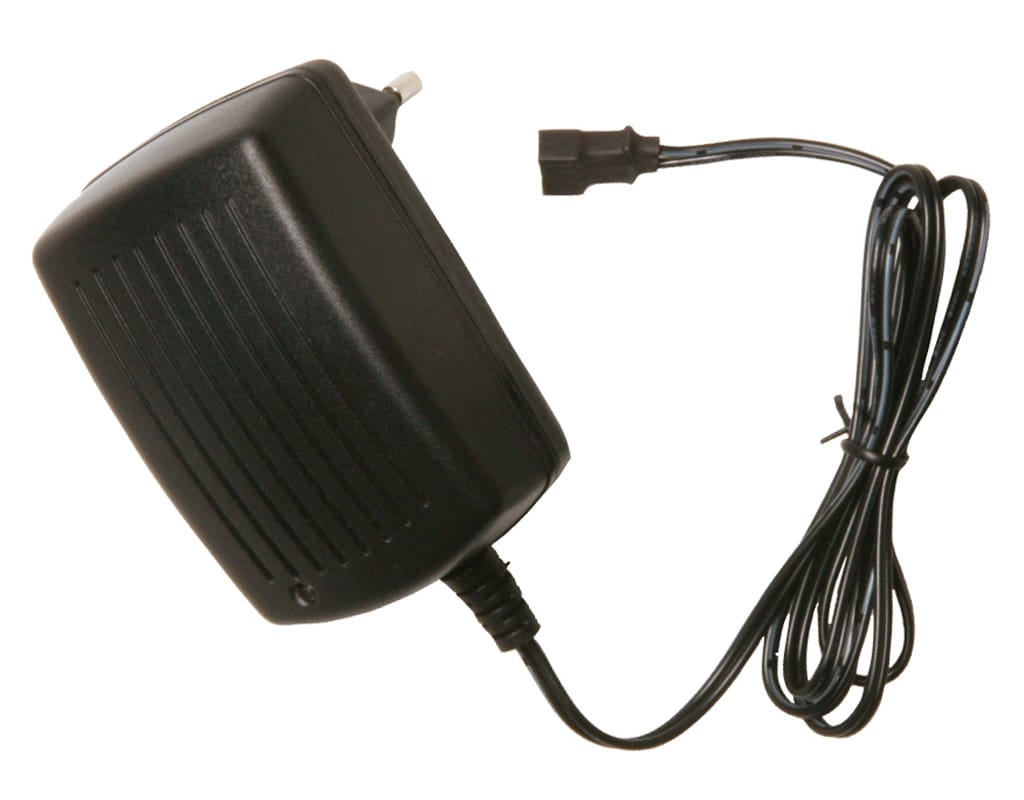
Main chargers look like NiMh battery chargers, but there are a number of important differences between them. These chargers charge individual cells until they reach the appropriate voltage of 4.2 volts, which they reach in about ¾ of the time of the entire charging process. Then the charger smoothly reduces the charging voltage until it reaches zero. After this time, charging is complete. Mains chargers do not require an additional power supply.
Microprocessor-based chargers use an advanced integrated circuit that controls the entire battery charging process. The advantage of microprocessor-based chargers is the ability to set a number of functions including: voltage and current selection, charging with or without a balancer, memorizing settings and much more. Importantly, microprocessor-based chargers monitor the status of all cells in real time, and also tell you when charging is complete.
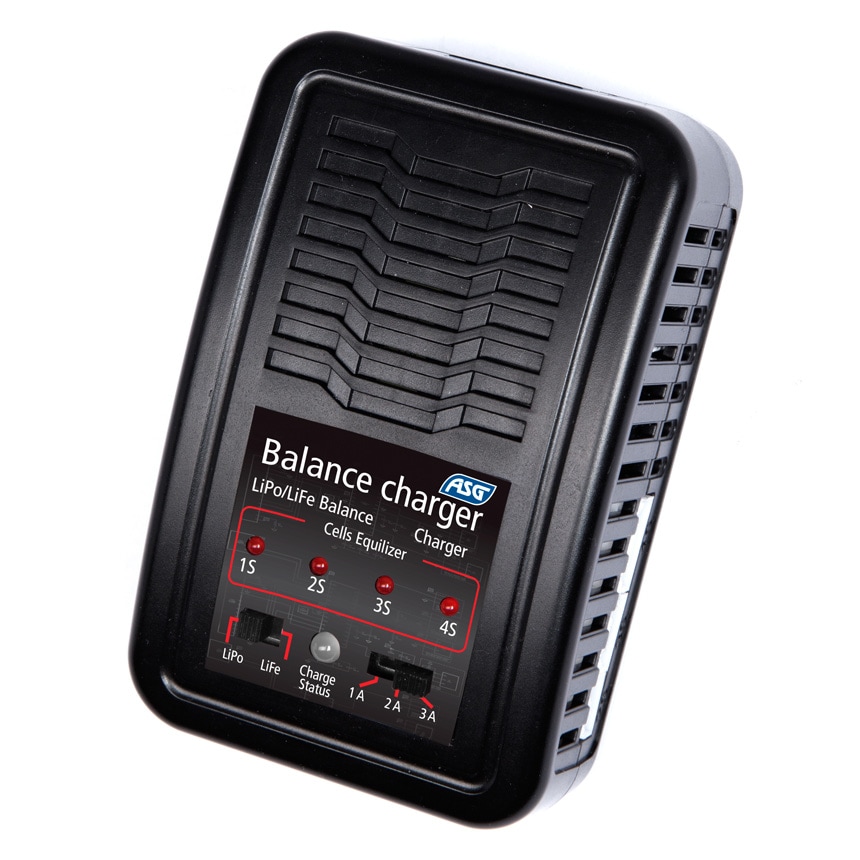
When choosing a charger, it is essential to check what type of battery it is designed for. This is very important, because the use of non-dedicated devices risks damaging the battery, which in very extreme cases can lead to the battery catching fire or exploding. In the case of universal microprocessor chargers, charging can be done with the help of a balancer.

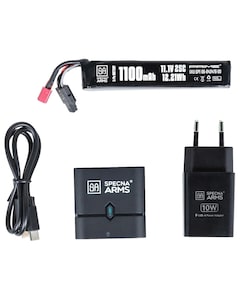
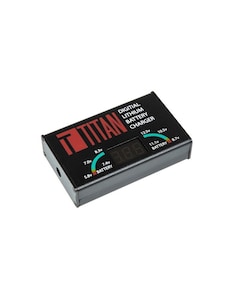
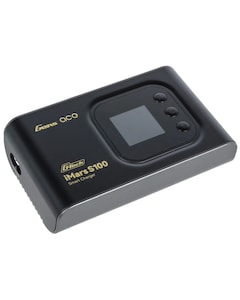
The process of charging Li-Po and Li-Ion batteries
The process of charging Li-Po and Li-Ion batteries is not complicated. It is worth paying attention to the proper settings of the charger.
When charging Li-Po and Li-On batteries, follow a few basic rules:
-
Charge the cells with a constant voltage (less than 4.2 volts) per cell. If your battery has 2 packs, then the voltage on the charger should be a maximum of 8.4 V, if the pack consists of 3 cells then the voltage should be 12.6 V, and so on. Charging a pack takes 60 to 90 minutes.
-
Charge the pack with a current of 1C. This is a value that does not damage the packs and increases battery life. Most of the available packs allow fast charging with a current of 2C or even 4C, however, this does not leave the battery life unaffected.
-
Charge the pack with a current of 1C. This is a value that does not damage the packs and increases battery life. Most of the available packs allow fast charging with a current of 2C or even 4C, however, this does not leave the battery life unaffected.
-
Charge batteries away from fire and flammable things, such as in a special fireproof bag. Do not leave charging batteries unattended in any way.
-
Contrary to many opinions, batteries can be recharged many times. This has little effect on their life. However, do not charge batteries for too long, due to the high amount of heat generated. Frequent, short recharges will work better than one recharge that lasts many times longer.
NiMH batteries
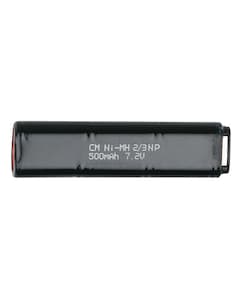
NiMH batteries (nickel hydride batteries ) are the oldest and cheapest batteries of all the above. They are made of cathode in the form of a nickel plate and anode made of metal alloy. These types of batteries are cheap to manufacture, easy to use and do not require the use of a specialized charger. Due to the low production costs of this type, batteries are most often supplied in a set with ASG guns.
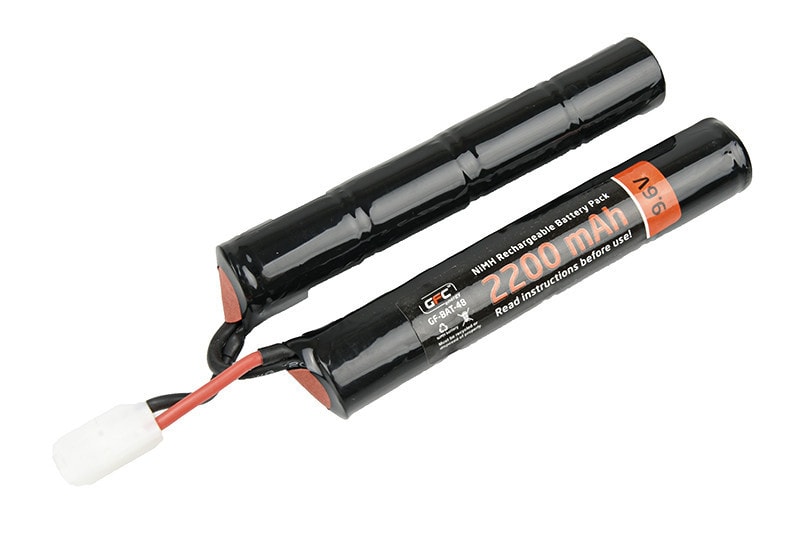
NiMH batteries are made up of several (usually 7 or 8) cells with a nominal voltage of 1.2 V, which are connected together in series. A total of 8 cells gives a total voltage of 9.6 V. These batteries come in a variety of capacities and can be used in both AEG riffles and pistols.
The advantages of using NiMH-type batteries are not significant. These include high resistance to mechanical damage, environmental friendliness, recyclability and simple storage and transportation. Advantages can also include the possibility of using a simple mains charger.
The biggest disadvantages of using this type of battery are:
-
low performance relative to modern battery types,
-
large cell size,
-
low cell voltage (1.2 V),
-
susceptibility to temperature changes,
-
memory effect - in order to operate the battery correctly, it must always be discharged to "zero" before recharging,
-
limited service life,
-
high self-discharge at the expense of capacity,
-
requires a complex charging algorithm.
NiMH batteries - charging
NiMH batteries are charged using a mains or microprocessor-based charger, although this is not required as with Li-Po, Li-Fe or Li-Ion batteries. The charging process itself for NiMH batteries is long and requires a special formula. It is worth adding that, through the memory effect, NiMH batteries should be discharged to zero before each charge. Charging the battery will reduce its capacity and significantly shorten its life.
Formula for charging NiMH batteries:
T - charging time [h]
C - battery capacity (mAh)
I - charger charging current (mA)
Example: the battery has a capacity of 2600 mAh and the charger has a charging current of 400 mA. After substituting into the formula, we get the time: T = 1.4 x 2600 / 400 = 9.1 h
Which charger for NiMH batteries should I choose?
NiMH batteries do not require the use of a sophisticated microprocessor-based charger. However, it is worth knowing that the NiMH battery chargers supplied with your carbine are often of poor quality and will result in a shortened battery life. If you plan to use the NiMH battery included with your riffle In order to improve the quality of this type of battery, you can get a better charger than the one included by the manufacturer.
Which battery for your ASG replica should you choose? - summary
Choosing the ideal battery for an ASG replica is not obvious. There are a number of factors to consider when looking for the right model. If you want a powerful battery with high performance, high capacity and a small size, then we recommend choosing a Li-Po, Li-Ion or Li-Fe battery. However, if you are planning to use NiMH type batteries, which are safer to use and less expensive then we encourage you to get a better quality charger. Whether you are interested in purchasing a NiMH or Li-on battery, we encourage you to browse our range of batteries and chargers for ASG guns.