What is a cold weapon?
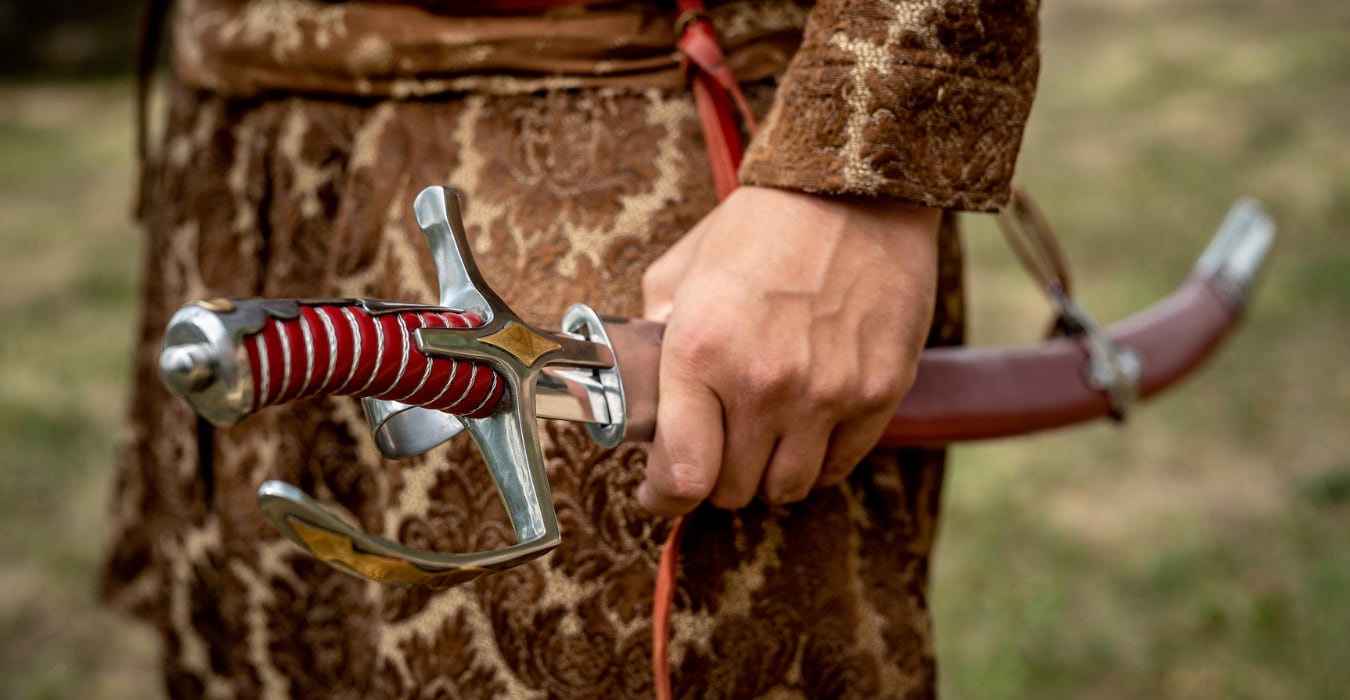
Cold weapons, whether in the form of primitive tools or advanced constructions, has played a significant role in world history. Not only as a tool of warfare, but also as an expression of culture and craftsmanship. Nowadays, although its martial use has largely been replaced by firearms, cold weapons still retain their place in the fields of collecting, historical re-enactment and martial arts.
In this article, you will learn what a cold weapon is, learn about its different types and classifications, and address the issue of the legality of its possession in Poland.
Definition of cold weapons
Cold weapons are a type of weapon used for hand-to-hand combat that inflicts damage using human muscle power. From the earliest times until the 16th century, it was the primary weapon of war, hunting and sport used in direct clashes.
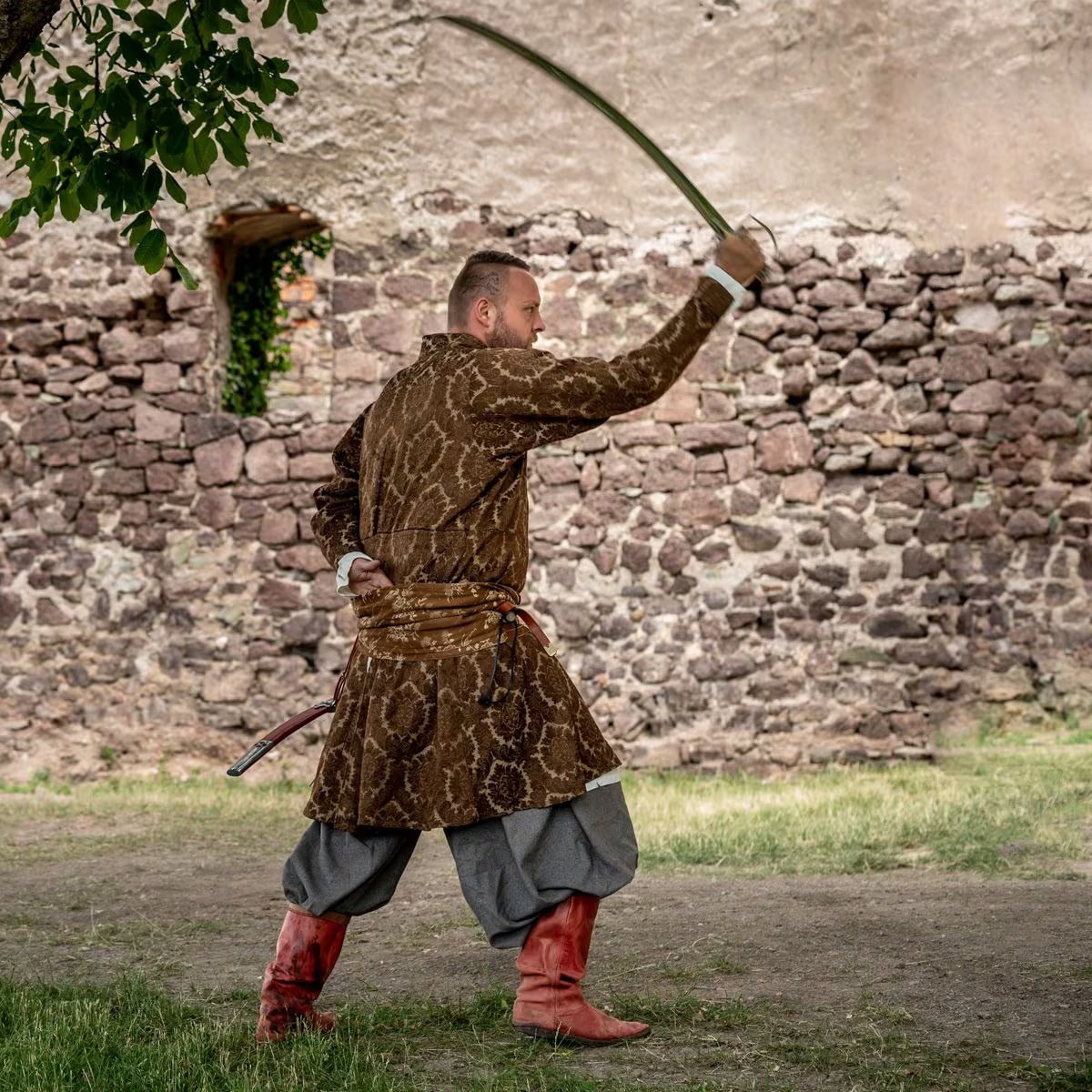
Today, small arms often play an important role in historical re-enactments, parades, demonstrations and cultural events, contributing to the commemoration of different eras. It is used, for example, in fencing demonstrations or battle re-enactments.


What are the types of cold weapons?
Archaeologists and military historians present various classifications of cold weapons. They divide it according to the damage inflicted, the subtype of the weapon itself (e.g. swords, axes) or distinguish on the basis of characteristic features of the tool's construction. Andrzej Nadolski, an eminent Polish arms expert dealing with the medieval period, divided cold weapons into incisal (e.g. swords, sabres, cordons, cleavers), obuchuch (e.g. axes, cheques, mace, mace) and spar (e.g. spears, glees, partisans).
The PWN Encyclopaedia gives a general classification of cold weapons in terms of the damage they inflict, classifying them into incisive, spiked and edged weapons.
Nevertheless, many weapons combine the characteristics of these different categories. A sword, for example, is an incisive weapon, which means that it allows both cuts and thrusts to be inflicted. However, it all depends on who wields the weapon in question and the individual style of use.
Therefore, the division into these three weapons represents a more general way of classification. Below are the three types of firearms that can be found in our range:
Incised weapons
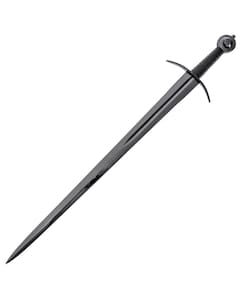
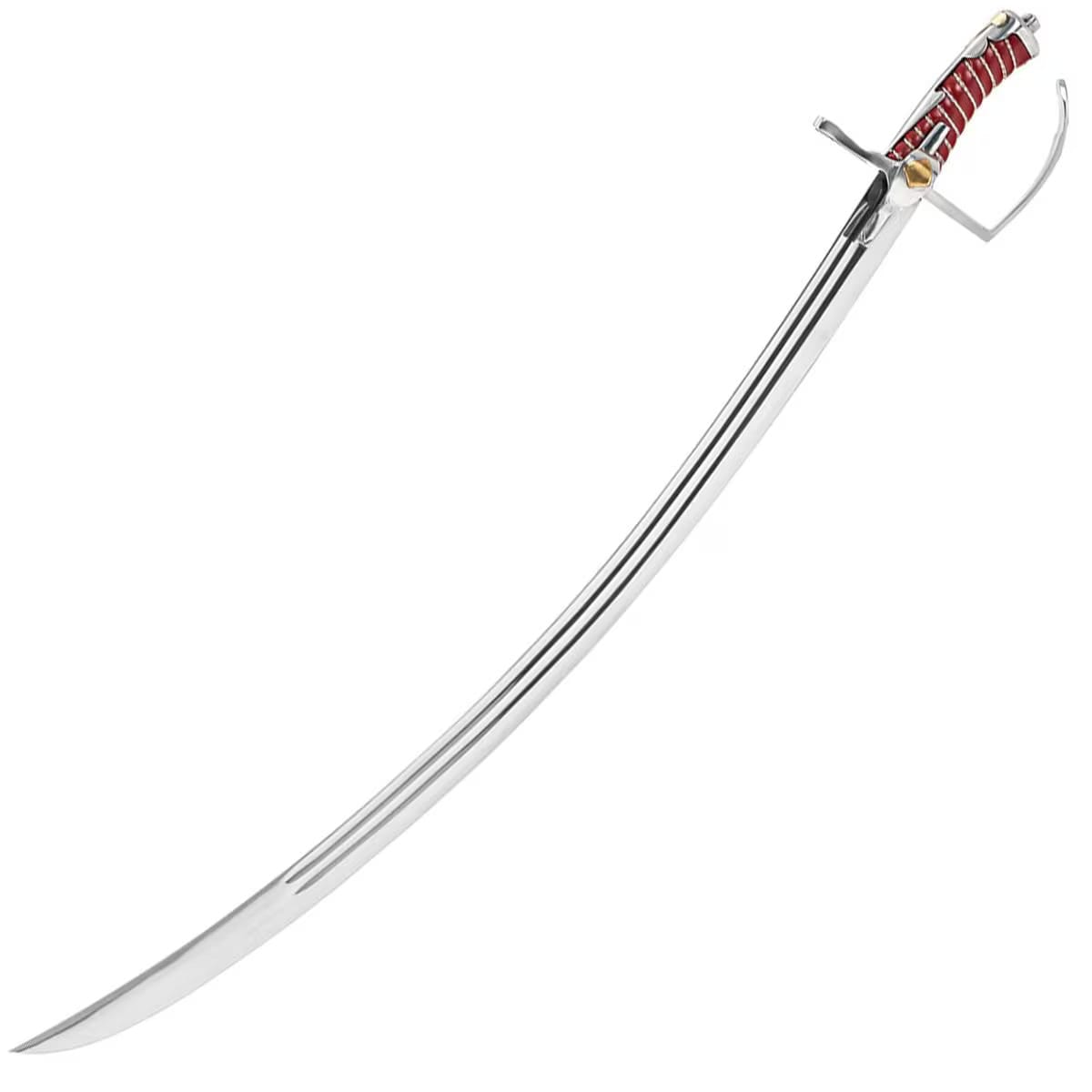
Incised weapons, i.e. those designed to inflict cuts, include such subtypes as the sword, sabre, cleaver or cutlass. The defining feature of an incisive weapon is the metal head: straight or curved, single-edged or double-edged.
Incisive weapons also make it possible to inflict blows, but this is usually a side function, sometimes greatly reduced or even omitted altogether compared to weapons combining the characteristics of an incisive and a spiked weapon.
Collared weapons
A spiked weapon is a type of weapon designed primarily for inflicting thrusts, which is made possible by a specially designed sharp barb or spearhead. Sometimes, to a limited extent, also for cutting. Examples of such weapons are spear or dagger. Two main types of spiked weapons can be distinguished: spar weapons and sidearms.
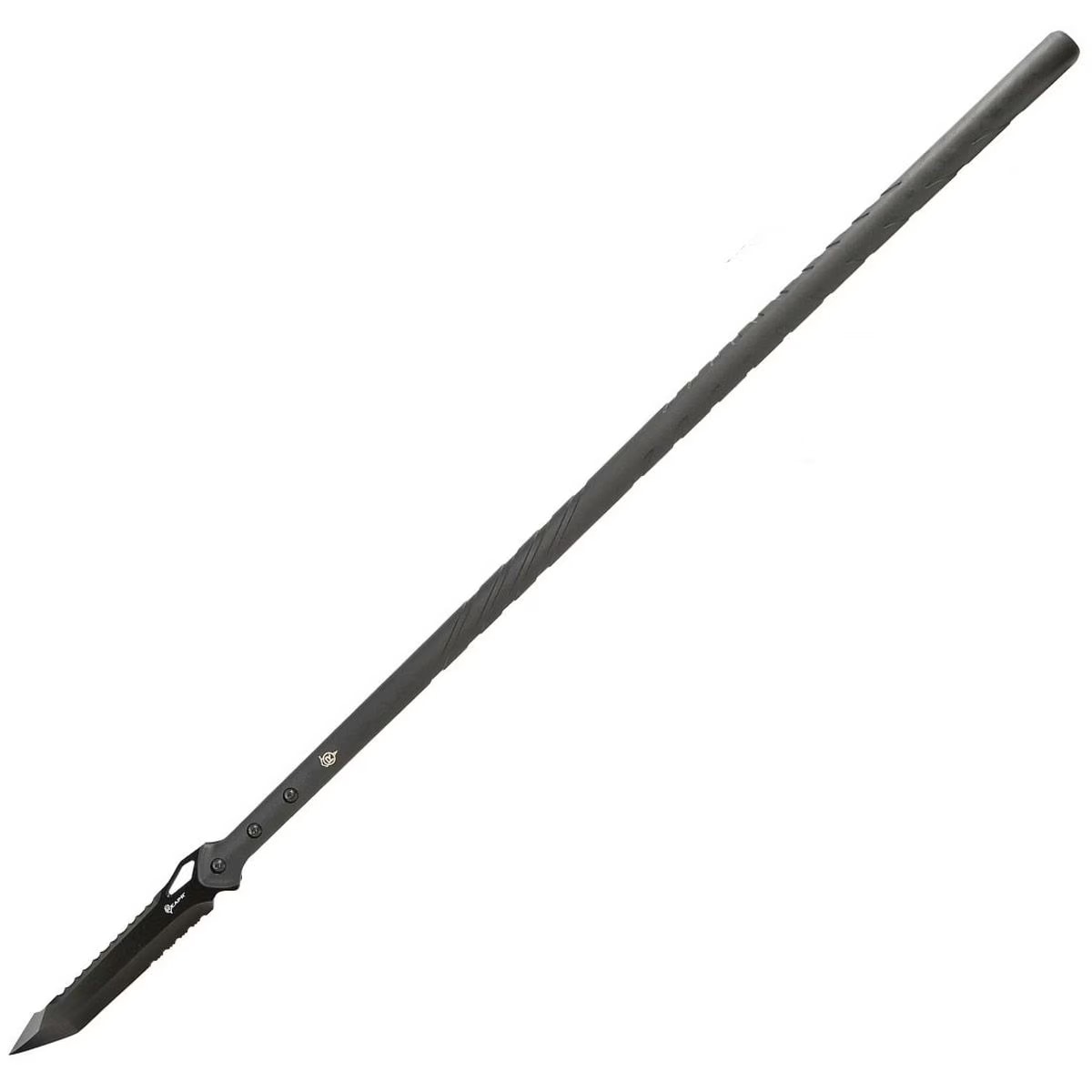
Spar weapons were mainly used in infantry versus cavalry combat, although not exclusively. It consisted of a long spar and a spearhead set at its end. An example of a spiked spar weapon is:
- spear,
- copy,
- partisan.
Clappered weapons
Bifacial weapons, used to deliver crushing blows, include weapons such as axes, mace or mace. These weapons usually consist of a hard material head or axe rib set on a metal shaft or short spar. It is considered to be one of the oldest weapons used by man. The earliest examples of double-edged weapons were stone tools from the older Stone Age (Palaeolithic), namely choppers and fists, and primitive machetes - a piece of wood or large bones.

Are small arms legal in Poland?
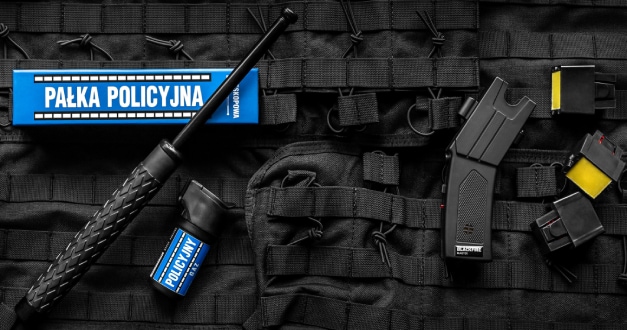
Many people are fascinated by cold weapons, but have doubts as to whether their possession is legal. According to the Weapons and Ammunition Act of 21 May 1999, the cold weapons for which a permit is required include:
- blade concealed in objects not resembling weapons,
- brass knuckles,
- nunchaku,
- baton with a tip made of heavy and hard material or containing inserts of such material,
- baton made of wood or other heavy and hard material, resembling a baseball bat.
What is the conclusion? Do you need a permit for melee weapons? In accordance with the law in force in Poland, no permit is required for other types of cold weapons (not listed in the Act), and citizens have free access to possess them (contrary to popular opinion, a knife - regardless of the length of the blade - is not considered a cold weapon (according to with the Weapons and Ammunition Act).
Replicas of melee weapons in the Militaria.pl
The Militaria.pl offers various models of melee weapons, intended for collectors, fans of historical reconstructions, and people looking for weapons for martial arts training.
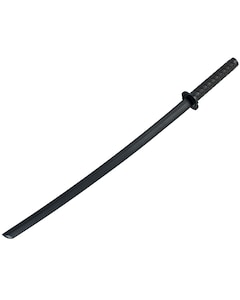
We have swords and sabres european, japanese and chinese, as well as replicas modeled on props from film productions. Selected ones have professionally hardened blades and are intended for training precision and cutting power. Our assortment includes both sharp steel swords and replicas of decorative swords with blunt blades. We also offer replicas of famous Japanese katana swords, the handles of which are made of high-quality materials. Swords made of plastics such as ABS or Zytel are also available. Swords of this type are recommended for use in various forms of self-defense and when training sports and martial arts, such as Kendo. We recommend sabers such as a replica of the Polish hussar saber from the 17th century or a replica of the American M1860 light cavalry saber.
The Militaria.pl store also offers axes modeled on archaeological finds from the so-called Viking era. The sharp blades are made of hardened carbon steel, and the durable walnut handles allow for long-term use of the tool.
Our offer also includes daggers and combat knives. Both training and decorative models, as well as sharp, fully functional pieces. We encourage you to check out our offer of spears. They include models that combine modern technology and the classic shape of the blade, which is known from traditional spears used during ancient hunting. They are a great option for people who want to practice throwing at a target. They are also suitable for field applications.
Bibliography:
- Górewicz Igor D., "O broni Słowian. Na wojnie i w kulturze", Triglav, 2020.
- Nadolski Andrzej, "Studia nad uzbrojeniem polskim w X, XI i XII wieku", Zakład im. Ossolińskich we Wrocławiu, 1954.
- Marek Lech, "Early Medieval Swords from Central and Eastern Europe. Dilemmas of an Archeologist and a Student of Arms", Wydawnictwo Uniwersytetu Wrocławskiego, 2005.
- Encyklopedia PWN, wersja internetowa.