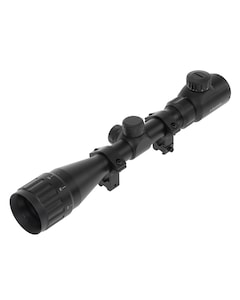
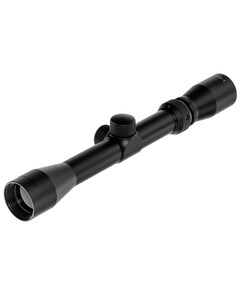
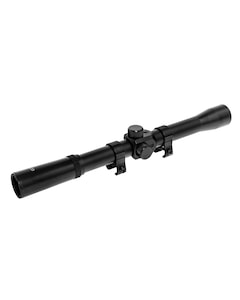
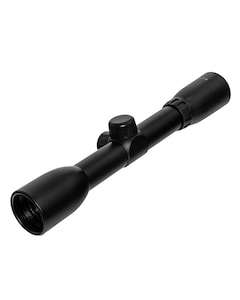
Which optical viewfinder to buy?
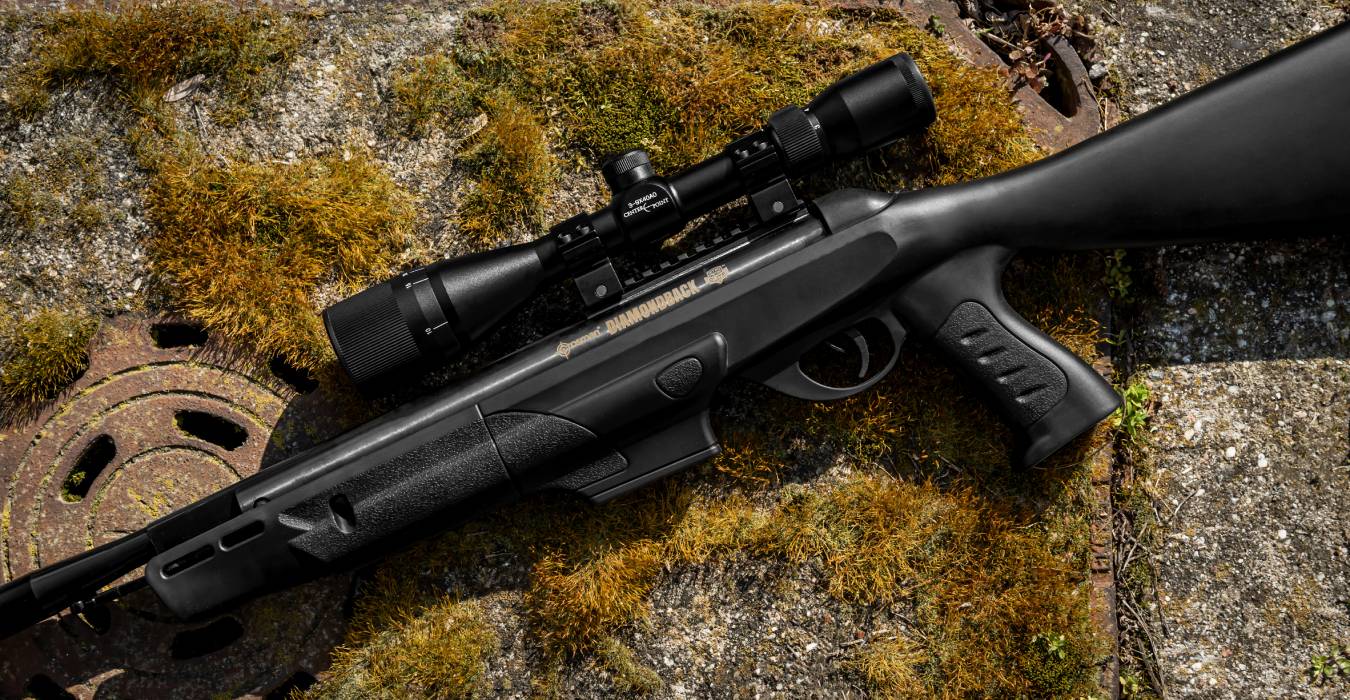
With such a wide variety of equipment on the market, this is an essential question that needs to be answered before buying the right optical device. This does not only apply to the conditions in which the scope will be used, but also to the equipment with which it will be integrated.
Optical sight markings
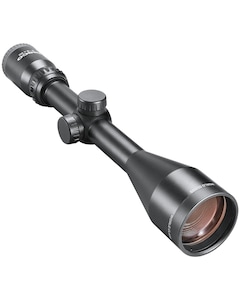
Virtually all parameters for optical sights exactly match those of binoculars. Here we are dealing with magnification (8x, 9x), objective diameter (40 mm, 50 mm), exit pupil, field of view (in the case of spotting scopes denoted by 100 meters or yards, not 1000 m as in the case of binoculars). A novelty in the designation of spotting scopes may be the AO parameter denoting the possibility of parallax error correction, IR denoting the illumination of the sighting reticle. Sometimes the manufacturer also indicates the type of target reticle in the designation of the scope, but this applies only to selected scopes and complex ballistic reticles.
Thus, the 8x50IR AO spotting scope has a magnification of 8x, an objective diameter of 50 mm, illumination of the target reticle and the ability to correct parallax error.
Windsock spotting scope
Each user airguns or airguns (airguns are airguns with a power of more than 17 Juli, which must be registered and can only be used at shooting ranges) is wondering which scope to choose for himself. To do this, it is necessary, in a few words, to classify this type of equipment. The simplest way is to classify air rifles and air guns into spring-loaded, in which air is compressed by a spring-driven piston, and PCP, PCA, CO2 powered by compressed gas from an integrated or replaceable container.
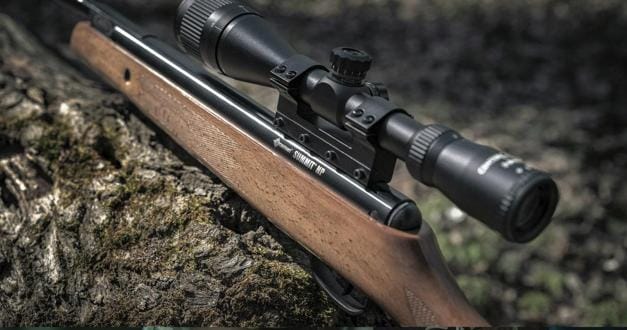
Paradoxically, for cheaper (but not always) spring-loaded windcheaters, one should purchase a sight that is stronger and more durable. This is because the spring that drives the piston of the windshield causes quite a bit of recoil and vibration when fired. These are forces that will also act on the scope. Delicate scopes, mounted on such windguns, will unsettle, and in the worst case scenario, the target reticle can break off and the scope can be permanently damaged. At this link we have prepared an offer for you scopes for powerful spring-loaded riflescopes.
Airguns PCA, PCP and CO2 they no longer require such powerful sights. Their propulsion system has virtually no recoil and the scope can be softer. Here you can check our offer scopes for PCA, PCP and CO2 airguns.
Target sights for hunters
In the case of hunting weapons, the problem of selecting a scope is more complex. Of course, durability is just as important as in the case of spring-loaded riflescopes. However, another determinant of scope selection will be the type of hunting for which it will be used. For hunting in the field, the best scopes will be those with low magnifications, for example: adjustable 1.25-4 × 25 with an illuminated spot. They offer a clear, bright image and a large field of view, so important for safety on driven hunts.
Above all, spotting scopes for sundowners should offer a clear and bright image. Anti-reflective coatings to improve light transmission will be important here. Targeting precision will certainly be improved by an illuminated targeting reticle.
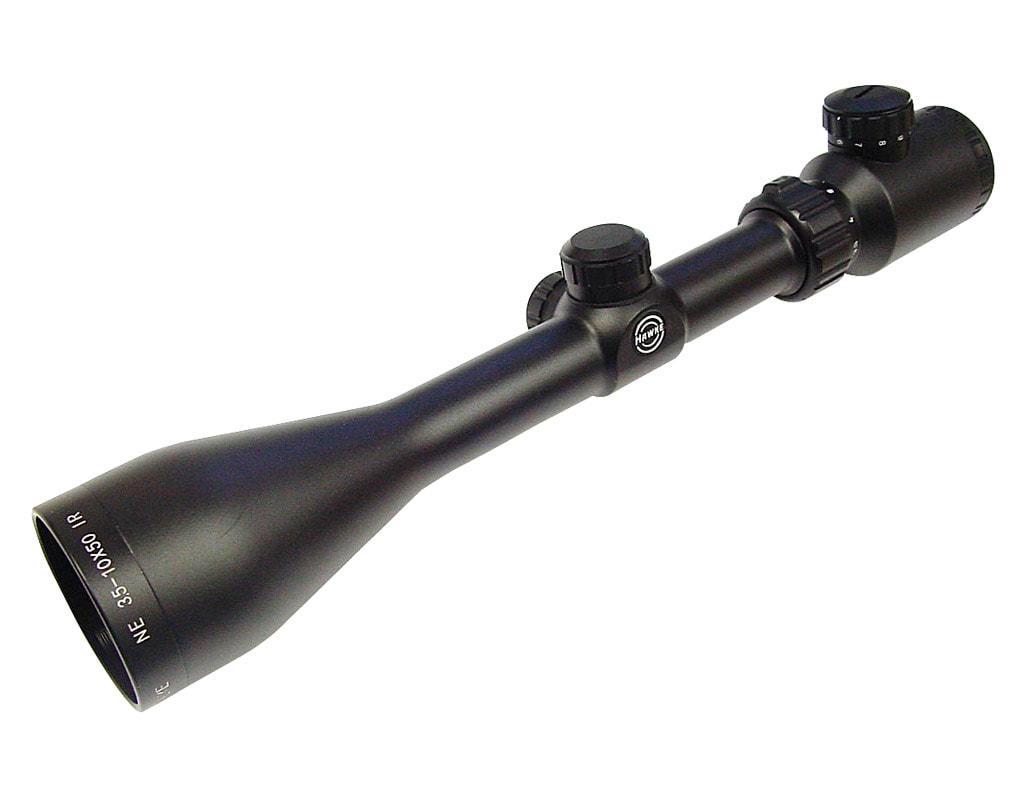
In both cases, i.e., air rifles and sharp weapons, the type of shooting will also affect the choice of target reticle, you need to consider whether you will need a complex ballistic cross type MIL-DOT, Ballistic, etc., or whether any of the traditional solutions will suffice, for example: cross 30/30, German or No. 4.
What kind of assembly?
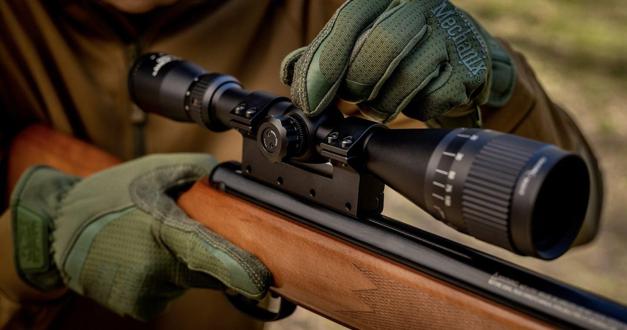
Mounting a scope on a weapon or windsock is done with the help of special mounts called mounts, mounted on a mounting base located on the weapon.
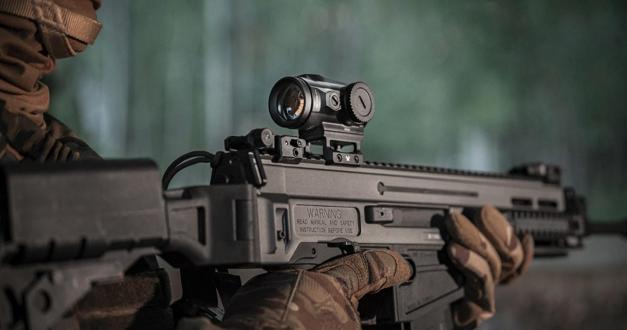
In the case of windsocks, the most common mounting bases are mounting rails in the 9-11mm or Weaver (also called Picatinny) standard. Often the mounting base is equipped with a so-called stop pin socket.
For spring-loaded riflescopes, a one-piece mounting is recommended, provided just with a stop pin. It allows a very stable mounting of the sight on the windshield. Very strong two-piece mounts can also be used, necessarily equipped with a peg.
For PCP, PCA and CO2 windcheaters, it is best to use a two-piece mount (often the use of such a mount is required by the design of the windcheater). Such mounts are sufficient for these types of windcheaters and the sights mounted on them.
Hunting weapons have a great number of mounting standards. Practically every manufacturer introduces its solutions for mounting optical sights. It happens that weapons have a 9-11 mm mounting rail. The best solution for hunters is, in the case of breakable weapons, one-piece mounts with a stop pin. Repeaters often have adapted bases for two-piece mounts.
When selecting a mount, it is important to make sure that it has a mount diameter suitable for the scope with which it will be integrated.
Inch tube or 30 mm tube?
There has long been a discussion: Inch tube vs. 30 mm. Unfortunately, the cruel truth is that this parameter is marginal. It has no effect on the brightness or clarity of the image. The only parameter that is affected by the width of the tube is the wider crosshair adjustment range in 30 mm scopes. This is significant only when shooting at very long distances.
Cross illuminated or not?
This is a question that is not at all simple to answer. Much depends on the habits and personal preferences of the shooter. The illuminated crosshair makes target acquisition very easy and quick. However, it can turn out to be more of a hindrance than a convenience especially when shooting with precision. A scope equipped with illuminated target reticle should have a very wide scale of illumination power adjustment. When shooting in the daytime, the illumination point should be quite bright to be visible. However, it then obscures a large portion of the target. This can make it difficult to aim especially at small objects at long distances. In low light, the illumination should only be hinted at, it will still be clearly visible to the shooter, and too much illumination can even blind the shooter and cause a lack of precision shooting.
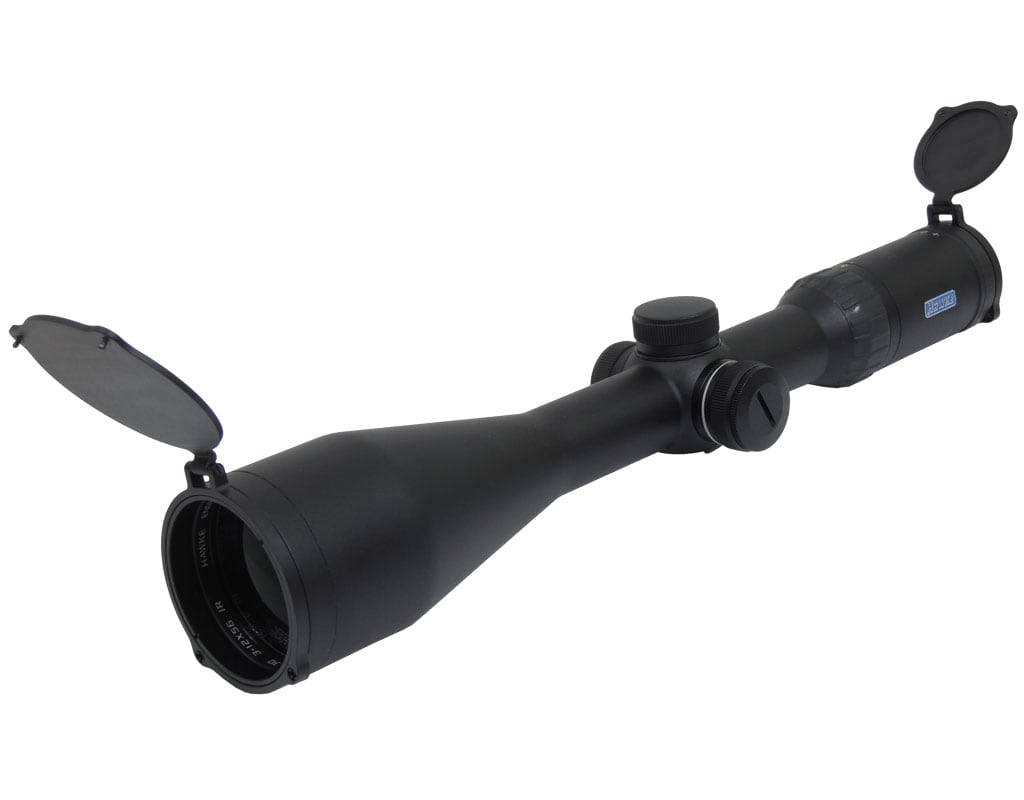
The color of the backlight is also important for the eye - it is believed that green is the best.
When choosing a spotting scope, keep in mind the scopes available from us discount codes.