How do you choose a hiking backpack?
Every trip to the mountains, whether it is a short, recreational excursion or a longer hike, requires adequate preparation. One of the most important pieces of equipment is undoubtedly hiking backpack. Choosing the right model of backpack is quite a challenge, and an ill-fitting one can effectively spoil your enjoyment of the trip.
In this article, we will give you tips on how to choose a hiking backpack. The right fit for your body shape, even weight distribution - what else should you pay attention to when choosing a backpack? What is the best hiking backpack?
A good hiking rucksack - what kind of rucksack?
If you are planning an out-of-town trip, a survival expedition or a camping trip lasting several days, you are probably wondering which hiking backpack to choose. Depending on its purpose (the purpose and length of your trip), it should be sufficiently capacious, have adjustable carry system components and practical compartments, and be comfortable to wear.
It will be important to determine what activities you will need the backpack for. Looking for a versatile model for a day out? A medium-sized rucksack with useful pockets to take on a survival expedition of several days? Or are you planning a long trip and need a large expedition backpack with a frame? This overview of the range of backpacks for hiking and our guide will certainly make your decision easier. Read what you should consider to choose a good hiking backpack, tailored to you, with which hiking will be pure pleasure.
Depending on whether you will be camping in a tent or in a hostel, whether you are going on a winter or summer season expedition - you will need to pack more or less stuff. The size of your litre pack may depend on what conditions you intend to travel in. Beginners may find it more difficult to complete a backpack. It is important to find the right balance, and preparing a list of essentials in advance can help with this.
The weight in the rucksack should be distributed evenly so as not to impede movement on the terrain or put a strain on the spine. Depending on how many days the expedition will last, a different amount of stuff needs to be packed. The question arises: which hiking backpack should you choose for a day trip, a few days or a two-week trip? When looking for an answer to this question, the following breakdown can be suggested:
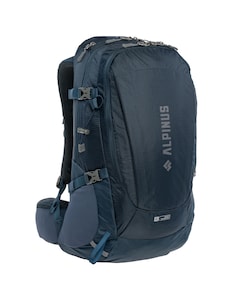
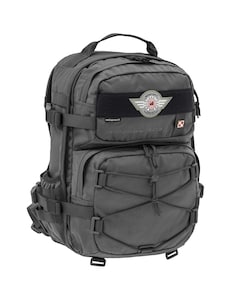
Backpack with a capacity of 20 to 35 litres
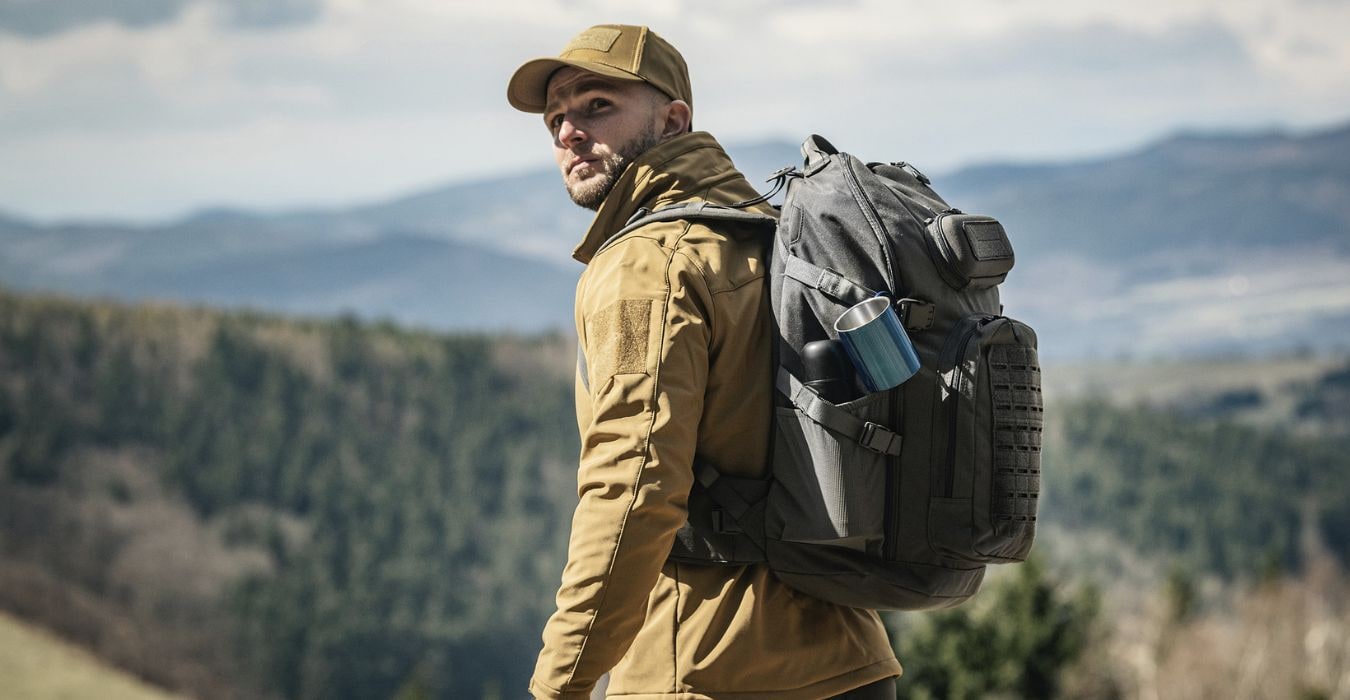
In warmer weather, a smaller model of backpack (for example, with a capacity of 20-25 litres) can be taken on a journey. In winter, however, it is a good idea to choose a larger model, with a capacity of up to 35 litres. At this time, you will need more space for extra items that will be useful on the trip, such as a thermos, a warm fleece or extra hand warmers. If you choose a rucksack with a capacity of up to 35 litres, it is important to plan the number of items you need and how you want to pack them. It is also worth taking care to distribute the weight evenly.

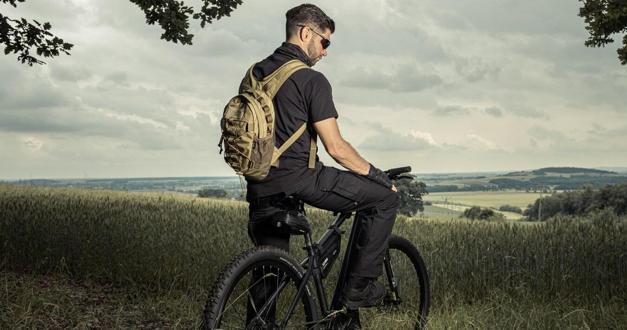
Small backpacks work well for day trips. Backpacks of this capacity will accommodate basic equipment such as documents, provisions, drinks, mosquito and tick repellent or a first aid kit. It is worth remembering that hiking backpacks are equipped with practical pockets and compartments, which make it easier to arrange your equipment. Equally useful are compression straps, thanks to which the size of the rucksack can be adapted to its contents.



Backpack with a capacity of 35 to 50 litres
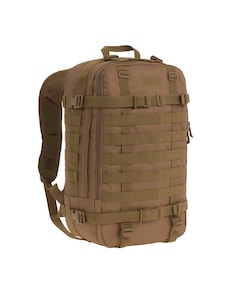
This is the most versatile model of rucksack, which will prove useful on trips of several days. Backpacks of this capacity will also be a good choice for survival expeditions, camps, summer camps or various types of training organised in the field. In addition to basic equipment, a rucksack of this capacity can accommodate tinned food, ready-to-eat rations, freeze-dried food and high-energy snacks. You will also be able to pack a sufficiently large supply of water, basic electronics and clothing for a change of clothes.

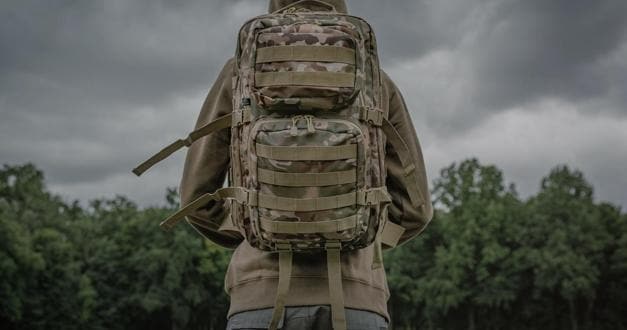
Backpacks with a capacity of 35 to 45 litres are most often equipped with a number of pockets that allow items to be arranged in a practical manner. Thanks to the attachment straps, you can attach additional accessories to the outside of the backpack that do not fit inside, such as a carrimata or tent. It is also worth bearing in mind that some models of rucksacks are often equipped with a chimney, thanks to which the capacity of the rucksack can be increased even further. Capacity can also be increased by attaching MOLLE pockets or pouches if the rucksack is compatible with this system.
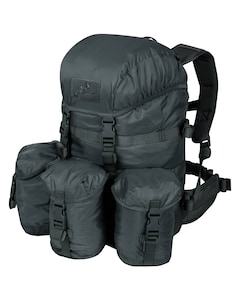
Backpack capacity from 50 litres
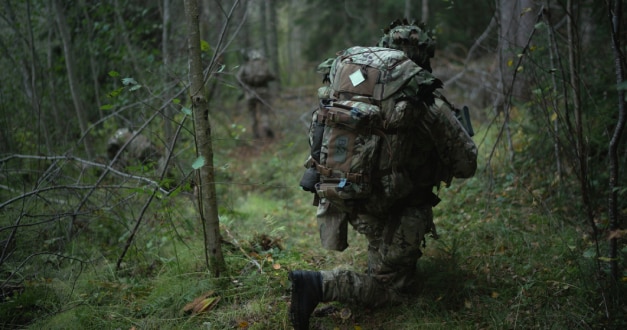
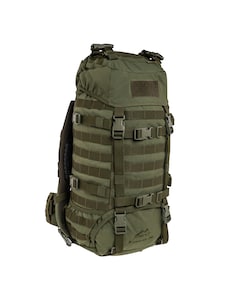
This is the so-called expedition backpack. This model will work well on multi-day expeditions where you need to take food supplies, more clothing and equipment. Compared to smaller models, these rucksacks are equipped with a more developed carry system and reinforced with a frame. However, it is worth thinking carefully about choosing a larger backpack, as the larger the backpack, the heavier it is. Long trips require well thought-out packing.

Hiking backpack vs. material
Until recently, one of the most popular materials used from backpack manufacturing was Cordura. It is very strong (it is a combination of polyamide, polyurethane coating and Teflon) and is used primarily in tactical rucksacks. However, in tandem with the durability of Cordura comes its weight. For this reason, more and more manufacturers are using lighter but still strong materials.

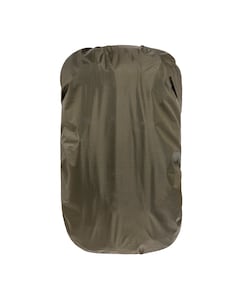
Today, most of the hiking backpacks on the market are made of polyester, polyamide or nylon, with a predominance of the latter. It is worth ensuring that the sensitive areas of the backpack are additionally reinforced. Some models have a high level of water resistance or are specially impregnated with a layer to protect against moisture and dirt. Hiking rucksacks often come complete with rain covers.
What else to look for when choosing a hiking backpack?
Apart from the obvious issues such as the capacity or the durability of the materials used in the manufacture of a hiking backpack, it is worth paying attention to a number of other details to ensure that the chosen model meets all our needs during a hike. What should you pay particular attention to when choosing a hiking backpack? We will describe these issues below.
Additional pockets in the backpack
Additional pockets allow easier access to equipment. Thanks to them, no small item gets lost in the depths of the main compartment. If you like to keep everything separated and organised so that you have to reach into the main compartment as little as possible, invest in a rucksack equipped with a webbing system.. You can easily attach an extra pocket or larger items that did not fit inside the backpack.
Chimney for extra space
When opting for high-capacity rucksacks, it is common to find an extra packing space provided by the chimney. This is an additional piece of fabric, equipped with a drawstring. A useful solution especially during long expeditions combined with camping.
Pouch for water tank
A useful invention turns out to be a pocket for a water reservoir. Many expedition backpacks offer such a solution. They have a special compartment for the water reservoir and the possibility to lead a special tube out of the backpack. This makes it quick and easy to rehydrate your body. There is no need to constantly reach into the side pocket for a bottle of water.
Rain cover
A useful addition to any backpack will be a rain cover. The weather likes to be changeable, so it's better to have this protection with you. A rain cover will provide extra protection for both the items inside the backpack and those attached to the outside.

Backpack carrying system
The carry system is responsible for the correct distribution of the weight of the equipment carried in the rucksack. It ensures that our shoulders are not overloaded. If the rucksack is well suited to your body shape and is properly adjusted, the more you will be able to carry on your shoulders. In the case of smaller trekking rucksacks, you will encounter padded backs. On the other hand, in larger capacity expedition backpacks you will encounter a frame. This significantly improves the quality of use, the weight is much better distributed.
Lap belts
Choosing a hiking rucksack with a good hip belt is crucial to the success of a hike. The larger the rucksack and the heavier the weight, the stronger and wider the belt should be.
The best way to carry out the test is to go to the shop and fill a rucksack with a load of around 10-15 kg. The backpack under test should not be empty. When you put the backpack on, pay attention to the position of the hip belt. It should snugly encircle your hip bones. After adjusting the harness, check that it does not put pressure on your neck. Next, adjust the length of the stabilising straps of the shoulder straps (the upper part of the backpack straps) so that they are angled away from the vertical by approximately 45 degrees. Finally, fasten and adjust the chest strap.
Walk around the shop a bit, do some quicker movements so that you can see if any adjustments are needed for the adjustment. Check that you don't feel any discomfort in the shoulder or back area. Most of the weight should be on your hips.


Range of backpacks in the Militaria.pl shop
You already know what elements to look out for when choosing a hiking backpack. You can take advantage of our range of hiking backpacks, which are suitable for day trips and multi-day excursions. Remember to consider the conditions in which you will be using your backpack before choosing it.
Among the range you will find products from well-known brands such as Alpinus, Badger Outdoor, Deuter, Fjord Nansen, Helikon, Gregory, Mil-Tec, Salewa, Tatonka, Texar, Wisport, Brandit, Pentagon, First Tactical, Coleman and many others. The manufacturers of these brands specialise, among other things, in creating high-quality outdoor equipment. Depending on your needs and preferences, choose a backpack in the right colour or in camouflage, with a useful MOLLE mounting system, with a large number of pockets or equipped with a rain cover.