72-Hour Supplies – What Should You Have at Home in Case of a Crisis?
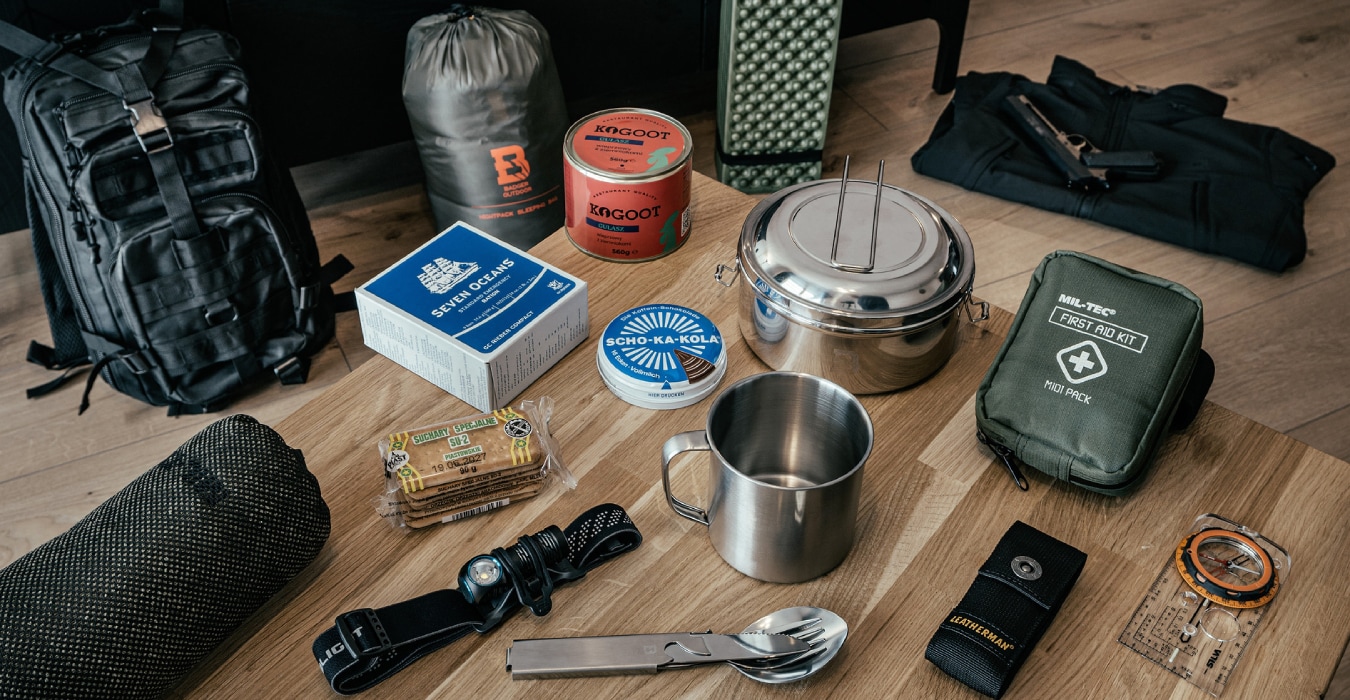
A prolonged blackout (a power outage over a large area), a flood, a terrorist attack or acts of war can make it difficult to access water, electricity, stores and basic services. That’s why it is worth preparing home supplies in advance that will cover your most important needs for at least 72 hours. What should you stock at home to get through the first three days of a crisis?
In this guide, we present a list of home supplies based on the Polish government’s “Safety Guide,” issued by the Ministry of the Interior and Administration on August 28, 2025. We also explain why preparing for a minimum of three days is recommended, how to properly store the items you’ve gathered, and how home supplies differ from the contents of an evacuation backpack.
Supplies for 3 Days – A List Based on the Government “Safety Guide”
Why Prepare Supplies for 3 Days?
Preparing household supplies for three days is one of the Polish government’s basic recommendations. The “Safety Guide,” developed by the Ministry of the Interior and Administration, the Ministry of National Defense and the Government Center for Security, states it directly: “Prepare household supplies for a minimum of 3 days and review them regularly.”
This recommendation takes on particular importance in the current security situation. The war in Ukraine, hybrid threats including cyberattacks and sabotage, and increasingly frequent extreme weather events all show how important it is to be ready for disruptions to basic infrastructure. A prolonged power outage can mean not only a lack of lighting, but also problems with heating, access to water, electronic payments and communications.
Similar recommendations appear in other countries as well. Finland promotes the principle of 72-hour self-sufficiency, and in October 2026 the United Kingdom launched its “Be Ready” campaign, encouraging residents to prepare for three days of disruptions to essential services. The European Commission has also included in its crisis preparedness strategy the development of guidelines for citizens’ self-sufficiency for a minimum of 72 hours.
Three days is, however, the minimum preparation period, not a guarantee that things will return to normal afterward. Household supplies are primarily meant to help you get through the first days of a crisis without having to go shopping, and to let emergency services focus their efforts on those who need help most. Stockpiling is only one element of preparedness – we cover the others in our guide “How to Prepare for War and Crisis.”


How to Prepare and Store Household Supplies
First, calculate the amount of supplies you need based on the number of people in your household. Each person should have at least 9 liters (about 2.4 gallons) of water for 72 hours, which for a family of four means at least 36 liters (about 9.5 gallons). If the water will also be used for preparing meals and maintaining hygiene, the supply should be larger. It is best to store it in factory-sealed bottles, away from sunlight and heat sources.
Choose food with a situation in mind where the refrigerator, electric stove and gas stove are not working. The core of your supply should be products that can be eaten without cooking or adding water, e.g., canned food, ready-to-eat meals and dry products. It is worth choosing easy-open packaging or keeping a can opener on hand. The amount of food must be adjusted to the number of people, their age, energy requirements and any dietary restrictions.
It is best to store supplies in a dry, cool and easily accessible place, protected from moisture and flooding. Place products with a shorter shelf life at the front so they get used first. Every few months, check the expiration dates of food and medications, the tightness of packaging, the condition of batteries and the charge level of power banks. Store medications according to the manufacturer’s instructions. For products that require refrigeration, it is worth consulting a pharmacist in advance on how to handle them during a power outage.
Home Supplies for 72 Hours vs. an Evacuation Backpack – What’s the Difference?
Home supplies for 72 hours are meant to help you get through a crisis without leaving your residence, as long as staying there is safe. They can include larger quantities of water, food, hygiene products and equipment, because you don’t have to carry them. They are especially useful during long power outages, interruptions in water supply or temporary disruptions in deliveries.
An evacuation backpack, on the other hand, is prepared in case you need to leave your home quickly. It should contain the most essential items, including water, food, medications, a first aid kit, documents, cash, a flashlight, a power bank and weather-appropriate clothing. Unlike home supplies, its contents must be limited to an amount you can carry comfortably. You can find a detailed packing list in our guide “The Prepper’s Evacuation Backpack – How to Pack It.”
It is worth preparing both home supplies and an evacuation backpack. They are two complementary ways of getting ready for emergencies. Equally important is knowing the alarm signals in effect in Poland and the rules for responding to warnings. In the event of a real threat, follow the announcements and instructions issued by the relevant authorities.
72-Hour Supplies at Militaria.pl
At Militaria.pl, you will find products and equipment that will help you prepare your home for the first 72 hours of an emergency. Our range includes long shelf-life food, first aid kits, thermal blankets and sleeping bags, among other items. It is also worth getting equipment that is useful during power outages. Flashlights, emergency radios, power banks and other blackout products can be found in a dedicated category in our store. Browse the Militaria.pl range and assemble home supplies tailored to the needs of your household.