How to Use a Kubotan: Grip, Techniques & Training Tips

A kubotan is a small, unassuming self-defense tool that looks a lot like a pen – most people carry it as a kubotan keychain. Its design couldn't be simpler, but using a kubotan for self-defense effectively takes a working knowledge of the basic techniques and regular practice.
In this guide, we explain what a kubotan is, how to use a kubotan, how to hold it correctly, and where to start if you want to learn. We also cover whether you can carry a kubotan every day and what Polish law says about owning and using one.
What is a kubotan and what is it used for?
A kubotan is a short (usually about 12–15 cm, or 5–6 inches), rigid, cylindrical tool, most often made of aluminum, steel, or hard plastic. It is designed to sit comfortably in your hand and give you a secure grip that won't slip. When you close your fist around the middle of a kubotan, both ends stick out past your knuckles and the bottom of your fist. One end typically has a hole with a metal split ring, so you can carry the kubotan as a keychain or clip it to the gear you carry.
The kubotan was developed by Japanese martial arts instructor Takayuki Kubota, who, among other things, trained Los Angeles police officers in its use. A kubotan is mainly used to support self-defense techniques, including applying pressure, breaking free from grabs, and delivering specific strikes. Using it effectively and safely, however, requires proper training.
Keep in mind that not every product sold as a kubotan is the same. You'll find models that are:
- classic – a simple rod, smooth or grooved, with a key ring,
- with finger grooves – deeper, contoured grooves that fit your fingers and stabilize your grip,
- with a tapered tip – narrowed at one end for more precise pressure,
- shaped like a tactical pen – with a working ink cartridge and sometimes a glass breaker,
- double-ended – with working tips on both ends, usually without a key ring.
Differences in material, shape, and construction affect both how comfortable a kubotan is to use and – as we explain below – how a particular model may be treated under the law.


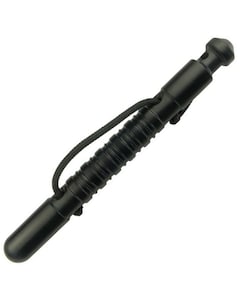


How to use a kubotan for self-defense
Kubotan: how to use it in practice? In self-defense, a kubotan is used mainly to reinforce strikes, escape from grabs, and apply pressure to specific points on the body. Its design may be simple, but using it well takes proper training. Kubotan techniques fall into three basic groups:
- Strikes – held in a closed fist, a kubotan can reinforce short defensive movements meant to stop an attack and give you a chance to get away.
- Grabs and joint locks – a kubotan can be added to techniques that help you break free from a hold or control an attacker's movement. Doing them correctly requires an understanding of body mechanics and practice with an instructor.
- Pressure techniques – these use the kubotan's hard body to apply focused pressure, for example when trying to break free from a grab. Applied incorrectly, they can cause injury.
Remember that kubotan self-defense techniques don't guarantee your safety, and using it without the right skills can increase the risk of unnecessary injury. That's why the best place to learn kubotan techniques is a self-defense class under the guidance of a qualified instructor. In a real threat, your priority should be avoiding confrontation – and if you are attacked, stopping the attack and getting to safety.
How to hold a kubotan
The foundation of using a kubotan is a secure, stable grip that lets you control where the tool sits in your hand. The most common grip is the hammer grip: you wrap your whole hand around the body of the kubotan, much like you'd hold the handle of a small tool.

Depending on the model, one or both ends of the kubotan may stick out past your closed fist. Don't place the hard body between your fingers or wrap the key ring around them, as this increases the risk of injuring your hand.
Kubotan training: how to practice step by step
Kubotan training should cover more than just techniques – it should also build balance, coordination, and your ability to react to a threat. It's best to learn in stages, starting with drills that don't involve contact with another person.
Step 1. Grip and control
Practice holding the kubotan correctly, paying attention to the position of your fingers and wrist. Check that the tool doesn't rotate in your hand as you move your arm. It's worth running these drills both with the kubotan on its own and with your keys attached.
Step 2. Drawing the kubotan
Practice reaching for your kubotan from where you carry it every day. Make sure you can pull it out of your pocket or bag comfortably without looking at your hand. Repeat the drill in different clothing, because a heavy jacket, gloves, or a tight pocket can make it harder to get to.
Step 3. Movement and keeping your distance
Practice stepping back, changing direction, and staying balanced with the kubotan in your hand. Being able to create distance from a potential attacker matters too. The goal of these drills is to move freely and stay in control of your body – not to seek out a direct confrontation.
Step 4. Partner drills
Grab escapes and other contact drills should only be done under an instructor's supervision. Use a soft training kubotan, and agree in advance on how much contact is acceptable and on a signal to stop the drill. Never use hard, metal models to strike or apply pressure to your training partner.
Step 5. Scenario training
In self-defense classes, it pays to practice simple scenarios, such as responding to aggressive behavior, keeping your distance, or safely backing away. An instructor can gradually change the conditions of a drill so you learn to read the situation, not just repeat a set of moves.
The most common training mistakes are focusing too much on the kubotan itself, neglecting footwork, jumping into contact techniques too soon, and using a hard tool during partner drills.
You'll find gear for safe practice in the training equipment category at Militaria.pl.

Is a kubotan a weapon? Is a kubotan legal in Poland?
Owning a classic kubotan is legal in Poland and doesn't require a permit. However, you need to take into account how a particular model is built and how it's used.
The Weapons and Ammunition Act of 21 May 1999 doesn't list the kubotan by name among the types of weapons. Article 4, however, specifies certain types of melee weapons, including knuckle-dusters, nunchaku, and certain batons. An ordinary kubotan with a simple design and no extra dangerous elements isn't automatically classified under these categories. With non-standard models, however, especially those with special tips, the legal assessment may need to take their actual design into account.
The legality of using a kubotan in self-defense is a separate matter. Under Article 25 of the Criminal Code, self-defense applies to repelling a direct, unlawful attack on an interest protected by law. The means of defense must be proportionate to the circumstances of the threat, and exceeding its limits may result in criminal liability. You can read more about this in our guide "The Limits of Self-Defense".
So you can't assume that legally owning a kubotan gives you the right to use it in every conflict. It's also worth remembering the restrictions on bringing dangerous items into mass events.
Kubotan FAQ: frequently asked questions
Is a kubotan good for self-defense?
Yes. A kubotan can be part of your self-defense plan, but how effective it is depends mostly on your skills. It only works at very close range, when the attacker is already near you. Without practicing your grip and draw, it's easy to drop it or lose it. That's why a kubotan is best treated as a backup to something like pepper spray, which lets you respond from a greater distance.
Is a kubotan a good self-defense tool for women?
Yes, as long as the model fits your hand. For smaller hands, a kubotan with a slimmer diameter, lower weight, and well-defined finger grooves works better. It should stick out on both sides of your closed fist. As with any user, it's a good idea to pair your purchase with a self-defense class. You'll find tools picked with women in mind in our women's self-defense category.
Can you carry a kubotan on your keychain?
Yes – that's the most popular way to carry a kubotan keychain. Most models come with a metal split ring made for keys. Just don't attach a huge bunch of keys, since that makes it harder to draw quickly and hold securely. Before a flight, move your kubotan to your checked luggage.
What is a kubotan made of?
Most often aluminum (usually anodized), which combines low weight with high strength. You'll also find kubotans made of tough plastic or titanium, and less often wood or steel. Plastic is lighter and cheaper, while titanium is the most durable and the most expensive. Partner training is done with kubotans made of soft material.
How do I choose the right kubotan?
When choosing a kubotan, look at:
- length – it should stick out on both sides of your closed fist,
- diameter – one you can grip securely,
- surface – grooves or ridges improve your grip, especially with gloves on,
- material and weight – aluminum is a sensible middle ground,
- key ring – if you want to carry it as a keychain,
- no extra features that could change how it's treated under the law.
What's the difference between a kubotan and a tactical pen?
A tactical pen is essentially a kubotan combined with a writing instrument. It has a similar shape and can be used in a similar way, but it also writes, and some models add a glass breaker, flashlight, or other tools. A classic kubotan is simpler, usually cheaper, and comes with a key ring. A tactical pen is usually carried in a pocket or on a clip, and it draws less attention in places where a kubotan might stand out. When choosing a tactical pen, check whether it has a hidden blade – if it does, its legal status may be different.