How to choose a tactical flashlight?
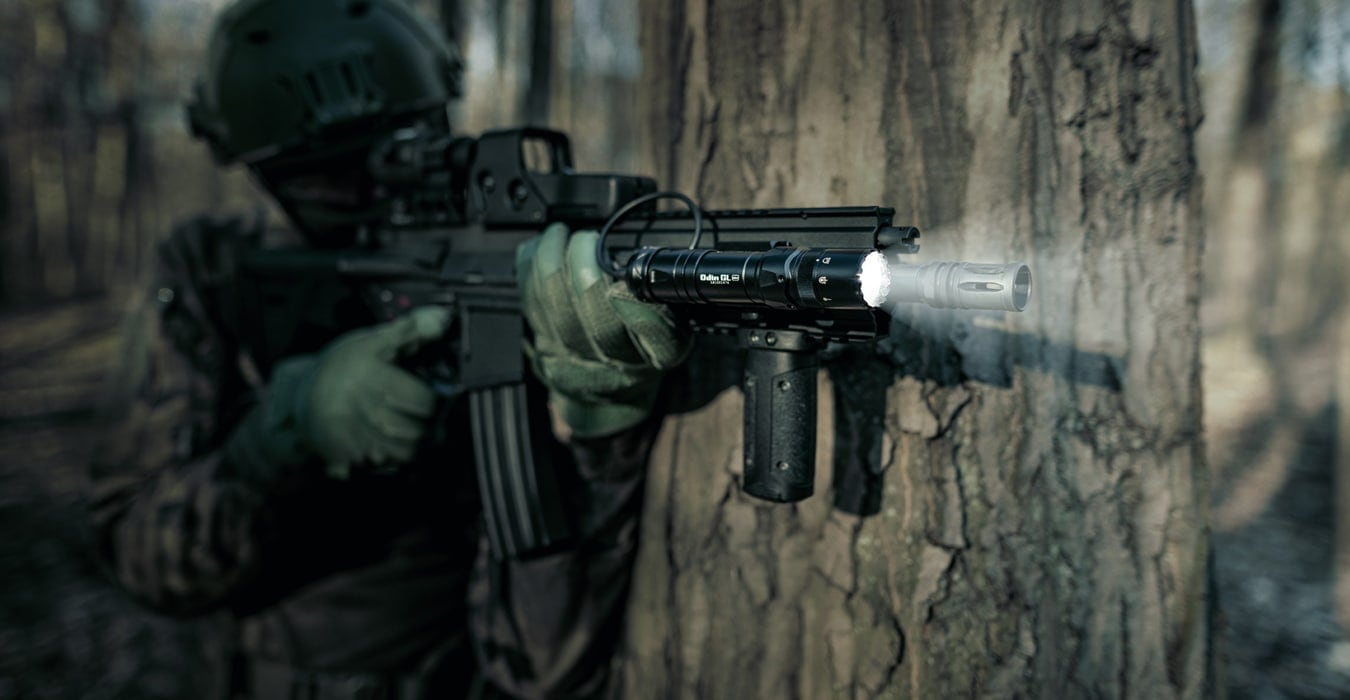
Today on the market we can find countless models of flashlights, including flashlights with a tactical purpose. Although many of the manufacturers proudly call their models tactical flashlights, this does not always mean that such a flashlight will be suitable for mounting and effective use on a firearm. This is mainly due to the fact that the equipment is subjected to much greater stress during shooting. In addition to the flashlight, therefore, the mounting system also turns out to be crucial. Tactical flashlight which one to choose? - Thanks to this guide you will learn what to pay attention to when choosing the right model.
What is the best tactical flashlight?
The best flashlight is a reliable flashlight. In shooting, reliability, robustness and stability are highly valued. In the case of flashlights, solidity can be ensured by making them from materials that are characterized by high strength. An excellent example of this is aircraft aluminum, from which the bodies of flashlights are often made. The equipment is then resistant to shocks and falls, even from a height of 1.5 meters. Coating with hard anodization will minimize the occurrence of corrosion and ensure the flashlight's original color. Although the flashlights' diodes are protected by glasses made of resistant to mechanical damage and thermal shock, such as borosilicate glass, the presence of a steel crown to protect the flashlight head will be an added advantage.
It will be extremely important to meet stringent water resistance standards, so that the equipment is resistant to all moisture, dust and dirt and can successfully serve you even in harsher conditions, such as in lashing rain. The eight-step IPX waterproof standard may prove crucial here. It is used to determine the level of waterproofness of materials, and the higher the number, the greater the waterproofness. Information about the degree of waterproofness of the product of interest can be found in the product description and technical data. In the case of flashlights, you will most often deal with standards: IPX4 (total resistance to flooding with water), IPX6 (stream of water flowing from different directions with a capacity of up to 100 liters per minute) and IPX8 (resistance to immersion to a depth of up to 2 meters for 30 minutes). Flashlight manufacturers meet these exacting standards by using precision threads, seals and O-rings.
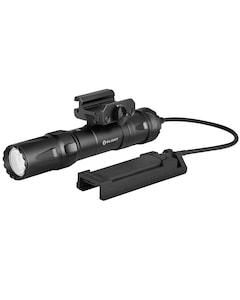
It would be worthwhile for the flashlight to have several light modes, so that the light output can be optimized to the conditions encountered and individual preferences. Changing the light mode to a weaker one will allow efficient power management. In modern flashlights we will meet an electronic system that will protect the flashlight from overheating by reducing the current, stabilizing the light output at a lower level, allowing the head to cool down. Double-sided switches will allow you to change modes efficiently, regardless of whether you are left or right-handed. Many shooters will certainly appreciate the presence of a strobe mode, thanks to which you can blind your opponent and gain an advantage over him. Also useful can be the function of mounting a gel pressure switch, which makes it much easier to operate the flashlight. Such an on/off switch is mounted in a convenient place such as near the front grip.

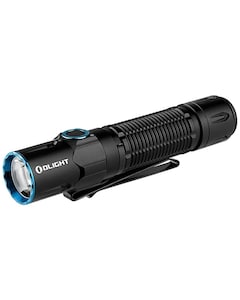
Tactical flashlight which one to buy? One powered by rechargeable batteries or batteries? This dispute is still unresolved. Each option has its supporters. Batteries, such as the popular AA-type sticks, are certainly more readily available, as you can get them at any major store, kiosk or gas station, whether you are in the provinces or abroad. We can also always stock up on batteries if we go to a remote area without access to electricity. When, on the other hand, we have trouble-free access to power, it is worth using rechargeable batteries, as it is more efficient and environmentally friendly. If you want to learn more details about flashlights, take a look at this guide on lumens, diodes and batteries.
Types of tactical flashlights
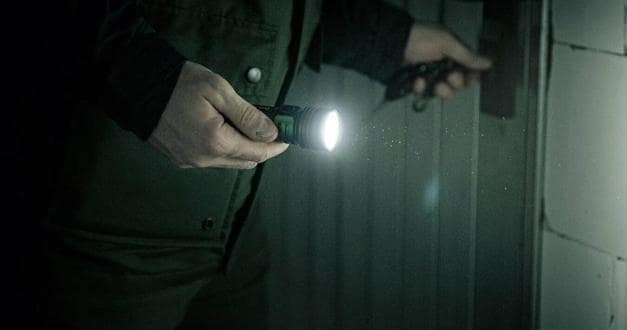
Among tactical flashlights, you can find those that have an integrated mounting system and those that do not have such a feature. In the latter case, you can use the flashlight during normal use by simply holding it in your hand, but whenever the need arises, you can successfully mount the flashlight on your weapon.
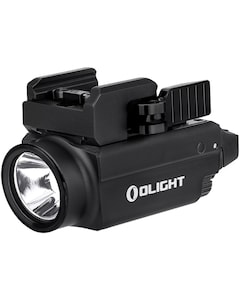
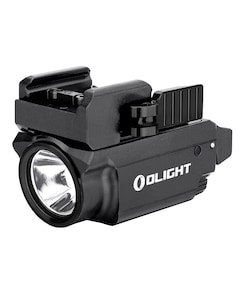
The most popular integrated mounting system you will encounter will certainly be the presence of an accessory rail in the 22mm standard (weaver/ picatinny/ MIL-STD-1913). Such a standard will allow you to mount a flashlight under the barrel of most modern gun models. In the offer you can meet models that also have a laser sight with a red or green beam color. Such a solution will allow you to quickly track your target without having to align the bow tie with the sights.
If you want to mount your flashlight to your weapon, special mounting systems will come to your aid. The only key here will be to know the diameter of the flashlight's tube. Many mounts have a specific range of tube diameters, so we can easily fit our flashlight to them. If you do not have an accessory rail on your weapon, a stable magnetic mount, which is mounted to the barrel, for example, will come to your aid.