How to sharpen a knife? - knife sharpening accessories review
On purchase knife, especially a more expensive one, it is worth investing in a solid sharpener or sharpening kit. Of course, no whetstone or even an advanced set will do all the work for us. Also, even the best manual skills won't do much in the absence of the right tools, especially when we are dealing with a severely dulled knife made of hard and wear-resistant steel. So let's take a look at the purpose, advantages and limitations of the knife sharpening accessories available on the market.
In this guide you will learn what types of knife sharpeners there are, and how to use them effectively. Take a look at our guide and find out which knife sharpener to choose.
Classic sharpening stones
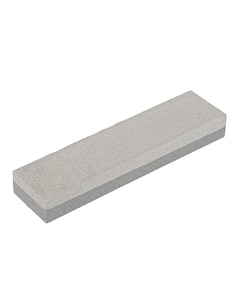
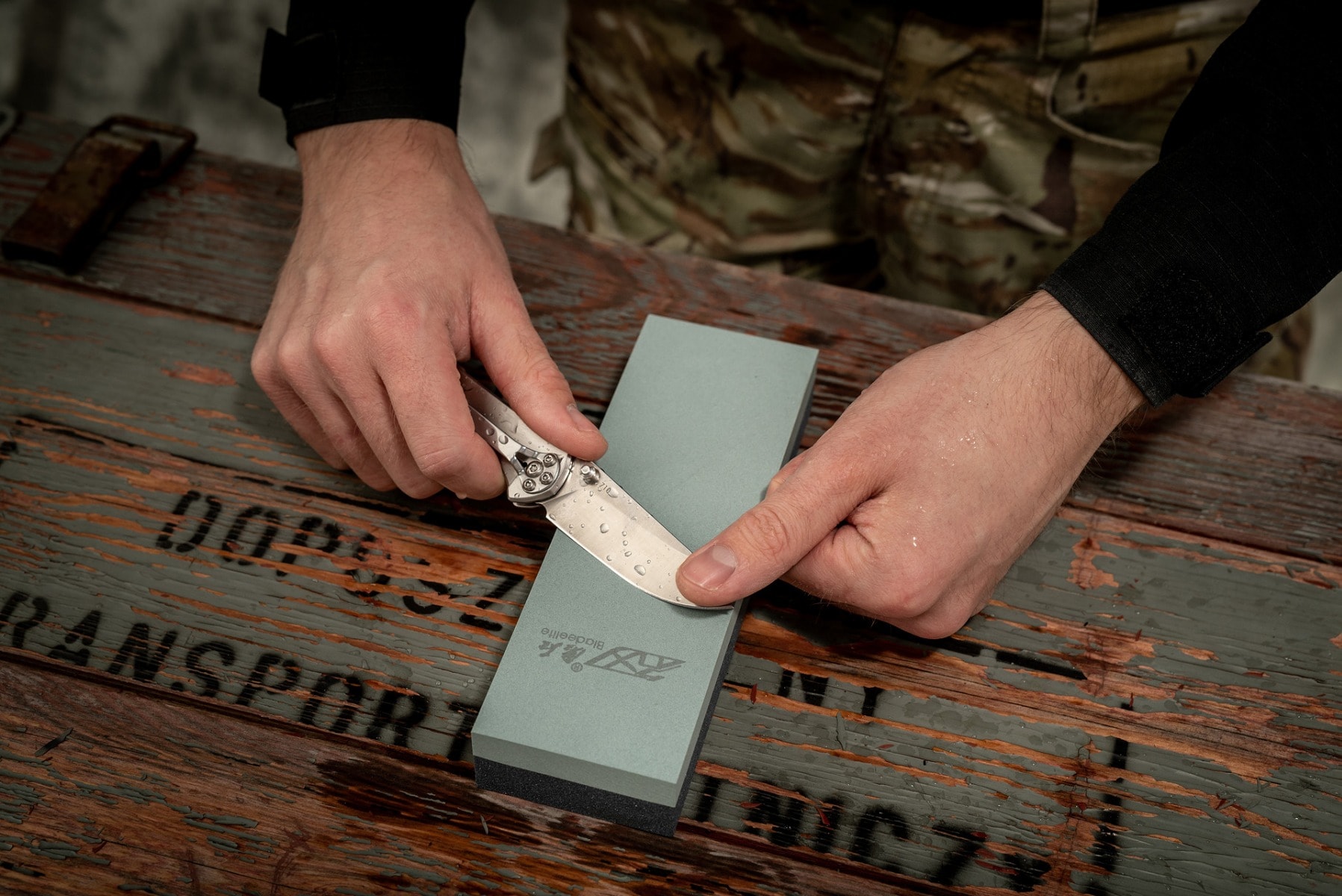
Sharpening stones are simple tools, all or part of which consists of a deliberately shaped surface with abrasive properties. Surely, everyone has already come across such a tool, usually in the form of the popular "whetstone" or "scythe stone".
However, the matter is not as simple as it might seem. Sharpening stones vary in geometry, gradation and material of the abrasive surface - all of which have a significant impact on the range of applications and the effectiveness of our whetstone. It is therefore worth taking a closer look at these issues.
Sharpening stone geometry
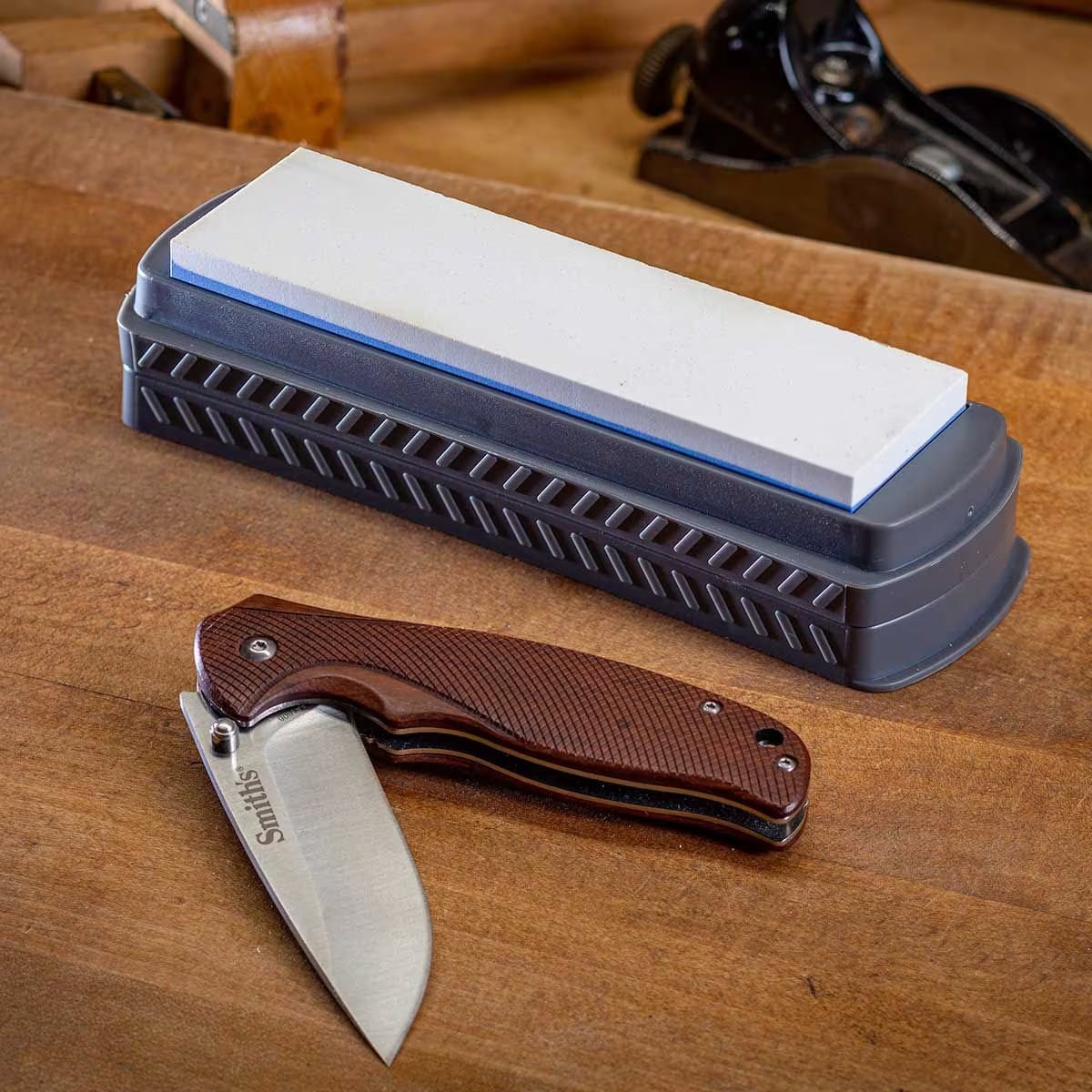
As far as geometry is concerned, the most important division is the distinction between flat stones and oval. A flat whetstone means an even, flat abrasive surface, usually rectangular in shape. On such a whetstone, the vast majority of knives will be sharpened correctly, with the exception of those characterised by a concave section on the blade ("recurve" profile). This is due to the simple fact that when the concave part of the cutting edge is applied to a flat abrasive surface, it will only make contact with it at two points, while the rest will remain unsharpened or be sharpened incorrectly during the movement of the knife.
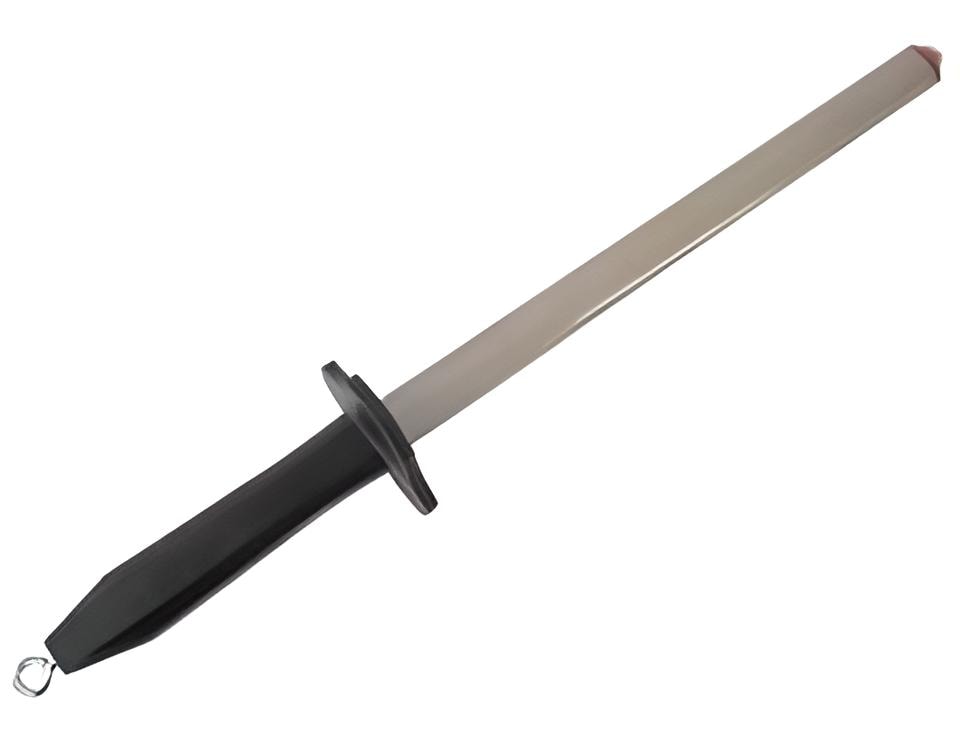
For this reason, oval sharpening stones are available on the market. A concave section of the blade applied to an oval with a small diameter will only ever come into contact with it at one point, so that by dragging the cutting edge across such a surface, we have the chance to sharpen it evenly and at a fixed angle.
Knives with a classic blade profile can also be sharpened on an oval stone, but this will be less convenient than sharpening on a flat stone, on which the cutting edge rests over a much larger area, making it easier to guide the knife more steadily and maintain a constant angle.



How to sharpen a stone knife? - the most important rules
Perhaps your question about sharpening technique arises at this point, unfortunately this is a topic for a separate article and by no means a short one. So we will just remind you of the most important rules for sharpening knives:
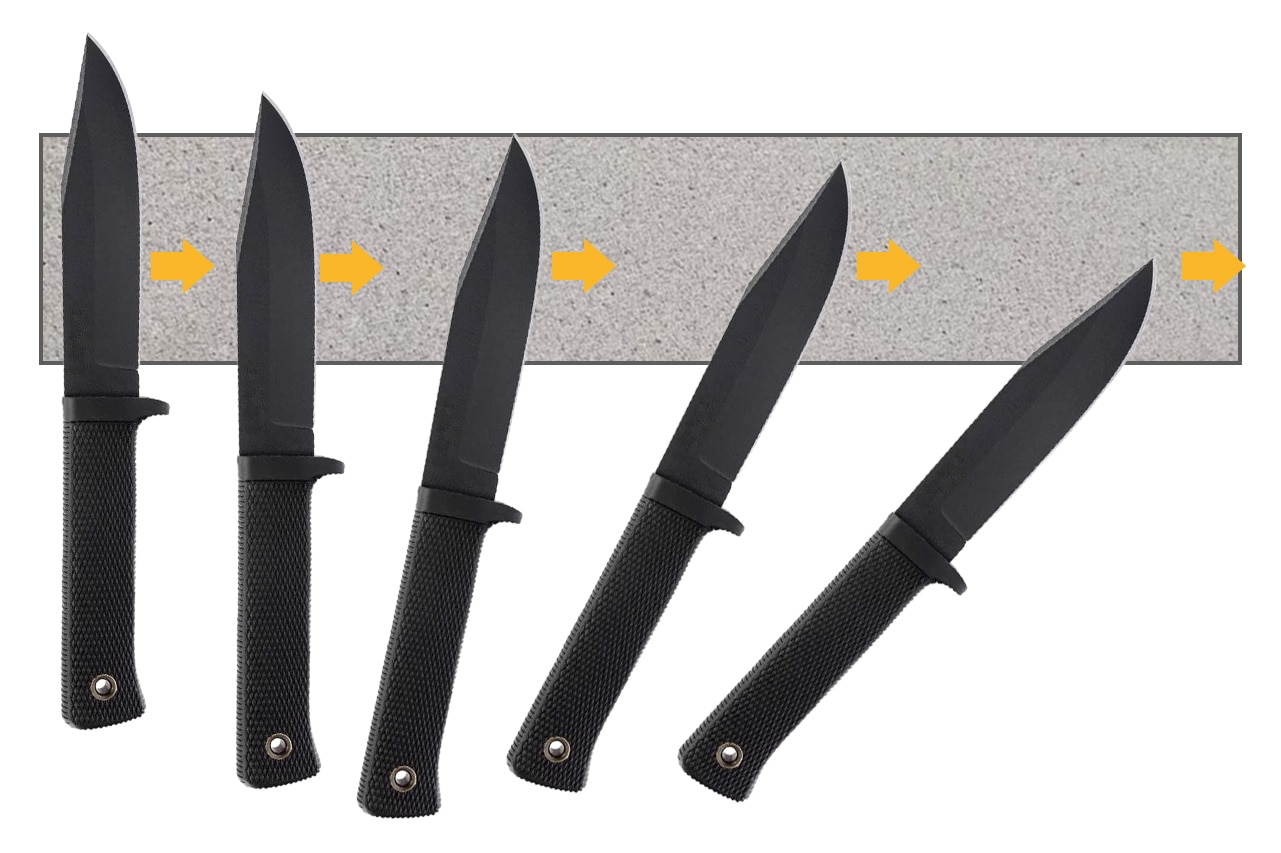
- Run the knife with the blade forward ("against the hair")
- Sharpen both sides of the cutting edge
- We try to keep a constant sharpening angle from the threshold to the tip of the head
- The optimum sharpening angle is about 20 degrees per side for most steels
Gradation of sharpening stones
Another important issue is the selection of gradation, i.e. the degree of "roughness" of the whetstone. Most often, manufacturers use one of two methods to determine gradation. The first is to provide gradation expressed in numbers, where the number means the number of abrasive particles per square centimeter, similarly to sandpaper. A 600-grit whetstone will therefore be rougher than a 1200-grit whetstone. The second method is intuitive descriptions, for example from "Extra Fine" to "Extra Coarse", i.e. gradually from very fine to very rough.
It happens that verbal markings are supplemented with an equivalent in the form of the number of grains per square centimeter and vice versa, but this is not a standard assignment, each manufacturer can define in his own way what he means by "medium" or "very fine". Typically, however, the finest whetstones do not exceed a grit of 1200, while the coarsest rarely have a grit lower than 220. Of course, there are exceptions to this rule, especially in the case of very fine whetstones that polish the cutting edge "mirror." It also happens that the manufacturer specifies the grain size of the whetstone in microns, but this is probably the least intuitive method and is rarely used on its own.
What gradation of knife sharpening stone should I choose?
What about gradation from a sharpening perspective? We know from experience that if someone sharpens a knife regularly and does not allow major damage to the cutting edge, they probably do not need a whetstone thicker than "fine", i.e. in the grit range of 800-600. This is a gradation that It is completely sufficient to quickly restore the sharpness of a slightly dull knife, and at the same time it does not leave too deep grooves for later smoothing. However, if you plan to sharpen very dull knives or plan to reprofile the current cutting edge, it is worth purchasing a rough whetstone with a grit range of 400-200.
A grit of about 1200, so the whetstone is called 'extra fine' or 'ultra fine', is used for the ultimate in smoothing - a knife properly sharpened on such a whetstone shaves off hair with no problem and smoothly cuts loose hanging paper thin. 1200 is an abrasive particle size of 9 microns, which is smaller than the typical chromium carbide in hardened steel. At the same time, it is a gradation that provides sufficient cutting aggressiveness on hard, smooth or fibrous materials, which becomes somewhat of a problem when the edge is polished on higher gradations.
The optimum for a working blade? All indications are that yes, although there are 'schools' recommending 'mirror polishing' or even honing with polishing paste on the leather, while others see no point in sharpening at gradations higher than 600 - a subject we will certainly return to when we write an article on the art of sharpening.
Sharpening stones and the material of manufacture
Sharpening stones also differ in terms of the material from which they are made, and this has quite an impact on the abrasive properties of the whetstone. The different materials of sharpening stones affect their abrasive properties, which in turn determines the effectiveness of the sharpening process. Made of different materials, stones can be more or less aggressive.
Natural sharpening stones
The first group consists of natural stones. The most popular of these are Arkansas and the so-called Belgian stone (Belgisher Brocken). Sometimes Arkansas stones are offered by manufacturers in "soft" (soft) and "hard" (hard) versions, which can cause some confusion. Well, contrary to the first connotation, the "soft" Arkansas stone is used to pre-sharpen more blunt knives, while the "hard" variety is used to make the final smoothing of the blade.
Actually, it is hard to talk about the advantages of natural stones, because compared to more modern sharpening solutions, they actually have only disadvantages. They are relatively expensive because they are labour-intensive to obtain and machine. They are slow to pick up steel, wear themselves out rather quickly, and are virtually useless in high-alloy steels rich in hard tungsten and vanadium carbides. During sharpening, the pores of the natural stones quickly become clogged and thus slow down the sharpening process even further. As if that were not enough, the natural stones wear unevenly, in line with the sharpening motion of the respective knife model, which becomes evident after a long period of sharpening, with a distortion of the grinding plane visible to the naked eye.
So why do they still find amateurs? It seems to me that this is a group of users for whom the non-practical aspect is also important. Sharpening on a real Arcansas is the same 'trapper vibe' as lighting a campfire with a flint, a whetstone for knife lovers custom forged by a master friend, with a beautiful wooden handle and in a hand-stitched leather scabbard. And there's probably something to it.
Ceramic sharpening stones
The second group is ceramic stones (synthetic). They are most often formed from aluminium oxide Al2O3 (alumina), referred to by English-speaking manufacturers as 'alumina', and less often from silicon carbide SiC, which is more often used to make abrasive papers than typical sharpening stones.
Alumina has the advantage of being less prone to clogging and of being hard enough to ensure abrasion of most of the common steels used for knives today. Only vanadium carbides in steels that contain this element in amounts greater than 2% can present a serious obstacle for alumina. However, we are talking here about final smoothing at very low gradations, where we would like to grind both the matrix and the individual carbides stuck in it. At gradations between 200 and 600, the abrasive particles are so large that, in practice, they will "tear out" entire carbides along with pieces of the martensite matrix.
In the case of silicon carbide (SiC)-based abrasive surfaces, the problem with carbides in steels does not arise at all, as it is able to abrade even the hardest ones.
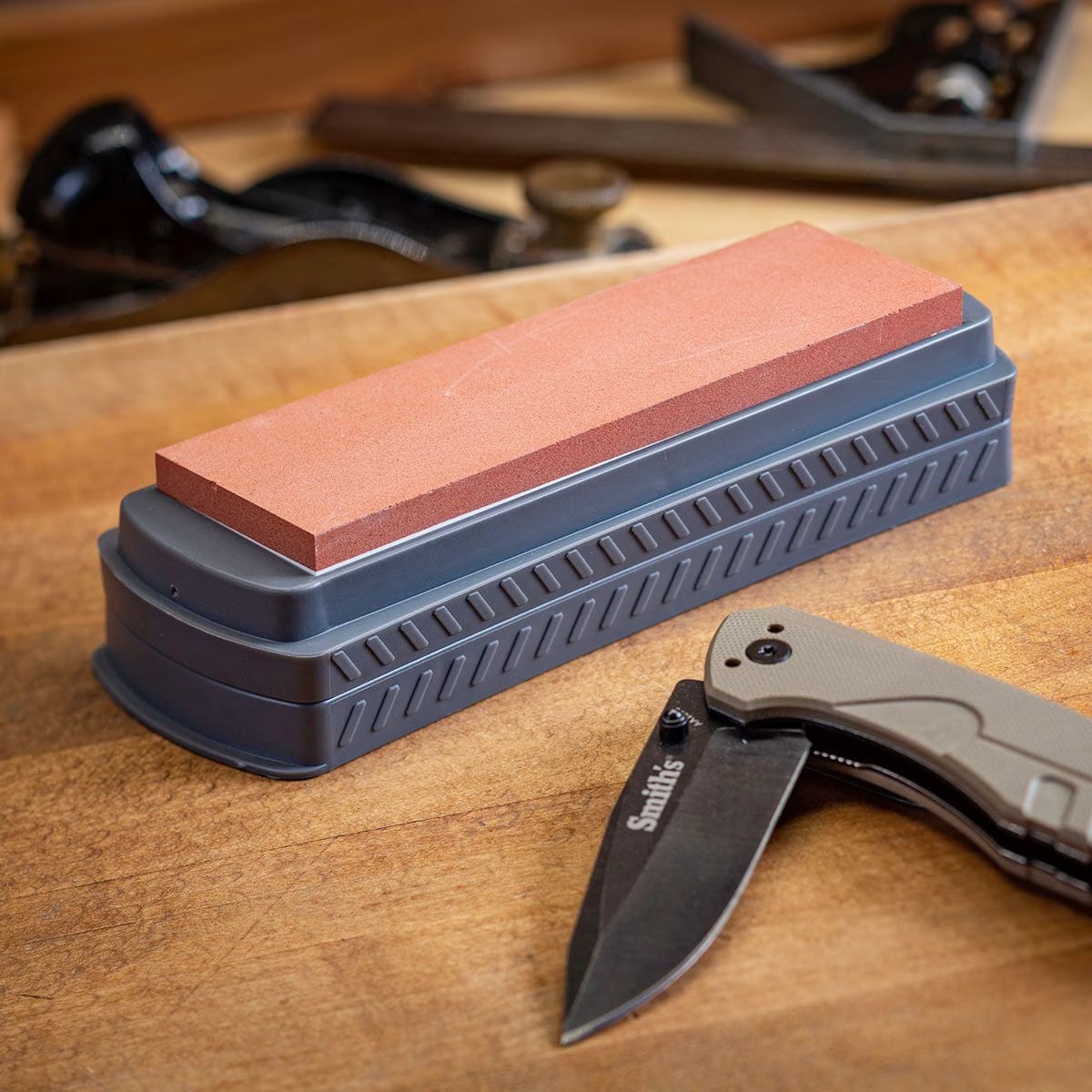
Unfortunately, ceramic whetstones also have similar disadvantages to natural stones. The most important of these is their susceptibility to uneven wear. After dozens of sharpening cycles, we can expect deformation of the surface as a result of uneven wear, until eventually the whetstone is no longer suitable for precision sharpening, even though there is physically quite a bit left.
Much here depends on the quality of the material and workmanship, whetstones from companies such as Lansky, Gerber or Spyderco whetstone will certainly last much longer than a Chinese or "no-name" whetstone from the market. Unfortunately, a decent ceramic whetstone is often 25% of the price of a good knife and sometimes even more.
Diamond stones
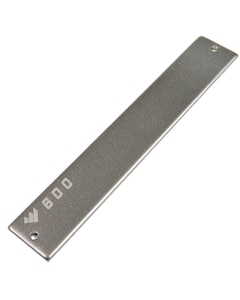
The last group consists of diamond whetstones.They usually consist of a metal plate or oval rod on which synthetic diamond dust of a specific gradation is deposited. The most critical manufacturing stage, on which the quality of the future whetstone depends, is the sputtering and permanent setting of the diamond powder.
Mastering this technology on an industrial scale is not easy and there are currently only two manufacturers on the market for diamond knife sharpening accessories - EzeLap and DMT. I personally do not recommend other diamond whetstones, especially "no-name" ones made in China or Russia. Despite their apparent good performance, cheap diamond whetstones will quickly become brittle or, to put it more bluntly, "bald". In contrast, DMT and EzeLap whetstones are practically "unbreakable".
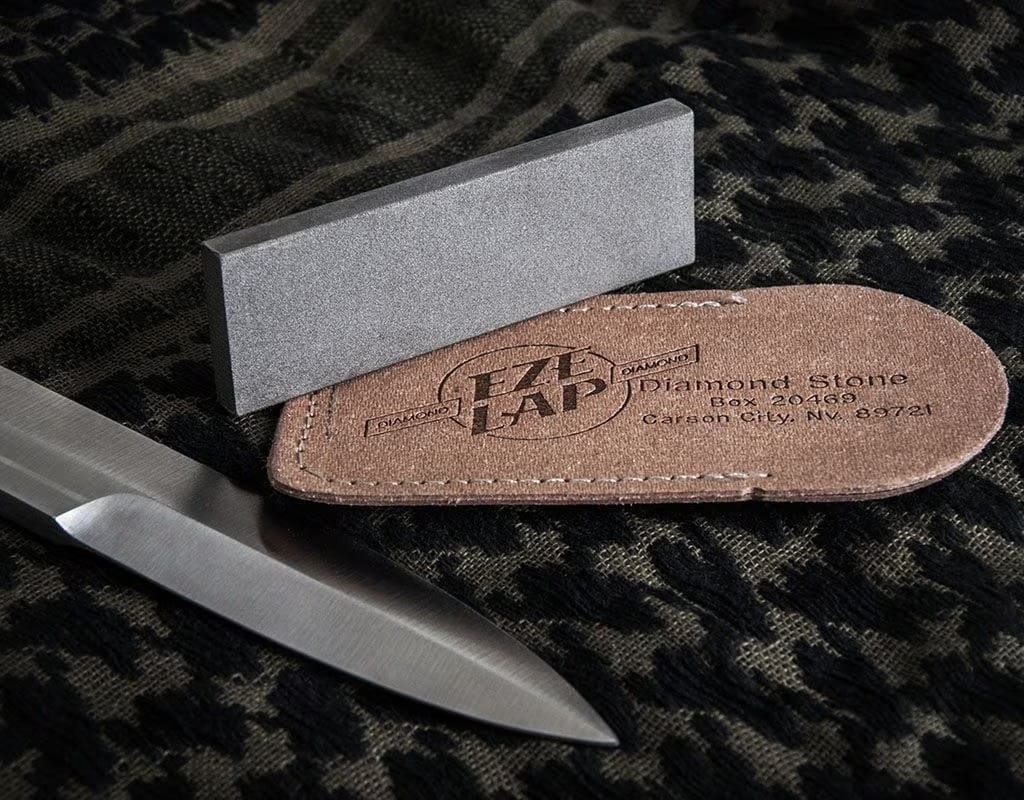
The most important advantages of diamond whetstones are, of course, due to the properties of this material. No steel or even carbide can resist the crystalline diamond particles.
Sharpening is fast and the correct cutting edge cuts very aggressively. This is not only because it sharpens even the hardest carbides in the structure, but also because the diamond crystals are sharper and cut deeper furrows in the steel than ceramic whetstones of the same gradation.i.
The second, almost equally important advantage of diamond whetstones over those discussed earlier is due to their design. Because diamond dust is applied to a steel plate or rod, there is virtually no possibility of deformation of the surface as a result of wear.
A good diamond whetstone therefore not only guarantees fast, efficient sharpening, but also preserves as good a cutting edge geometry as our manual skills allow.
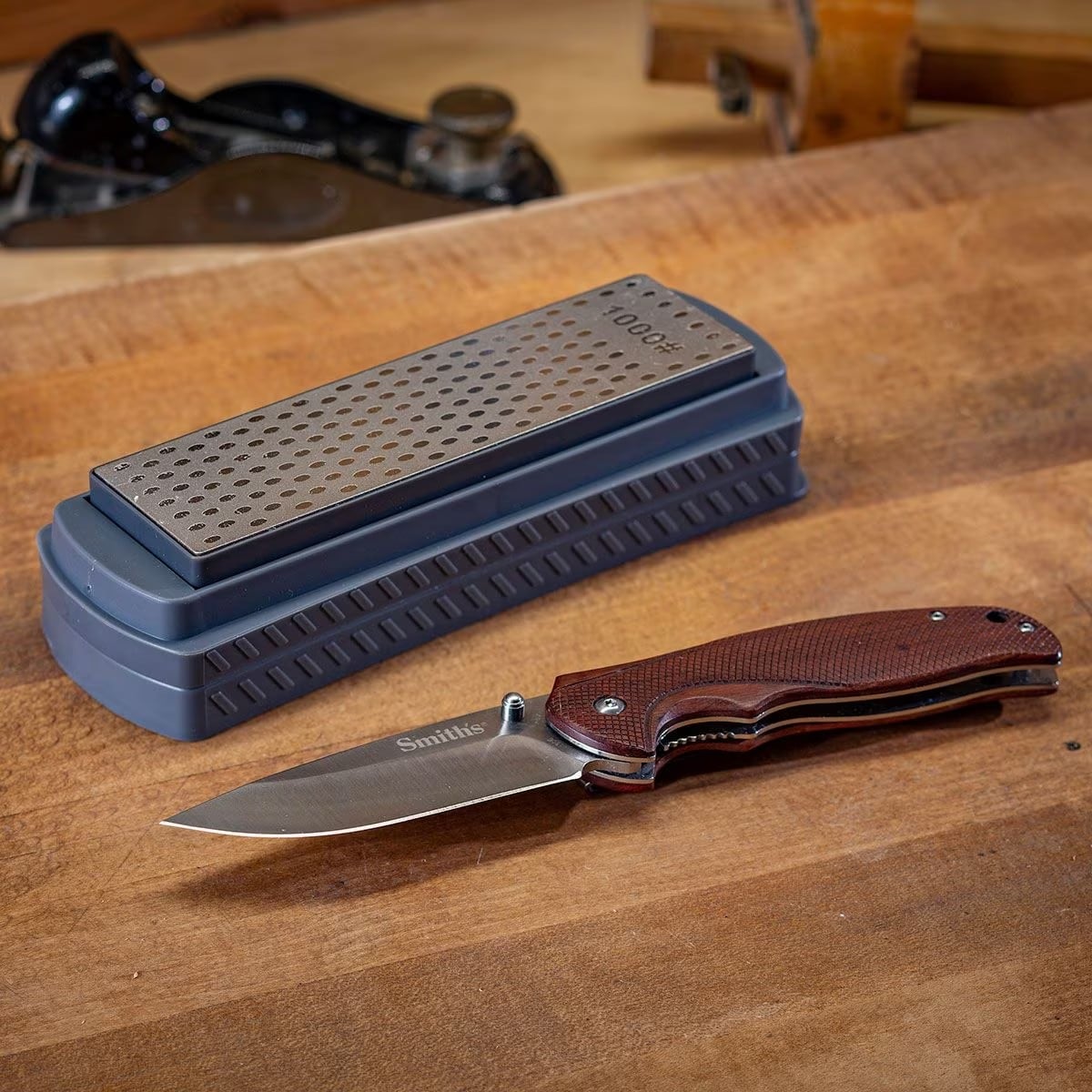
It is worth noting at this point that diamond whetstones can come in the form of a solid plate with a continuous abrasive surface or as diamond powder applied to a perforated sheet. The latter solution reduces the cost somewhat, as much less diamond is needed to coat such a 'screen', but in terms of technical excellence the continuous abrasive surface whetstones are far superior.
In addition to the obvious advantages such as greater speed and uniformity of sharpening, diamond whetstones with a continuous abrasive surface are usually made on a base of a thicker and therefore less deformable sheet metal than that used for perforated surfaces.
Unfortunately, diamond sharpening stones are not among the cheapest on the market. Add to that the fact that you will need at least two gradations.
Is it worth it? In my opinion, it is worth it, not only because of the effectiveness of the diamond, but also because of the longevity of such a whetstone, which cannot be expected from even the best ceramic whetstones.
Knife sharpening systems
Not everyone needs to have watchmaking precision in their hands and a protractor in their eyes in order to have a well-sharpened knife - this was probably the assumption behind the creation of these clever inventions known somewhat loosely as "sharpening systems". Basically, we can distinguish between two basic types of solutions, which, with minor modifications or simplifications, are used by many manufacturers.
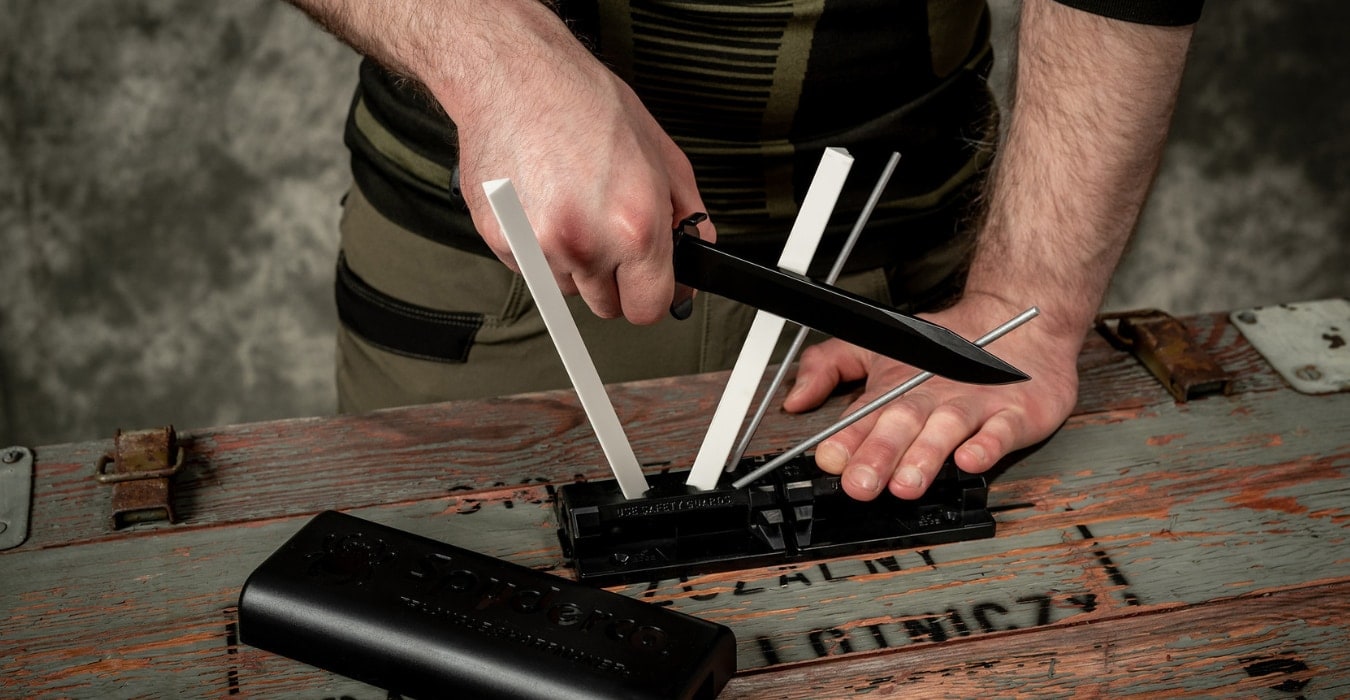
The first is based on the idea of something like a small vise, complete with guides that force the correct angle of attack for sharpening stones placed in holders on wire poles. After securing the knife head in the jaws of the vise, we insert the poles with the sharpening stone into the chosen guide and perform a sharpening movement guiding the stone from tip to threshold.
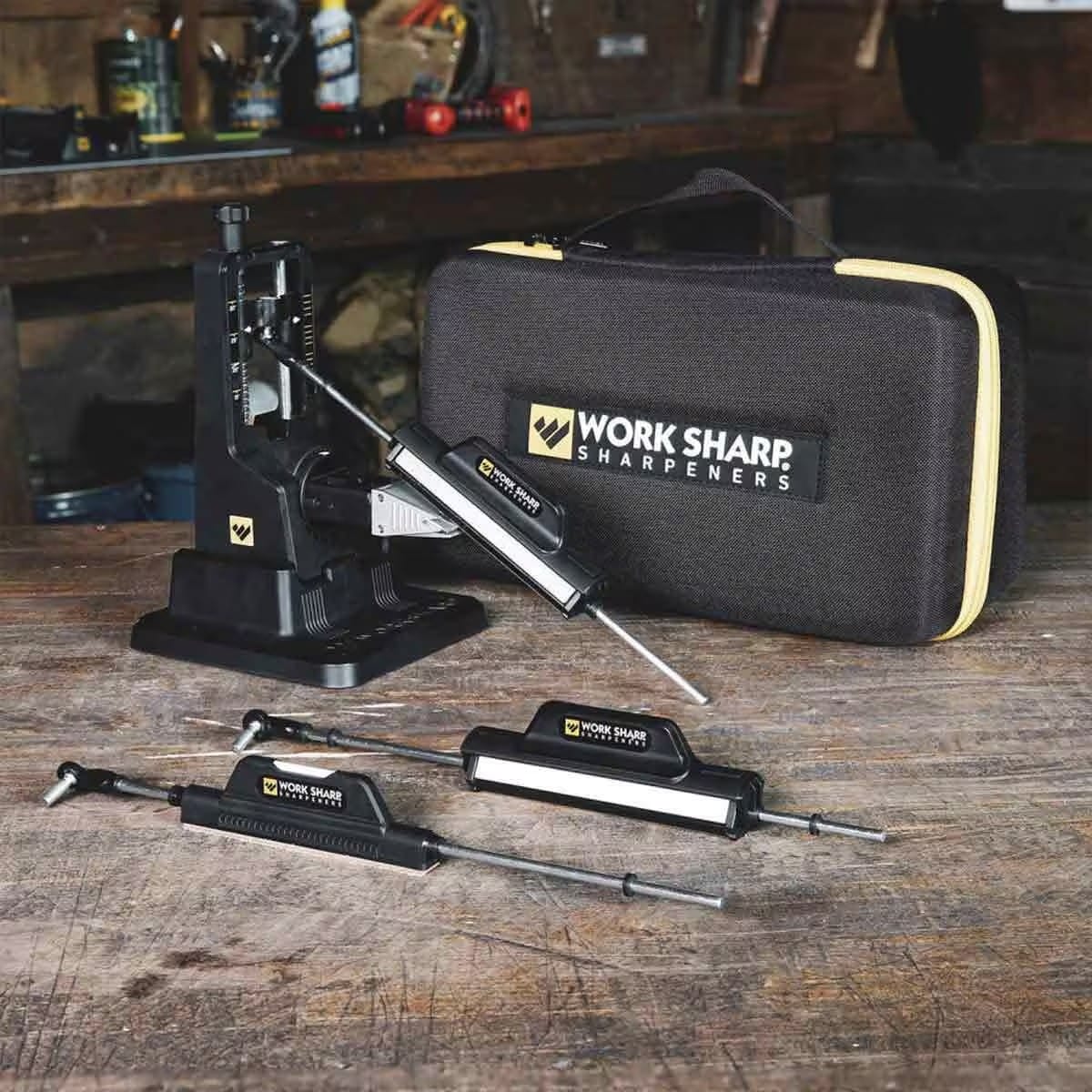
The advantage of this system is that user error has practically zero effect on the quality of sharpening, while the disadvantage is the relatively small maximum length of the knives that can be sharpened, which in this case is limited by the length of the poles to which the stone is attached. The stone itself can be either ceramic or diamond, and there are also sets containing several sharpening stones of different gradations, together with individual poles and holders. The most popular vise-based systems with guides are manufactured by DMT, Lansky and Work Sharp.
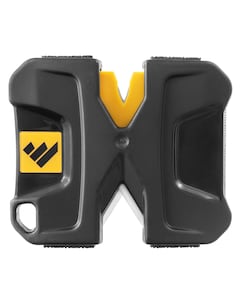
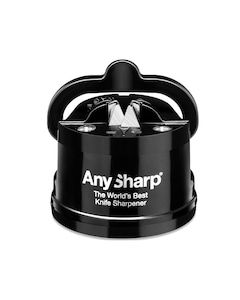
The second solution is even simpler. It involves the use of two sharpening rods positioned vertically at an angle, so that together they form a 'V'. The angle of the sharpening rod is fixed and usually between 15 and 30 degrees. The sharpener's task is to guide the cutting edge of the knife along the sharpening bars, as if we wanted to cut something from top to bottom, perpendicular to the ground. Theoretically, a single inclined bar would suffice, but using a pair makes it possible to efficiently and conveniently sharpen one side of the cutting edge and the other, an operation that is necessary especially in the final stage of sharpening.
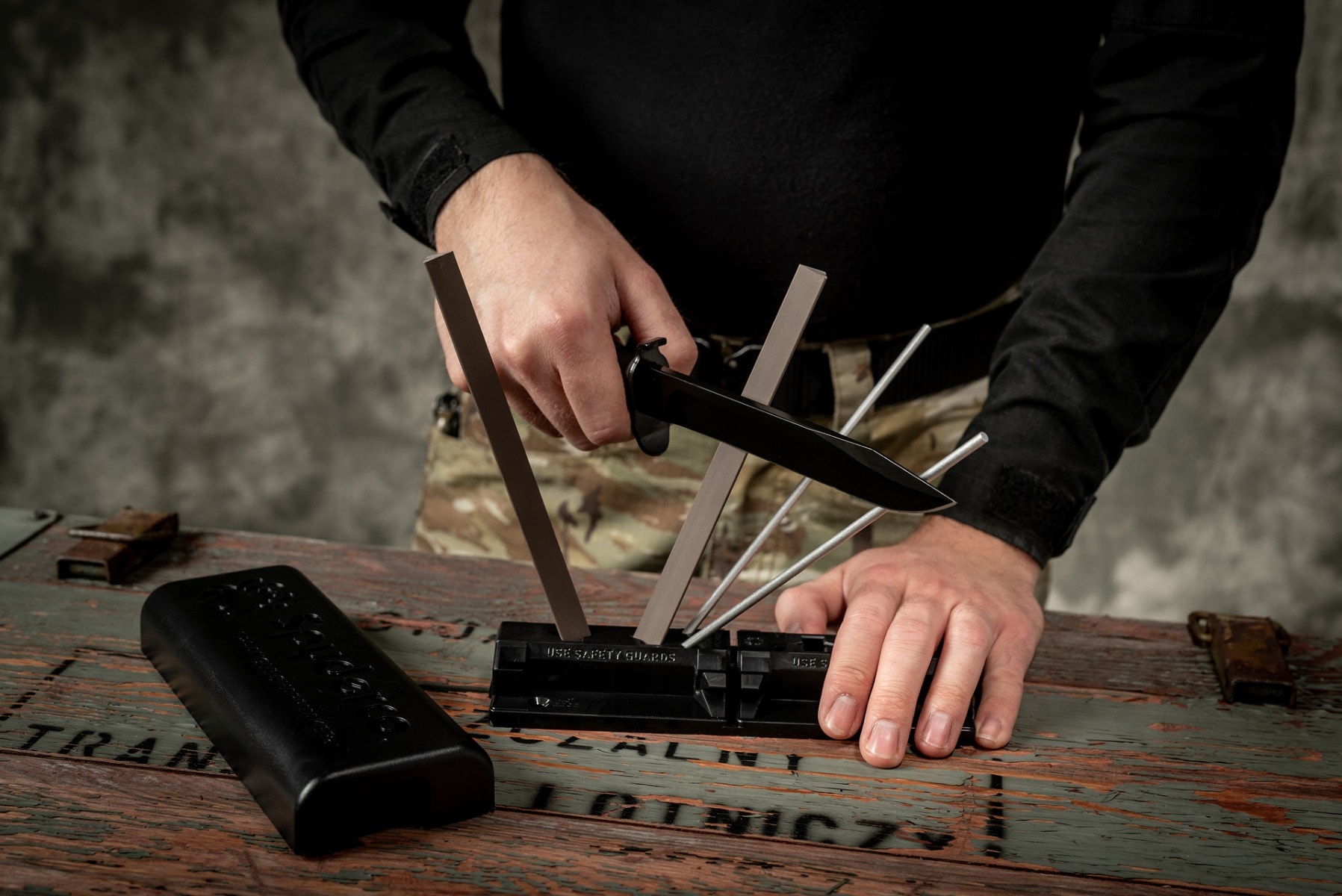
Compared to a system based on poles, guides and vices, the undoubted advantage of the 'V' system is that there are no restrictions on the length of the knives to be sharpened. The second advantage is the already mentioned possibility of sharpening both sides of the knife's cutting edge again and again.
The undoubted disadvantage, on the other hand, is the wide room for error for the user. In order to sharpen the knife to the angle we have chosen due to the inclination of the sharpening bars, we have to guide the knife perfectly perpendicular to the ground. In practice, any twitch of the hand or minimal change in the angle of the knife will result in an error - exactly like when sharpening on a classic stone. Of course, movement perpendicular to the ground is easier, and certainly much more intuitive, than feeling the sharpening angle when sharpening on a whetstone lying horizontally.
As with the vice system, the sharpening stones can be ceramic or diamond, and different gradations are used. For proper sharpening of knives with a concave section ("recurve"), sharpening on an edge or round bars is used. Toothed blades can also be sharpened on the edge.
A separate group of whetstones that force a fixed sharpening angle are the pocket models, but we will discuss these along with others below.
Pocket whetstones
No matter how well you sharpen your knife before heading out into the field, you shouldn't rely on the assumption that it won't need sharpening for a week or two. Yes, knives made from extreme steels can retain their razor sharpness even longer, but only if you're using the knife for light work, not to mention unlucky events such as dropping the blade on a stone or snagging a nail in wood or a staple in cardboard - and it doesn't help much that you've spent the equivalent of half your salary on a knife, the laws of physics are inexorable, no steel will make a knife into a lightsaber.
It is therefore worth considering supplementing a basic sharpening stone or an existing system with a small, pocket-sized whetstone for temporary/emergency sharpening.
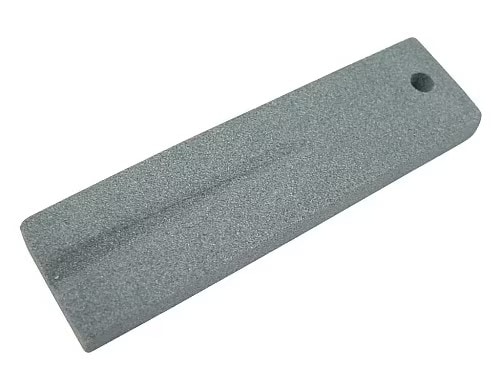
The simplest form of pocket whetstone is the classic miniature sharpening stone, i.e. a rectangular plate with an abrasive surface measuring roughly 50 mm × 10 mm × 5 mm, on which we guide the knife analogously to sharpening on a larger stone, which is by no means simpler in the case of a miniature. Manufacturers sometimes make suitable recesses and angles on such miniature stones so that we can sharpen small items such as fishing hooks or serrated blades.
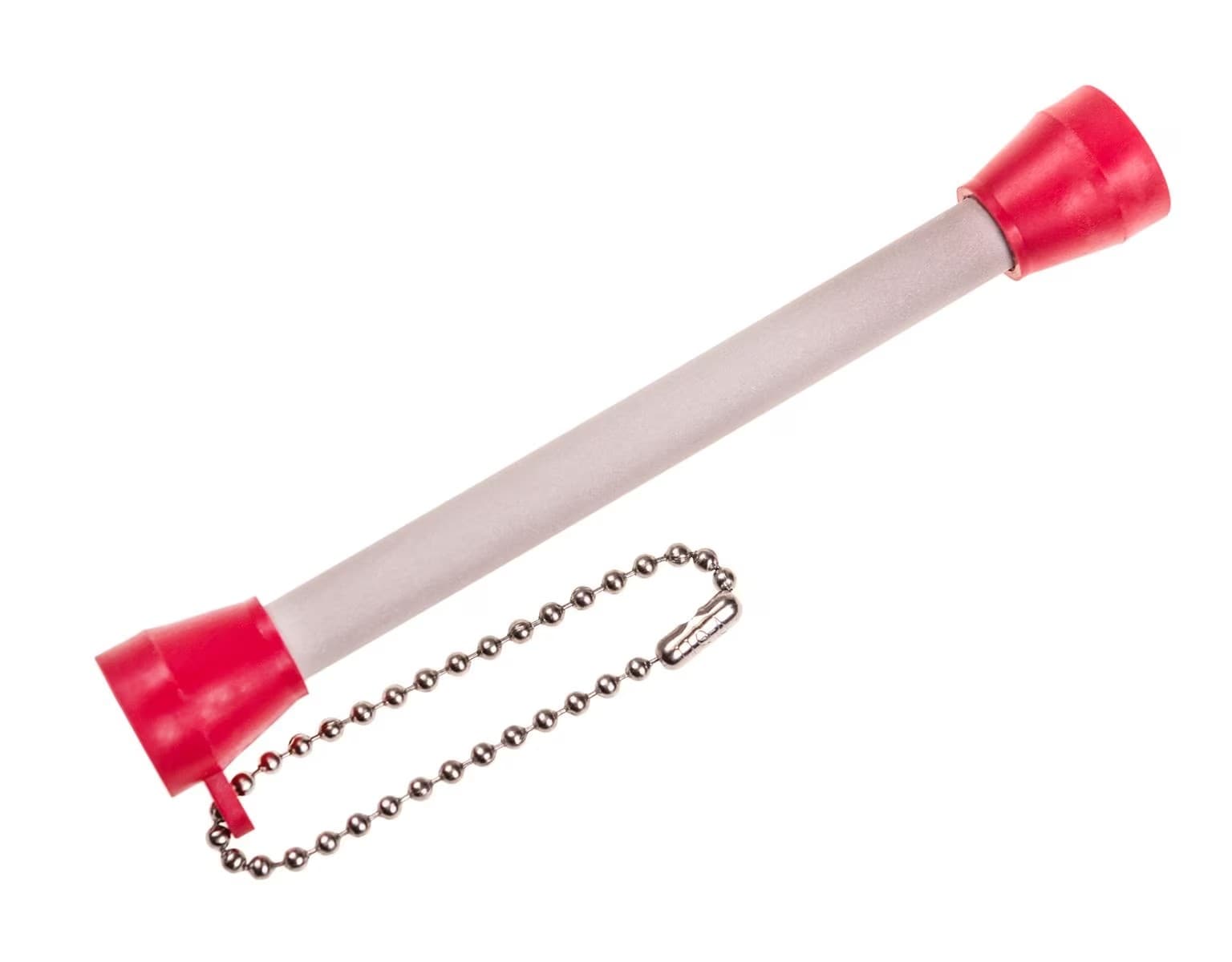
In a slightly more advanced version, it can be a multi-faceted sharpening rod ending on both sides with rubber or plastic rests for the thumb and forefinger - hence the common name for this type of whetstone: "dog-bone", or "dog-chest".
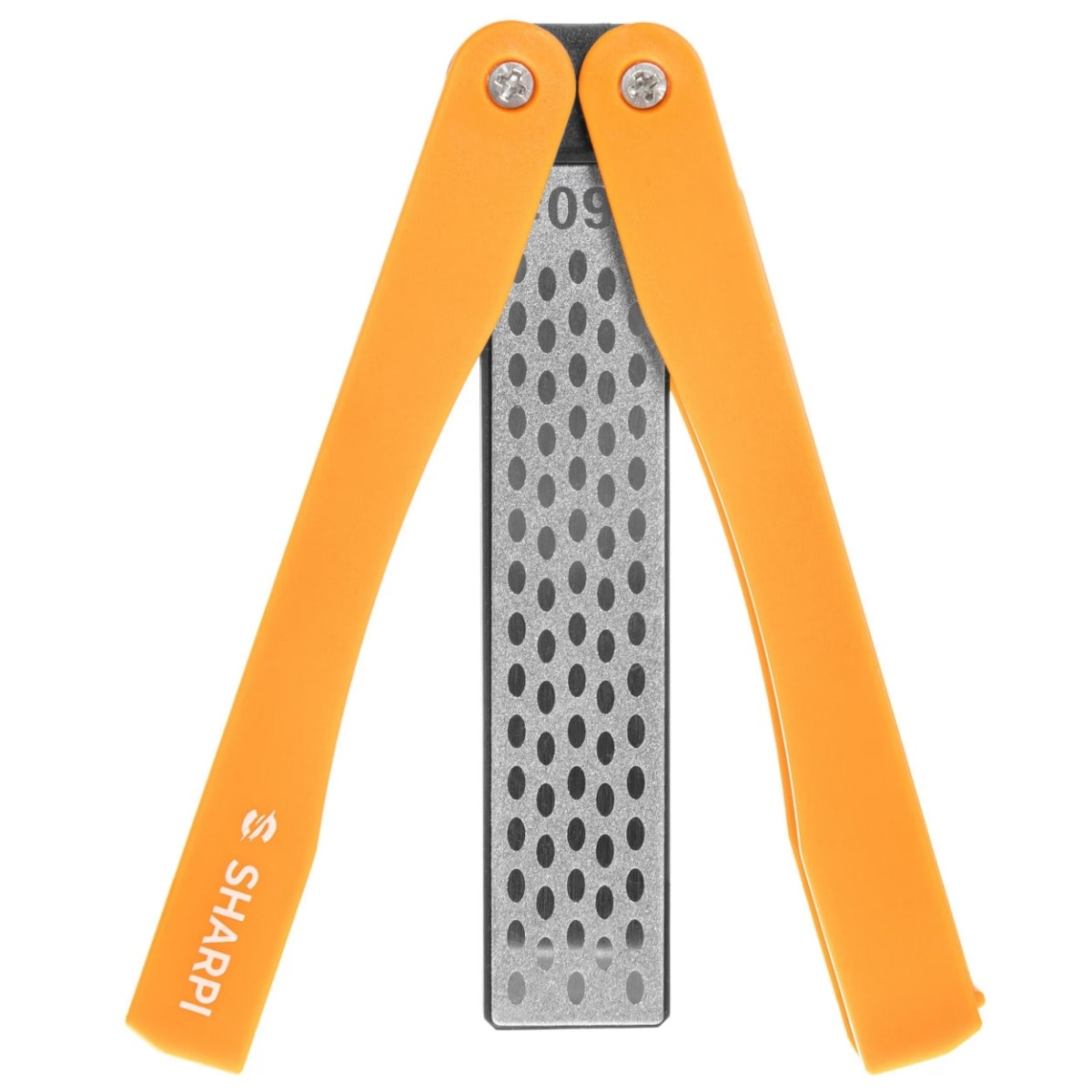
Slightly better in terms of effectiveness is the Sharpi Butterfly diamond whetstone. This is also a classic sharpening stone, but the folding handle design (similar to butterfly knives) results in a comfortable grip and a relatively long abrasive surface. Added to this, of course, are the advantages of the diamond already discussed, although in this case we are dealing with a perforated surface.
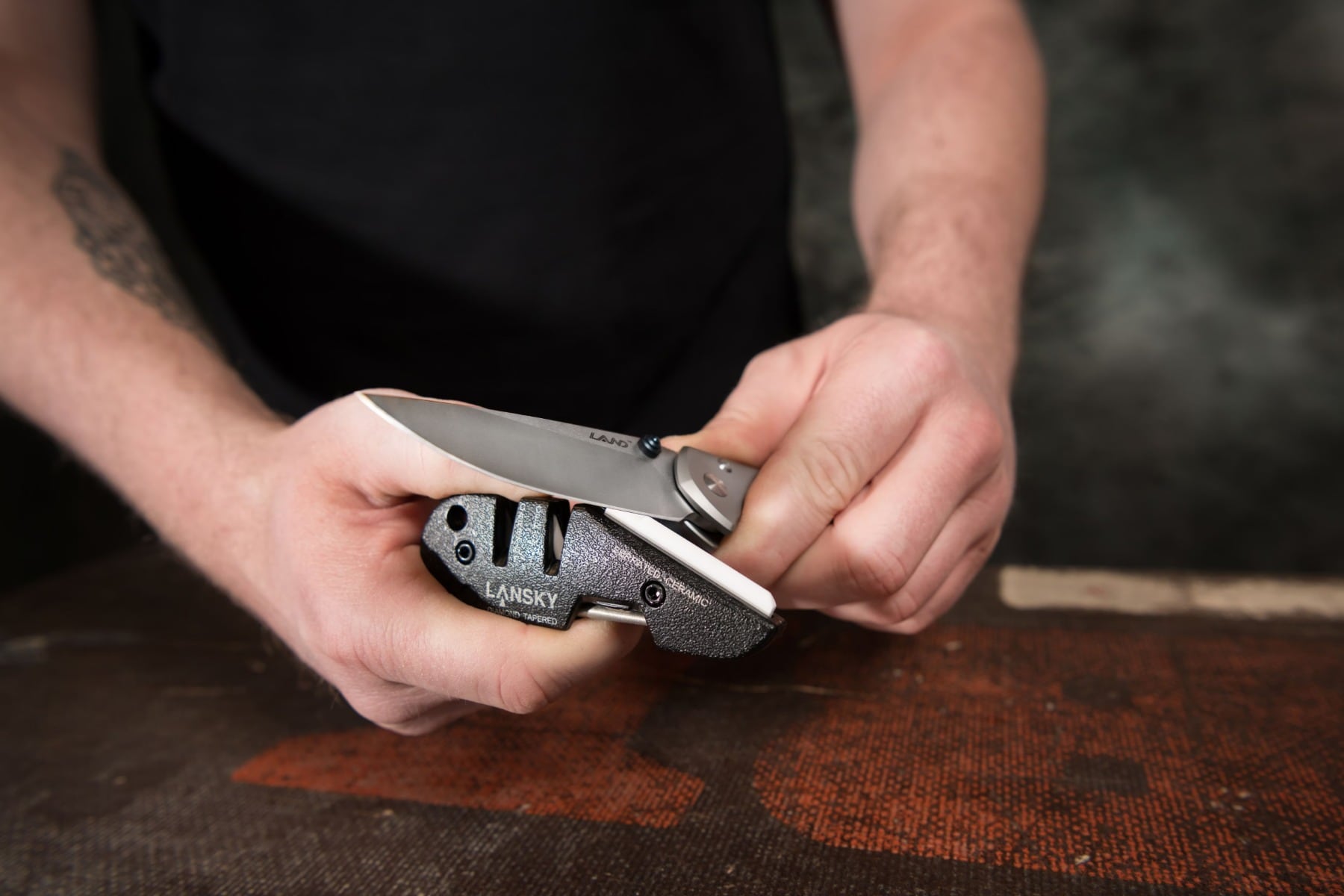
Usually, however, pocket whetstones are based on solutions that facilitate sharpening by forcing a suitable angle. The most common solution, is a 'V' shaped slot formed by intersecting abrasive surfaces inclined at the appropriate angle.
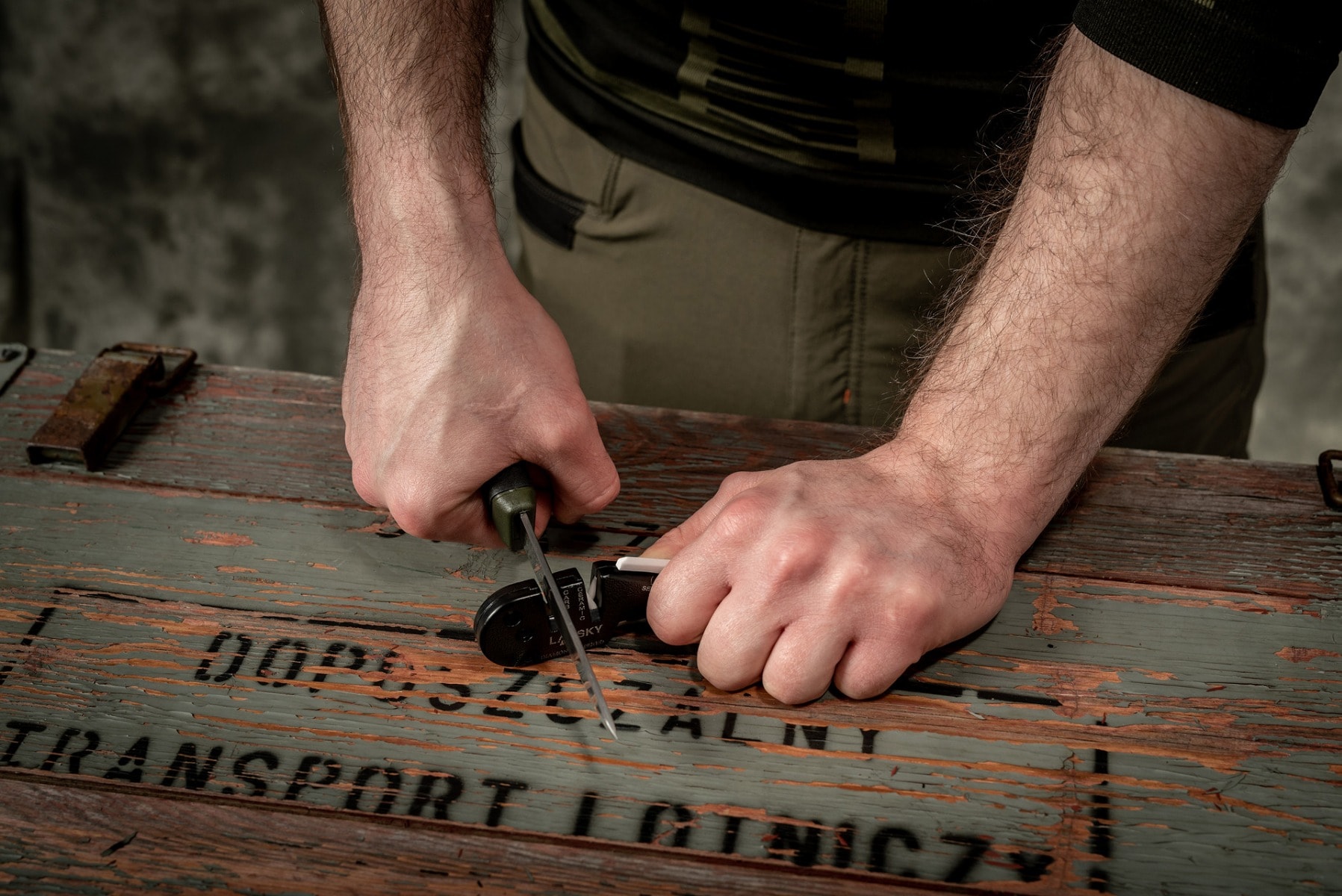
To sharpen a knife, it is sufficient to place the cutting edge inside the slot and drag the blade from the threshold to the tip. Usually the abrasive surfaces here are made in the form of alumina rods, but there are also sharpening slots based on tungsten carbide. These are definitely more durable, although unfortunately they sharpen in a somewhat more brutal manner, resulting in even less accuracy.
Which knife sharpener to choose? - summarisede
In summary, choosing the right knife sharpener depends on the individual user's preferences, the type of knife and expectations of sharpening results. It is important to consider the material of the knife and the degree of wear on the blade. The final choice should also take into account the skill of the user and their needs and preferences for using the sharpener.
A sharp knife is a safe knife
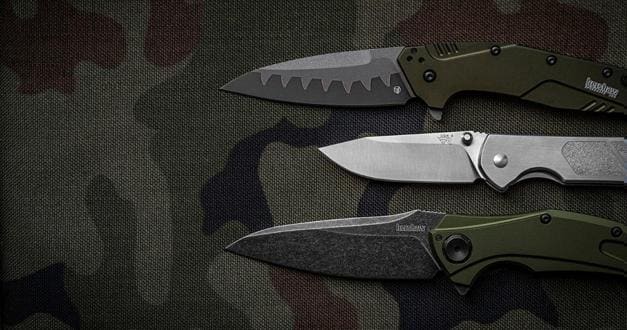
It is hard to overestimate the advantages of a really sharp knife, and this applies whether it is a kitchen knife, a hunting knife, a mushroom knife or your favourite EDC knife. Contrary to popular opinion, a sharp knife is definitely safer than a dull knife. Several factors contribute to this.
Above all, when working with a sharp knife, we do not need to apply a lot of force. This prevents hand fatigue and minimises the risk of the knife slipping. There is also no risk of the material to be cut being torn off instead of being cut in an uncontrolled manner. In other words, the work is done by the tool and the user can devote all his attention to its control. Moreover, such a knife cuts instead of actually crushing and tearing.
Obviously, this brief overview does not exhaust all the issues related to knife sharpening accessories, but we hope that, at least for novice users, it will make it easier to orient themselves in the extensive market offer and help to make the optimal purchase that will not disappoint expectations.
Want a sharp knife? It's time to stock up on a professional whetstone! Of course, it is important to observe the following when working with our really sharp knife principles of knife handling.