Butterfly Knife (Balisong): What It Is, Uses and How to Choose
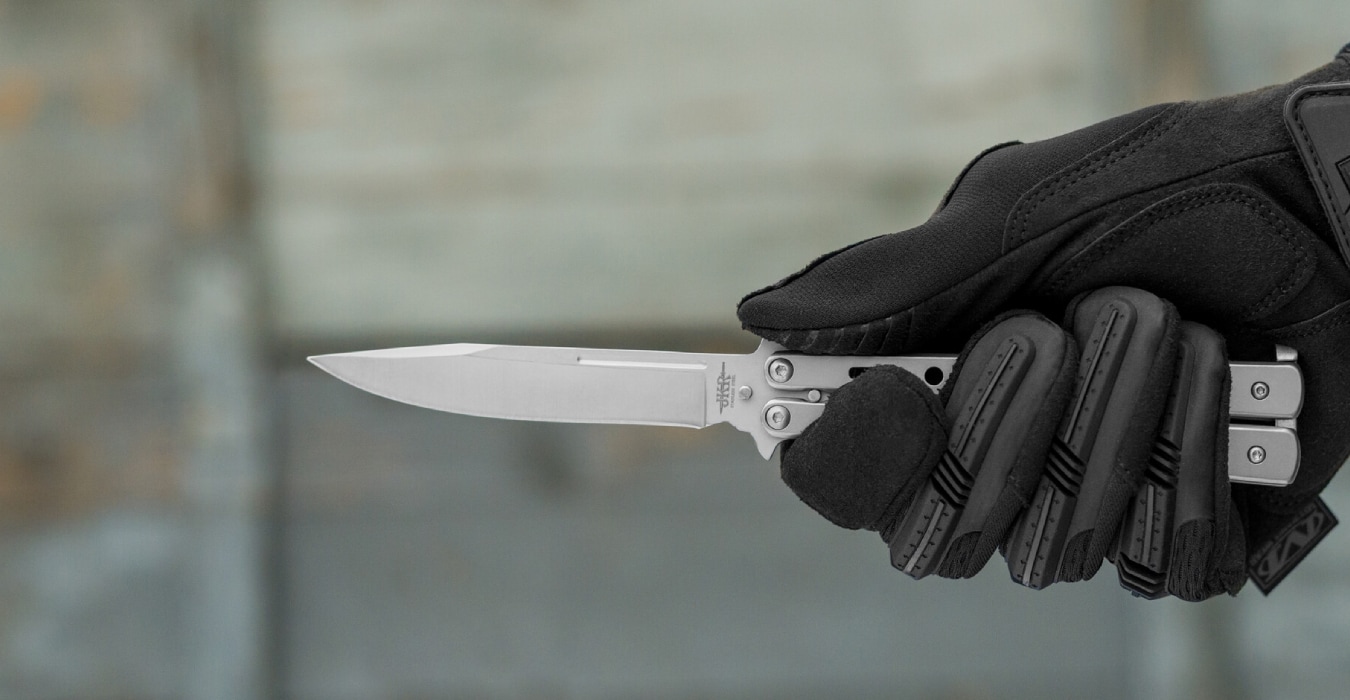
The butterfly knife, also known as a balisong, is defined by its distinctive handle made of two movable parts. When the knife is closed, they cover the blade; when it is open, they form the handle. This unusual design has made balisongs popular not only with folding-knife fans and collectors, but also with people who practise flipping: performing impressive tricks by spinning and manipulating the knife.
In this guide we explain what a butterfly knife is, what it is used for, how the law treats it, and what to consider when choosing one.
What is a butterfly knife?
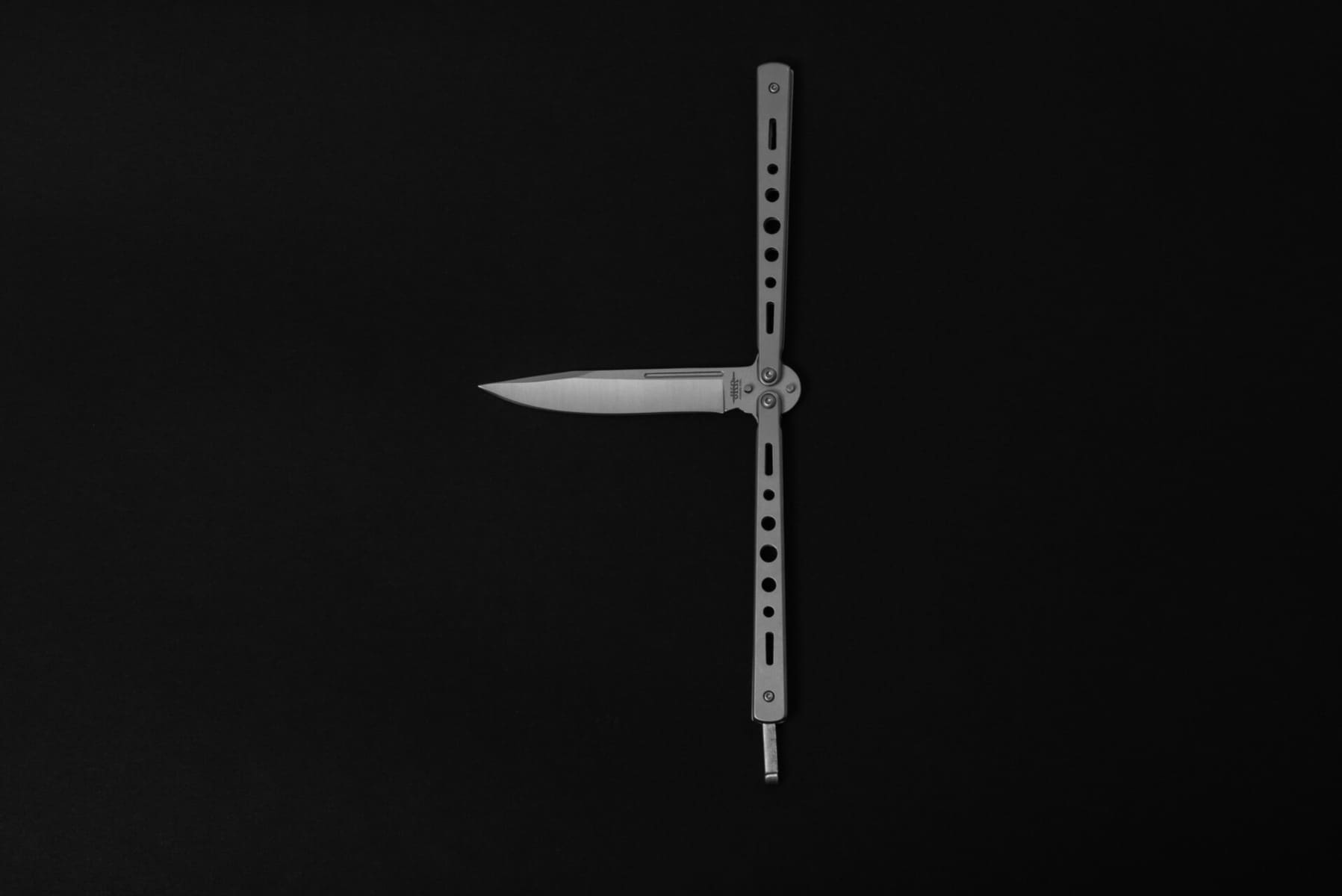
A butterfly knife, or balisong, is a type of folding knife recognised by its handle design. The handle consists of two movable sections joined to the base of the blade by pivots. When the knife is closed, both handle halves wrap around the blade and conceal it between them.
This sets the balisong apart from a traditional folding knife, in which a single blade pivots into a one-piece handle. Many models also have a latch that stops the handles from swinging open or closed by accident.


What does a butterfly knife look like and how is it built?
A closed butterfly knife looks like a flat, elongated handle with the blade hidden inside. When opened, both handle sections form a single grip, and the balisong then resembles a classic fixed-blade knife.
The basic parts of a balisong are the blade and two movable handles. Each handle rotates around its own pivot at the base of the blade, which is what allows the knife to be opened and closed.
Depending on the model you may also find stop pins, latches and different pivot solutions such as bushings, washers or bearings. How well all the parts fit together is crucial, because it determines how smoothly the knife operates and how much play it has.
There are two main handle constructions: channel, where each handle half is made from a single piece with a channel for the blade, and sandwich, where each half is built from joined parts, typically two scales separated by spacers.
Training butterfly knives, known as trainers, form a category of their own. Instead of a sharp blade they have a dull training blade, so you can practise flipping with a much lower risk of cuts. This does not remove the risk of injury entirely during tricks.
What is a butterfly knife used for?
A butterfly knife with a sharp blade can do the same jobs as other folding knives: opening packages, cutting string and tape, and handling small everyday tasks. Because of its unusual design, however, it is also popular with collectors and flipping enthusiasts, who open, close and spin the knife in the hand to perform butterfly knife tricks.
If you are starting out with flipping, a training butterfly knife with a dull blade and rounded edges is the recommended choice. It lets you practise the handle movements and learn basic tricks with much less risk of cuts than a model with a sharp blade.
Are butterfly knives legal?
It depends entirely on where you live. Knife laws differ from country to country, and in the US they can differ from state to state and even city to city. In some places a balisong is treated like any other folding knife; in others it is specifically restricted or banned.
The restrictions can cover buying, owning, carrying, importing or selling a butterfly knife, and sometimes only knives with a sharp blade. Because the rules vary so much, always check the current law where you live before you buy.
Legal ownership never means you can carry a knife wherever you like. Many countries restrict carrying knives in public, at mass events and in transport hubs, and knives are not allowed in hand luggage on a plane. Rules also apply to import, export and transit. If you plan to travel abroad, check the current regulations of your destination country, including any transit countries. If in doubt, the safest option is to leave the balisong at home.
This guide is general information and not legal advice. Laws change, so always check the rules that apply in your country and region.
Training butterfly knife vs. knife with a sharp blade
The key difference is the blade. A classic butterfly knife has a sharpened cutting edge and can work as a utility folding knife. A training knife (trainer) has a dull blade with no cutting edge, often with a rounded tip and holes to reduce weight.
| Feature | Butterfly knife with a sharp blade | Training butterfly knife (trainer) |
|---|---|---|
| Blade | Sharp, with a cutting edge | Dull, with no cutting edge |
| Purpose | Utility and collecting | Learning and improving flipping |
| Learning to flip | Requires experience and great care | Better for beginners, with a lower risk of cuts |
| What to look for | Blade steel, ergonomics, pivot quality | Balance similar to a sharp-blade model |
If your main goal is learning to flip, a trainer is the more sensible choice at the start. For a utility knife, blade steel, ergonomics, pivot quality and overall build quality matter more.
How to choose a butterfly knife
First decide what you want it for. A collector, a flipping enthusiast and someone who wants an unconventional folding knife for everyday tasks will each look for different things. When choosing, pay attention to:
- type of blade – sharp or training,
- blade steel – affects edge retention, corrosion resistance and ease of sharpening,
- handle material – affects weight, grip and balance,
- weight and balance – especially important in models designed for flipping,
- pivot construction – a well-fitted mechanism should run smoothly without excessive play,
- handle type – for example channel or sandwich,
- latch – a latch locks the handles together; some flipping-oriented designs come without one.
A more expensive model is not always the best first choice. At the start, matching the construction to your intended use matters more than the number of extras or a flashy finish.
How to look after a butterfly knife
A balisong has more moving parts than a typical folding knife, so regular care directly affects how smoothly it works. Periodically clean the pivots and the area around the blade of dust and dirt, apply a small amount of knife oil, and wipe off the excess so it does not collect debris. Also check the screws: over time they can loosen, causing play and rattling in the handles. Tighten them carefully, because over-tightened pivots can make the knife stiff.
Butterfly knives at Militaria.pl
If you already know what you are looking for, the butterfly knife category at Militaria.pl lets you compare models by blade type, materials, construction and price. The range includes both simpler balisongs and more advanced designs from established manufacturers.