Is a metal detector legal? regulations, permits and search rules

Before you head out into the field with a metal detector, it’s worth checking under what rules you are allowed to search. Buying and owning a metal detector are legal in Poland, but not every form of using it is allowed without additional formalities. What matters most is who owns the land and what restrictions apply there.
Legal status: September 2026. Buying and owning a metal detector are legal in Poland and do not require obtaining a permit or registering the device. A permit is, however, required when searching for hidden or abandoned movable historical monuments using electronic or technical devices — it is issued by the provincial heritage conservator. From January 1, 2027, the rules are expected to change: the permit is to be replaced by the landowner’s consent and by reporting the search in a ministerial app.
Do you need a permit for a metal detector?
You do not need a permit to buy or own a metal detector. A permit from the provincial heritage conservator is required, however, when you intend to use the device to search for hidden or abandoned historical monuments. You do not need it if you are looking for items that are not monuments, for example, house keys lost while working in the garden.
If you plan to search on someone else’s field or plot, you also need the owner’s permission to use their land. So if you want to look for relics in your neighbor’s field, you must obtain both their consent and the conservator’s permit. The owner decides whether to make the land available, and the conservator determines whether you may search for relics there and under what conditions.
When is a permit for metal detector searches required?
Under Article 36(1)(12) of the Act of 23 July 2003 on the Protection and Guardianship of Monuments, a permit is required for the search for hidden or abandoned movable relics, including archaeological relics, using any type of electronic or technical devices and diving equipment. This obligation is not limited to known archaeological sites or places marked with a sign indicating monument protection. It also applies to searches in an ordinary field or meadow, if their purpose is to find historical artifacts.
A relic should not be equated only with a very old or particularly valuable item. The Act does not set a single age threshold after which every object automatically becomes a relic. What matters, among other things, is its historical, artistic, or scientific value and the importance of preserving it for the public interest. The mere argument that the found object is less than one hundred years old therefore does not determine its status.
That is why you should start your preparations by asking a simple question: what exactly are you planning to look for? If you are dealing with relics, the paperwork should come before you head out into the field, not only after the first interesting find.
How to obtain a permit and how much does it cost?
If you plan to search for relics on land, you file your application with the regional monument conservator competent for the area of your trip. It is therefore not your home address that matters, but the location of the area you want to search. A private individual may also apply for a permit — you do not need to set up an association or represent an institution, nor is an archaeology degree required.
Preparing the application requires more detailed planning of your trip. The details are set out in the Regulation of the Minister of Culture and National Heritage on conducting conservation, restoration, and archaeological research works. As a rule, you must:
- indicate the search area and the person who will conduct the search,
- justify the intention to carry out the search,
- attach a program specifying the scope and method of operation,
- attach a map with the area marked,
- document the right to use the property or attach the consent of its owner or holder.
For some areas — for example national parks and nature reserves — additional requirements apply under nature protection regulations.
How much does a permit for searching for relics with a metal detector cost? For hobby relic hunting, the standard administrative fee for issuing a permit is PLN 82 (as of September 2026). If you use a proxy, a fee of PLN 17 may be added for submitting the power of attorney document, unless an exemption applies. The fee therefore does not apply to owning or using the detector itself, but to issuing a permit for specific searches.
Submitting an application does not yet give you the right to start searching. After you receive the decision, read its conditions — they define, among other things, the area, the method of operation and the period of validity. You must also fulfill the specified information obligations regarding the searches and their participants, including notifying the start and end dates of the work.
What will change from 1 January 2027?
The amendment to the Act on the Protection of Monuments and the Guardianship of Monuments of 13 July 2023 introduces a fundamental liberalization of the rules for amateur searches. Instead of a permit from the Voivodeship Monument Conservator, it will be sufficient to have the consent of the property owner and to register the search in an app provided by the Ministry of Culture and National Heritage. Only after making a find does the searcher report it to the conservator.
The date for these regulations to enter into force has already been postponed twice: originally they were to apply from 1 May 2024, then from 1 May 2025, and finally — after an amendment signed by the president in April 2025 — from 1 January 2027. The reasons were objections from archaeological and museum communities and the lack of readiness of IT systems. In parallel, the Ministry of Culture is working on a broader amendment to the Act.
The practical conclusion: until the end of 2026 the existing permit system remains in force. Since the date has already been postponed several times, before a planned trip in 2027 check the current legal status instead of assuming that the new rules are already in effect.
FAQ – questions about metal detectors and regulations
Can you search with a metal detector on your own field or plot?
Owning the property makes access to the land simpler, but it does not exempt you from monument protection regulations. If you intend to search for monuments with a detector on your own field, you still need the appropriate permit. Owning the land also does not give you the right to keep the archaeological finds.
A different situation is looking for your keys or a modern wedding ring lost while working in the garden. Such activity in itself does not require a conservator’s permit. However, if you accidentally come across an object that could be an archaeological monument, you cannot treat it like an ordinary lost item — the rules on securing and reporting the find then apply.
On someone else’s field, agree in advance on the scope of the search with the person authorized to grant access to the land. A good practice is to put in writing the arrangements regarding the location, date and method of operation. This helps avoid a situation where the owner agrees to you entering with a detector, but not to the works you intend to carry out.
Can you use a metal detector in the forest and on the beach?
In the forest, the principle that if you are allowed to walk there, you are also free to search and dig does not apply. On land managed by the State Forests, the rules for making the area available for searches using electronic or technical devices — especially when they involve disturbing the soil — are set out in an ordinance of the Director General of the State Forests, and consent is granted by the competent forest district manager. When the goal is to search for monuments, the issue of the conservator’s permit is a separate matter.
On the beach, searches often concern modern items, such as jewelry or coins lost by people relaxing there. In such cases no permit from the heritage conservator is required, but you do need the landowner’s consent. Additional rules are set by the relevant maritime offices. The Maritime Office in Szczecin informs that hobby beach searching does not require its written authorization, provided, among other things, that you do not disturb other people’s leisure and that you refill any holes you dig. This rule does not cover, among others, dunes, cliffs, forests, or port and marina areas. Similar rules apply within the jurisdiction of the Maritime Office in Gdynia.
Also remember that using the technical belt of the seashore for purposes other than shoreline maintenance generally requires the consent of the director of the competent maritime office. The lack of an obligation to obtain one specific permit does not mean there are no restrictions at all — the maritime office’s information concerns shoreline protection, not the consent of the land’s owner or manager. Before you go, check the rules for the specific beach you’ve chosen, instead of applying information about one section of the coast to all the others.
What to do after finding a relic or a dangerous object?
An interesting find may tempt you to immediately dig it out, clean it, and examine it closely. When dealing with objects that may be archaeological monuments, it is better to refrain from any further disturbance of the discovery site. In the event of accidentally finding such an object, it should be secured with the means available, the place should be marked, and the competent provincial heritage conservator should be notified without delay. When this is not possible, the competent commune head (wójt), mayor, or city president should be notified. During searches covered by a permit, you must also comply with any conditions concerning discoveries.
Do not assume that you can take the found object home for your private collection. Discovered or found archaeological monuments are the property of the State Treasury, including when you encounter them on your own plot of land. They may be more important to the history of the place than their appearance or market value would suggest.
Modern jewelry likewise does not automatically become the finder’s property. If you do not know the person entitled to collect the item or their whereabouts, as a rule you should notify the competent district governor (starosta). In the case of valuables, the regulations also provide for an obligation to hand them over. Finding an item and acquiring ownership of it are two different events.
You must act completely differently with an object resembling a shell, grenade, ammunition, or a weapon. Do not touch it, do not clean it, do not move it, and do not take it to a police station. Move away to a safe place, warn people nearby, and notify the emergency services by calling 112, giving the location. A rusty appearance does not mean the find is safe, and any attempt at identifying it must be left to specialists.
What are the consequences of illegal searching?
Lack of the required permit is not just an oversight that always ends with a warning. Searching for hidden or abandoned monuments without a permit or contrary to its conditions is a crime. It is punishable by a fine, restriction of liberty, or imprisonment for up to two years. Liability may arise from carrying out such searches alone, not only from keeping the found object.
A separate matter is damage or destruction of a historical monument. For deliberate actions of this kind, the law provides for a penalty of six months to eight years of imprisonment; unintentional actions may also be punishable. Following the rules therefore matters both before setting out on your trip and at the moment when the detector indicates something interesting.
Check metal detectors available at Militaria.pl
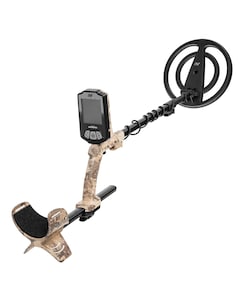
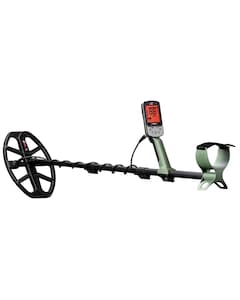
Once you know where and under what rules you can conduct your searches, it is easier to move on to choosing your equipment. At Militaria.pl you will find metal detectors from brands such as Minelab, Nokta and Garrett, as well as handheld detectors and sets with additional accessories. You can compare the devices and choose a model that fits your planned trips and your budget.
Before purchasing, pay attention to the weight of the device, its power supply, operation and the level of water resistance declared by the manufacturer. However, do not start planning your trips based solely on the detector’s specifications. Equally important are a verified location, all formalities taken care of, and knowledge of how to behave after finding an item. With such preparation, you can focus on searching in the field instead of wondering whether you are allowed to conduct it.