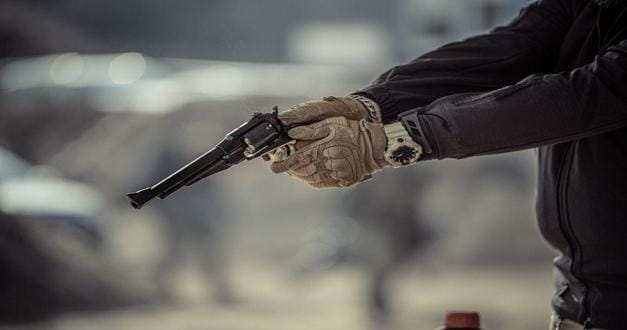
Shoot with black powder - guidance, safety and handling
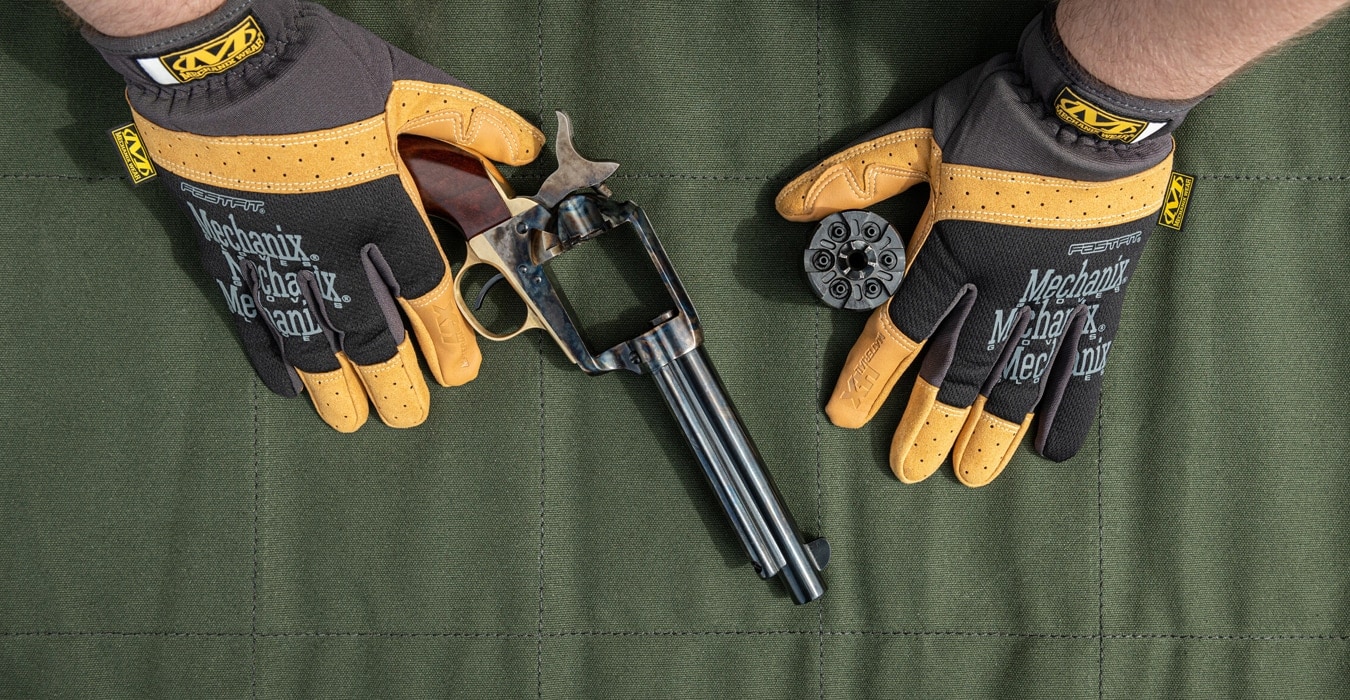
Black powder shooting is a fantastic hobby, combining sport, experiencing history and making interesting friends. At the same time, on the threshold of embarking on this adventure, there are legal and practical questions relating to safety, handling and specific nomenclature. In this guide, we will try to bring you closer to these issues, so that your first steps with a black firearm are safe and fully informed.
Are black powder weapons firearms?
At the outset, it is worthwhile to dwell on a fundamental issue which, on the one hand, may seem obvious but, on the other, through various half-truths and understatements, is sometimes unclear.
Are black-powered guns even such real firearms?
Black-rifles are recognised as firearms in Poland. Although they can be owned without a permit, they should never be treated as toys, as they can often be as powerful as the weapons used in the 19th century. For more information on the legal issues involved in owning this type of weapon, see our guide - ‘Black powder weapons without a licence - legal issues to be aware of’.
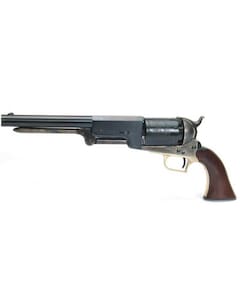
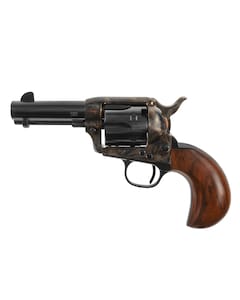

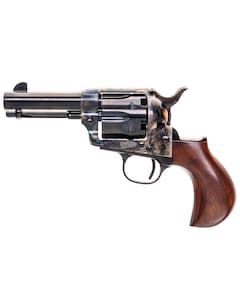
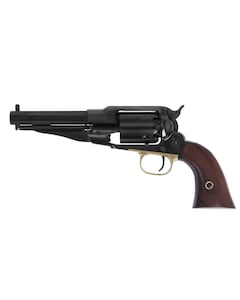
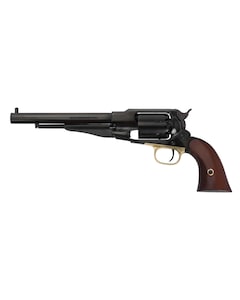
Structural elements of a black-powered weapon
What to do with what and for what, i.e. basic concepts in the construction of a black-powered weapon and the accessories designed to operate it.
Structural elements:
-
chimney - the element at the end of the cartridge chamber through which the ignition channel passes to transfer the spark from the cap to the powder,
-
the tap - the part which, when the trigger is pulled, strikes the percussion cap triggering the initiation charge; in the case of a weapon with a rock breech, the rock embedded in the cock ignites the spark when it strikes the flint,
-
the bullet - also known as a punch, a tool under the barrel used to compact the powder and insert the bullet into the cartridge chamber,
-
accelerator - an auxiliary mechanism used in rifles to reduce the force required to pull the trigger, making it easier to keep the weapon on target when firing a shot, resulting in increased accuracy,
-
trigger - taking the form of a tongue, is used to release the trigger mechanism, which ultimately translates into the firing of a projectile from the barrel of a loaded weapon,
-
bail - a trigger guard that protects the tongue from accidental removal or damage,
-
revolver drum - an element that acts as a magazine, the holes of the drum act as cartridge chambers,
-
rock - an element of a weapon with a rock lock, made of flint, embedded in the jaws of the cock; when the trigger is pulled, it strikes the flint, igniting sparks on the powder-filled pan,
-
pan - a part of a weapon with a rock breech, usually in the form of a small shelf on the right side of the barrel, connected to the barrel by a firing hole; powder is poured onto the pan, initiating (after ignition by striking the rock on the flint) the combustion of the actual propelling charge contained in the barrel,
-
threaded barrel - also known as a furrowed barrel, characterised by the presence in the barrel tube of spiral indentations, known as furrows, and protruding fragments known as fields. Together, the grooves and fields form a type of thread, the pitch of which is defined as the distance over which the bullet makes a complete revolution about its axis, the value being given in inches. For example, a pitch of 1:18 means 1 full rotation of the bullet over a distance of 18 inches, or ~450 mm. A threaded barrel allows the bullet to achieve both progressive and rotational movement at the same time, which increases accuracy and range over smoothbore weapons.
Accessories:
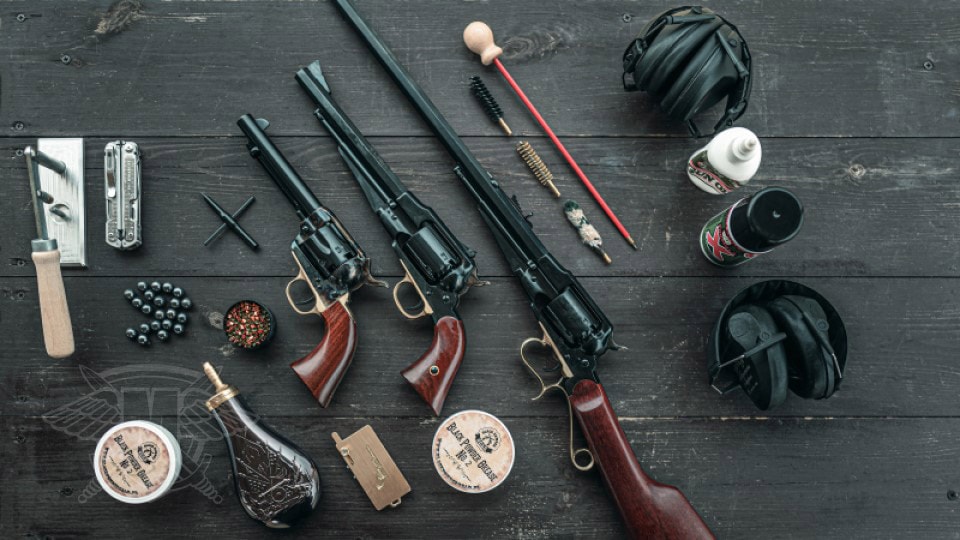
-
-
percussion cap - acts as a primer, i.e. a charge that initiates the ignition of gunpowder, is shaped like a cup of several millimetres, and is applied to the fireplace at the end of the charging process,
-
wads - separates the gunpowder from the bullet preventing the lead from melting and thus contaminating the barrel, at the same time enabling the gunpowder to be pressed down more effectively and increasing the tightness of the whole system; a popular alternative to felt nails is food-grade semolina,
-
round balls bullets for black powder weapons- cast from lead, the basic type of ammunition in black-pistol revolvers, should not have any defects on the surface such as overfeed, seams or underfeed, the best quality is characterised by the rolled bullets, the most commonly used are over-calibre bullets providing higher tightness, e.g. .454 for .44 calibre,
-
bullets for black powder weapons - an alternative for revolvers and the primary ammunition for most rifles, the cone-shaped ammunition, also made of lead, offers slightly different ballistic properties,
-
wrenches- allows the unscrewing of fireplaces for cleaning purposes and in emergency situations, should be of high strength so as not to deform when unscrewing, and may be fitted with a needle to pierce the fireplaces,
-
ramrods - a rod-shaped instrument with a handle on which various brushes can be fitted to remove carbon deposits from the barrel tube,
-
drum loading press - makes it easier and quicker to load the drum after it has been removed from the revolver, helps to reduce wear on the breech,
-
bullet pullers - a tool that allows the removal of a lead bullet in the event of an unexploded bullet, depending on the design it resembles a screw, corkscrew or sedan/hole, also used for cleaning the barrel,
-
powder flasks - is used to carry gunpowder and to measure the exact amount of gunpowder, apart from the quick separation of the correct amount of powder they often offer a refined aesthetics, becoming an ornament of the gunsmith's equipment, for their filling a dedicated funnel is useful, when using a powder magazine it is necessary to be careful, a good practice is to treat it, in terms of storage and handling, like the gunpowder itself, i.e. protect it from heat, fire, but also mechanical damage. A good practice is to treat it, in terms of storage and handling, like gunpowder itself, i.e. to protect it from heat, fire, but also from mechanical damage,
-
a capholder - also called a cap loader, it speeds up the application of the caps to the chimneys and facilitates their proper, firm pressing in
-
bullet molds - a cockpit is a device for casting lead bullets or projectiles for blacksmiths,
-
lubricating grease - used to lubricate the front of the cartridge chamber after the bullet is loaded, reduces the build-up of carbon deposits, thus making it easier to keep the barrel clean, additionally prevents the spark from jumping to adjacent chambers during firing and protects against moisture, comes in several variants, adapted to the ambient temperature, type 1 - the hardest, recommended for summer, type 2 - universal, best for spring and autumn, type 3 - soft, recommended for winter use,
-
patches- a circular section of greased cloth, used to wrap a sub-calibre bullet, which seals the barrel tube during firing,
-
patron - a form of ready load for a black-pistol weapon, wrapped in thin tissue paper, contains all the necessary elements, i.e. gunpowder, nail, ball and lubricant, patrons make loading a black-pistol weapon easier and faster, dedicated kits are useful for their manufacture, but they can be prepared entirely by hand.
-
Purchase of black powder
All the accessories listed can be purchased without additional documents. The case is different with black powder, the purchase of which in Poland requires the presentation of an EKBP, i.e. the European Firearms Pass, in a shop. This is due to the licensed dealer's obligation to keep records of such transactions and Article 14 of the Weapons and Ammunition Act. The card may be applied for by a person over 18 years of age who is the owner of a firearm.
In order to obtain an EKBP, we submit an application to the Provincial Police Chief of the Police Headquarters having jurisdiction over the place of residence. The documents should be forwarded to the Administrative Proceedings Department of the Provincial Police Headquarters concerned, and this can be done by correspondence. The application must contain our data: first and last name, date and place of birth, permanent residence address and details of the weapon: type, make, calibre and serial number. It is advisable to enclose with the application a document confirming that it is a separable-loading firearm manufactured before 1885 or a replica thereof and certifying ownership. This can be a copy of the proof of purchase from the shop or the contract of sale. Two 3.5 x 4 cm photographs are also required, as well as proof of payment of stamp duty in the amount of PLN 105 to the account of the City Hall where the provincial headquarters is located.
Unlike obtaining a gun permit, there is no discretion when it comes to issuing an EKBP - if we have met the conditions mentioned above, the card will be issued to us. This can be done straight away, when applying in person, or by post. The EKBP is valid for 5 years, with the possibility of extension for another 5. In addition to the possibility of purchasing gunpowder, the card also entitles the holder to transport the weapons listed on it, including ammunition, to other EU countries.
In a situation where we have not yet made a card and cannot purchase gunpowder, it can be given to us at the range, perfectly legally, by another black-powder shooter.
If we are in possession of a firearm covered by the Weapons and Ammunition Act, a separable loading firearm manufactured prior to 1885 or a replica thereof, we may legally possess gunpowder without additional permits. This is confirmed by the Supreme Court resolution of 24.02.2010, I KZP 29/09.
It is important to remember that making black powder on one's own is not only illegal under Article 171. § 1 of the Criminal Code, but also highly dangerous, as is the subsequent firing of a weapon loaded with homemade powder.
Fundamental safety rules for the use of black firearms
This MUST NOT be done when using a black firearm:
-
Use powder other than black factory powder.
-
Use an enlarged powder charge compared to the manufacturer's recommendations.
-
Apply the caps to the chimneys before the cartridge chambers are finished loading.
-
To look into the barrel exit.
-
Aim in a different direction to the axis of the shooting lane, where there are pellets and targets.
-
Rotate with the weapon and brandish it, regardless of whether it is loaded.
-
Direct weapons at people and animals, including in the form of a joke or play.
-
Attempt to push through the bullet blocked in the barrel with the next shot.
-
Keep your finger on the trigger until you are ready to fire.
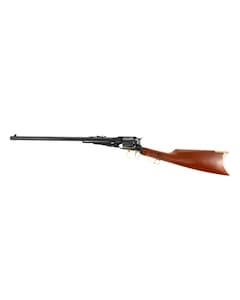

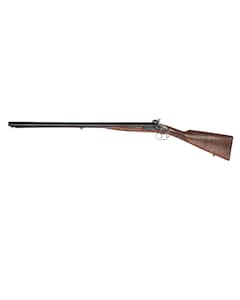
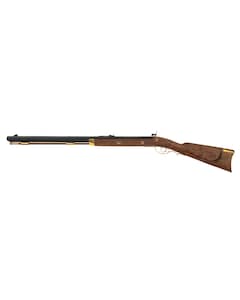
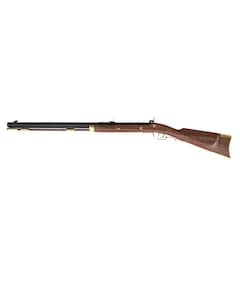

Safe handling of black powder weapons
Preparation of necessary equipment
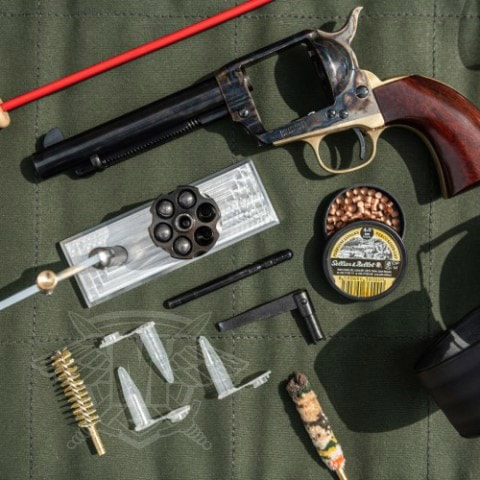
black-weapon
Before heading to the shooting range, it will be necessary to select the required equipment. Apart from the gun itself, bullets or shells, caps and, of course, gunpowder are indispensable for shooting. In addition, you will need to have a tack, the right lubricant and a press if you are using a revolver without a bump stock or simply prefer to load the bullets with it.
If you are using over-calibre bullets, a rubber mallet may also be useful to make the bullets easier to hit. It doesn't hurt to take along another useful accessory, the cap gun. In addition to shooting equipment, your equipment should also include accessories for cleaning and dealing with unforeseen situations.
For day-to-day cleaning, a cleaning brush with a set of brushes, wipes and chemicals are sufficient. For emergencies, a fireplace spanner, a graciger and a multitool as a handy toolbox will come in handy. Sometimes a wooden stick with a diameter slightly smaller than the barrel tube can also come in handy.
And don't forget to protect yourself; always take safety goggles and ear protection to the range. It is also a good idea to equip yourself with well-fitting gloves which, while protecting your hands, will not impede the use of the instruments.
Loading weapons
The loading process must follow a strict sequence. Firstly because, like any other recipe, it requires the right ingredients to be added at a specific point in time to achieve the correct effect. The second issue is safety; all gun operations must be carried out in such a way as to minimise hazards.
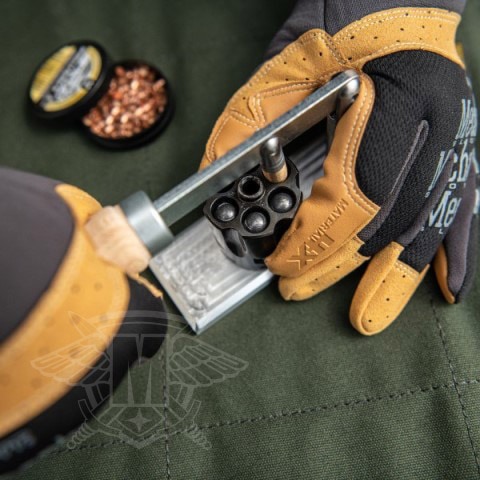
The first action is to pull the cock back to a safe middle position, half-cock. In this position, pulling the trigger will not cause the cock to fall on the chimney. The half-cock is therefore one of the elements acting as a 'fuse', which is not present as such in a black-pistol weapon. Next, it is necessary to verify that there are no caps on the chimneys, if so they must be removed before loading. If we are going to use a press to load, at this point we remove the barrel from the revolver. If using a cartridge, we leave it in the revolver.
The 5 or 6 cartridge chambers must be prepared in the same way, everything is placed in the chambers from the barrel side: First we pour in the gunpowder from a test tube or powder magazine, in the amount specified by the gun manufacturer. The powder weight is usually given in gr. grains. 1 gram corresponds to just over 15 grains. The next step is to apply a nail which separates the gunpowder from the bullet. Whether felt, cork or porridge, the thickness should be such that the bullet neither protrudes from the front of the cartridge chamber nor falls into it. Felt strikers are a more expensive solution, but during firing they will clean and, if coated with grease around the perimeter, will further lubricate the barrel, reducing carbon build-up.
After the nail comes the bullet or projectile. The most commonly used bullets are super-calibre bullets, which are larger than the barrel tube. This ensures better sealing of the cartridge chamber, but also requires a firm squeeze - hence the use of a bullet stopper or press, and sometimes a rubber mallet. After pressing down, the bullet should be as close as possible to the edge of the cartridge chamber, but must not protrude beyond it. It is a good idea, especially at the beginning of the black-pistol adventure, to use bullets sold in shops, as they offer a reproducible shape, have no manufacturing defects and are made of lead suitable for the purpose. Casting bullets yourself can be an interesting addition to this passion, but it must be done with due care and backed up with the right knowledge.
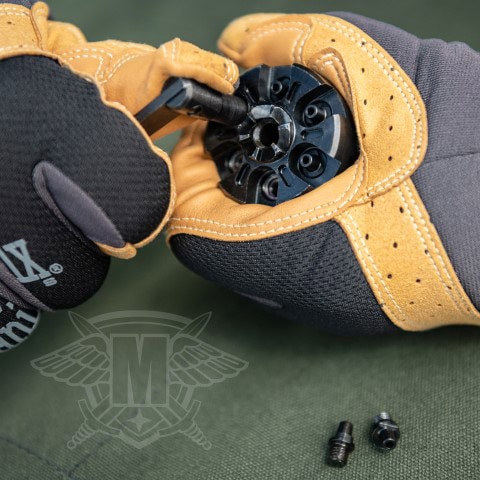
When the bullets are properly seated, revolver grease is applied to the chamber exits so that they are thoroughly protected with it. This will protect the chamber from moisture, make it easier to clean the barrel later and minimise the risk of sparks jumping to the other chambers at the time of firing. A lubricant matching the ambient temperature should be used.
At this point it would be appropriate to explain why it is a good idea to prepare only 5 of the 6 chambers. Doing so is intended to increase safety. It allows the last unloaded chamber to be turned into another element acting as a "fuse". If we need to put the weapon down, e.g. to correct our gloves or glasses, we can rest the cock on the chambers of the unloaded chamber, reducing the risk of accidental firing.
In a situation where loading was carried out on a removed barrel, we reinstall it. We make sure that the cock is in the half cock position and then, if we are ready to shoot and the gun is pointed towards the shooting lane, we proceed to insert the percussion caps. This can be done simply with your own hands, but it will be quicker and more efficient to use a cap gun. It is practically impossible to release the percussion cap by pressing it down with a finger or even a loader, so don't be afraid to use quite a bit of force to make sure the cap is firmly seated. Inserting the percussion caps only at the very end is very important, as it minimises the risk of firing an uncontrolled shot during loading.
Thus prepared, the weapon is ready to fire. All that remains is to tighten the cock to the full-cock position and aim, and you can enjoy the spectacular performance of your black-pistol weapon.
Cleaning, maintenance and storage of the black rifle
Before cleaning, it is absolutely necessary to make sure that the weapon is not loaded. Until you have checked this for yourself, when you pick up a gun you always treat it as if it could go off!
Although this may seem obvious and natural, when the emotions and adrenaline involved in shooting come into play it can unfortunately be different. We need to focus on making sure we don't miss these rules and gradually turn them into a habit of safe gun handling.
Always make sure the cock is in the half-cock position and there is no cap on any of the chimneys. Remove the drum and verify that the chambers are empty.
Do you clean your guns at the shooting range?
Regular gun care is undoubtedly a sensible habit. However, you may ask yourself whether cleaning your gun during breaks in shooting is a necessity. The answer depends on several factors, primarily how many shots we have fired. For recreational shooting, there is no need to clean the gun after every empty barrel, but it should be done when approaching 100 shots fired. A large amount of crud reduces accuracy and, in extreme cases, can cause barrel obstruction.
At the range, we will most often limit ourselves to a general cleaning without taking the replica apart. We can remove carbon deposits from the barrel tube with a cleaning brush, and a cloth with a suitable chemical agent is sufficient for wiping down the frame, barrel, liners and barrel from the outside. It is important to pay attention to whether there are any fragments of percussion caps left on the weapon, which disintegrate when fired. Such splinters can get into the crevices and cause the mechanisms to jam.
The second case when it is worth deciding to clean the weapon already at the shooting range is when we know that for various reasons we will not clean the weapon on our return. Leaving it covered in scale and deposits leads to corrosion and malfunction of the mechanisms.
Caring for the black powder at home
The cleaning and subsequent maintenance of the weapon is much better done after returning home. You should not be afraid of these activities - for some blacksmiths they are just as satisfying as the shooting itself, because caring for a revolver or a rifle is a great opportunity to safely handle a historical weapon and learn about its construction.
The degree to which a weapon needs to be disassembled depends on its design and the degree of fouling. As long as you do not feel confident in disassembling and reassembling the replica and it does not show any signs of malfunction, you do not have to disassemble it to the last screw. As a standard, we remove the barrel from the revolver, unscrew the chimneys, take off the handle linings and, if possible, disconnect the barrel.
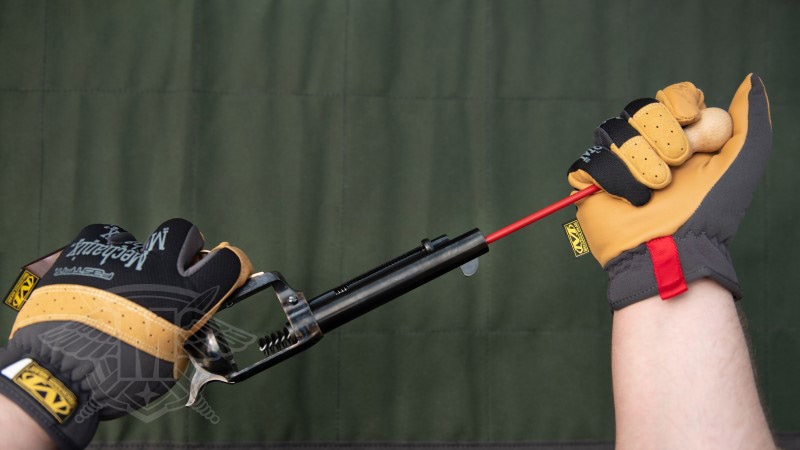
When cleaning the barrel tube, it is a good idea to use all the brushes included with the extractor, starting with the hardest. This will ensure that the fouling is first crushed and then effectively pushed out.
Using the appropriate products, and with the aid of cloths and brushes, we clean the other components, bearing in mind that the wooden linings usually require a different product. We do not have to be afraid of the metal parts of the revolver coming into contact with water, but they must be thoroughly dried after cleaning.
On the already dried weapon we apply preservative oils, suitable for wood and metal, thanks to which the weapon will be ready for storage.
Storage of black powder weapons at home
There are not as precise requirements imposed on holders of split-loading weapons as in the case of firearms requiring a permit. This is defined by the Ordinance of the Minister of the Interior of 26 August 2014 on the storage, carrying and registration of weapons and ammunition.
However, this does not mean that the solutions provided for modern firearms such as cabinets, safes and caskets with an S1 classification are inadequate. For we are still obliged to comply with Article 32.1 of the Weapons and Ammunition Act, i.e. storing weapons and ammunition in a way that prevents unauthorised access. Such protection will be particularly recommended if we have children, but also if we have overly curious friends, especially if we happen to celebrate pompously at home with a large group of guests. Dedicated glass display cabinets are also an interesting solution for black firearms, allowing the collection to be displayed safely.
There remain the purely technical aspects. Stored weapons should be clean, as any gunpowder deposits are hygroscopic and increase moisture accumulation. The storage area itself also needs to be dry and free of condensation. Also, places with elevated temperatures, such as the immediate vicinity of a radiator or fireplace, should not be chosen.
Similar recommendations also apply to gunpowder. The most important thing is to store it away from potential sources of ignition. Access to gunpowder must also be prevented by unauthorised persons, so here too we use locked storage. Moisture leads to a deterioration in the performance of the gunpowder and can ultimately cause misfires, so a good solution, in addition to dry storage, is to use airtight packaging supplied by the manufacturer.
Emergency situations - what to do when...
During shooting, as during any other activity, some unexpected events may occur. In such a situation, we should know how to behave in order to ensure the safety of ourselves, those around us, but also the weapon itself.
... the gun did not fire
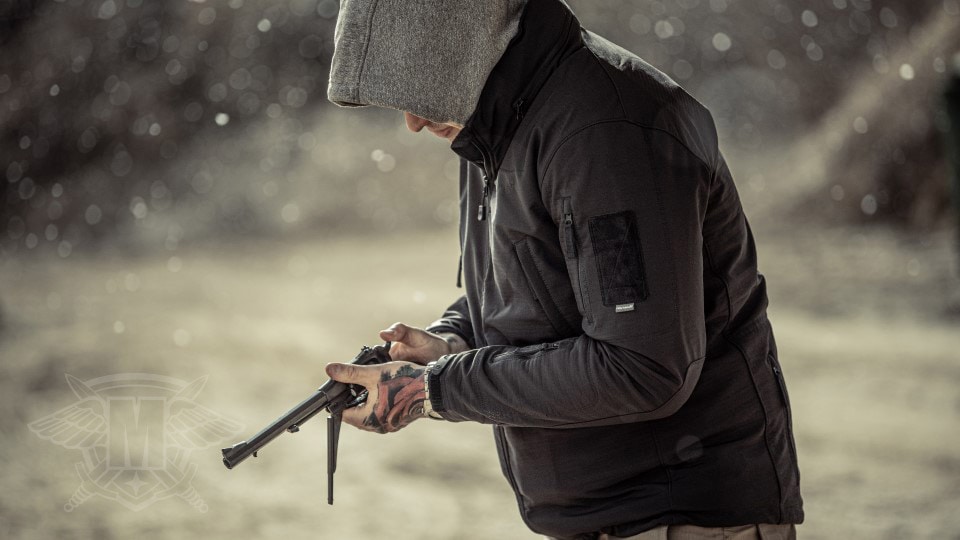
There can be many reasons for a misfire, including soggy powder, a faulty percussion cap or an obstructed firebox. If the cap has not fired at all, we can try firing it again. When this does not help either, a change of cap remains.
In a situation where the percussion cap has fired, but the gun has not, it is necessary to wait 30-60 seconds, still aiming at the target. A so-called hang fire may have occurred, i.e. a delay between pulling the trigger and firing. If after this time nothing happens, you can try firing again with the next cap.
... after a misfire we have to empty the cartridge chambers
A repeated failure to fire means that the problem lies elsewhere, so the problematic cartridge chamber must be emptied. First remove the unused caps from the chambers of the other chambers using pliers, e.g. in a multitool. Then unscrew the chamber with a spanner and pour out the powder with the back of the chamber. To remove the bullet we will use a graybar, which we screw into the lead. A wood screw and multitool can be used as a substitute. If the problem turned out to be an obstructed ignition channel in the fireplace, we clean it out, e.g. using a needle attached to a fireplace spanner. If we are still unable to identify the problem, it remains to unload the remaining chambers and verify all the components calmly. It does not hurt to ask more experienced shooters or a gunsmith. If you are concerned about emptying the cartridge chambers dry. you can put the entire drum in water to let the powder get wet and only then proceed with the emptying.
All actions must, of course, be performed without looking down the barrel or turning with the weapon towards other people!
... mechanism jammed
When mechanisms jam, all chambers should be unloaded before searching for the culprit. The most common malfunctions are jamming in the mechanism of a fragment of a fired percussion cap, which disintegrates into small fragments when fired, or blockage resulting from a large amount of crud. For this reason, it is good practice, in addition to cleaning the weapon of course, to check on an ongoing basis that there are no shreds of percussion sticking out of the gaps in the weapon's construction. If we are unable to correct the problem or determine the cause at all, we should contact a gunsmith.
... the barrel is obstructed
We should prevent this from happening in the first place, as such a situation poses a critical danger. Obstruction can be caused by deposits of lead, gunpowder residue or lubricants, but also by low-quality bullets which, for example, do not fully exit the barrel tube after being cracked by a shot. It is a good idea to check the obstruction after every emptying of the barrel. It is a good idea to check on an ongoing basis whether the bullets are hitting the target/barrel, if not, this could be a signal that something is going on. Also, an unusual bang or a large amount of smoke escaping through the gap between the drum and barrel is a clear warning.
In the event of a large amount of carbon build-up, the barrel tube is thoroughly cleaned with a cleaning rod after unloading the weapon. Blocked bullets or projectiles are removed with a graciger. Under no circumstances should you attempt to push through an obstructed barrel with the next shot! Always check the clearance of the barrel only from the barrel side!
Summary
This guide is more than just a must read for anyone interested in the subject of black firearms. It is a place you can return to whenever you have any doubts. Take a peek once in a while to remind yourself of the important points related to your safety and handling of emergency situations.
Write down somewhere all the tips on what not to do when using a black firearm. Safety first! You will find them in the paragraph
"Fundamentalne zasady bezpieczeństwa przy korzystaniu z broni czarnoprochowej..."
We hope that this guide has made the subject a little clearer for you and that you now know where you can shoot a black-pistol weapon, how to use it, how to properly maintain it, clean it and how to store it correctly to guarantee the greatest safety for yourself and third parties.
Bibliography
1. USTAWA z dnia 21 maja 1999 r. o broni i amunicji
Dz. U. 1999 Nr 53 poz. 549
Text of the law
2. USTAWA z dnia 22 czerwca 2001 r. o wykonywaniu działalności gospodarczej w zakresie wytwarzania i obrotu materiałami wybuchowymi, bronią, amunicją oraz wyrobami i technologią o przeznaczeniu wojskowym lub policyjnym
Dz. U. 2001 Nr 67 poz. 679
Text of the law
3. ROZPORZĄDZENIE MINISTRA SPRAW WEWNĘTRZNYCH I ADMINISTRACJI
z dnia 12 września 2011 r. w sprawie wzoru Europejskiej karty broni palnej
Dz.U. 2011 nr 206 poz. 1222
Text of the law
4. ROZPORZĄDZENIE MINISTRA SPRAW WEWNĘTRZNYCH
z dnia 26 sierpnia 2014 r. w sprawie przechowywania, noszenia oraz ewidencjonowania broni i amunicji
Dz.U. 2014 poz. 1224
Text of the law
5. ROZPORZĄDZENIE MINISTRÓW TRANSPORTU I GOSPODARKI MORSKIEJ ORAZ SPRAW WEWNĘTRZNYCH I ADMINISTRACJI
z dnia 10 kwietnia 2000 r. w sprawie przewożenia broni i amunicji środkami transportu publicznego.
Dz.U. 2000 nr 31 poz. 390
Text of the law
6. UCHWAŁA Z DNIA 24 LUTEGO 2010 R.
I KZP 29/09
Text of the law
7. II OSK 2130/14 - Wyrok NSA
Text of the law
8. USTAWA z dnia 6 czerwca 1997 r. Kodeks karny
Dz. U. 1997 Nr 88 poz. 553
> Text of the law