How to choose the right compass?

Navigation using compass and maps is an important skill to increase safety when moving through unknown territory. The compass is a reliable navigational instrument for plotting a route and helping with the use of a map. Its advantage is that it does not require power, so it can be used in all conditions. In this guide you will learn: which compass to choose, what it does and how to use it in the field.
How does the compass work?
A compass is a device that allows you to plot a route to a planned destination. This instrument allows you to determine the directions of the world (north, south, east, west), which are determined by means of a magnetic needle. This needle has two poles: north and south. Its free placement in a cylinder-shaped casing allows it to spin around and rotate in such a way that it always points north with one end and south with the other. Most often, the ends of the needle are painted red and white, where the red side indicates the direction of north.
To nullify needle vibrations, the hollow space in the case is filled with an alcohol-based fluid, which also gives it greater stability and measurement precision. The entire capsule is covered with a glass. In addition to the needle, the capsule also houses a dial with directional markings and a graduated scale. The directions of the world are specified with international symbols:
- N – north,
- S – south,
- E – east,
- W – west.
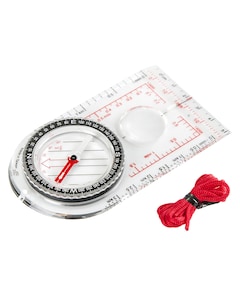
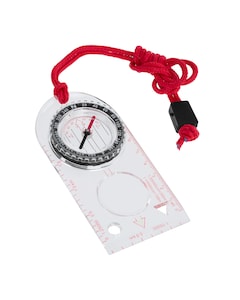
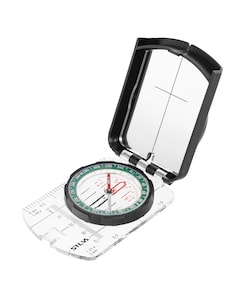
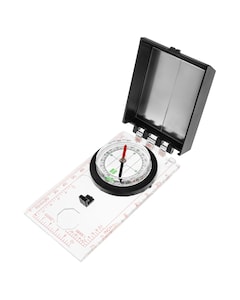
The cylinder can be placed on a plate equipped with, for example: a ruler, a magnifying glass and a scale with common map scales. Compasses of this type are commonly referred to as map compasses. In addition to the plate, the device can also be enclosed in a housing made of plastic or metal alloys such as aluminium.

Types of compasses
There are many types of compasses that use diverse methods and technologies to determine direction. Although the most traditional and typical compass is the magnetic compass, whose construction was discussed above, the wide range of products available on the market needs to be clarified. In addition to traditional magnetic compasses, there are also modern digital compasses, which use data from satellites and can be synchronised with GPS navigation. There are also other types of compasses on the market, such as geodetic compasses, geological compasses, solar compasses or gyrocompasses.
Types of compasses by construction
One of the basic divisions of compasses based on their construction is between plate and box compasses. Both types have their advantages and are widely used in various fields.
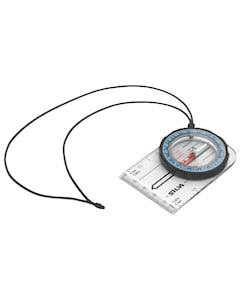
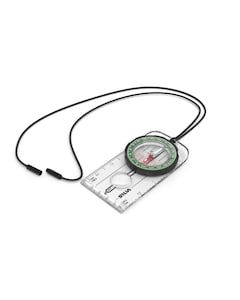
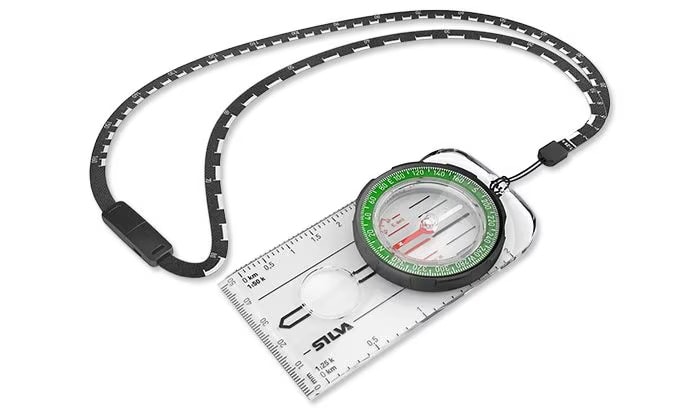
Plate compass is one whose capsule is placed on a plate made of plastic. On this plate there are also various useful tools, such as scales with scales, a magnifying glass and a rotating scale with degrees, called a limbus. In addition, this compass can be hung around the neck with a string. The use of transparent plastic for the plate facilitates the use of the map, allowing the compass indication to be read and the map to be oriented at the same time.
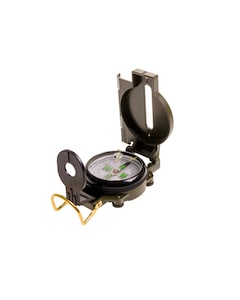
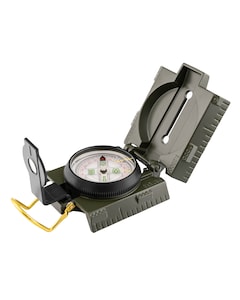
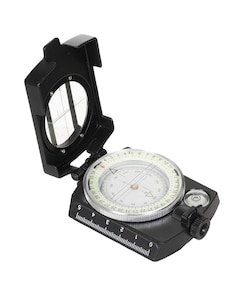
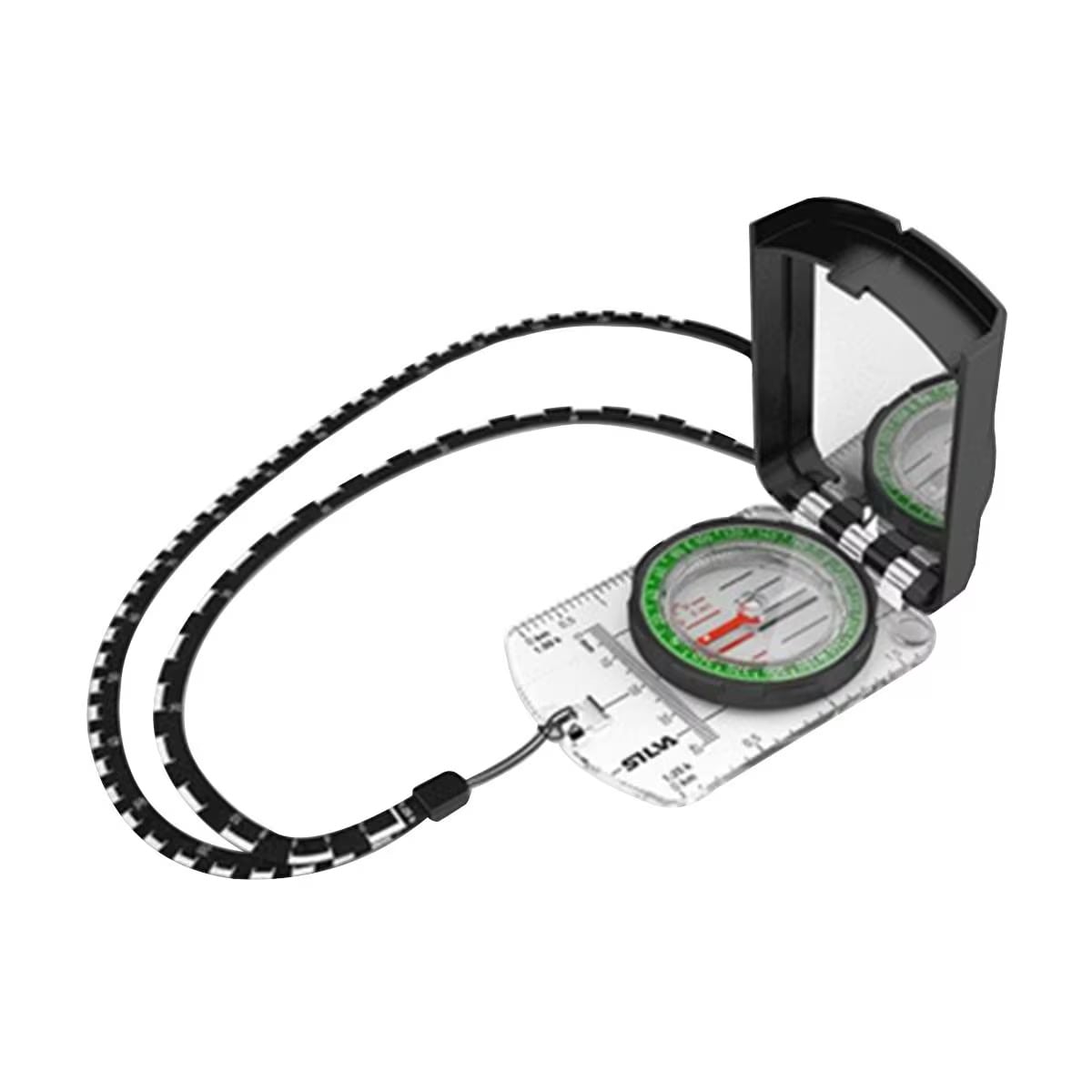
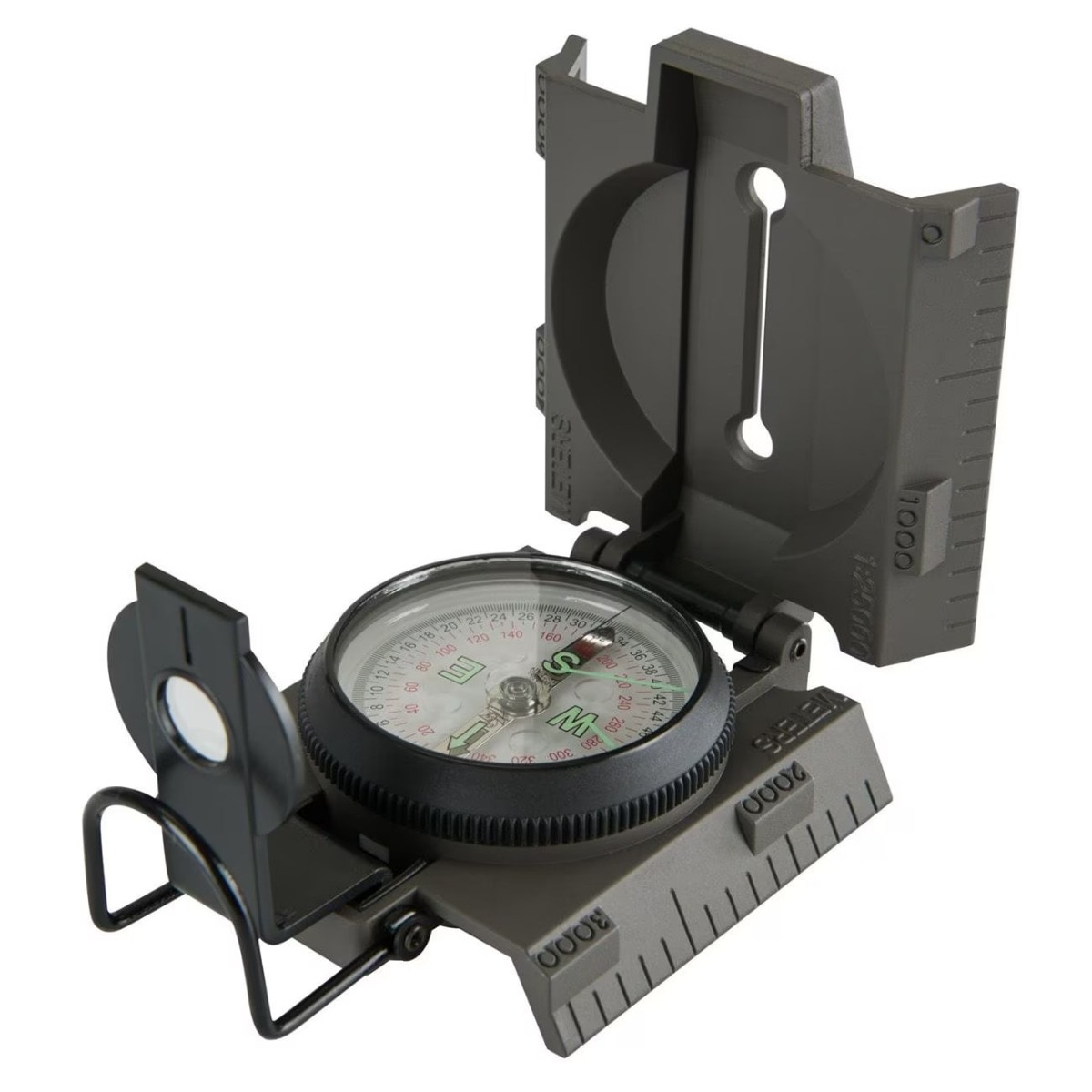
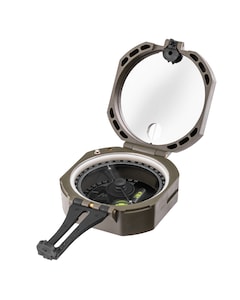
Box compass, like a compass, it has a capsule housed in a lockable box made of plastic or metal. The box is the key element of this type of compass. One of the advantages of such a model is that additional elements, such as a mirror or targeting instruments, can be placed inside the box. Thanks to this design, the user can more easily conduct a march in a specific azimuth using the additional tools built into the compass box.
Compass vs compass - what's the difference?
The terms 'compass' and 'compass' are sometimes used interchangeably, and are in fact two different devices which, although they have a similar purpose, differ in design. A compass is a sealed device, which prevents mechanical damage from occurring. It has more functions than a simple compass. With it, you can not only plot the directions of the world, but also determine directional angles, even in very demanding conditions.
The construction of the compass is also more complex. In addition to the magnetic needle, as in the case of a compass, there are the aiming instruments (bow tie, pinkie). With these you can determine the exact direction to a distant point on the horizon. This will make marching on an azimuth much easier and will also allow you to draw the course of your route.
Which compass to choose?
Choosing the right compass depends mainly on individual needs and goals. Compasses are used in a variety of activities such as hiking, survival, cross-country skiing or sailing. The choice should also be determined by the precision you expect from a compass.
Compass for sporting activities
If you are an active runner and orienteering is the main purpose of your compass use, then the speed of response to changes in direction will be key. In addition, a thumb mount, a housing made of sturdy plastic or a clearly visible, wide needle - will be additional assets. In models of this type, the graduation is only cursory and serves for overview and quick measurements.
Hiking compass for expeditions
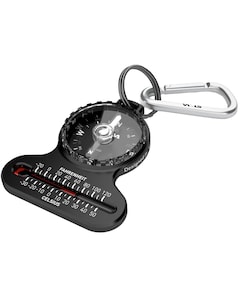
A hiking compass will come in handy when hiking on the trail and on more demanding expeditions. On simple routes, when the compass is to be used to make sure of junctions or landmarks, it is advisable to rely on simple and easy-to-use plate or box compass models that hang around your neck. This will be an effective and convenient solution that will lead you to your destination without making the expedition more difficult with technically complex equipment.
However, a simple compass will not always be sufficient. On more demanding mountain expeditions or when searching for a specific point, you need more precision. It is then important to choose a model with maximum graduation accuracy so that you can better control your route. If you do a lot of map work on your expeditions, check distances and want to precisely control long distances on the map, a compass with a transparent plate (map compass) will be most effective. It will work great in the mountains or on forest trails.
Military compass
This type of compass is mainly designed for military use. Military compasses need to be robustly made and resistant to extreme weather conditions, especially temperature fluctuations. They should also be precise in their measurements. In addition, military compasses are generally equipped with fluorescent elements for use at night and UTM scales to facilitate working with military maps.
Nautical compass
This type of compass is suitable for installation on boats, sailboats, kayaks, motorboats, yachts and other watercraft. It is distinguished above all by its durable dome, which is resistant to moisture, thus protecting the compass in harsh conditions. The dials of these compasses are easy to read and often have backlighting, making it easier to read in different lighting conditions on the water.



How to make a field compass?
There are many off-the-shelf navigation tools and devices available on the market today. However, making a compass yourself can be a very useful skill and an interesting experience. Although it may seem like a daunting challenge, in reality all you need are readily available items.
Here is a list of items you will need:
- magnet,
- needle,
- a piece of paper or a leaf,
- dish,
- water.
Instructions:
Step 1: Pour water into a vessel and place a piece of paper or a leaf on the surface so that it floats freely.
Step 2: Then rub the needle several times against the magnet.
Step 3: Place the needle on a floating object and set the magnet aside so that it does not interfere with the compass.
Step 4: The needle should rotate, pointing north with one end and south with the other.
Step 5: To check that the compass is working correctly, turn the needle in any direction or stir the water. If the needle returns to its original position, the compass is working correctly.
Magnetic declination - what is it?
Magnetic declination is the angle between geographical north and magnetic north. The value of this angle changes depending on where you are. To avoid declination errors, you can use online tools to check the declination value for any location on Earth. Alternatively, you can determine the declination in the field using the instructions below, a compass and a map.
Look around and find a specific, distant point with your eyes, such as the top of a mountain. Take a compass and determine the azimuth to this spot. Then orient the map, find your position on it and the aforementioned specific point. Check the azimuth resulting from the map and compare it with the azimuth from the terrain.
When the magnetic declination points east of north (i.e. the compass needle is shifted west), add the declination value to the compass reading to get the true geographical direction. When the declination points west of north (the compass needle is shifted east), subtract the declination value.
How to use a compass?
You already know what the structure of a compass is and how it works. How do you put it into practice? If you are also using a map, lay it out on a level surface. The compass will help you orient the map and determine the north direction. Lay the compass on the map and wait for the needle to stabilise. Then arrange the map so that the north direction coincides with the compass. Simple? Of course it is!
Remember that you will read the direction on the compass thanks to the magnetic needle, so do not use the device near magnets or power lines, which can disrupt the Earth's natural magnetic field and cause measurement distortions.
Compasses on offer at Militaria.pl
If you need a reliable navigation tool for use in the field, then a compass may be a good choice for you. The Militaria.pl shop offers a wide selection of compasses that are sure to catch your eye. In our range you will find metal compasses with illumination, as well as models with transparent cases and many other variations. Many of the compasses available have additional features, such as a mirror or aiming devices, which make it much easier to orientate and march along a specific azimuth. The compasses on offer are characterised by their robust casing, which makes them resistant to damage.
If you are a military enthusiast or need a precise navigation tool for use in a variety of situations, the compasses offered by the Militaria.pl shop will certainly meet your needs. The wide selection of models and their additional features make them popular with both military enthusiasts and people who need a reliable tool for precise navigation in the field.